The Personality Atlas
THE CELEBRITY PERSONALITY ARCHIVE / FILM & TELEVISION

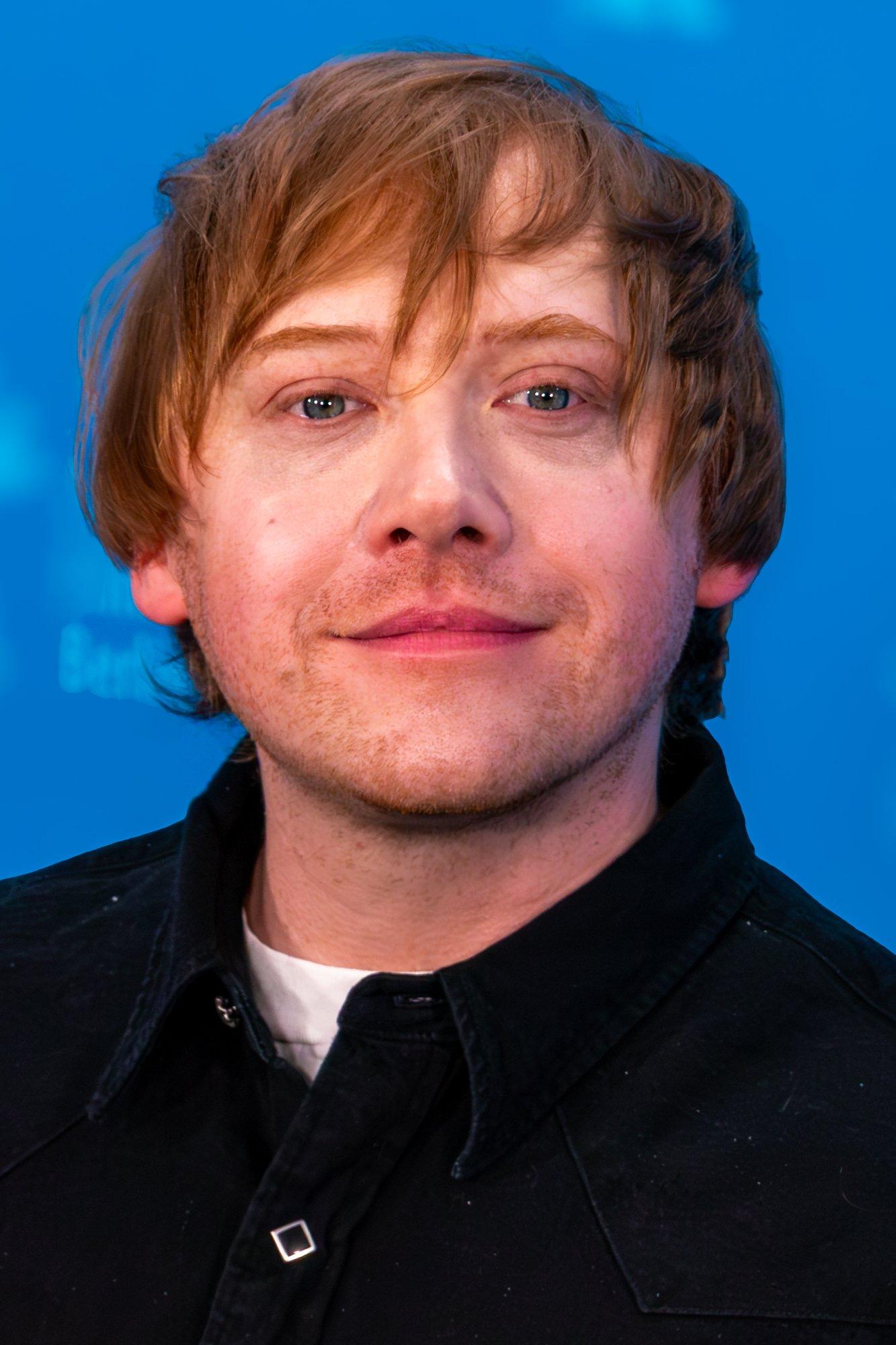
Rupert Grint.

Actor · Film, Television and Stage Performer

Rupert Grint became world-famous before he had much of a professional résumé, turning a self-made rap audition into the role of Ron Weasley and then spending a decade growing up inside one of cinema’s biggest franchises. What followed is less a child-star cautionary tale than a quieter, stranger career: stage work, black comedy, prestige television, horror, an ice cream van bought with blockbuster money, and a public image that stays more curious than self-advertising.

OBJECTIVE PERSONALITY CLASSIFICATIONFF-Ti/Ne-CS/P(B) #3What does this mean?
PERSONALITY SYSTEMObjective Personality
LEAD FUNCTIONTi · Introverted Thinking
SECOND SAVIOR FUNCTIONNe · Extroverted Intuition
MBTI EQUIVALENTINTP
01 / BEHIND THE CLASSIFICATION

The personality behind the fame.

How does a recorded OPS classification like FF-Ti/Ne-CS/P(B) #3 break down? Walk through nine coins and watch the proposed type take shape. These are deductions from the archived code, not independent evidence of typing accuracy.

Scroll below to see Rupert Grint take shape.

STARTING POINT512 possible OPS typesEach type combines core functions, an animal order, and sexual modalities.
THE FINISH LINEFF-Ti/Ne-CS/P(B) #3One recorded classification, decoded from its components.
Rupert Grint’s HUMAN NEEDS 01—03
01
DECIDER OR OBSERVER?

Decider over Observer

Deciders have more balanced Observer poles in the middle: Control (Oi) and Chaos (Oe). Organizing what's known and handling what's new tend to feel more manageable. People are the harder territory. Self (Di) and Tribe (De) sit at the extremes, so judgment, rejection, approval, and conflict can trigger the strongest reactions.

For Rupert Grint, fame arrived as a people problem before it was ever a career strategy. He was eleven, cast as Ron Weasley, and dropped into one of the most watched trios in modern film. Reviewers kept measuring how he, Daniel Radcliffe and Emma Watson were maturing from movie to movie, and every post-Potter role came with that comparison attached. The strength in a Decider profile is resilience under judgment and significance pressure. The blind spot is letting identity questions—how he is seen, where he fits, whether he still matters—dominate attention longer than the next step requires.

D
02
SELF OR TRIBE?

Di · Self over De · Tribe

Self (Di) is the stronger deciding pole. They check decisions against their own values or reasons first: what makes sense to me, what feels right to me? The strength is independent conviction; the recurring friction is the Tribe (De)—other people's standards, feedback, and expectations. As the portrait unfolds, notice how Self takes the lead.

Grint’s public choices often look less like brand obedience and more like following his own internal read. He left school at sixteen to focus on acting, took odd side projects such as Thunderpants and Driving Lessons while Potter was still printing money, and later moved into stage work with Mojo rather than only chasing safe franchise extensions. Self over Tribe can protect a career from becoming pure audience management. The cost is that a privately convincing choice does not automatically answer collaborators, critics or fans who expected something more strategic, prestigious or neatly explained.

Di
03
GATHER OR ORGANIZE?

Oe · Gather over Oi · Organize

Gather (Oe) leads with new information, experiences, and possibilities. Its strength is curiosity and adaptability; the recurring friction is narrowing the options and settling into what is already known. Another layer of the personality portrait comes into focus.

After Potter, Grint did not lock himself into one respectable adult reinvention. He moved from dramedy to war film, from West End and Broadway to Snatch, Sick Note, The ABC Murders, Servant, Cabinet of Curiosities and Knock at the Cabin. That pattern fits Gather over Organize: fresh angles, new formats and another possible lane keep appearing. The advantage is range; another project can open another version of the career. The blind spot is selectivity. A life full of interesting options can still need someone to decide which direction deserves sustained commitment, not just another intriguing detour.

Oe
FIRST THREE COINSD + Di + Oe

These establish the preferred human needs in the OPS framework.

Rupert Grint’s FUNCTIONS 04—05
04
FEELING OR THINKING?

Thinking · T over Feeling · F

Thinking (T) evaluates decisions through reasons, logic, and what works—not a lack of emotion. Its strength is analytical consistency; Feeling (F) provides balance through values, meaning, and the human consequences of a decision. Combined with Self (Di), this forms the recorded Savior Ti.

One of the clearest public examples of a Thinking lens in Grint’s biography is unglamorous: his tax disputes with HMRC turned on technical classification, accounting dates and whether money counted as income or capital. That does not prove motive, but it does show a life where impersonal distinctions carried real consequences. Ti’s strength is trusting internal logic and precise categories rather than vague sentiment. Its weakness appears when a neat private framework meets an outside system with its own definitions. Being able to make the distinction is not the same as winning the argument.

T → Ti
05
SENSING OR INTUITION?

Intuition · N over Sensing · S

Intuition (N) focuses on concepts, patterns, and what information might mean. Sensing (S) balances it through observable facts, physical detail, and direct experience. Combined with Gather (Oe), this gives the recorded Savior Ne.

Grint’s original Harry Potter audition already had a conceptual twist. After seeing a Newsround report about the open casting, he sent a rap video explaining why he should play Ron—a more inventive angle than simply reciting lines and hoping to blend in. That same tendency shows up in a career drawn to offbeat projects, from Thunderpants to Moonwalkers to Knock at the Cabin. Ne’s strength is spotting another possibility inside familiar material. Its cost is that a clever angle can multiply directions faster than it supplies a settled long-range plan.

N → Ne
THE TWO SAVIOR FUNCTIONSTi / Ne

Opposing functions: Fe and Si.

Rupert Grint’s ANIMAL STACK 06—07
06
CONSUME OR BLAST?

Consume over Blast

Consume gathers information for internal processing; Blast organizes and communicates information. The recorded order is Consume → Sleep → Play → Blast. This comparison follows their positions in that stack.

Consume over Blast fits how Grint’s career developed in public: first as a kid absorbing an enormous machine around him, then as an adult building breadth across film, theatre and television without constantly turning himself into a loud thesis statement. He spent eight Potter films learning on sets run by different directors, then kept collecting experience in smaller, stranger projects. Consume’s strength is depth drawn from taking more in. Its blind spot is postponement. More roles, more observation and more preparation can quietly replace the harder task of stating clearly what the next chapter is supposed to be.

C > B
07
PLAY OR SLEEP?

Sleep over Play

Play emphasizes external real-time engagement; Sleep emphasizes internal processing. The recorded stack places Sleep earlier.

With Consume ahead of Blast and Sleep ahead of Play, Grint reads less like someone forcing a public persona and more like someone who first settles into his own take, then brings it outward. Critics noticed his “slow burn” in Deathly Hallows – Part 1, and he spoke about enjoying the chance to play a more emotional, darker Ron in Half-Blood Prince once the character clicked. Sleep’s strength is internal consolidation: the performance has a center. The cost is that real-time collaboration and outside input can arrive after the inner version already feels finished.

S > P
Rupert Grint’s ANIMAL ORIENTATION 08—09
08
INFO OR ENERGY DOMINANT?

Energy over Info

Energy dominant means Play and Sleep are both in the top three: there is access to expending energy through engagement and conserving it through internal processing. Blast last leaves the information side uneven—Consume may gather far more than gets communicated.

Grint’s stack lands on Energy because Sleep and Play both sit in the top three, giving him a mix of private recharge and outward participation. That helps explain how he can sustain ensemble work, a stage debut and long-form television while keeping a relatively low-broadcast public footprint. Blast being last creates the missing balance: the issue is not a lack of experience but a weaker impulse to package it into a clear message. His Instagram debut is telling—one photo with his newborn daughter drew a million followers in hours, even though he had waited years to join the platform at all.

Energy
09
INTROVERSION OR EXTROVERSION?

Introversion over Extroversion

The last animal, Blast, determines this OPS coin: Play or Blast last means Introversion; Consume or Sleep last means Extroversion. This describes animal orientation, not sociability or shyness.

Grint’s OPS Introversion coin comes from Blast last, not from whether he can handle red carpets, theater audiences or a global franchise. He obviously can. The real pattern is that taking in material and settling into it come more naturally than broadcasting a final explanation. That helps make his work feel understated rather than over-signaled; the performance does not need a megaphone to register. The blind spot is strategic clarity. A career can stay interesting and active while still leaving collaborators and audiences waiting for a more explicit sense of where he wants to push next.

I
Sexual Modalities

The four sexual modalities.

OPS uses masculine/feminine sensory and extroverted-deciding distinctions as framework-specific terms, not gender categories. The four modalities are already included in the original 512 types. The recorded modality is FF · Tester.

MM KinestheticMasculine Sensory · Masculine De
MF AudioMasculine Sensory · Feminine De
FF RECORDED MODALITYTesterFeminine Sensory · Feminine De
FM VisualFeminine Sensory · Masculine De
ADDITIONAL LAYER · SOCIAL TYPE

The four social types.

Social types are an additional layer on top of the original Objective Personality classification, introduced later in OPS research. They describe two proposed social preference coins: Flex vs. Friends and Generalize vs. Specialize. The combination and priority of these preferences produce four social types. Rupert Grint's recorded social type is #3.

SOCIAL #1 #1Flex · Generalize
SOCIAL #2 #2Generalize · Friends
SOCIAL #3 RECORDED SOCIAL TYPE#3Specialize · Flex
SOCIAL #4 #4Friends · Specialize
COMPLETE RECORDED OPS TYPE · MODALITY INCLUDED + SOCIAL TYPEFF-Ti/Ne-CS/P(B) #3

Ti leads, Ne supports, and the animal stack is Consume → Sleep → Play → Blast.

THE FINISHED PORTRAIT · ALL NINE COINS REVEALED

Rupert Grint's complete function and animal stack

ConsumeSleepPlayBlastmTimNefSifFe
FF-Ti/Ne-CS/P(B) #3DOUBLE ACTIVATED · CONSUMEExplore the Interactive Coin Builder →
THE RUPERT GRINT LENS

The quiet center after Hogwarts

Most people still meet Rupert Grint through Ron Weasley: comic timing, loyal sidekick, a face fixed inside a decade-long franchise. The fuller public picture is stranger and sharper—a rap audition, an ice cream van bought with blockbuster money, and post-Potter choices that kept dodging the most obvious reinvention.

Ti paired with Ne gives him a useful engine: private judgment plus an eye for the odd angle. It helps explain the inventive audition and the willingness to move from Harry Potter into Mojo, Servant and Knock at the Cabin. The limit is coherence; interesting choices can outpace a clearly stated direction.

As a Decider and Double Observer, Grint is pushed more by identity, comparison and people-pressure than by control over circumstances. The world side can stay relatively flexible while the human side stings. His neglected function is Fe, opposite lead Ti, so the weaker edge is building shared buy-in around what he already knows.

Consume → Sleep → Play → Blast gives him a rich private process before the final demand to broadcast the point. Blast last can leave the message trailing the experience. Balance means naming the next direction sooner—pairing another offbeat role with a plain explanation of why this is the lane worth building.

Want to understand the Savior and Demon states behind these nine coins? Explore the complete explanation, visual examples, and typing principles on our Methodology page →

02 / KEEP EXPLORING

Different faces. Familiar patterns.

Explore other celebrities with related recorded OPS classifications. Related functions are not necessarily exact type matches.

Discover Type Twins
YOUR TURN

Curious about your own type?

Discover how your own personality might be classified through Objective Personality.

Get objectively typed
Rupert Grint's Personality Type & OPS Profile | The Personality Atlas