The Personality Atlas
THE CELEBRITY PERSONALITY ARCHIVE / FILM & TELEVISION

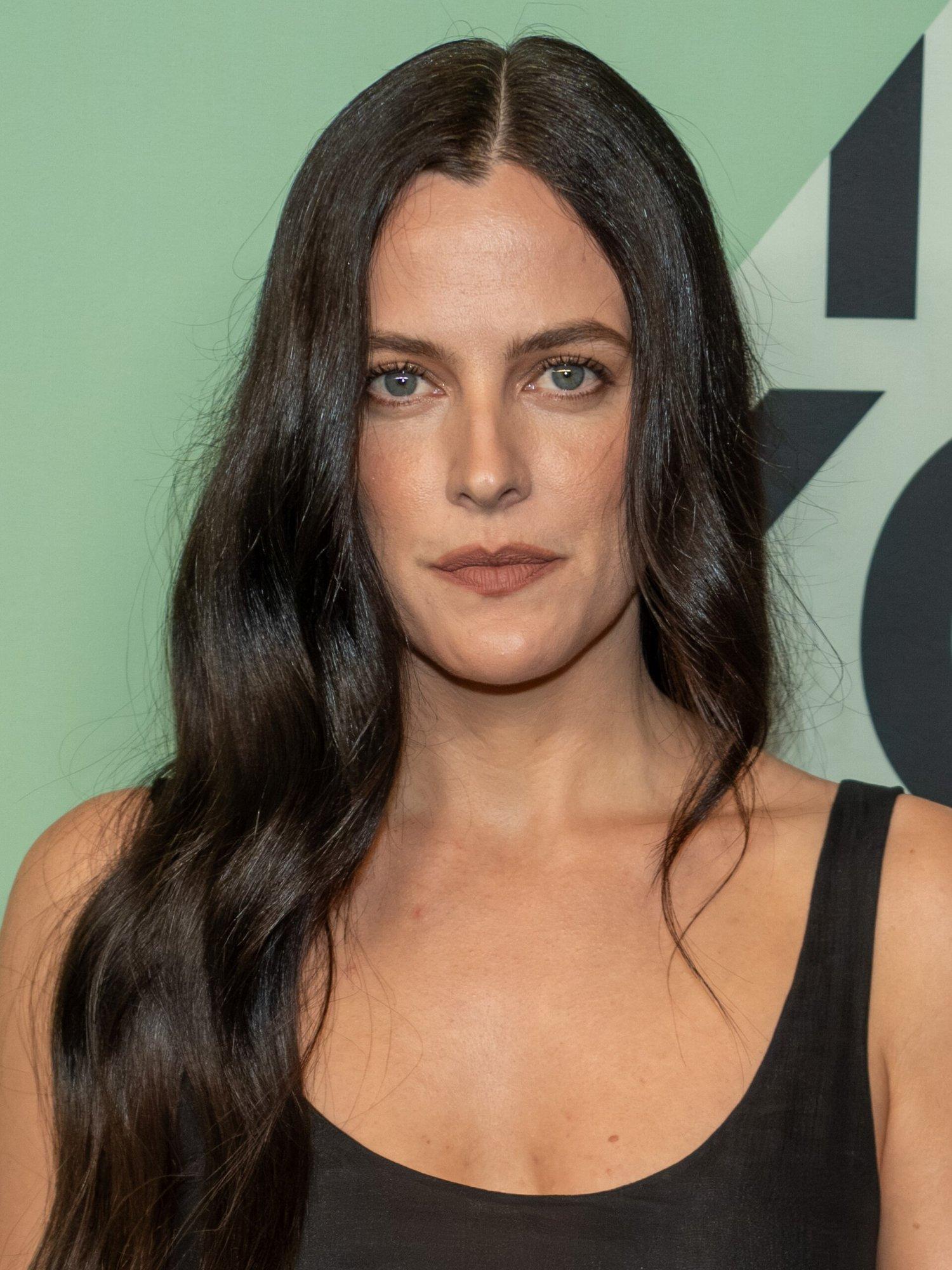
Riley Keough.

Actor · Producer · Director

Riley Keough has spent her adult life doing something trickier than merely surviving a famous surname. She moved from teenage runway work to feral indies, prestige television, Cannes-winning directing and, after Lisa Marie Presley’s death, the very concrete stewardship of Graceland. The public impression is cool, enigmatic glamour. The career underneath it is more disciplined: a woman repeatedly asked to turn family myth, heavy logistics and ambitious art into something usable.

OBJECTIVE PERSONALITY CLASSIFICATIONFF-Ni/Te-BS/P(C)What does this mean?
PERSONALITY SYSTEMObjective Personality
LEAD FUNCTIONNi · Introverted Intuition
SECOND SAVIOR FUNCTIONTe · Extroverted Thinking
MBTI EQUIVALENTINTJ
01 / BEHIND THE CLASSIFICATION

The personality behind the fame.

How does a recorded OPS classification like FF-Ni/Te-BS/P(C) break down? Walk through nine coins and watch the proposed type take shape. These are deductions from the archived code, not independent evidence of typing accuracy.

Scroll below to see Riley Keough take shape.

STARTING POINT512 possible OPS typesEach type combines core functions, an animal order, and sexual modalities.
THE FINISH LINEFF-Ni/Te-BS/P(C)One recorded classification, decoded from its components.
Riley Keough’s HUMAN NEEDS 01—03
01
DECIDER OR OBSERVER?

Observer over Decider

Observers have more balanced Decider poles in the middle: Self (Di) and Tribe (De). Their own perspective and other people's perspectives tend to be easier to navigate. Things are the harder territory. Control (Oi) and Chaos (Oe) sit at the extremes, so disrupted plans, uncertainty, and a changing world can trigger the strongest reactions.

Keough’s public life has repeatedly turned on realities she did not choose: a childhood split between privilege and trailer-park cabins, a career launched under the Presley name, and then the concrete responsibility of becoming sole owner of Graceland after her mother’s death. That is Observer pressure—dealing with the weight of circumstances, inheritance, timing and what is physically on the table. Her strength is moving through unstable terrain without freezing. The blind spot is assuming that once the environment is stabilized, the deeper personal questions will sort themselves out on their own.


O
02
SELF OR TRIBE?

De · Tribe over Di · Self

Tribe (De) is the stronger deciding pole. They check decisions against people, shared standards, and what works for the group: what do we need, what will others think? The strength is coordination and responsiveness; the recurring friction is the Self (Di)—knowing and defending their own position. As the portrait unfolds, notice how Tribe takes the lead.

When Keough co-founded Felix Culpa, co-directed War Pony, and later became the guardian overseeing the sub-trusts tied to her younger siblings’ inheritance, her public role kept pulling toward responsibility for others, not just private preference. Tribe-first tends to ask what serves the group, the project, the family structure, the outcome people can actually use. That is a real strength; it makes her unusually able to step into collective duty. The cost is obvious and expensive: other people’s needs can become the standard so quickly that her own internal verdict arrives later, or only after the work is already committed.

De
03
GATHER OR ORGANIZE?

Oi · Organize over Oe · Gather

Organize (Oi) leads with refining, preserving, and structuring what is already known. Its strength is preparation and clear direction; the recurring friction is unexpected change that disrupts the plan. Another layer of the personality portrait comes into focus.

Keough did not stay in the broadest possible lane after modeling. She narrowed into a recognizable body of work—American Honey, The Girlfriend Experience, The Lodge, Daisy Jones & the Six, War Pony—projects with a distinct, curated intensity rather than maximum mass-market safety. Organize-first prefers distilling the field, not living forever in open tabs. The strength is coherence: her career feels chosen, not scattered. The blind spot is that a strong internal map can make fresh options look less compelling simply because they do not fit the pattern already taking shape.

Oi
FIRST THREE COINSO + De + Oi

These establish the preferred human needs in the OPS framework.

Riley Keough’s FUNCTIONS 04—05
04
FEELING OR THINKING?

Thinking · T over Feeling · F

Thinking (T) evaluates decisions through reasons, logic, and what works—not a lack of emotion. Its strength is analytical consistency; Feeling (F) provides balance through values, meaning, and the human consequences of a decision. Combined with Tribe (De), this forms the recorded Savior Te.

War Pony winning the Caméra d’Or is a useful public example of Keough’s Thinking side because co-directing and producing are not just aesthetic jobs; they demand decisions that make a vision executable. The same applies to finishing Lisa Marie Presley’s unfinished memoir from recorded tapes and bringing it into publishable form. Thinking here is not coldness. It is the willingness to structure, decide and move the work forward. The blind spot is that efficiency can flatten messy human nuance when a situation does not fit a clean plan or a workable timeline.

T → Te
05
SENSING OR INTUITION?

Intuition · N over Sensing · S

Intuition (N) focuses on concepts, patterns, and what information might mean. Sensing (S) balances it through observable facts, physical detail, and direct experience. Combined with Organize (Oi), this gives the recorded Savior Ni.

Keough’s Intuition shows up less as random experimentation than as a fixation on the through-line. Felix Culpa announced novel adaptations; War Pony moved toward a strong directorial statement; even From Here to the Great Unknown required shaping scattered autobiographical tapes into a narrative arc. Intuition’s strength is seeing what the pieces are adding up to before everyone else does. Its cost is compression. Once the larger pattern feels clear, immediate facts or alternative readings can start looking like noise rather than useful correction.

N → Ni
THE TWO SAVIOR FUNCTIONSNi / Te

Opposing functions: Se and Fi.

Riley Keough’s ANIMAL STACK 06—07
06
CONSUME OR BLAST?

Blast over Consume

Consume gathers information for internal processing; Blast organizes and communicates information. The recorded order is Blast → Sleep → Play → Consume. This comparison follows their positions in that stack.

Keough’s stack starts with Blast over Consume, and her recent public work makes that easy to see. Completing her mother’s memoir, narrating it for release, and then speaking with Oprah on a primetime special all revolve around taking material and making it deliverable to other people. The strength is decisive articulation: she can move a project from raw material to shared meaning. The cost is that more input can look optional when it is not. Blast gets things into the world; Consume asks whether enough has been taken in before the message hardens.

B > C
07
PLAY OR SLEEP?

Sleep over Play

Play emphasizes external real-time engagement; Sleep emphasizes internal processing. The recorded stack places Sleep earlier.

After that Blast-over-Consume start, Sleep comes before Play. Keough wrote the memorial words her husband delivered for Lisa Marie Presley, became a certified death doula after her brother’s death, and waited until the 2024 Oprah special for her first public interview after losing her mother. The pattern is not withdrawal from life; it is private consolidation before live exchange. Sleep’s strength is depth and inner steadiness. The blind spot is that real-time interaction can be delayed until the internal version feels ready, even when another person may need the unfinished conversation now.

S > P
Riley Keough’s ANIMAL ORIENTATION 08—09
08
INFO OR ENERGY DOMINANT?

Energy over Info

Energy dominant means Play and Sleep are both in the top three: there is access to expending energy through engagement and conserving it through internal processing. Consume last leaves the information side uneven—Blast may broadcast more than gets taken in.

Keough’s type lands on the Energy side because Sleep and Play both sit in the top three alongside Blast. Publicly, that looks like someone who can process privately, collaborate, and still step into visible output—acting, co-directing War Pony, running Felix Culpa, handling estate duties, even taking a last-minute Chanel performance invitation. The advantage is range under pressure. The missing balance sits at Consume last: outward movement can outrun intake. Growth is not becoming less active, but making deliberate room to absorb before the next obligation instantly becomes a message or performance.

Energy
09
INTROVERSION OR EXTROVERSION?

Extroversion over Introversion

The last animal, Consume, determines this OPS coin: Play or Blast last means Introversion; Consume or Sleep last means Extroversion. This describes animal orientation, not sociability or shyness.

Her last animal is Consume, which makes this OPS Extroversion result. That does not mean party-girl energy or constant sociability; it means the stack is more naturally oriented toward output, interaction and preexisting conclusions than toward prolonged intake. Keough’s career keeps asking for that stance—fronting Daisy Jones songs, stepping into interviews, producing work, representing a family estate. The strength is external traction. The blind spot is informational hunger arriving late, after the decision, the statement or the performance is already underway. The growth edge is to seek fresh input before momentum makes revision expensive.

E
Sexual Modalities

The four sexual modalities.

OPS uses masculine/feminine sensory and extroverted-deciding distinctions as framework-specific terms, not gender categories. The four modalities are already included in the original 512 types. The recorded modality is FF · Tester.

MM KinestheticMasculine Sensory · Masculine De
MF AudioMasculine Sensory · Feminine De
FF RECORDED MODALITYTesterFeminine Sensory · Feminine De
FM VisualFeminine Sensory · Masculine De
COMPLETE RECORDED OPS TYPE · MODALITY INCLUDEDFF-Ni/Te-BS/P(C)

Ni leads, Te supports, and the animal stack is Blast → Sleep → Play → Consume.

THE FINISHED PORTRAIT · ALL NINE COINS REVEALED

Riley Keough's complete function and animal stack

BlastSleepPlayConsumemNifTemFifSe
FF-Ni/Te-BS/P(C)DOUBLE ACTIVATED · BLASTExplore the Interactive Coin Builder →
THE RILEY KEOUGH LENS

The cool myth-manager under pressure

When Keough sat down with Oprah in 2024 after completing From Here to the Great Unknown, the public saw another composed Presley inheritor handling impossible material elegantly. The more revealing picture is less ornamental. Her career keeps placing her where family legacy, art and logistics collide, and then asking her to make something coherent out of it.

Ni/Te is strong at narrowing chaos into a direction and then making that direction workable for other people. You can see it in the arc from selective acting roles to Felix Culpa and the Caméra d’Or-winning War Pony. The limit is familiar: once the line of march is visible, contradictory data and slower emotional ambiguity can look like delay rather than information.

Keough is an Observer and, therefore, a Double Decider. That pairing matters. People problems may still hurt, but the deeper imbalance leans toward stabilizing circumstances, trajectory and control before dealing with every personal ripple. The neglected function opposite her lead savior is Se, which can leave immediate facts, fresh evidence and on-the-ground adjustments playing catch-up to the inner map.

Blast → Sleep → Play → Consume puts outward delivery first and leaves intake last. That can create poise under pressure: speak, shape, perform, coordinate, then gather more later. The tax is obvious when responsibility multiplies faster than reflection. The best balance is concrete and simple: protect time to take in unfiltered new information before the next statement or stewardship task, so her clarity gets sharper rather than softer.

Want to understand the Savior and Demon states behind these nine coins? Explore the complete explanation, visual examples, and typing principles on our Methodology page →

02 / KEEP EXPLORING

Different faces. Familiar patterns.

Explore other celebrities with related recorded OPS classifications. Related functions are not necessarily exact type matches.

Discover Type Twins
YOUR TURN

Curious about your own type?

Discover how your own personality might be classified through Objective Personality.

Get objectively typed
Riley Keough's Personality Type & OPS Profile | The Personality Atlas