The Personality Atlas
THE CELEBRITY PERSONALITY ARCHIVE / FILM & TELEVISION

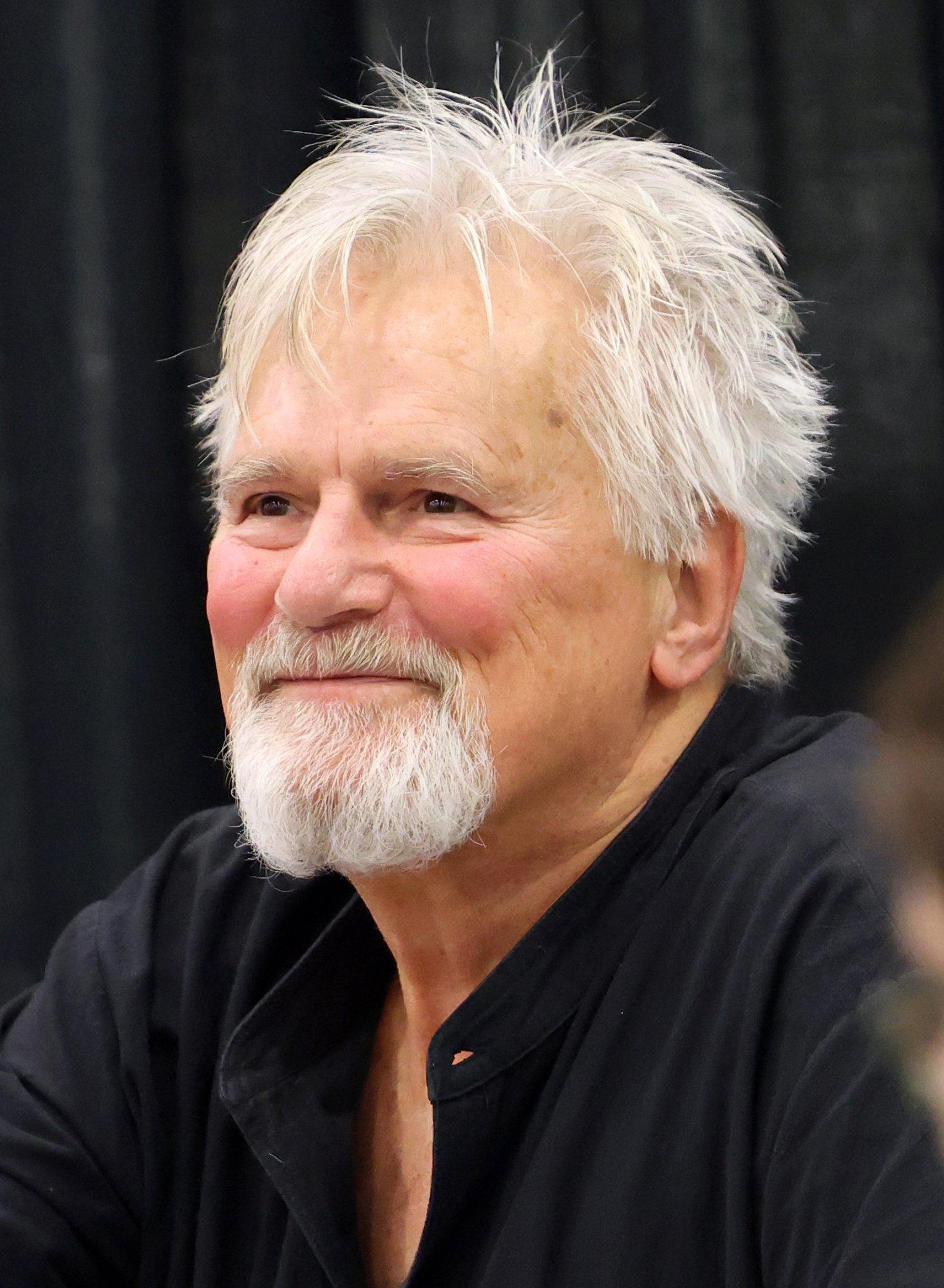
Richard Dean Anderson.

Actor · Producer · Television Icon

Richard Dean Anderson became a television icon twice over: first as MacGyver, the anti-gun fixer who made ingenuity look cooler than firepower, then as Stargate SG-1’s dryly funny Jack O’Neill. Behind the durable likability is a career shaped by strategic pullbacks, physical risk, and stubbornly personal standards about what kind of hero—and what kind of life—was worth building.

OBJECTIVE PERSONALITY CLASSIFICATIONFF-Ti/Se-CS/P(B) #4What does this mean?
PERSONALITY SYSTEMObjective Personality
LEAD FUNCTIONTi · Introverted Thinking
SECOND SAVIOR FUNCTIONSe · Extroverted Sensing
MBTI EQUIVALENTISTP
01 / BEHIND THE CLASSIFICATION

The personality behind the fame.

How does a recorded OPS classification like FF-Ti/Se-CS/P(B) #4 break down? Walk through nine coins and watch the proposed type take shape. These are deductions from the archived code, not independent evidence of typing accuracy.

Scroll below to see Richard Dean Anderson take shape.

STARTING POINT512 possible OPS typesEach type combines core functions, an animal order, and sexual modalities.
THE FINISH LINEFF-Ti/Se-CS/P(B) #4One recorded classification, decoded from its components.
Richard Dean Anderson’s HUMAN NEEDS 01—03
01
DECIDER OR OBSERVER?

Decider over Observer

Deciders have more balanced Observer poles in the middle: Control (Oi) and Chaos (Oe). Organizing what's known and handling what's new tend to feel more manageable. People are the harder territory. Self (Di) and Tribe (De) sit at the extremes, so judgment, rejection, approval, and conflict can trigger the strongest reactions.

Richard Dean Anderson’s most telling career pivot was not getting MacGyver; it was refusing to keep living like MacGyver forever. After seven years of being in virtually every frame, he said the show left him with “absolutely no life at all.” Later, on Stargate SG-1, he pushed for more comedic leeway, more ensemble weight, and eventually a smaller on-location role to be with his daughter. That is classic Decider friction: the pressure comes from roles, expectations, and responsibility to people. Strength: clearer priorities. Blind spot: waiting too long before renegotiating them.
D
02
SELF OR TRIBE?

Di · Self over De · Tribe

Self (Di) is the stronger deciding pole. They check decisions against their own values or reasons first: what makes sense to me, what feels right to me? The strength is independent conviction; the recurring friction is the Tribe (De)—other people's standards, feedback, and expectations. As the portrait unfolds, notice how Self takes the lead.

His public choices repeatedly show Self over Tribe. Anderson was drawn to MacGyver because the hero avoided guns, and he only signed onto Stargate SG-1 after deciding the film had “great potential” and securing terms he personally wanted: more humor and less lone-hero burden. He did not simply inherit a franchise’s expectations; he bent the role toward his own standard. That independence gives his characters a definite center. The cost is that a private yes can sound stubborn from the outside, especially when other people are already invested in the existing formula.

Di
03
GATHER OR ORGANIZE?

Oe · Gather over Oi · Organize

Gather (Oe) leads with new information, experiences, and possibilities. Its strength is curiosity and adaptability; the recurring friction is narrowing the options and settling into what is already known. Another layer of the personality portrait comes into focus.

Before the famous roles, Anderson’s life was crowded with open doors: college without finishing, a bicycle trip from Minnesota to Alaska, then whale handler, entertainment director, medieval theater musician, street mime, and juggler before settling in Los Angeles. Even his screen career moved from soap opera to action-adventure to sci-fi command. Gather-first types often look like this in public: not linear, but opportunistic in the best sense. The strength is range and adaptability. The growth cost is selectivity. A man who can plausibly become many things still has to decide which path gets the next decade.

Oe
FIRST THREE COINSD + Di + Oe

These establish the preferred human needs in the OPS framework.

Richard Dean Anderson’s FUNCTIONS 04—05
04
FEELING OR THINKING?

Thinking · T over Feeling · F

Thinking (T) evaluates decisions through reasons, logic, and what works—not a lack of emotion. Its strength is analytical consistency; Feeling (F) provides balance through values, meaning, and the human consequences of a decision. Combined with Self (Di), this forms the recorded Savior Ti.

Anderson’s recorded judging function is Ti, and his career offers practical examples of that internal logic. He did not approach Stargate SG-1 as a prestige inheritance from the film; he studied the movie, judged its mechanism, saw “great potential,” and then reworked the role so it made better sense for him and the series. In season eight he even had Jack O’Neill promoted partly to reduce location shooting and let Don S. Davis retire. Ti’s strength is clean structural problem-solving. Its blind spot is that efficient solutions can understate the emotional complexity around them.

T → Ti
05
SENSING OR INTUITION?

Sensing · S over Intuition · N

Sensing (S) focuses on concrete details, observable reality, and lived experience. Intuition (N) balances it by looking for broader patterns, concepts, and implications. Combined with Gather (Oe), this gives the recorded Savior Se.

Se is easy to spot in the physical receipts of Anderson’s life. A teenage hockey dream ended only after he broke both arms three weeks apart. On MacGyver, he did enough of his own stunt work to suffer a compressed disc, surgery, and lasting pain. Even his most iconic characters work through the immediate environment: a Swiss Army knife, a prop, a room, a visible problem. Se brings responsiveness and tangible presence; it makes action feel lived instead of theoretical. The price is that reality pushes back. The body, unlike the script, does not improvise consequences away.

S → Se
THE TWO SAVIOR FUNCTIONSTi / Se

Opposing functions: Fe and Ni.

Richard Dean Anderson’s ANIMAL STACK 06—07
06
CONSUME OR BLAST?

Consume over Blast

Consume gathers information for internal processing; Blast organizes and communicates information. The recorded order is Consume → Sleep → Play → Blast. This comparison follows their positions in that stack.

Anderson’s public record fits Consume over Blast. Before joining Stargate SG-1, he watched the original film over and over until he had a settled read on what the series could become. Earlier, he accumulated an oddly rich toolkit—music, juggling, marine-animal work, performance jobs—before television finally turned him into a household name. Consume gives him material, texture, and a sense of what is actually there before he starts declaring conclusions. The shadow is familiar: taking in more can feel productive long after the project needs a simple message, a firm direction, or a definitive yes.

C > B
07
PLAY OR SLEEP?

Sleep over Play

Play emphasizes external real-time engagement; Sleep emphasizes internal processing. The recorded stack places Sleep earlier.

Sleep outruns Play here, which helps explain why Anderson could be charmingly loose on camera yet still keep pulling his career toward a more protected center. He ad-libbed sarcastic lines into Jack O’Neill and organized cast-and-crew hockey games during SG-1, so the social spark is real. But the more decisive public pattern is private consolidation first: cutting back on field work, then stepping down from star-producer status to spend more time with his young daughter. Sleep gives continuity and inner steadiness. The cost is that other people may meet the wit before they meet the quieter priorities shaping it.

S > P
Richard Dean Anderson’s ANIMAL ORIENTATION 08—09
08
INFO OR ENERGY DOMINANT?

Energy over Info

Energy dominant means Play and Sleep are both in the top three: there is access to expending energy through engagement and conserving it through internal processing. Blast last leaves the information side uneven—Consume may gather far more than gets communicated.

Anderson’s stack lands on Energy over Info because both Sleep and Play sit in the top three while Blast falls last. In public life, that reads less like withdrawal and more like bandwidth management. He could carry MacGyver, joke up Stargate, produce shows, and still feel the strain of being the person who had to hold the whole frame together. The strength is a lively mix of activity and private reset: engage, pull back, return with perspective. The missing balance is not more enthusiasm. It is clearer outward delivery—saying the direction sooner, delegating sooner, and not waiting until overload makes the limit obvious.

Energy
09
INTROVERSION OR EXTROVERSION?

Introversion over Extroversion

The last animal, Blast, determines this OPS coin: Play or Blast last means Introversion; Consume or Sleep last means Extroversion. This describes animal orientation, not sociability or shyness.

Anderson’s OPS Introversion comes from Blast landing last, not from any inability to perform. This is a man who led two hit television franchises, guest-starred as himself on The Simpsons, and accepted an honorary Air Force brigadier general recognition in public. Sociability is not the question. The question is how natural it is to broadcast a settled conclusion and keep doing that on demand. With Blast fourth, private understanding and direct experience arrive more easily than packaged explanation. The growth edge is simple but uncomfortable: state the plan earlier, make the ask clearer, and let collaborators respond before exhaustion makes the decision for him.

I
Sexual Modalities

The four sexual modalities.

OPS uses masculine/feminine sensory and extroverted-deciding distinctions as framework-specific terms, not gender categories. The four modalities are already included in the original 512 types. The recorded modality is FF · Tester.

MM KinestheticMasculine Sensory · Masculine De
MF AudioMasculine Sensory · Feminine De
FF RECORDED MODALITYTesterFeminine Sensory · Feminine De
FM VisualFeminine Sensory · Masculine De
ADDITIONAL LAYER · SOCIAL TYPE

The four social types.

Social types are an additional layer on top of the original Objective Personality classification, introduced later in OPS research. They describe two proposed social preference coins: Flex vs. Friends and Generalize vs. Specialize. The combination and priority of these preferences produce four social types. Richard Dean Anderson's recorded social type is #4.

SOCIAL #1 #1Flex · Generalize
SOCIAL #2 #2Generalize · Friends
SOCIAL #3 #3Specialize · Flex
SOCIAL #4 RECORDED SOCIAL TYPE#4Friends · Specialize
COMPLETE RECORDED OPS TYPE · MODALITY INCLUDED + SOCIAL TYPEFF-Ti/Se-CS/P(B) #4

Ti leads, Se supports, and the animal stack is Consume → Sleep → Play → Blast.

THE FINISHED PORTRAIT · ALL NINE COINS REVEALED

Richard Dean Anderson's complete function and animal stack

ConsumeSleepPlayBlastmTifSemNifFe
FF-Ti/Se-CS/P(B) #4DOUBLE ACTIVATED · CONSUMEExplore the Interactive Coin Builder →
THE RICHARD DEAN ANDERSON LENS

The action hero who kept editing the burden.

MacGyver made Anderson look like the effortlessly resourceful action lead: Swiss Army knife, no gun, one more impossible fix. The public image was competence under pressure. Behind it was an actor who felt the load of carrying every frame, then kept revising his career so the work did not swallow the rest of his life.

Ti with Se is a potent combination for turning immediate reality into workable solutions. He spots what is in front of him, then adjusts the structure until it makes practical sense—whether that means reshaping Jack O’Neill with more humor or changing his SG-1 role to reduce location demands. The limit is that a workable arrangement can still leave quieter relational needs underexplained.

As a Decider and Double Observer, Anderson’s deeper imbalance sits with human significance, responsibility, and loyalty more than with chaos itself. He can move through changing jobs, genres, and production demands, but people-needs still force the sharper choices. The neglected function opposite his lead savior is Fe, so the growth edge is making the interpersonal rationale more explicit instead of assuming the practical solution speaks for itself.

Consume → Sleep → Play → Blast shows why the final pinch point is not talent or stamina, but outward conclusion. Blast last can keep him gathering, refining, and engaging long after a clearer message would help everyone else. The balancing move is specific: say the boundary early—whether about workload, family time, or creative direction—so his flexibility stays intact without requiring burnout to prove the point.

Want to understand the Savior and Demon states behind these nine coins? Explore the complete explanation, visual examples, and typing principles on our Methodology page →

02 / KEEP EXPLORING

Different faces. Familiar patterns.

Explore other celebrities with related recorded OPS classifications. Related functions are not necessarily exact type matches.

Discover Type Twins
YOUR TURN

Curious about your own type?

Discover how your own personality might be classified through Objective Personality.

Get objectively typed
Richard Dean Anderson's Personality Type & OPS Profile | The Personality Atlas