The Personality Atlas
THE CELEBRITY PERSONALITY ARCHIVE / FILM & TELEVISION

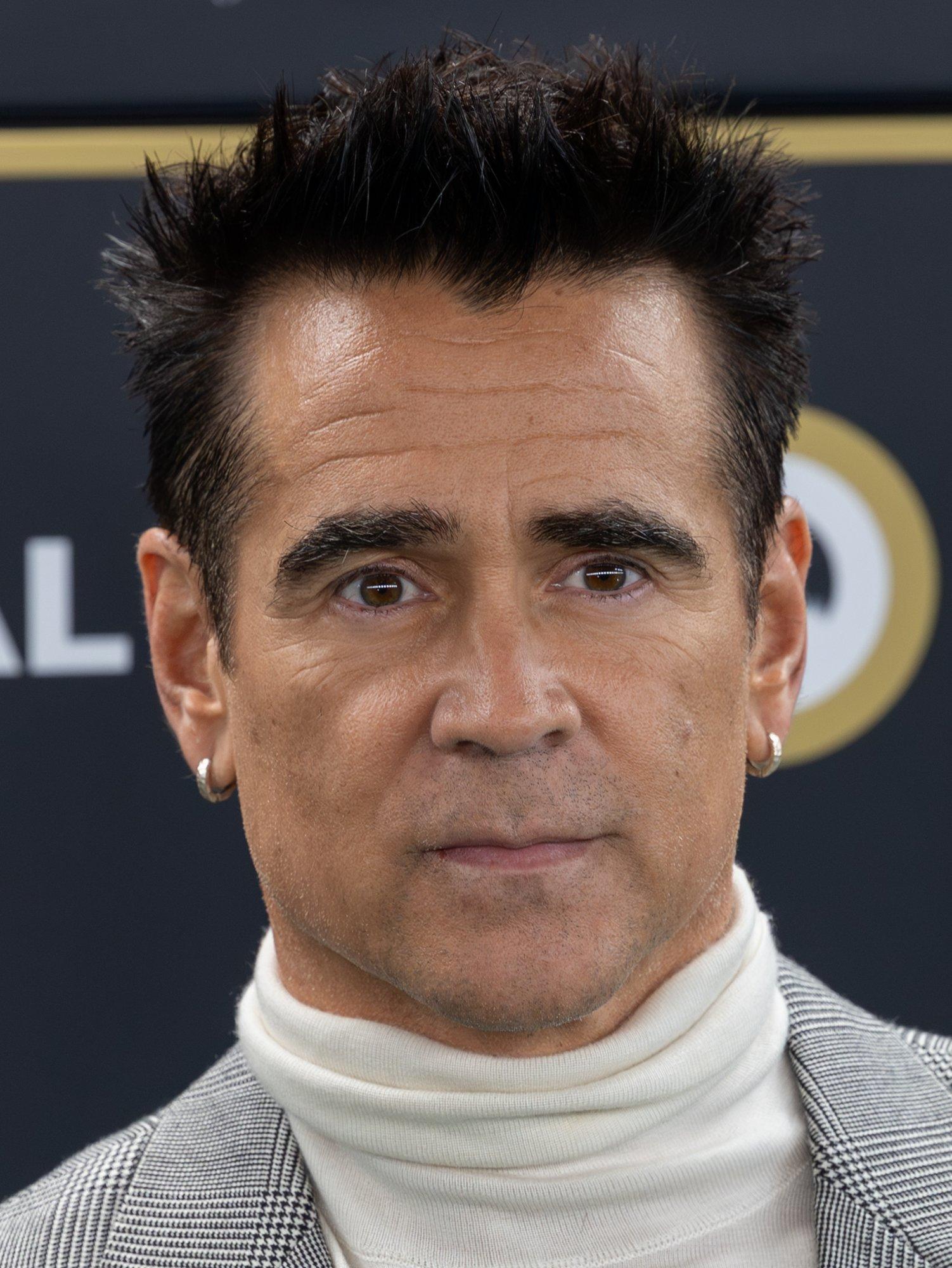
Colin Farrell.

Actor · Leading man · Character performer

From Tigerland and Phone Booth to In Bruges, The Banshees of Inisherin and The Penguin, Colin Farrell has built a career that keeps dodging the neatest version of movie stardom. He has carried studio thrillers, historical epics, dark comedies and eccentric indies, often with critics disagreeing wildly about the result. The throughline is less polish than appetite: a performer who keeps choosing roles with texture, risk and enough edge to disturb his own image.

OBJECTIVE PERSONALITY CLASSIFICATIONFF-Ti/Se-CS/P(B)What does this mean?
PERSONALITY SYSTEMObjective Personality
LEAD FUNCTIONTi · Introverted Thinking
SECOND SAVIOR FUNCTIONSe · Extroverted Sensing
MBTI EQUIVALENTISTP
01 / BEHIND THE CLASSIFICATION

The personality behind the fame.

How does a recorded OPS classification like FF-Ti/Se-CS/P(B) break down? Walk through nine coins and watch the proposed type take shape. These are deductions from the archived code, not independent evidence of typing accuracy.

Scroll below to see Colin Farrell take shape.

STARTING POINT512 possible OPS typesEach type combines core functions, an animal order, and sexual modalities.
THE FINISH LINEFF-Ti/Se-CS/P(B)One recorded classification, decoded from its components.
Colin Farrell’s HUMAN NEEDS 01—03
01
DECIDER OR OBSERVER?

Decider over Observer

Deciders have more balanced Observer poles in the middle: Control (Oi) and Chaos (Oe). Organizing what's known and handling what's new tend to feel more manageable. People are the harder territory. Self (Di) and Tribe (De) sit at the extremes, so judgment, rejection, approval, and conflict can trigger the strongest reactions.

Farrell’s public career is saturated with judgments from other people. Charm reportedly helped him win Tigerland; critics split on Alexander, Miami Vice and several later films; then In Bruges, The Banshees of Inisherin and The Penguin brought major awards back into the picture. That pattern points to Decider pressure: the recurring friction is reputation, approval and how he lands with directors, critics and audiences. The strength is resilience under changing verdicts. The blind spot is letting other people’s read of the work feel like the real emergency, even when the circumstances themselves are manageable.
D
02
SELF OR TRIBE?

Di · Self over De · Tribe

Self (Di) is the stronger deciding pole. They check decisions against their own values or reasons first: what makes sense to me, what feels right to me? The strength is independent conviction; the recurring friction is the Tribe (De)—other people's standards, feedback, and expectations. As the portrait unfolds, notice how Self takes the lead.

After the early run of Phone Booth, The Recruit and S.W.A.T., Farrell could have stayed in the safest external lane: bankable action lead, familiar studio asset, predictable leading man. Instead the filmography keeps veering toward Intermission, Ondine, The Lobster, Seven Psychopaths and The Killing of a Sacred Deer. Self over Tribe does not mean antisocial; it means his inner read often outranks consensus about what he should cash in on next. That independence gives the career personality. The cost is friction with expectations. Other people can mistake a private standard for inconsistency when they wanted a cleaner brand.

Di
03
GATHER OR ORGANIZE?

Oe · Gather over Oi · Organize

Gather (Oe) leads with new information, experiences, and possibilities. Its strength is curiosity and adaptability; the recurring friction is narrowing the options and settling into what is already known. Another layer of the personality portrait comes into focus.

The range of Farrell’s roles is almost aggressive in its openness: war drama in Tigerland, sci-fi in Minority Report and Total Recall, historical epics like Alexander and The New World, dark comedy with Martin McDonagh, fantasy in Fantastic Beasts, crime television in True Detective, and later The Penguin. Gather over Organize keeps doors open. Another genre, another accent, another collaborator can be useful information rather than a threat to identity. The strength is adaptability across a long career. The blind spot is selectivity. A working actor cannot become every promising version of himself at once.

Oe
FIRST THREE COINSD + Di + Oe

These establish the preferred human needs in the OPS framework.

Colin Farrell’s FUNCTIONS 04—05
04
FEELING OR THINKING?

Thinking · T over Feeling · F

Thinking (T) evaluates decisions through reasons, logic, and what works—not a lack of emotion. Its strength is analytical consistency; Feeling (F) provides balance through values, meaning, and the human consequences of a decision. Combined with Self (Di), this forms the recorded Savior Ti.

Farrell often seems to build a role from internal mechanics rather than from generic charisma. For Bullseye, he said he read Frank Miller’s Daredevil comics to study the character’s expressions and movement. For True Detective, he worked with a dialect coach on a difficult Californian accent. That private standard fits Ti: does the part make sense from the inside? The strength is specificity instead of autopilot movie-star shorthand. The blind spot is translation. A choice can feel exact to him while still reading awkwardly or overcooked to other people, which helps explain some sharply divided reviews.

T → Ti
05
SENSING OR INTUITION?

Sensing · S over Intuition · N

Sensing (S) focuses on concrete details, observable reality, and lived experience. Intuition (N) balances it by looking for broader patterns, concepts, and implications. Combined with Gather (Oe), this gives the recorded Savior Se.

Even when reviewers disagree, Farrell is rarely abstract onscreen. Phone Booth drew praise for energy and intensity; S.W.A.T. for bringing a spark; Ondine for a beautifully confident performance as a fisherman; Fright Night for a seductive, physically commanding threat. Se makes acting tangible through voice, posture, timing and what the camera can register immediately. The strength is presence you can actually see and hear. The blind spot is scale. A vivid scene can dominate the moment while leaving the broader long-range message of a performance less neatly defined.

S → Se
THE TWO SAVIOR FUNCTIONSTi / Se

Opposing functions: Fe and Ni.

Colin Farrell’s ANIMAL STACK 06—07
06
CONSUME OR BLAST?

Consume over Blast

Consume gathers information for internal processing; Blast organizes and communicates information. The recorded order is Consume → Sleep → Play → Blast. This comparison follows their positions in that stack.

Farrell’s public record repeatedly shows Consume over Blast. He did not treat Bullseye as a generic comic-book villain; he read Daredevil comics to absorb the character’s exaggeration and movement. He later used a dialect coach for True Detective, whether critics loved the result or not. That bias toward taking in material first gives his performances density. There is usually real homework underneath the surface. The growth cost is simpler and less glamorous: eventually the actor still has to make the point legible. More intake can enrich the role while postponing the clearest outward statement.

C > B
07
PLAY OR SLEEP?

Sleep over Play

Play emphasizes external real-time engagement; Sleep emphasizes internal processing. The recorded stack places Sleep earlier.

Then the Play versus Sleep contrast leans toward Sleep. Farrell’s most acclaimed work often feels privately settled before it reaches the screen: In Bruges, The Lobster, After Yang and The Banshees of Inisherin all carry that inwardly digested quality. Even in ensembles like S.W.A.T. or Horrible Bosses, he can seem less interested in loose social momentum than in arriving with a fully processed take. The strength is centered, distinctive work. The blind spot is pace. Sleep over Play can make the performance feel more distilled than openly iterated, more internally calibrated than collaboratively tested in real time.

S > P
Colin Farrell’s ANIMAL ORIENTATION 08—09
08
INFO OR ENERGY DOMINANT?

Energy over Info

Energy dominant means Play and Sleep are both in the top three: there is access to expending energy through engagement and conserving it through internal processing. Blast last leaves the information side uneven—Consume may gather far more than gets communicated.

Farrell’s recorded stack is Energy-dominant, and the career makes that readable. He can move between inward, processed performances like After Yang or The Banshees of Inisherin and outward group projects like S.W.A.T., Horrible Bosses and Fantastic Beasts without looking stuck in only one mode. The strength is a top-three balance between conserving an internal center and engaging the demands of the job. The missing piece is Blast. The void is not more experience; he has plenty. It is turning accumulated craft into a clearer overt throughline so other people do not have to infer the larger point from scattered excellent roles.

Energy
09
INTROVERSION OR EXTROVERSION?

Introversion over Extroversion

The last animal, Blast, determines this OPS coin: Play or Blast last means Introversion; Consume or Sleep last means Extroversion. This describes animal orientation, not sociability or shyness.

Farrell’s OPS Introversion result comes from Blast landing last, not from a shortage of public charisma. A man can headline blockbusters, win Golden Globes and still prefer intake and private consolidation over broadcasting a fixed conclusion. With Blast fourth after Consume, Sleep and Play, the work is often easier to admire role by role than to summarize as one neat public thesis. That is the growth edge: making the throughline more explicit without flattening the unpredictability that keeps his performances alive. The aim is not to become louder, only clearer sooner.

I
Sexual Modalities

The four sexual modalities.

OPS uses masculine/feminine sensory and extroverted-deciding distinctions as framework-specific terms, not gender categories. The four modalities are already included in the original 512 types. The recorded modality is FF · Tester.

MM KinestheticMasculine Sensory · Masculine De
MF AudioMasculine Sensory · Feminine De
FF RECORDED MODALITYTesterFeminine Sensory · Feminine De
FM VisualFeminine Sensory · Masculine De
COMPLETE RECORDED OPS TYPE · MODALITY INCLUDEDFF-Ti/Se-CS/P(B)

Ti leads, Se supports, and the animal stack is Consume → Sleep → Play → Blast.

THE FINISHED PORTRAIT · ALL NINE COINS REVEALED

Colin Farrell's complete function and animal stack

ConsumeSleepPlayBlastmTifSemNifFe
FF-Ti/Se-CS/P(B)DOUBLE ACTIVATED · CONSUMEExplore the Interactive Coin Builder →
THE COLIN FARRELL LENS

The career that resists a clean pitch

Farrell can move from the frantic pressure of Phone Booth to the wounded stillness of The Banshees of Inisherin and then into the crime world of The Penguin. The public impression is volatility with charm. The person underneath looks less like a brand manager than an actor drawn to parts that give him something concrete to solve.

Ti/Se helps explain why he reads as both tactile and exacting. Reading Frank Miller’s Daredevil comics for Bullseye and drilling a nonstandard accent for True Detective show the strength: a role built from mechanics, voice and physical reality. The limit is that an internally coherent choice can still divide critics if the intention is felt more than explained.

As a Decider and Double Observer, Farrell’s larger strain is people: reputation, fit, approval and how a performance lands with others. Circumstantial variety is often easier for him than settling self-versus-tribe tension. Neglected Fe, opposite lead Ti, is the harder task of shaping the work for shared readability instead of trusting the part’s internal logic to speak for itself.

Consume → Sleep → Play → Blast leaves broadcasting conclusions last. The advantage is a filmography rich in texture and internal processing before performance. The imbalance is making collaborators and audiences infer the throughline from role after role. A useful counterweight is to state the core intention earlier in interviews and creative conversations, while keeping the curiosity and range that make the performances worth watching.

Want to understand the Savior and Demon states behind these nine coins? Explore the complete explanation, visual examples, and typing principles on our Methodology page →

02 / KEEP EXPLORING

Different faces. Familiar patterns.

Explore other celebrities with related recorded OPS classifications. Related functions are not necessarily exact type matches.

Discover Type Twins
YOUR TURN

Curious about your own type?

Discover how your own personality might be classified through Objective Personality.

Get objectively typed
Colin Farrell's Personality Type & OPS Profile | The Personality Atlas