The Personality Atlas
THE CELEBRITY PERSONALITY ARCHIVE / FILM & COMEDY

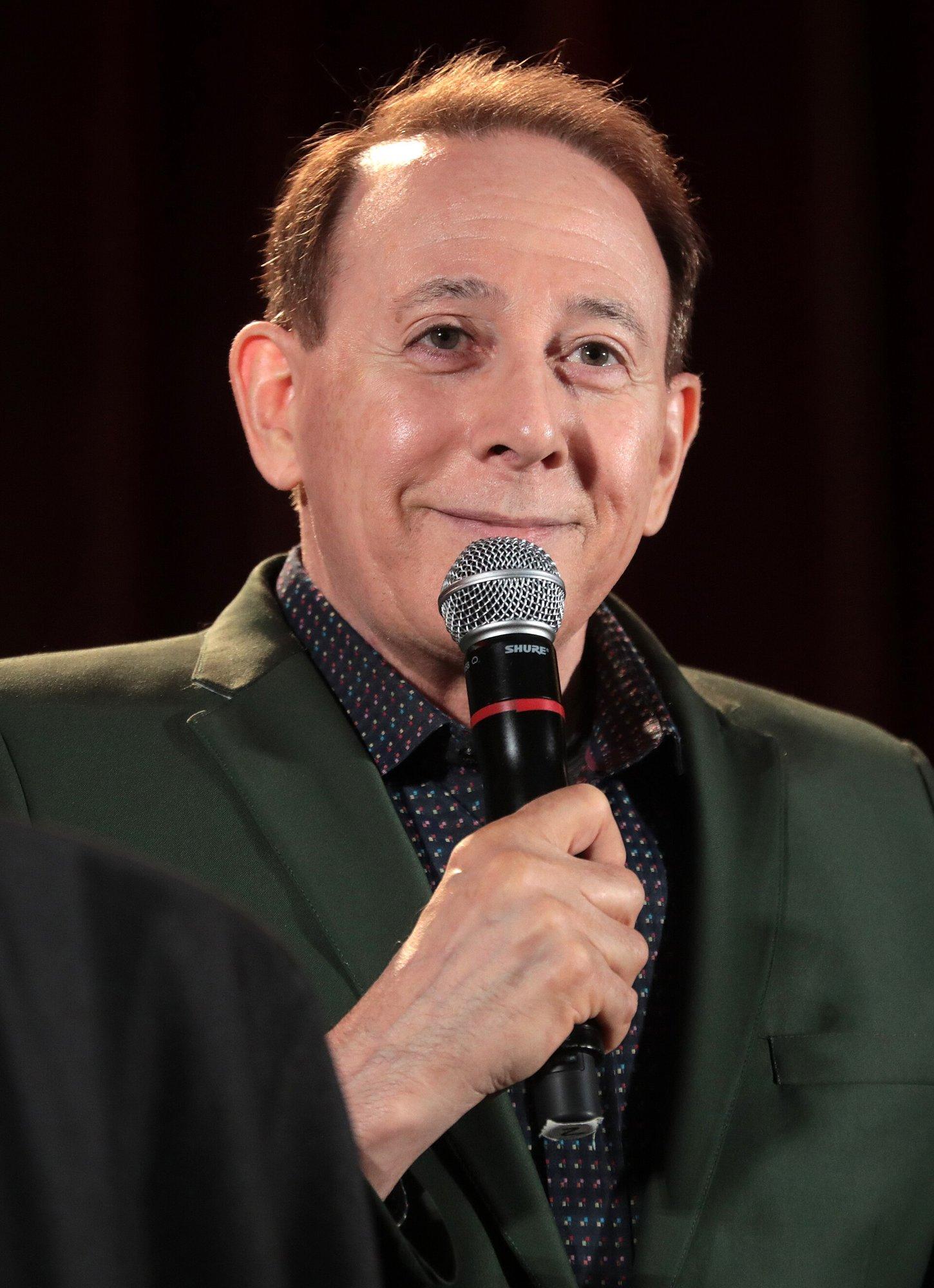
Paul Reubens.

Actor · Comedian · Character Creator

Paul Reubens turned a Groundlings improv fragment into one of American comedy’s strangest durable creations. Pee-wee Herman looked like spontaneous candy-colored chaos, but the career behind him was exacting: sellout stage shows, a hit film, an Emmy-winning children’s series, a long retreat and a late revival, all shaped by how much of himself Reubens chose to reveal.

OBJECTIVE PERSONALITY CLASSIFICATIONFF-Ti/Ne-CP/S(B) #3What does this mean?
PERSONALITY SYSTEMObjective Personality
LEAD FUNCTIONTi · Introverted Thinking
SECOND SAVIOR FUNCTIONNe · Extroverted Intuition
MBTI EQUIVALENTINTP
01 / BEHIND THE CLASSIFICATION

The personality behind the fame.

How does a recorded OPS classification like FF-Ti/Ne-CP/S(B) #3 break down? Walk through nine coins and watch the proposed type take shape. These are deductions from the archived code, not independent evidence of typing accuracy.

Scroll below to see Paul Reubens take shape.

STARTING POINT512 possible OPS typesEach type combines core functions, an animal order, and sexual modalities.
THE FINISH LINEFF-Ti/Ne-CP/S(B) #3One recorded classification, decoded from its components.
Paul Reubens’ HUMAN NEEDS 01—03
01
DECIDER OR OBSERVER?

Decider over Observer

Deciders have more balanced Observer poles in the middle: Control (Oi) and Chaos (Oe). Organizing what's known and handling what's new tend to feel more manageable. People are the harder territory. Self (Di) and Tribe (De) sit at the extremes, so judgment, rejection, approval, and conflict can trigger the strongest reactions.

Reubens described losing the 1980–81 Saturday Night Live slot to Gilbert Gottfried as the moment he thought his career was over. That is people-weight in a very exposed form: another person’s selection suddenly feels like a verdict with an audience attached. The strength is that he turned comparison into invention, borrowing money and building The Pee-wee Herman Show instead of fading out. The blind spot is how quickly human judgment can become existential. When the room chooses someone else, the risk is reading a career setback as a total statement about who gets to matter.

D
02
SELF OR TRIBE?

Di · Self over De · Tribe

Self (Di) is the stronger deciding pole. They check decisions against their own values or reasons first: what makes sense to me, what feels right to me? The strength is independent conviction; the recurring friction is the Tribe (De)—other people's standards, feedback, and expectations. As the portrait unfolds, notice how Self takes the lead.

When Warner Bros. approved a director for Pee-wee’s Big Adventure, Reubens refused the fit and insisted on finding someone who matched his vision, landing on Tim Burton after seeing Frankenweenie. That is Self over Tribe in a useful, concrete form: a private standard held firm under studio pressure. The upside is unmistakable authorship. Pee-wee did not arrive by committee. The growth cost is that a strong inner verdict can make other people’s preferences look disposable too quickly, even when collaboration might improve the final shape.

Di
03
GATHER OR ORGANIZE?

Oe · Gather over Oi · Organize

Gather (Oe) leads with new information, experiences, and possibilities. Its strength is curiosity and adaptability; the recurring friction is narrowing the options and settling into what is already known. Another layer of the personality portrait comes into focus.

Pee-wee Herman was not copied from one clean source. Reubens pulled pieces from a childhood harmonica brand, an energetic boy named Herman, a cartoon voice from Life with Father, circus atmosphere in Sarasota and Groundlings improv. Later he bounced between stage, HBO, film, Saturday-morning television, Broadway and Netflix. Gather-first thrives on that expanding field of options. The strength is range. The blind spot is selectivity: ideas multiply faster than a life can execute them, and projects like Meet the Muckles can swell until possibility becomes expense and delay.

Oe
FIRST THREE COINSD + Di + Oe

These establish the preferred human needs in the OPS framework.

Paul Reubens’ FUNCTIONS 04—05
04
FEELING OR THINKING?

Thinking · T over Feeling · F

Thinking (T) evaluates decisions through reasons, logic, and what works—not a lack of emotion. Its strength is analytical consistency; Feeling (F) provides balance through values, meaning, and the human consequences of a decision. Combined with Self (Di), this forms the recorded Savior Ti.

Reubens ran Pee-wee less like a mood than a design problem. He spotted Burton as the right director partly through style and art direction, negotiated unusual creative control from CBS, and built Playhouse as fast, visual children’s TV that “never talked down” to its audience. Ti gives that internal engineering: what are the rules, what fits, what breaks the mechanism? The strength is precision inside apparent silliness. The cost is that a personally coherent system can stay so self-contained that other people’s interpretations or practical objections arrive late, as noise rather than useful data.

T → Ti
05
SENSING OR INTUITION?

Intuition · N over Sensing · S

Intuition (N) focuses on concepts, patterns, and what information might mean. Sensing (S) balances it through observable facts, physical detail, and direct experience. Combined with Gather (Oe), this gives the recorded Savior Ne.

He could look at Warner Bros. executives riding bikes and suddenly realize the movie should be about a stolen bicycle. That leap is more revealing than simply calling him eccentric. Ne spots the hidden route between unrelated details and builds a world around it. It also helps explain how a failed improv exercise at the Groundlings became an enduring comic mythology. The strength is originality that does not need a literal template. The cost is that a brilliant conceptual turn still has to survive budgets, aging, audience shifts and the blunt reality that not every inspired idea deserves its own empire.

N → Ne
THE TWO SAVIOR FUNCTIONSTi / Ne

Opposing functions: Fe and Si.

Paul Reubens’ ANIMAL STACK 06—07
06
CONSUME OR BLAST?

Consume over Blast

Consume gathers information for internal processing; Blast organizes and communicates information. The recorded order is Consume → Play → Sleep → Blast. This comparison follows their positions in that stack.

Before Pee-wee looked effortless, Reubens had spent years absorbing material: circus memories, old children’s shows, Lucy reruns, improv experiments, visual details, props, voices and later even collections of fake food and lamps. Consume gives him a deep reservoir to draw from, which is why the character felt oddly complete from the start. Blast sits on the other side of that gift. The growth cost is simple and uncomfortable: gathering more texture can postpone saying plainly what the project is, where it is going, and what needs to be decided now.

C > B
07
PLAY OR SLEEP?

Play over Sleep

Play emphasizes external real-time engagement; Sleep emphasizes internal processing. The recorded stack places Play earlier.

Reubens did not build Pee-wee alone in a sealed room. Phil Hartman helped shape the character, John Paragon helped write the show, the Groundlings sharpened the act, and later talk-show appearances in character fed the public electricity around him. Play coming before Sleep gives him a strength in discovering material through live interaction and ensemble momentum. The tradeoff is that private consolidation can lag behind the action. A persona can keep moving, touring and improvising long after the quieter question appears: what still belongs, and what needs to change before the next return?

P > S
Paul Reubens’ ANIMAL ORIENTATION 08—09
08
INFO OR ENERGY DOMINANT?

Energy over Info

Energy dominant means Play and Sleep are both in the top three: there is access to expending energy through engagement and conserving it through internal processing. Blast last leaves the information side uneven—Consume may gather far more than gets communicated.

His recorded pattern lands on Energy dominance, which fits the alternating rhythm of intense outward performance and strategic retreat. Reubens could spend years publicly inhabiting Pee-wee, then drop into a low-profile stretch of writing, collecting and recalibrating before resurfacing in Broadway or Netflix revivals. That balance of active engagement and private regrouping is a real strength. The missing piece is not more curiosity; it is Blast at the bottom. The bottleneck appears when all the imagination, craft and stored material still need a direct, simplified explanation that other people can instantly follow.

Energy
09
INTROVERSION OR EXTROVERSION?

Introversion over Extroversion

The last animal, Blast, determines this OPS coin: Play or Blast last means Introversion; Consume or Sleep last means Extroversion. This describes animal orientation, not sociability or shyness.

This Introversion coin does not mean the man behind Pee-wee lacked stage presence. It means Blast comes last: Consume, Play and Sleep are easier to access than broadcasting a settled message. Reubens could command a theater, a children’s show or a late-night set, yet he also spent years hiding his own name behind the character and only later giving interviews as himself. The strength is a rich private buffer behind the performance. The blind spot is waiting too long to state conclusions plainly as Paul Reubens rather than letting the persona do all the talking.

I
Sexual Modalities

The four sexual modalities.

OPS uses masculine/feminine sensory and extroverted-deciding distinctions as framework-specific terms, not gender categories. The four modalities are already included in the original 512 types. The recorded modality is FF · Tester.

MM KinestheticMasculine Sensory · Masculine De
MF AudioMasculine Sensory · Feminine De
FF RECORDED MODALITYTesterFeminine Sensory · Feminine De
FM VisualFeminine Sensory · Masculine De
ADDITIONAL LAYER · SOCIAL TYPE

The four social types.

Social types are an additional layer on top of the original Objective Personality classification, introduced later in OPS research. They describe two proposed social preference coins: Flex vs. Friends and Generalize vs. Specialize. The combination and priority of these preferences produce four social types. Paul Reubens's recorded social type is #3.

SOCIAL #1 #1Flex · Generalize
SOCIAL #2 #2Generalize · Friends
SOCIAL #3 RECORDED SOCIAL TYPE#3Specialize · Flex
SOCIAL #4 #4Friends · Specialize
COMPLETE RECORDED OPS TYPE · MODALITY INCLUDED + SOCIAL TYPEFF-Ti/Ne-CP/S(B) #3

Ti leads, Ne supports, and the animal stack is Consume → Play → Sleep → Blast.

THE FINISHED PORTRAIT · ALL NINE COINS REVEALED

Paul Reubens's complete function and animal stack

ConsumePlaySleepBlastmTimNefSifFe
FF-Ti/Ne-CP/S(B) #3DOUBLE ACTIVATED · CONSUMEExplore the Interactive Coin Builder →
THE PAUL REUBENS LENS

The man inside the gray suit

For a decade, Reubens made public appearances and gave interviews as Pee-wee Herman, asking audiences to treat the character like a real person. That stunt worked because the performer underneath was not random at all. The candy-colored anarchist on screen came from a maker who controlled costume, pacing, venue and public access with unusual care.

Ti/Ne gave him an enviable comic engine: build an internal system, then keep finding new conceptual angles for it. That is how a small Groundlings bit could expand into a film, a Playhouse, Broadway and a Netflix revival. The limit is that a brilliant private framework can keep proliferating possibilities while delaying the blunt, public simplification that collaborators, studios or audiences need from the person behind the bit.

As a Decider and Double Observer, Reubens reads as more thrown by people, comparison and social judgment than by the ordinary unpredictability of circumstances. He could navigate changing formats and revive old material, but the human side carried more charge. The neglected Fe side of the equation asks for clearer shared signaling: not just what makes sense to him, but what message other people are actually receiving from him.

Consume → Play → Sleep → Blast shows the final pressure point. Blast last can leave the direct takeaway underexplained while the character, references and performance stay vivid. The balancing move is not to become less strange. It is to keep the imaginative world intact while naming the point more explicitly—onstage, in development, or in interviews—so the audience does not have to reverse-engineer the man from the costume.

Want to understand the Savior and Demon states behind these nine coins? Explore the complete explanation, visual examples, and typing principles on our Methodology page →

02 / KEEP EXPLORING

Different faces. Familiar patterns.

Explore other celebrities with related recorded OPS classifications. Related functions are not necessarily exact type matches.

Discover Type Twins
YOUR TURN

Curious about your own type?

Discover how your own personality might be classified through Objective Personality.

Get objectively typed
Paul Reubens's Personality Type & OPS Profile | The Personality Atlas