The Personality Atlas
THE CELEBRITY PERSONALITY ARCHIVE / TECHNOLOGY

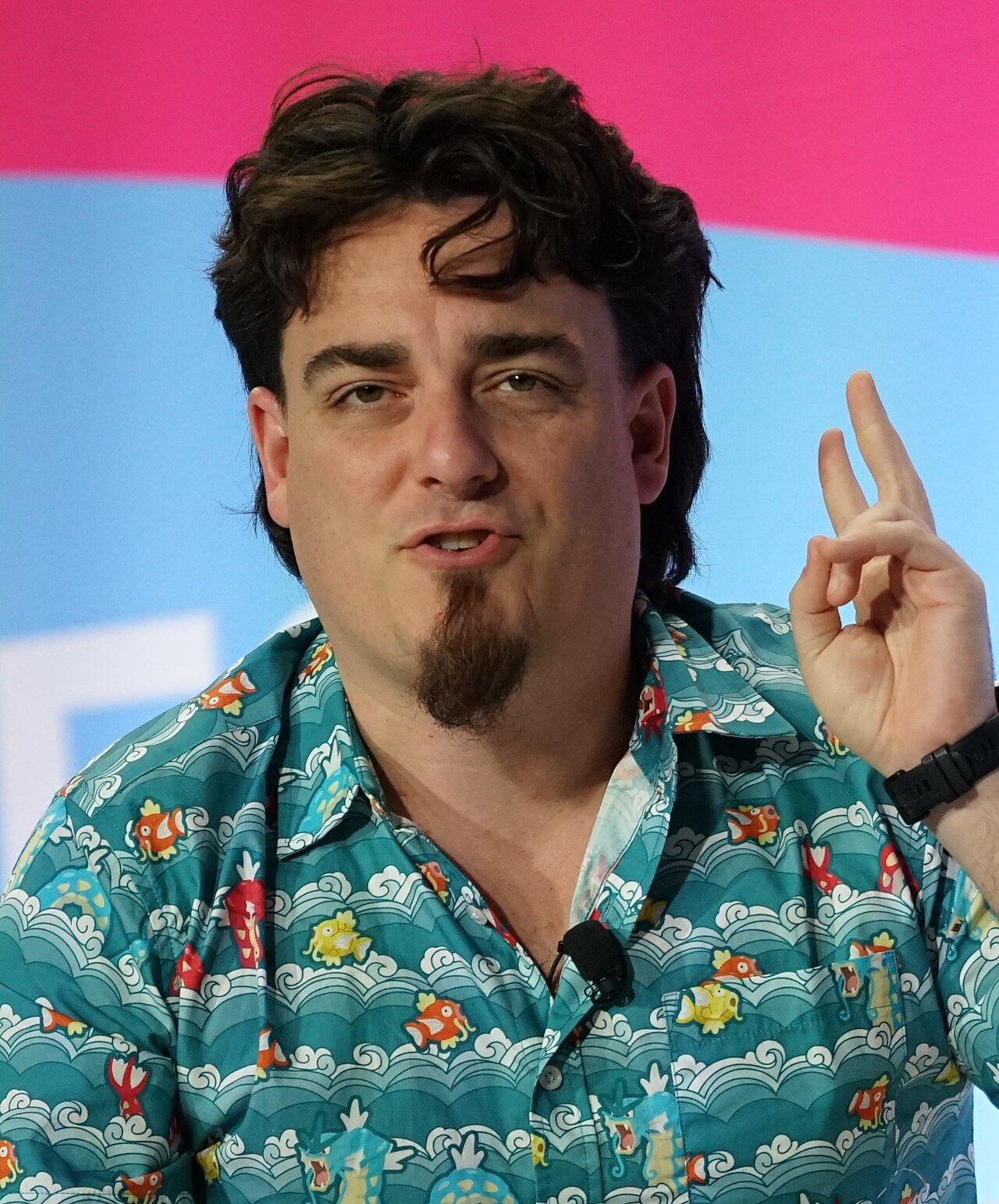
Palmer Luckey.

Entrepreneur · Oculus founder · Anduril executive

Palmer Luckey made the garage-inventor myth feel annoyingly literal: a homeschooled teenager in Long Beach building VR headsets, reviving a dormant industry with Oculus, then pivoting into defense technology at Anduril. The public image is half barefoot tinkerer, half systems provocateur—someone who would rather attack an unsolved technical constraint than wait for permission from a room already committed to the old way.

OBJECTIVE PERSONALITY CLASSIFICATIONMF-Ne/Ti-CP/B(S) #1What does this mean?
PERSONALITY SYSTEMObjective Personality
LEAD FUNCTIONNe · Extroverted Intuition
SECOND SAVIOR FUNCTIONTi · Introverted Thinking
MBTI EQUIVALENTENTP
01 / BEHIND THE CLASSIFICATION

The personality behind the fame.

How does a recorded OPS classification like MF-Ne/Ti-CP/B(S) #1 break down? Walk through nine coins and watch the proposed type take shape. These are deductions from the archived code, not independent evidence of typing accuracy.

Scroll below to see Palmer Luckey take shape.

STARTING POINT512 possible OPS typesEach type combines core functions, an animal order, and sexual modalities.
THE FINISH LINEMF-Ne/Ti-CP/B(S) #1One recorded classification, decoded from its components.
Palmer Luckey’s HUMAN NEEDS 01—03
01
DECIDER OR OBSERVER?

Observer over Decider

Observers have more balanced Decider poles in the middle: Self (Di) and Tribe (De). Their own perspective and other people's perspectives tend to be easier to navigate. Things are the harder territory. Control (Oi) and Chaos (Oe) sit at the extremes, so disrupted plans, uncertainty, and a changing world can trigger the strongest reactions.

When Luckey started building headsets at 16, the problem was not a lack of opinions; it was low contrast, high latency, narrow field of view, bulk, and cost. He answered by building more than 50 displays and testing reality until the hardware improved. That is Observer friction: the world is stubborn, the constraints are real, and progress comes from wrestling the variables. The strength is persistence with messy external problems. The blind spot is assuming every bottleneck yields to another iteration, when some advances require accepting a tradeoff instead of endlessly optimizing it.
O
02
SELF OR TRIBE?

Di · Self over De · Tribe

Self (Di) is the stronger deciding pole. They check decisions against their own values or reasons first: what makes sense to me, what feels right to me? The strength is independent conviction; the recurring friction is the Tribe (De)—other people's standards, feedback, and expectations. As the portrait unfolds, notice how Self takes the lead.

Luckey’s public career repeatedly shows an internal standard that does not wait for group approval. He kept the Rift moving out of his parents’ garage, lent a prototype to John Carmack free of charge, stayed hands-on across engineering and marketing, and later pursued defense technology despite obvious cultural pushback from parts of Silicon Valley. Self over Tribe can be a major asset in frontier work: someone has to back the idea before consensus exists. The cost is relational fallout. A conviction that feels straightforward internally can still collide hard with partners, employees, or audiences using a different standard.

Di
03
GATHER OR ORGANIZE?

Oe · Gather over Oi · Organize

Gather (Oe) leads with new information, experiences, and possibilities. Its strength is curiosity and adaptability; the recurring friction is narrowing the options and settling into what is already known. Another layer of the personality portrait comes into focus.

Before Oculus became a $2 billion acquisition, Luckey had already bounced through electronics projects, portabilization forums, USC mixed-reality lab work, iPhone repair, and headset prototypes with wildly different features. That pattern fits Gather over Organize: keep sampling, keep testing, keep opening new doors until something unexpectedly clicks. The strength is range. He can pull from hobbyist culture, military research, gaming communities, and consumer hardware without treating any one lane as final. The growth cost is narrowing. A career built on possibilities still has to decide which possibility deserves the next decade, not just the next interesting week.

Oe
FIRST THREE COINSO + Di + Oe

These establish the preferred human needs in the OPS framework.

Palmer Luckey’s FUNCTIONS 04—05
04
FEELING OR THINKING?

Thinking · T over Feeling · F

Thinking (T) evaluates decisions through reasons, logic, and what works—not a lack of emotion. Its strength is analytical consistency; Feeling (F) provides balance through values, meaning, and the human consequences of a decision. Combined with Self (Di), this forms the recorded Savior Ti.

Luckey’s Thinking side shows up most clearly in his obsession with mechanism. Oculus was not sold as a mood board; it was sold through specifics—latency, field of view, weight, stereoscopy, controllers, cost-effective systems. Ti’s advantage is ruthless internal logic: does the design actually make sense from the inside out? That makes him unusually dangerous in technical fields where vague enthusiasm burns money. The blind spot is that coherent reasoning does not erase outside frameworks. Contracts, institutional expectations, and public interpretation can still bite even when the engineering case feels airtight to the person making it.

T → Ti
05
SENSING OR INTUITION?

Intuition · N over Sensing · S

Intuition (N) focuses on concepts, patterns, and what information might mean. Sensing (S) balances it through observable facts, physical detail, and direct experience. Combined with Gather (Oe), this gives the recorded Savior Ne.

It took a strong Intuition tilt to look at early-2010s virtual reality—still associated with bulky failures—and see not a dead niche but a coming platform. The same forward-leaning pattern later shows up in autonomous defense systems at Anduril and even the relaunch of ModRetro around revived hardware. Ne’s strength is seeing the opening before it looks obvious. The cost is appetite. If every frontier contains another promising angle, then settling into maintenance, repetition, and incremental polish can feel suspiciously small, even when that quieter work is what lets the bigger vision endure.

N → Ne
THE TWO SAVIOR FUNCTIONSNe / Ti

Opposing functions: Si and Fe.

Palmer Luckey’s ANIMAL STACK 06—07
06
CONSUME OR BLAST?

Consume over Blast

Consume gathers information for internal processing; Blast organizes and communicates information. The recorded order is Consume → Play → Blast → Sleep. This comparison follows their positions in that stack.

Long before Oculus had a clean mainstream pitch, Luckey was absorbing everything he could: studying why head-mounted displays failed, posting progress on MTBS3D, and iterating through dozens of prototypes. Consume leads that pattern. The gift is depth earned the slow way; he did not revive VR by guessing. He had an unusually rich private library of firsthand problems and fixes. The cost of Consume over Blast is that one more round of input can keep feeling useful even after the real need has shifted to a sharper public takeaway, a firmer decision, or a simpler message.

C > B
07
PLAY OR SLEEP?

Play over Sleep

Play emphasizes external real-time engagement; Sleep emphasizes internal processing. The recorded stack places Play earlier.

Once the Rift caught fire, Luckey’s second animal showed itself in motion. He demoed at PAX, Gamescom, and QuakeCon, lent hardware to Carmack, and let real-time interaction with enthusiasts, developers, and press accelerate the product’s visibility. Play before Sleep favors testing things live with other people instead of waiting for perfect internal closure. That creates speed and market contact. The cost is recovery. External momentum can become its own drug, making it harder to step back, digest what just happened, and separate the useful signal from the adrenaline of being in the middle of it.

P > S
Palmer Luckey’s ANIMAL ORIENTATION 08—09
08
INFO OR ENERGY DOMINANT?

Info over Energy

Info dominant means Consume and Blast are both in the top three: gathering and communicating information are more balanced. Sleep last leaves the energy side uneven—Play can keep engagement going without enough private recovery.

Luckey’s stack is Info-dominant, and his public record makes that easy to picture. He gathers technical input, bounces it through people, then packages it into a product, demo, company, or contract pitch. Oculus Kickstarter, trade-show evangelism, and Anduril announcements all ride that information loop. The advantage is throughput: ideas do not stay trapped in his head for long. The void comes from the missing fourth animal. With Sleep last, the danger is not laziness or lack of engagement; it is moving so continuously between learning and broadcasting that private consolidation, recovery, and slower internal calibration get shortchanged.

Info
09
INTROVERSION OR EXTROVERSION?

Extroversion over Introversion

The last animal, Sleep, determines this OPS coin: Play or Blast last means Introversion; Consume or Sleep last means Extroversion. This describes animal orientation, not sociability or shyness.

OPS Extroversion here does not mean Luckey is merely sociable, loud, or publicity-hungry. It means Sleep sits last, so the least natural move is withdrawing long enough to settle on a private conclusion before reentering the stream. His career repeatedly advances through contact with the outside world: forums, conventions, collaborators, investors, government contracts, public statements. That outward orientation helps frontier ideas gain traction. The growth cost is pace. If the world keeps supplying new inputs and demands, quiet integration can look optional right up until the lack of it starts muddying judgment, priorities, or stamina.

E
Sexual Modalities

The four sexual modalities.

OPS uses masculine/feminine sensory and extroverted-deciding distinctions as framework-specific terms, not gender categories. The four modalities are already included in the original 512 types. The recorded modality is MF · Audio.

MM KinestheticMasculine Sensory · Masculine De
MF RECORDED MODALITYAudioMasculine Sensory · Feminine De
FF TesterFeminine Sensory · Feminine De
FM VisualFeminine Sensory · Masculine De
ADDITIONAL LAYER · SOCIAL TYPE

The four social types.

Social types are an additional layer on top of the original Objective Personality classification, introduced later in OPS research. They describe two proposed social preference coins: Flex vs. Friends and Generalize vs. Specialize. The combination and priority of these preferences produce four social types. Palmer Luckey's recorded social type is #1.

SOCIAL #1 RECORDED SOCIAL TYPE#1Flex · Generalize
SOCIAL #2 #2Generalize · Friends
SOCIAL #3 #3Specialize · Flex
SOCIAL #4 #4Friends · Specialize
COMPLETE RECORDED OPS TYPE · MODALITY INCLUDED + SOCIAL TYPEMF-Ne/Ti-CP/B(S) #1

Ne leads, Ti supports, and the animal stack is Consume → Play → Blast → Sleep.

THE FINISHED PORTRAIT · ALL NINE COINS REVEALED

Palmer Luckey's complete function and animal stack

ConsumePlayBlastSleepfNemTifFemSi
MF-Ne/Ti-CP/B(S) #1DOUBLE ACTIVATED · PLAYExplore the Interactive Coin Builder →
THE PALMER LUCKEY LENS

The garage futurist with no pause button

The Palmer Luckey public image is almost cartoonishly specific: Hawaiian shirts, bare feet, a garage-built headset, then a Time cover and a multibillion-dollar sale. But behind the memeable founder aesthetic is someone who kept attacking stubborn technical limits until a dead-looking category suddenly looked commercially inevitable.

His Ne/Ti saviors give him a real advantage in frontier industries. Ne keeps spotting the opening others dismiss—consumer VR, autonomous defense systems, retro hardware revival—while Ti keeps pulling the mechanism apart until it makes internal sense. That combination is formidable. Its limit is that a technically satisfying model can tempt him to move faster than institutions, partners, or public context are ready to move.

As an Observer and Double Decider, Luckey is more naturally preoccupied with uncertain systems and changing circumstances than with people drama itself. That pairing often handles the self-versus-tribe tug better than the chaos-versus-control tug. The neglected Si opposite his lead Ne is the quieter discipline of standardizing, repeating, and trusting a settled template instead of chasing the next variable or exception.

Consume → Play → Blast → Sleep puts Sleep last, so the imbalance is not a lack of ideas or public engagement; it is the difficulty of stopping the loop long enough to consolidate privately. The useful correction is concrete: preserve the experimentation, but build protected review time after launches and announcements so the next move is chosen, not merely accelerated into.

Want to understand the Savior and Demon states behind these nine coins? Explore the complete explanation, visual examples, and typing principles on our Methodology page →

02 / KEEP EXPLORING

Different faces. Familiar patterns.

Explore other celebrities with related recorded OPS classifications. Related functions are not necessarily exact type matches.

Discover Type Twins
YOUR TURN

Curious about your own type?

Discover how your own personality might be classified through Objective Personality.

Get objectively typed
Palmer Luckey's Personality Type & OPS Profile | The Personality Atlas