The Personality Atlas
THE CELEBRITY PERSONALITY ARCHIVE / SCIENCE & MEDIA

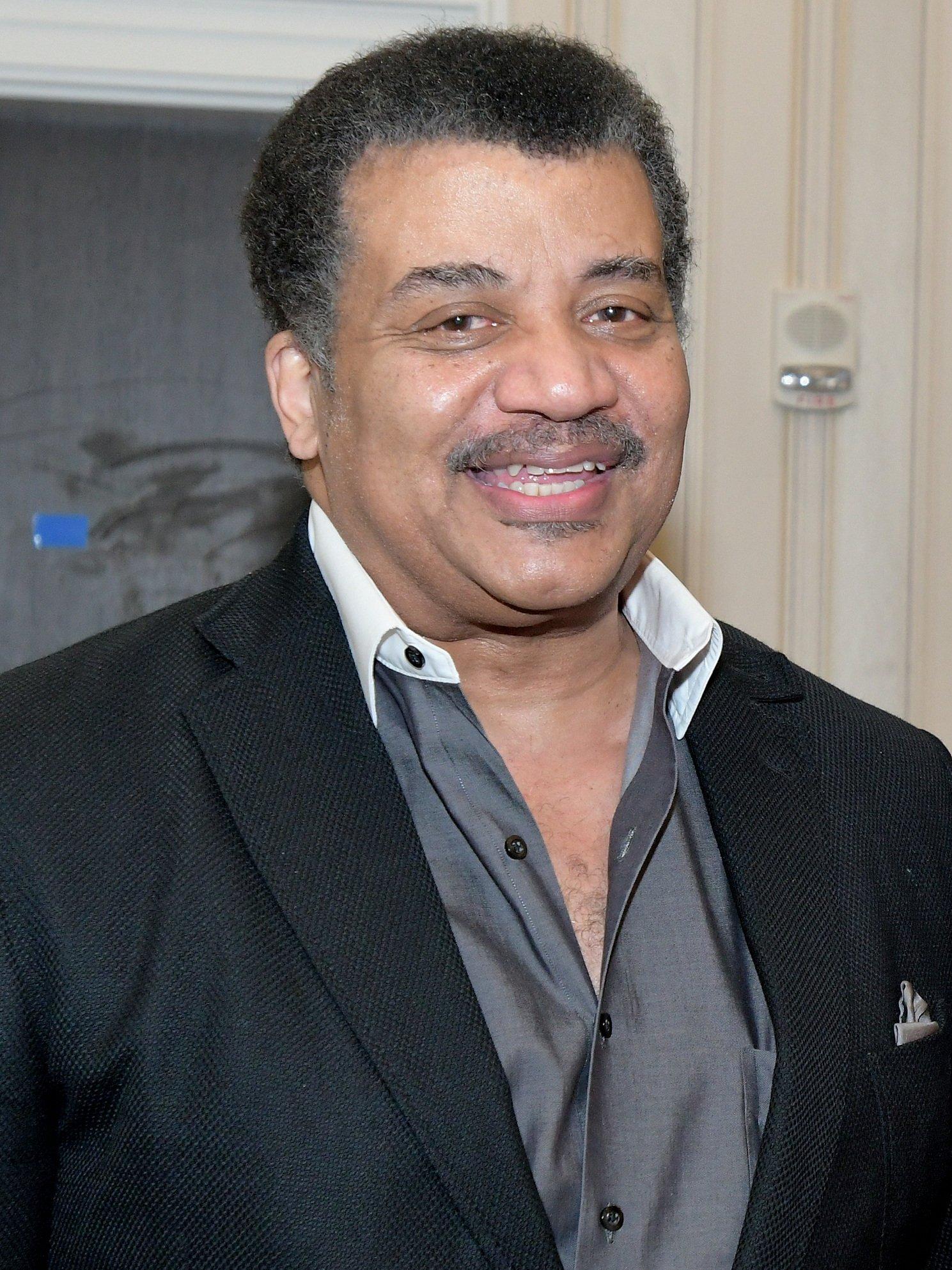
Neil DeGrasse Tyson.

Astrophysicist · Author · Science Host

Neil deGrasse Tyson turned the Hayden Planetarium, Pluto arguments, Cosmos, and StarTalk into one long campaign to make astrophysics feel less like homework and more like a live public event. The signature style is fast, funny and exacting: a Bronx-raised researcher who can move from Senate testimony to Manhattanhenge without lowering the intellectual bar.

OBJECTIVE PERSONALITY CLASSIFICATIONMM-Ne/Ti-CP/B(S)What does this mean?
PERSONALITY SYSTEMObjective Personality
LEAD FUNCTIONNe · Extroverted Intuition
SECOND SAVIOR FUNCTIONTi · Introverted Thinking
MBTI EQUIVALENTENTP
01 / BEHIND THE CLASSIFICATION

The personality behind the fame.

How does a recorded OPS classification like MM-Ne/Ti-CP/B(S) break down? Walk through nine coins and watch the proposed type take shape. These are deductions from the archived code, not independent evidence of typing accuracy.

Scroll below to see Neil DeGrasse Tyson take shape.

STARTING POINT512 possible OPS typesEach type combines core functions, an animal order, and sexual modalities.
THE FINISH LINEMM-Ne/Ti-CP/B(S)One recorded classification, decoded from its components.
Neil DeGrasse Tyson’s HUMAN NEEDS 01—03
01
DECIDER OR OBSERVER?

Observer over Decider

Observers have more balanced Decider poles in the middle: Self (Di) and Tribe (De). Their own perspective and other people's perspectives tend to be easier to navigate. Things are the harder territory. Control (Oi) and Chaos (Oe) sit at the extremes, so disrupted plans, uncertainty, and a changing world can trigger the strongest reactions.

Tyson’s most public fights have rarely been about whether people like him. The flashpoint is usually the map itself: how planets should be classified, how space should be funded, how the public should understand the universe. His Hayden Planetarium decision to group Pluto with like objects triggered hate mail from children because he challenged a familiar picture of reality. That is classic Observer pressure—circumstances, categories and an unruly external world. The strength is calm curiosity under chaos. The blind spot is underestimating how quickly a factual reframe can become personal for everyone else.
O
02
SELF OR TRIBE?

Di · Self over De · Tribe

Self (Di) is the stronger deciding pole. They check decisions against their own values or reasons first: what makes sense to me, what feels right to me? The strength is independent conviction; the recurring friction is the Tribe (De)—other people's standards, feedback, and expectations. As the portrait unfolds, notice how Self takes the lead.

When Tyson publicly pushed back on being labeled an atheist and even edited the wording on his Wikipedia entry toward agnostic, he showed a very personal standard for how he wanted to be defined. The same independence appears in his insistence that Pluto be grouped by common properties, not by sentimental habit. Self over Tribe gives him backbone: he can hold a position without waiting for unanimous approval. The growth cost is obvious in his career too. A standard that feels internally precise can still land as brusque, and other people may react to the tone before they ever consider the argument.

Di
03
GATHER OR ORGANIZE?

Oe · Gather over Oi · Organize

Gather (Oe) leads with new information, experiences, and possibilities. Its strength is curiosity and adaptability; the recurring friction is narrowing the options and settling into what is already known. Another layer of the personality portrait comes into focus.

Tyson’s career refuses one lane. He moved from research and lecturing to magazine columns, federal commissions, PBS, StarTalk, and Cosmos, and coined Manhattanhenge by linking a city street grid to Stonehenge. Gather over Organize thrives on that widening field. Another platform, another audience, another angle on the same cosmos: he keeps finding fresh entry points. The strength is range and adaptability. The blind spot is selectivity. When every new channel can carry the message, it becomes harder to decide which format deserves the deepest investment and which tempting possibility should simply be left alone.

Oe
FIRST THREE COINSO + Di + Oe

These establish the preferred human needs in the OPS framework.

Neil DeGrasse Tyson’s FUNCTIONS 04—05
04
FEELING OR THINKING?

Thinking · T over Feeling · F

Thinking (T) evaluates decisions through reasons, logic, and what works—not a lack of emotion. Its strength is analytical consistency; Feeling (F) provides balance through values, meaning, and the human consequences of a decision. Combined with Self (Di), this forms the recorded Savior Ti.

Tyson’s public authority is built less on warmth of consensus than on whether the explanation holds together. His defense of Pluto’s reclassification focused on shared physical categories rather than nostalgia for the ninth-planet story, and his long-running “Merlin” answers turned audience questions into clean logical breakdowns. Thinking here is a strength: he can strip an argument to its structure and show where it fails. The cost is social friction. A person hearing a beloved assumption dismantled may experience the precision as impatience, even when the reasoning itself is solid.

T → Ti
05
SENSING OR INTUITION?

Intuition · N over Sensing · S

Intuition (N) focuses on concepts, patterns, and what information might mean. Sensing (S) balances it through observable facts, physical detail, and direct experience. Combined with Gather (Oe), this gives the recorded Savior Ne.

Manhattanhenge is a perfect Tyson example because it is not just a fact; it is a connection. He noticed a familiar urban event, linked it to Stonehenge, and suddenly millions had a new imaginative handle on astronomy. The same move powers StarTalk and Cosmos, where astrophysics becomes a web of analogies, possibilities and larger implications. Intuition gives him the gift of making the universe feel conceptually alive. Its cost is that big framing can outrun slower concrete grounding. A brilliant pattern still needs enough ordinary detail for other people to follow it all the way through.

N → Ne
THE TWO SAVIOR FUNCTIONSNe / Ti

Opposing functions: Si and Fe.

Neil DeGrasse Tyson’s ANIMAL STACK 06—07
06
CONSUME OR BLAST?

Consume over Blast

Consume gathers information for internal processing; Blast organizes and communicates information. The recorded order is Consume → Play → Blast → Sleep. This comparison follows their positions in that stack.

Before Tyson became one of television’s best-known science communicators, he spent years absorbing and stockpiling material: physics at Harvard, graduate study, research posts, monthly “Universe” essays, and countless public questions answered under “Merlin.” That puts real weight behind Consume over Blast. His strength is depth before declaration; when he speaks, there is usually a large reservoir behind the sentence. The blind spot is familiar to prolific explainers: more intake can always seem useful, and the cleanest final message can be delayed by one more example, one more distinction, one more fascinating side road.

C > B
07
PLAY OR SLEEP?

Play over Sleep

Play emphasizes external real-time engagement; Sleep emphasizes internal processing. The recorded stack places Play earlier.

Play comes earlier than Sleep in the recorded stack, and Tyson’s public career makes that easy to picture. StarTalk pairs scientists with comedians and celebrities; televised appearances turn explanation into a live exchange instead of a sealed lecture. That outward back-and-forth keeps ideas accessible and quick on their feet. The tradeoff is that rapid interaction can reward the sharp response before quieter reflection catches up. Since Consume also comes before Blast, he can stay in motion—taking in, mixing it up, clarifying as he goes—without always pausing long enough to privately settle the final frame.

P > S
Neil DeGrasse Tyson’s ANIMAL ORIENTATION 08—09
08
INFO OR ENERGY DOMINANT?

Info over Energy

Info dominant means Consume and Blast are both in the top three: gathering and communicating information are more balanced. Sleep last leaves the energy side uneven—Play can keep engagement going without enough private recovery.

Tyson lands on the Information side because taking in material and delivering it publicly both sit high in his stack. His career is practically built on that loop: research, columns, books, television, podcast, repeat. The advantage is obvious. He can translate technical material for huge audiences without draining the science out of it. The missing balance comes from Sleep sitting outside the top three. Private consolidation, quiet recovery and letting an idea fully settle can lose ground to the next interview, episode or commission. The cost is not ignorance; it is insufficient internal stillness.

Info
09
INTROVERSION OR EXTROVERSION?

Extroversion over Introversion

The last animal, Sleep, determines this OPS coin: Play or Blast last means Introversion; Consume or Sleep last means Extroversion. This describes animal orientation, not sociability or shyness.

OPS Extroversion here does not mean “good at cocktail parties.” It means the last animal is Sleep, so Tyson’s system tilts toward engaging the world before retreating to prolonged private processing. That fits a life spent hosting StarTalk, fronting Cosmos, serving on national commissions and repeatedly stepping into public arguments about science. The strength is reach: ideas get aired, tested and circulated. The growth edge is different from becoming more social. It is protecting space to slow down, review and digest so that outward fluency does not replace the quieter work of internal consolidation.

E
Sexual Modalities

The four sexual modalities.

OPS uses masculine/feminine sensory and extroverted-deciding distinctions as framework-specific terms, not gender categories. The four modalities are already included in the original 512 types. The recorded modality is MM · Kinesthetic.

MM RECORDED MODALITYKinestheticMasculine Sensory · Masculine De
MF AudioMasculine Sensory · Feminine De
FF TesterFeminine Sensory · Feminine De
FM VisualFeminine Sensory · Masculine De
COMPLETE RECORDED OPS TYPE · MODALITY INCLUDEDMM-Ne/Ti-CP/B(S)

Ne leads, Ti supports, and the animal stack is Consume → Play → Blast → Sleep.

THE FINISHED PORTRAIT · ALL NINE COINS REVEALED

Neil DeGrasse Tyson's complete function and animal stack

ConsumePlayBlastSleepfNefTimFemSi
MM-Ne/Ti-CP/B(S)DOUBLE ACTIVATED · PLAYExplore the Interactive Coin Builder →
THE NEIL DEGRASSE TYSON LENS

The showman under the star map

On camera, Tyson can look like pure velocity: the host who can make Pluto, black holes or a tax-dollar argument sound like a bet worth taking. Behind that polish is a Bronx kid so transformed by the Hayden Planetarium that he later returned to run it and rebuild its public face.

His Ne/Ti pairing is the engine. Ne keeps spotting the larger pattern—Manhattanhenge, a cosmic analogy, a new doorway into physics—while Ti insists the explanation survive contact with logic. That combination makes him a formidable translator of science. Its limit is sharpness: a clean model can arrive with less patience for how attached other people are to the older one.

As an Observer and Double Decider, Tyson’s deepest tension is with the shape of reality more than the temperature of the room. Control, chaos, classification and explanation can take center stage while ordinary belonging concerns recede. The neglected function opposite his lead savior is Si, which asks for steadier routines, settled reference points and respect for the familiar facts already on the table.

Consume → Play → Blast → Sleep shows why the public educator arrives so easily and the quiet shutdown comes later. Sleep last can keep him brilliantly engaged while making full internal recovery less natural. The balancing move is specific: preserve the public teaching, but block protected off-air time to write, review and let conclusions cool before the next appearance.

Want to understand the Savior and Demon states behind these nine coins? Explore the complete explanation, visual examples, and typing principles on our Methodology page →

02 / KEEP EXPLORING

Different faces. Familiar patterns.

Explore other celebrities with related recorded OPS classifications. Related functions are not necessarily exact type matches.

Discover Type Twins
YOUR TURN

Curious about your own type?

Discover how your own personality might be classified through Objective Personality.

Get objectively typed
Neil DeGrasse Tyson's Personality Type & OPS Profile | The Personality Atlas