The Personality Atlas
THE CELEBRITY PERSONALITY ARCHIVE / SPACE SCIENCE

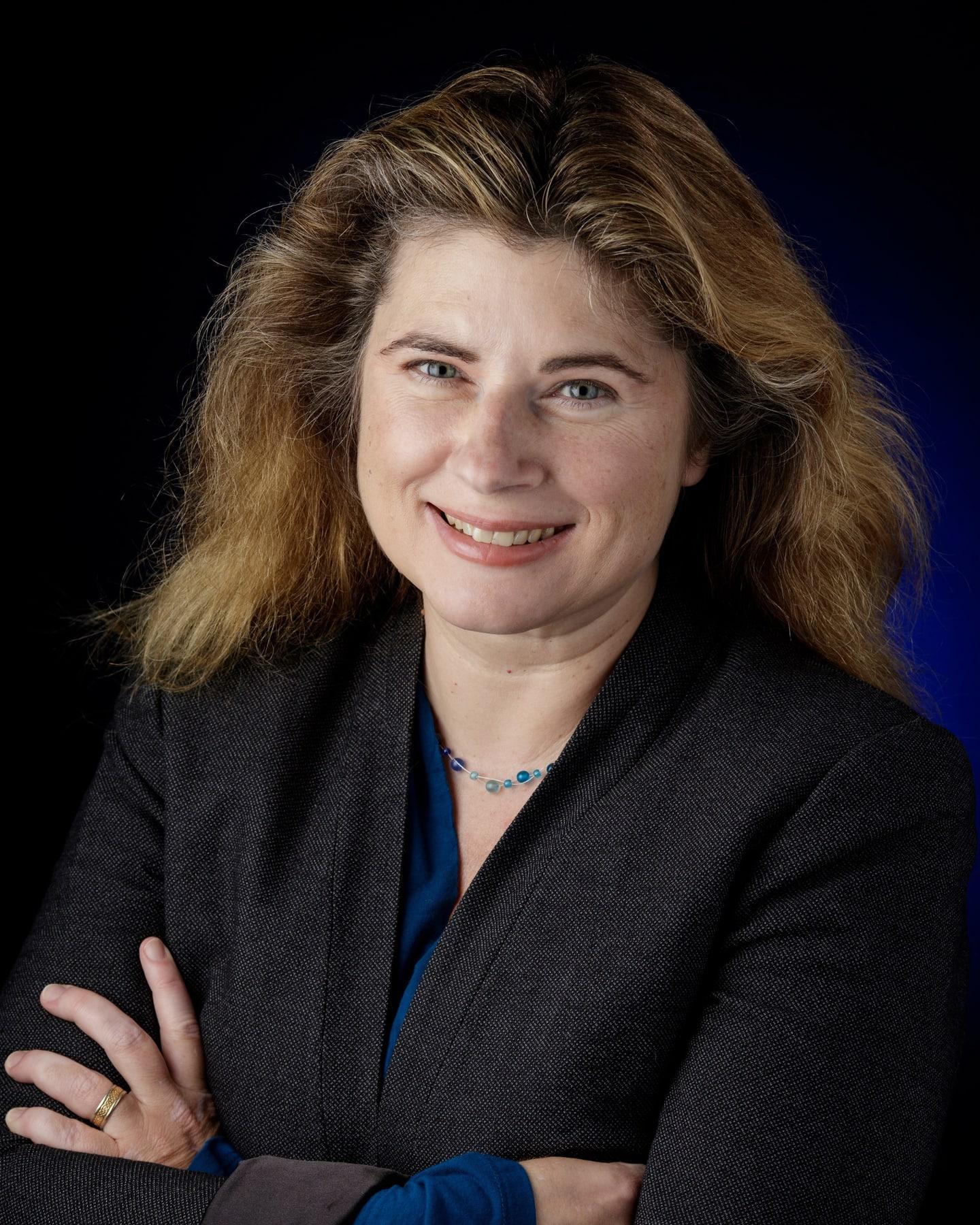
Michelle Thaller.

Astronomer · NASA science communicator

After 27 years at NASA, Michelle Thaller became one of the rare astronomers whose public identity spans real research, mission outreach and camera-ready explanation without sounding canned. From Spitzer education work at Caltech to Goddard science communication, plus regular television and podcast appearances, she has made the cosmos feel less like a museum exhibit and more like a live problem—one answer always opening three more questions.

OBJECTIVE PERSONALITY CLASSIFICATIONFF-Ne/Ti-CP/B(S)What does this mean?
PERSONALITY SYSTEMObjective Personality
LEAD FUNCTIONNe · Extroverted Intuition
SECOND SAVIOR FUNCTIONTi · Introverted Thinking
MBTI EQUIVALENTENTP
01 / BEHIND THE CLASSIFICATION

The personality behind the fame.

How does a recorded OPS classification like FF-Ne/Ti-CP/B(S) break down? Walk through nine coins and watch the proposed type take shape. These are deductions from the archived code, not independent evidence of typing accuracy.

Scroll below to see Michelle Thaller take shape.

STARTING POINT512 possible OPS typesEach type combines core functions, an animal order, and sexual modalities.
THE FINISH LINEFF-Ne/Ti-CP/B(S)One recorded classification, decoded from its components.
Michelle Thaller’s HUMAN NEEDS 01—03
01
DECIDER OR OBSERVER?

Observer over Decider

Observers have more balanced Decider poles in the middle: Self (Di) and Tribe (De). Their own perspective and other people's perspectives tend to be easier to navigate. Things are the harder territory. Control (Oi) and Chaos (Oe) sit at the extremes, so disrupted plans, uncertainty, and a changing world can trigger the strongest reactions.

Thaller’s public life has been built around unruly reality: binary stars, colliding winds, telescope missions and the challenge of explaining a universe that refuses to become simpler because a deadline is near. That puts the core tension in circumstances and complexity more than in social approval. An Observer frame suits a career spent translating what is out there, from Caltech’s Spitzer work to NASA Goddard communication. The strength is staying curious when the facts are messy. The blind spot is letting one more cosmic wrinkle postpone a harder choice about what to emphasize or leave out.

O
02
SELF OR TRIBE?

Di · Self over De · Tribe

Self (Di) is the stronger deciding pole. They check decisions against their own values or reasons first: what makes sense to me, what feels right to me? The strength is independent conviction; the recurring friction is the Tribe (De)—other people's standards, feedback, and expectations. As the portrait unfolds, notice how Self takes the lead.

Moving from Harvard astrophysics to a PhD on close massive binary systems, then into NASA and television, Thaller built credibility on explanations she could stand behind, not on reading the room first. Self over Tribe is not antisocial; it is an internal standard for what counts as solid. That independence helps when a public communicator has to simplify without feeling fake. The cost is that a personally satisfying explanation can still leave collaborators or audiences wanting a clearer bridge. Being right by one’s own standard does not automatically tell other people where to follow.

Di
03
GATHER OR ORGANIZE?

Oe · Gather over Oi · Organize

Gather (Oe) leads with new information, experiences, and possibilities. Its strength is curiosity and adaptability; the recurring friction is narrowing the options and settling into what is already known. Another layer of the personality portrait comes into focus.

Thaller’s resume is almost a map of proliferating channels: staff scientist at IPAC, outreach manager for Spitzer, assistant director for science communication at NASA Goddard, columnist, podcast host, frequent television contributor. Gather over Organize fits that expansion instinct. New platforms and new questions are openings, not interruptions. The strength is range: she can carry astronomy from a research setting into classrooms, studios and headphones without acting as if one format owns the truth. The growth cost is selectivity. Every new avenue creates another demand on time, and curiosity alone does not decide what deserves the next decade.

Oe
FIRST THREE COINSO + Di + Oe

These establish the preferred human needs in the OPS framework.

Michelle Thaller’s FUNCTIONS 04—05
04
FEELING OR THINKING?

Thinking · T over Feeling · F

Thinking (T) evaluates decisions through reasons, logic, and what works—not a lack of emotion. Its strength is analytical consistency; Feeling (F) provides balance through values, meaning, and the human consequences of a decision. Combined with Self (Di), this forms the recorded Savior Ti.

Thaller studied precision measurement of binary stars and later worked on colliding winds in close massive binary systems—fields that punish fuzzy reasoning. That background shows why Thinking fits better than a softer space-enthusiasm stereotype. The advantage is structural clarity: a claim should make mechanical sense, not just sound inspiring on camera. In public communication, that can turn awe into explanation. The limitation is that an airtight model is not automatically a complete message. Viewers and readers may also need pacing, context and a reason to care before the logic lands with full force.

T → Ti
05
SENSING OR INTUITION?

Intuition · N over Sensing · S

Intuition (N) focuses on concepts, patterns, and what information might mean. Sensing (S) balances it through observable facts, physical detail, and direct experience. Combined with Gather (Oe), this gives the recorded Savior Ne.

Across The Universe, How the Universe Works, The Planets and Beyond, Thaller’s public role depends on turning one scientific fact into a larger web of implications. Intuition shows up in that leap from data point to possibility: a star system is not just measured, it becomes a doorway to bigger patterns and questions. The strength is conceptual reach. She can make astronomy feel alive rather than archival. The counterweight is that reality still answers to instruments, measurements and limited time. A compelling idea about the cosmos still has to survive concrete evidence and the boundaries of what can actually be shown.

N → Ne
THE TWO SAVIOR FUNCTIONSNe / Ti

Opposing functions: Si and Fe.

Michelle Thaller’s ANIMAL STACK 06—07
06
CONSUME OR BLAST?

Consume over Blast

Consume gathers information for internal processing; Blast organizes and communicates information. The recorded order is Consume → Play → Blast → Sleep. This comparison follows their positions in that stack.

Before Michelle Thaller became a familiar on-camera explainer, she spent years doing the slower work: Harvard training, doctoral research, staff science roles, and long stretches inside mission-based institutions. That makes Consume the stronger side of this comparison than Blast. The gift is depth earned the hard way. She is not performing borrowed wonder; she has absorbed the material. The catch is that gathering can feel endlessly justified in a field as vast as astronomy. At some point the job changes from learning more to stating the takeaway plainly enough for everyone else to use.

C > B
07
PLAY OR SLEEP?

Play over Sleep

Play emphasizes external real-time engagement; Sleep emphasizes internal processing. The recorded stack places Play earlier.

Thaller did not keep her astronomy work sealed inside papers and internal meetings. She became a frequent on-camera contributor, hosted Orbital Path, and helped lead education and public outreach around the Spitzer Space Telescope. In this comparison, Play lands earlier than Sleep. The strength is live exchange: ideas get tested in public, shaped through conversation, and made usable for other people. The cost is that outward momentum can outrun quieter consolidation. A communicator can stay productively in motion while giving less priority to the private pause that lets a perspective deepen before the next appearance.

P > S
Michelle Thaller’s ANIMAL ORIENTATION 08—09
08
INFO OR ENERGY DOMINANT?

Info over Energy

Info dominant means Consume and Blast are both in the top three: gathering and communicating information are more balanced. Sleep last leaves the energy side uneven—Play can keep engagement going without enough private recovery.

Thaller’s career is a strong public example of Info dominance. She has spent decades doing both sides of the information loop: taking in specialized material as a scientist, then turning it outward through NASA communication, television, podcasts and columns. That combination gives her unusual explanatory leverage. She can absorb technical complexity and make it legible without flattening it into trivia. With Sleep last, the strain is internal recovery and longer private consolidation. The growth edge is protecting time for synthesis before the next demand to explain.

Info
09
INTROVERSION OR EXTROVERSION?

Extroversion over Introversion

The last animal, Sleep, determines this OPS coin: Play or Blast last means Introversion; Consume or Sleep last means Extroversion. This describes animal orientation, not sociability or shyness.

Thaller’s last animal is Sleep, which makes this OPS Extroversion coin—not because she seems socially outgoing, but because the overall pattern places taking in and engaging ahead of extended retreat. A public life spent moving between NASA roles, television appearances, podcasts and columns makes that easy to picture. The strength is external throughput: information keeps moving into shared space instead of staying bottled up in private processing. The blind spot is subtler than fatigue theater. When Sleep is last, reflection can become the part assumed to happen later, after one more interview, article or outreach push.

E
Sexual Modalities

The four sexual modalities.

OPS uses masculine/feminine sensory and extroverted-deciding distinctions as framework-specific terms, not gender categories. The four modalities are already included in the original 512 types. The recorded modality is FF · Tester.

MM KinestheticMasculine Sensory · Masculine De
MF AudioMasculine Sensory · Feminine De
FF RECORDED MODALITYTesterFeminine Sensory · Feminine De
FM VisualFeminine Sensory · Masculine De
COMPLETE RECORDED OPS TYPE · MODALITY INCLUDEDFF-Ne/Ti-CP/B(S)

Ne leads, Ti supports, and the animal stack is Consume → Play → Blast → Sleep.

THE FINISHED PORTRAIT · ALL NINE COINS REVEALED

Michelle Thaller's complete function and animal stack

ConsumePlayBlastSleepmNemTifFefSi
FF-Ne/Ti-CP/B(S)DOUBLE ACTIVATED · PLAYExplore the Interactive Coin Builder →
THE MICHELLE THALLER LENS

The cosmos, explained before it cools.

On television and podcasts, Thaller can sound like the astronomer who makes a huge subject feel graspable without shrinking it. That ease was built inside a long career: research training at Harvard and Georgia State, Spitzer outreach at Caltech, then 27 years at NASA, ending as Goddard’s assistant director for science communication.

Her Ne/Ti pairing connects possibilities and then checks whether the explanation actually holds together. That is a public strength in astronomy communication: she can move from a striking cosmic image to the mechanism behind it. The limit is that a clean model in her head may still need extra narrowing and framing before an audience can carry it with her.

As an Observer and Double Decider, Thaller’s main strain leans toward control, chaos and the endless variables of reality more than people drama or belonging questions. That pairing matters: an Observer is a Double Decider. The neglected function opposite her lead savior is Si, the slower stabilizing reference point that asks what is already known, organized and repeatable.

Consume → Play → Blast → Sleep helps explain the pace. She can gather, engage and teach quickly, while quiet internal recovery sits last. Sleep last does not remove depth; it makes reflection easier to postpone while another interview, column or appearance calls. Balance means scheduling real decompression after major communication runs, then returning with the same curiosity and clarity.

Want to understand the Savior and Demon states behind these nine coins? Explore the complete explanation, visual examples, and typing principles on our Methodology page →

02 / KEEP EXPLORING

Different faces. Familiar patterns.

Explore other celebrities with related recorded OPS classifications. Related functions are not necessarily exact type matches.

Discover Type Twins
YOUR TURN

Curious about your own type?

Discover how your own personality might be classified through Objective Personality.

Get objectively typed
Michelle Thaller's Personality Type & OPS Profile | The Personality Atlas