The Personality Atlas
THE CELEBRITY PERSONALITY ARCHIVE / SCIENCE & MEDIA

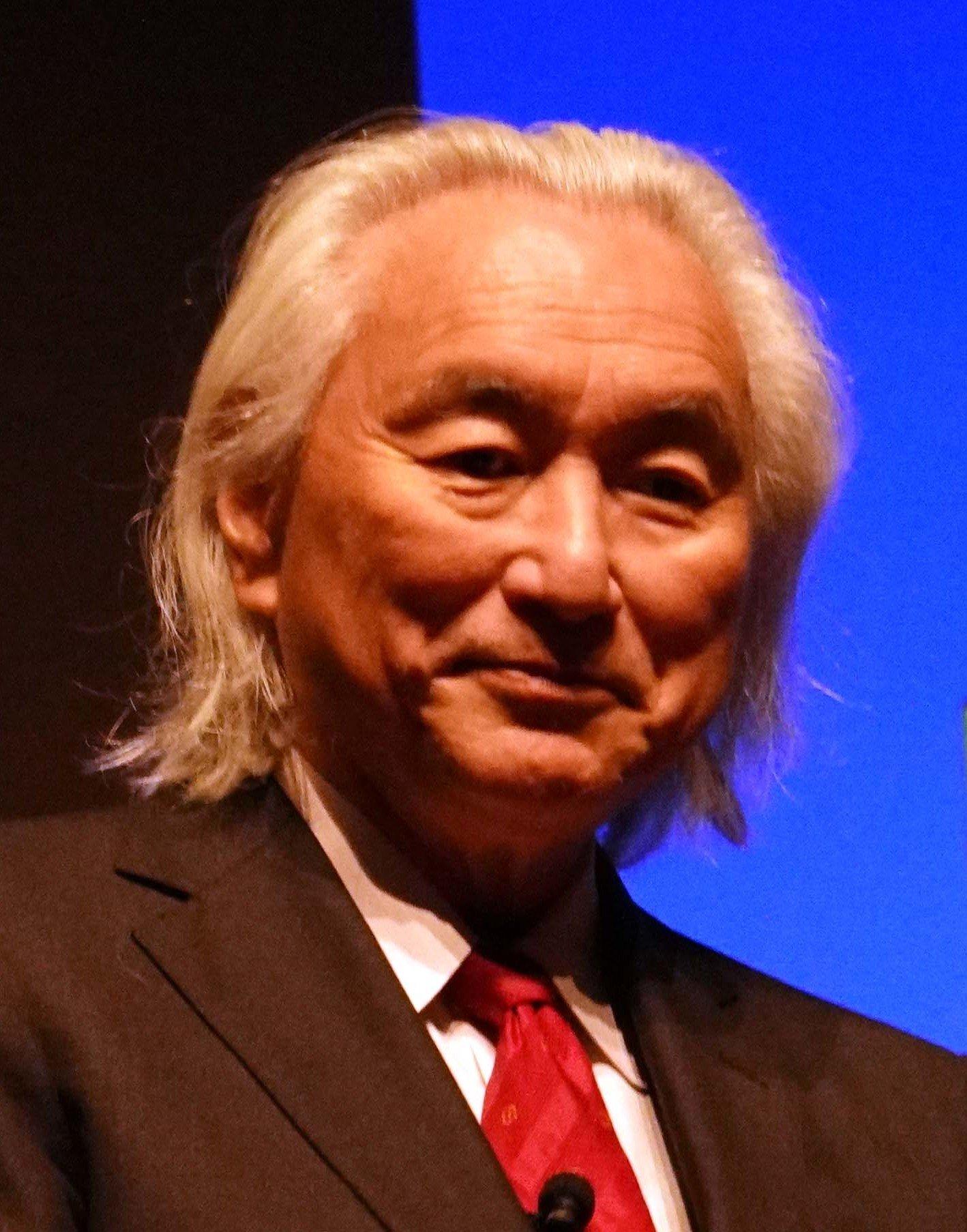
Michio Kaku.

Theoretical Physicist · Science Communicator

Michio Kaku turned theoretical physics into mass-market spectacle without abandoning the professor’s chalkboard roots. From building a homemade atom smasher in high school to hosting BBC and Discovery specials and writing bestsellers on impossible tech and humanity’s future, he has spent a career making vast scientific questions sound urgent, visual and strangely personal.

OBJECTIVE PERSONALITY CLASSIFICATIONFF-Ne/Ti-CP/B(S)What does this mean?
PERSONALITY SYSTEMObjective Personality
LEAD FUNCTIONNe · Extroverted Intuition
SECOND SAVIOR FUNCTIONTi · Introverted Thinking
MBTI EQUIVALENTENTP
01 / BEHIND THE CLASSIFICATION

The personality behind the fame.

How does a recorded OPS classification like FF-Ne/Ti-CP/B(S) break down? Walk through nine coins and watch the proposed type take shape. These are deductions from the archived code, not independent evidence of typing accuracy.

Scroll below to see Michio Kaku take shape.

STARTING POINT512 possible OPS typesEach type combines core functions, an animal order, and sexual modalities.
THE FINISH LINEFF-Ne/Ti-CP/B(S)One recorded classification, decoded from its components.
Michio Kaku’s HUMAN NEEDS 01—03
01
DECIDER OR OBSERVER?

Observer over Decider

Observers have more balanced Decider poles in the middle: Self (Di) and Tribe (De). Their own perspective and other people's perspectives tend to be easier to navigate. Things are the harder territory. Control (Oi) and Chaos (Oe) sit at the extremes, so disrupted plans, uncertainty, and a changing world can trigger the strongest reactions.

Kaku’s public career is built around immense external problems: the unfinished “theory of everything,” climate change, nuclear danger, and the future of cities, energy, and space. Even his origin story starts with Einstein’s unresolved desk and a garage-built atom smasher aimed at the realities of physics, not social approval. That is classic Observer friction: the world refuses to be simplified just because the idea is elegant. The strength is composure in uncertainty. The blind spot is assuming one better model can tame conditions that remain stubbornly messy.
O
02
SELF OR TRIBE?

Di · Self over De · Tribe

Self (Di) is the stronger deciding pole. They check decisions against their own values or reasons first: what makes sense to me, what feels right to me? The strength is independent conviction; the recurring friction is the Tribe (De)—other people's standards, feedback, and expectations. As the portrait unfolds, notice how Self takes the lead.

His decision to turn away from work on future nuclear weapons, despite Edward Teller’s influence, is a cleaner Self-over-Tribe example than any television appearance. Kaku has said anti-nuclear information he heard on Pacifica helped redirect him toward research, teaching, and public education. The advantage of that Di stance is backbone: he can keep an internal standard even when prestige or powerful institutions point elsewhere. The cost is that a personally settled conviction can sound complete before other stakeholders, tradeoffs, or objections have fully entered the conversation.

Di
03
GATHER OR ORGANIZE?

Oe · Gather over Oi · Organize

Gather (Oe) leads with new information, experiences, and possibilities. Its strength is curiosity and adaptability; the recurring friction is narrowing the options and settling into what is already known. Another layer of the personality portrait comes into focus.

Kaku’s career sprawls by design: professor, radio host, TV presenter, blogger, futurist, textbook writer, bestseller author. The same person who co-authored early string field papers also writes Physics of the Future and The Future of Humanity. Gather over Organize shows up in that appetite for fresh angles and new frontiers rather than one carefully fenced intellectual lane. The strength is range; he can translate science across audiences and topics. The blind spot is sprawl. More possibilities keep arriving, and not every promising avenue deserves equal emphasis or airtime.

Oe
FIRST THREE COINSO + Di + Oe

These establish the preferred human needs in the OPS framework.

Michio Kaku’s FUNCTIONS 04—05
04
FEELING OR THINKING?

Thinking · T over Feeling · F

Thinking (T) evaluates decisions through reasons, logic, and what works—not a lack of emotion. Its strength is analytical consistency; Feeling (F) provides balance through values, meaning, and the human consequences of a decision. Combined with Self (Di), this forms the recorded Savior Ti.

Thinking is not a vague “smart person” label here; it is visible in how Kaku frames explanation. Physics of the Impossible works by asking what mechanism would have to exist for time travel, invisibility, or warp drive to move from fantasy toward plausibility. Earlier, his academic work and textbooks did similar labor at a higher technical level. Ti’s strength is internal coherence: the model has to make sense on its own terms. The blind spot is that a logically satisfying framework can outrun public nuance, empirical caution, or the practical limits other people still need spelled out.

T → Ti
05
SENSING OR INTUITION?

Intuition · N over Sensing · S

Intuition (N) focuses on concepts, patterns, and what information might mean. Sensing (S) balances it through observable facts, physical detail, and direct experience. Combined with Gather (Oe), this gives the recorded Savior Ne.

Kaku’s signature move is to take one present fact and explode it into a map of futures: from Einstein’s unfinished theory to The God Equation, from space junk to Type 1 civilization, from current computing to Quantum Supremacy. That is Intuition in public. Ne keeps scanning for what this could become next, not just what it is now. The strength is horizon-setting; he makes science feel open-ended and alive. The cost is that immediate constraints—timelines, engineering details, institutional drag—can sound like footnotes when they are actually the battle.

N → Ne
THE TWO SAVIOR FUNCTIONSNe / Ti

Opposing functions: Si and Fe.

Michio Kaku’s ANIMAL STACK 06—07
06
CONSUME OR BLAST?

Consume over Blast

Consume gathers information for internal processing; Blast organizes and communicates information. The recorded order is Consume → Play → Blast → Sleep. This comparison follows their positions in that stack.

Before the documentaries and bestseller lists, Kaku spent decades absorbing difficult material: Harvard, Berkeley, research papers on superstring theory and quantum mechanics, then textbooks that required real command rather than clever branding. Consume over Blast fits that long apprenticeship. He takes in ideas, frameworks, and evidence until he has a large reservoir to draw from. That is a serious strength for a public educator because the explanation is fed by substance. The tradeoff is familiar: gathering can feel so productive that the sharper act of narrowing and declaring the main point arrives later.

C > B
07
PLAY OR SLEEP?

Play over Sleep

Play emphasizes external real-time engagement; Sleep emphasizes internal processing. The recorded stack places Play earlier.

Once Kaku has material, he does not keep it sealed in a study. Weekly radio, syndicated Science Fantastic, BBC and Discovery specials, constant guest spots, and talks with policymakers all show Play arriving earlier than Sleep. He thinks with the world, not only away from it. The strength is reach: ideas get tested, translated, and circulated through real-time exchange. The blind spot is recovery. A career built on repeated public engagement can leave less room for the slower private consolidation that decides which ideas truly survived contact with an audience.

P > S
Michio Kaku’s ANIMAL ORIENTATION 08—09
08
INFO OR ENERGY DOMINANT?

Info over Energy

Info dominant means Consume and Blast are both in the top three: gathering and communicating information are more balanced. Sleep last leaves the energy side uneven—Play can keep engagement going without enough private recovery.

Kaku’s stack is Info-dominant, and his public life makes that almost embarrassingly easy to see. He gathers enormous amounts of material and then turns it outward through books, documentaries, radio, and interviews. That balance is why he can function as both professor and mass explainer. But the missing pressure point is still Sleep last. When output stays strong, the temptation is to keep feeding the channel—another appearance, another forecast, another synthesis—without enough solitude to refine, prune, or simply let the mind go offstage for a while.

Info
09
INTROVERSION OR EXTROVERSION?

Extroversion over Introversion

The last animal, Sleep, determines this OPS coin: Play or Blast last means Introversion; Consume or Sleep last means Extroversion. This describes animal orientation, not sociability or shyness.

Kaku’s OPS Extroversion does not mean “likes attention” or “talks a lot on TV.” It means Sleep lands last, so external information exchange is easier to prioritize than extended private processing. In practice, that looks like a career built in public: classrooms, radio stations, documentaries, interviews, and future-facing books that keep ideas moving through other people. The strength is obvious—science reaches far beyond the seminar room. The growth cost is less glamorous: stopping the broadcast loop long enough to sit with what does not yet fit, even when the audience is ready for the next big horizon.

E
Sexual Modalities

The four sexual modalities.

OPS uses masculine/feminine sensory and extroverted-deciding distinctions as framework-specific terms, not gender categories. The four modalities are already included in the original 512 types. The recorded modality is FF · Tester.

MM KinestheticMasculine Sensory · Masculine De
MF AudioMasculine Sensory · Feminine De
FF RECORDED MODALITYTesterFeminine Sensory · Feminine De
FM VisualFeminine Sensory · Masculine De
COMPLETE RECORDED OPS TYPE · MODALITY INCLUDEDFF-Ne/Ti-CP/B(S)

Ne leads, Ti supports, and the animal stack is Consume → Play → Blast → Sleep.

THE FINISHED PORTRAIT · ALL NINE COINS REVEALED

Michio Kaku's complete function and animal stack

ConsumePlayBlastSleepmNemTifFefSi
FF-Ne/Ti-CP/B(S)DOUBLE ACTIVATED · PLAYExplore the Interactive Coin Builder →
THE MICHIO KAKU LENS

The futurist who keeps the universe onstage

Kaku’s public image is the smiling futurist who can make warp drives, extraterrestrial life, and civilization-scale forecasts sound like dinner conversation. But that polish sits on a more stubborn story: a teenager building a 2.3 MeV atom smasher in his parents’ garage, then a professor who never stopped treating impossible questions as workable material.

Ne/Ti is a potent combination for that job. Ne keeps opening conceptual doors—parallel worlds, future medicine, quantum revolutions—while Ti wants the inner logic to hold together. The strength is translation without deadening the idea. The limit is that a compelling model can start sounding cleaner than the slow institutions, engineering details, and messy evidence that still decide what survives.

As an Observer and Double Decider, Kaku is not fundamentally stuck on people drama so much as on the scale and uncertainty of the problems themselves. The imbalance leans toward managing possibilities and circumstances over settling into human-scale steadiness. Neglected Si, the opposite of his lead savior Ne, is the reminder that enduring progress still depends on repetition, constraint, and grounded particulars.

Consume → Play → Blast → Sleep explains why his science communication feels so tireless. He gathers, engages, and broadcasts before resting in private consolidation, so Sleep last can turn reflection into the delayed task. The balancing move is not to shrink his reach; it is to deliberately build quieter checkpoints—pause after the next media cycle, narrow one claim, revisit the evidence, and let the idea settle before launching the next future.

Want to understand the Savior and Demon states behind these nine coins? Explore the complete explanation, visual examples, and typing principles on our Methodology page →

02 / KEEP EXPLORING

Different faces. Familiar patterns.

Explore other celebrities with related recorded OPS classifications. Related functions are not necessarily exact type matches.

Discover Type Twins
YOUR TURN

Curious about your own type?

Discover how your own personality might be classified through Objective Personality.

Get objectively typed
Michio Kaku's Personality Type & OPS Profile | The Personality Atlas