The Personality Atlas
THE CELEBRITY PERSONALITY ARCHIVE / FILM, STAGE & TELEVISION

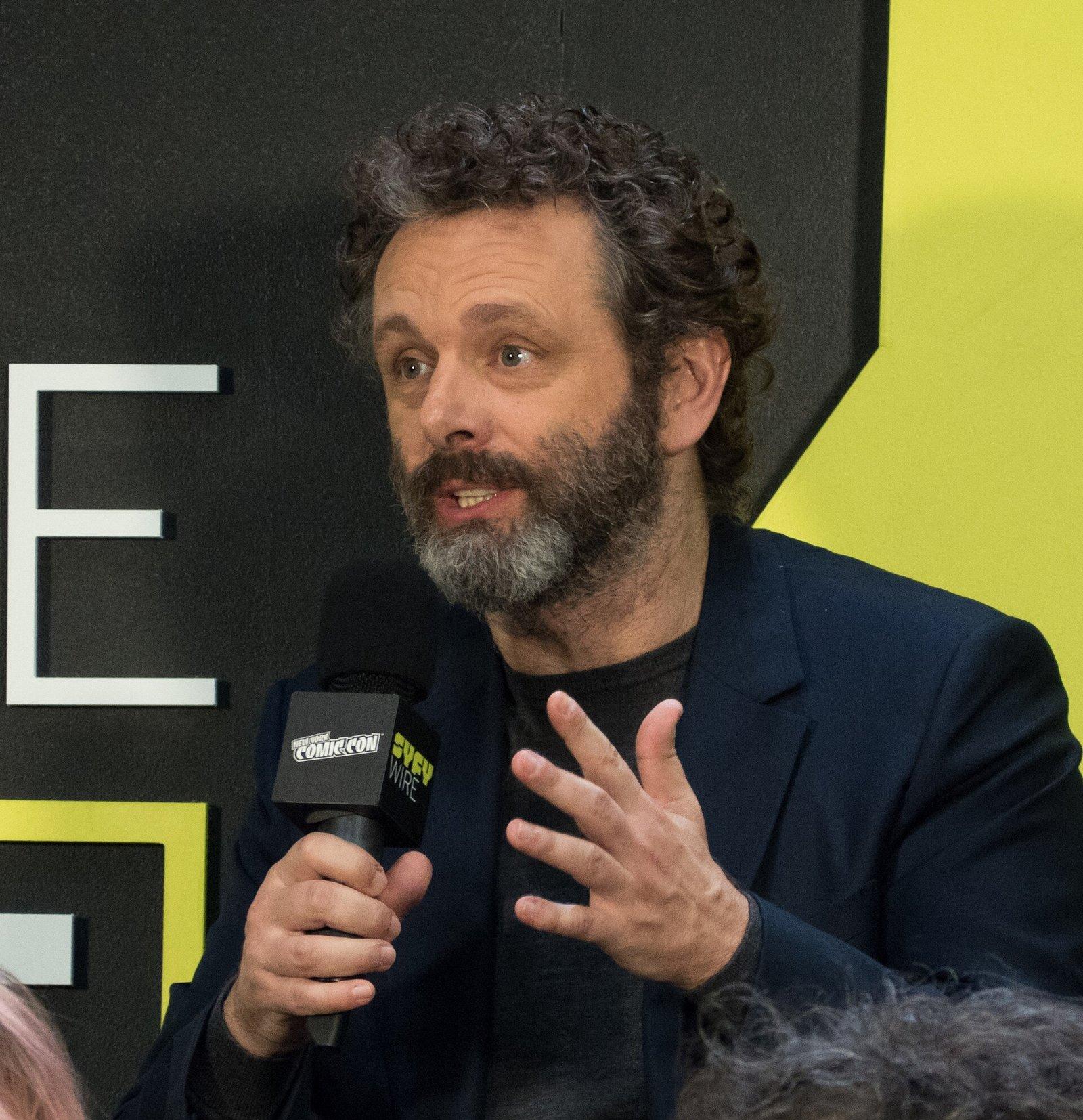
Michael Sheen.

Actor · Presenter · Activist

Michael Sheen built a career on disappearing into public figures and then stepping back into public life with unmistakable conviction. From Olivier-nominated stage work and his uncanny runs as Tony Blair and David Frost to Good Omens, Staged, and visible political activism in Wales, he combines technical bravado with a personal moral center that rarely feels rented.

OBJECTIVE PERSONALITY CLASSIFICATIONFM-Fi/Se-CS/P(B)What does this mean?
PERSONALITY SYSTEMObjective Personality
LEAD FUNCTIONFi · Introverted Feeling
SECOND SAVIOR FUNCTIONSe · Extroverted Sensing
MBTI EQUIVALENTISFP
01 / BEHIND THE CLASSIFICATION

The personality behind the fame.

How does a recorded OPS classification like FM-Fi/Se-CS/P(B) break down? Walk through nine coins and watch the proposed type take shape. These are deductions from the archived code, not independent evidence of typing accuracy.

Scroll below to see Michael Sheen take shape.

STARTING POINT512 possible OPS typesEach type combines core functions, an animal order, and sexual modalities.
THE FINISH LINEFM-Fi/Se-CS/P(B)One recorded classification, decoded from its components.
Michael Sheen’s HUMAN NEEDS 01—03
01
DECIDER OR OBSERVER?

Decider over Observer

Deciders have more balanced Observer poles in the middle: Control (Oi) and Chaos (Oe). Organizing what's known and handling what's new tend to feel more manageable. People are the harder territory. Self (Di) and Tribe (De) sit at the extremes, so judgment, rejection, approval, and conflict can trigger the strongest reactions.

Michael Sheen’s public life keeps circling charged human significance: Tony Blair across three films, David Frost in stage and film, Kenneth Williams, Brian Clough, then his own political and social activism. The recurring pressure is less “Can the logistics be controlled?” than “Who is this person to other people, and what does that role mean?” That Decider emphasis is a strength because he can make public figures feel morally alive instead of merely imitated. The cost is that people questions keep getting heavier; every portrayal or public stance invites another round of judgment, loyalty and backlash.

D
02
SELF OR TRIBE?

Di · Self over De · Tribe

Self (Di) is the stronger deciding pole. They check decisions against their own values or reasons first: what makes sense to me, what feels right to me? The strength is independent conviction; the recurring friction is the Tribe (De)—other people's standards, feedback, and expectations. As the portrait unfolds, notice how Self takes the lead.

Sheen renounced his OBE in 2017, a concrete example of an internal standard outweighing the comfort of broad approval. Self over Tribe is not antisocial grandstanding; it is choosing which judgment gets final authority. That independence gives him a clear advantage as both actor and activist, because the work does not feel negotiated into blandness. The blind spot is diplomatic drag. A personally settled line can be admirable and still leave institutions, collaborators or audiences catching up. Growth means translating conviction into terms other people can practically work with.

Di
03
GATHER OR ORGANIZE?

Oe · Gather over Oi · Organize

Gather (Oe) leads with new information, experiences, and possibilities. Its strength is curiosity and adaptability; the recurring friction is narrowing the options and settling into what is already known. Another layer of the personality portrait comes into focus.

His career refuses a single lane: classical theatre in the 1990s, prestige political dramas, fantasy franchises like Underworld and Twilight, comedy on 30 Rock, quarantine banter in Staged, and the angelic poise of Good Omens. Gather over Organize shows up in that restless range. Sheen can spot another live possibility and step into it without needing his whole résumé to match. The strength is adaptability. The cost is that opportunity multiplies faster than one life can contain it. A new doorway is not yet a long-term structure or a final creative thesis.

Oe
FIRST THREE COINSD + Di + Oe

These establish the preferred human needs in the OPS framework.

Michael Sheen’s FUNCTIONS 04—05
04
FEELING OR THINKING?

Feeling · F over Thinking · T

Feeling (F) evaluates decisions through values, meaning, and what matters—not simply through emotion. Its strength is a clear sense of significance; Thinking (T) provides balance through impersonal reasons, consistency, and evidence. Combined with Self (Di), this forms the recorded Savior Fi.

For Fantabulosa!, Sheen studied archival footage, read Kenneth Williams’s published diaries, and reshaped himself physically for the role. That is Feeling in the precise Fi sense: chasing what rings personally true, the inner contour of a life, not just the public mask. It gives his portrayals a rare intimacy; even famous figures come across as somebody’s specific human reality rather than a collection of tics. The limit is that private truth can become difficult to externalize. What feels deeply right to him still has to be communicated clearly to people who were not inside the same research and instinct.

F → Fi
05
SENSING OR INTUITION?

Sensing · S over Intuition · N

Sensing (S) focuses on concrete details, observable reality, and lived experience. Intuition (N) balances it by looking for broader patterns, concepts, and implications. Combined with Gather (Oe), this gives the recorded Savior Se.

Sheen’s stage reputation was built on sheer physical presence: critics singled out the hair-raising leap in Caligula, the “through-the-body” force of Look Back in Anger, the luminous Mozart of Amadeus, and even the unexpected musculature and wit he brought to Underworld. Se makes the performance tactile. He does not just understand a part; he lands it in voice, posture, timing and the visible room. That immediacy is a strength because audiences can feel the idea. The cost is that a great moment can dominate attention so completely that the wider pattern or takeaway stays less explicitly stated.

S → Se
THE TWO SAVIOR FUNCTIONSFi / Se

Opposing functions: Te and Ni.

Michael Sheen’s ANIMAL STACK 06—07
06
CONSUME OR BLAST?

Consume over Blast

Consume gathers information for internal processing; Blast organizes and communicates information. The recorded order is Consume → Sleep → Play → Blast. This comparison follows their positions in that stack.

Before Sheen tells an audience what a character means, he tends to load himself with material. Years at RADA, the long theatre apprenticeship, Kenneth Williams’s diaries, archival footage, and returning to Blair and Frost across multiple projects all point to Consume before Blast. The strength is obvious: he rarely looks underprepared, and his portrayals arrive with texture already built in. The blind spot is informational gravity. Another layer of study can keep enriching the work while postponing the cleaner, riskier move of stating the thesis plainly enough for everyone else to carry.

C > B
07
PLAY OR SLEEP?

Sleep over Play

Play emphasizes external real-time engagement; Sleep emphasizes internal processing. The recorded stack places Sleep earlier.

Sheen has often said he feels slightly more at home on stage because “you are your own editor,” a revealing clue for Sleep landing ahead of Play. The performance may look mercurial from the outside, but the stronger engine is first consolidating a character internally, then taking that version into public exchange. Staged shows the later Play side vividly; he can riff, react and spar in real time. The tradeoff is rigidity at the edges. A privately finished take can make fresh outside input feel like noise rather than useful disruption.

S > P
Michael Sheen’s ANIMAL ORIENTATION 08—09
08
INFO OR ENERGY DOMINANT?

Energy over Info

Energy dominant means Play and Sleep are both in the top three: there is access to expending energy through engagement and conserving it through internal processing. Blast last leaves the information side uneven—Consume may gather far more than gets communicated.

His recorded animal balance is Energy, and Michael Sheen’s public life makes that believable in a specific way: deep private consolidation sits near active engagement. He can vanish into research and stage craft, then pivot into live collaboration, directing The Passion or playing off David Tennant through lockdown in Staged. That mix is the strength. The missing pressure comes from Blast sitting last. He may already have absorbed and embodied the material, while the clean public takeaway arrives later. The growth cost is having to summarize sooner, not because the work is thin, but because other people still need the headline and the ask.

Energy
09
INTROVERSION OR EXTROVERSION?

Introversion over Extroversion

The last animal, Blast, determines this OPS coin: Play or Blast last means Introversion; Consume or Sleep last means Extroversion. This describes animal orientation, not sociability or shyness.

Sheen’s OPS Introversion coin does not mean shy, private, or incapable of commanding a room. This is a man who has led stage productions, done American television comedy, and presented himself openly in activism and media. The point is simpler and more technical: Blast lands last, so outwardly packaging a settled conclusion comes after taking in, processing and engaging. The strength is depth before declaration; he does not sound mass-produced. The blind spot is that even a charismatic public figure can leave others inferring the larger framework. Growth asks for one more step beyond the performance: say the point directly enough to be used, challenged, or joined.

I
Sexual Modalities

The four sexual modalities.

OPS uses masculine/feminine sensory and extroverted-deciding distinctions as framework-specific terms, not gender categories. The four modalities are already included in the original 512 types. The recorded modality is FM · Visual.

MM KinestheticMasculine Sensory · Masculine De
MF AudioMasculine Sensory · Feminine De
FF TesterFeminine Sensory · Feminine De
FM RECORDED MODALITYVisualFeminine Sensory · Masculine De
COMPLETE RECORDED OPS TYPE · MODALITY INCLUDEDFM-Fi/Se-CS/P(B)

Fi leads, Se supports, and the animal stack is Consume → Sleep → Play → Blast.

THE FINISHED PORTRAIT · ALL NINE COINS REVEALED

Michael Sheen's complete function and animal stack

ConsumeSleepPlayBlastfFifSemNimTe
FM-Fi/Se-CS/P(B)DOUBLE ACTIVATED · CONSUMEExplore the Interactive Coin Builder →
THE MICHAEL SHEEN LENS

The shapeshifter with a private center.

Sheen’s public image can look almost purely extroverted: a virtuoso impersonator, a stage animal, the man who can play Tony Blair, David Frost, Brian Clough and Aziraphale without shrinking on camera. But the through-line is not mere display. It is a performer who keeps searching for the specific person inside the public role.

His Fi/Se pairing gives him a potent strength. Fi looks for the inner truth he can stand behind; Se makes that truth visible in a body, a voice, a live room. That is why the research-heavy portrayals feel inhabited rather than copied. The limit is that vivid embodiment can sometimes outpace the plain explanation of what he wants others to take from it.

As a Decider and Double Observer, Sheen is built to range widely across information while still feeling the sharper pressure around people, meaning, loyalty and judgment. That pairing matters: the human problem is not mainly chaos in the environment, but significance in the social field. Neglected Te, opposite his lead Fi, asks for the impersonal, efficient, shareable conclusion—less private certainty, more externally usable structure.

Consume → Sleep → Play → Blast shows why the work can feel so complete before it is fully spelled out. Blast last creates the imbalance: enormous preparation, strong internal consolidation, real engagement—and then a reluctance to flatten it into a blunt message. The balance is not less depth. It is adding one explicit takeaway to each project or cause so the conviction becomes easier for others to act on.

Want to understand the Savior and Demon states behind these nine coins? Explore the complete explanation, visual examples, and typing principles on our Methodology page →

02 / KEEP EXPLORING

Different faces. Familiar patterns.

Explore other celebrities with related recorded OPS classifications. Related functions are not necessarily exact type matches.

Discover Type Twins
YOUR TURN

Curious about your own type?

Discover how your own personality might be classified through Objective Personality.

Get objectively typed
Michael Sheen's Personality Type & OPS Profile | The Personality Atlas