The Personality Atlas
THE CELEBRITY PERSONALITY ARCHIVE / BOOKS & JOURNALISM

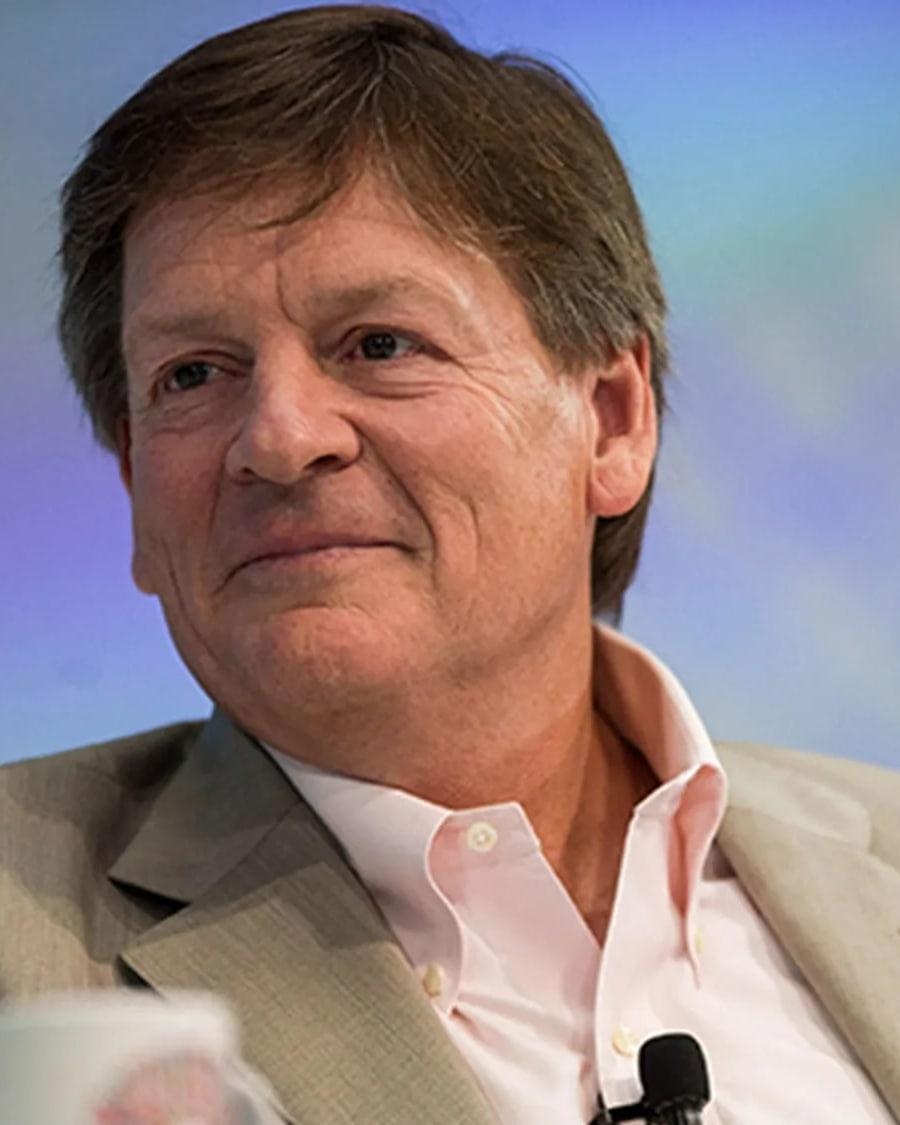
Michael Lewis.

Author · Financial Journalist · Podcast Host

Michael Lewis built a career by walking straight into institutions that insist they make sense—Salomon Brothers, the Oakland A’s front office, federal agencies, pandemic planning, the FTX collapse—and writing the scene that makes the machinery suddenly visible. He comes off like America’s great narrator of incentives: funny, forensic, and unusually good at finding the one concrete detail that turns a sprawling system into a human story.

OBJECTIVE PERSONALITY CLASSIFICATIONFF-Se/Ti-CP/B(S) #4What does this mean?
PERSONALITY SYSTEMObjective Personality
LEAD FUNCTIONSe · Extroverted Sensing
SECOND SAVIOR FUNCTIONTi · Introverted Thinking
MBTI EQUIVALENTESTP
01 / BEHIND THE CLASSIFICATION

The personality behind the fame.

How does a recorded OPS classification like FF-Se/Ti-CP/B(S) #4 break down? Walk through nine coins and watch the proposed type take shape. These are deductions from the archived code, not independent evidence of typing accuracy.

Scroll below to see Michael Lewis take shape.

STARTING POINT512 possible OPS typesEach type combines core functions, an animal order, and sexual modalities.
THE FINISH LINEFF-Se/Ti-CP/B(S) #4One recorded classification, decoded from its components.
Michael Lewis’ HUMAN NEEDS 01—03
01
DECIDER OR OBSERVER?

Observer over Decider

Observers have more balanced Decider poles in the middle: Self (Di) and Tribe (De). Their own perspective and other people's perspectives tend to be easier to navigate. Things are the harder territory. Control (Oi) and Chaos (Oe) sit at the extremes, so disrupted plans, uncertainty, and a changing world can trigger the strongest reactions.

Lewis’s public career keeps returning to systems that break in the real world: a Wall Street bond desk in Liar’s Poker, baseball economics in Moneyball, mortgage markets in The Big Short, federal transitions in The Fifth Risk. That pattern fits Observer friction. The recurring problem is not mainly whether people approve of him, but whether the machinery actually works, and what happens when it doesn’t. His strength is staying curious inside chaos long enough to describe it clearly. The blind spot is treating one more missing variable as the thing that will finally make the whole mess behave.
O
02
SELF OR TRIBE?

Di · Self over De · Tribe

Self (Di) is the stronger deciding pole. They check decisions against their own values or reasons first: what makes sense to me, what feels right to me? The strength is independent conviction; the recurring friction is the Tribe (De)—other people's standards, feedback, and expectations. As the portrait unfolds, notice how Self takes the lead.

Self over Tribe shows up in the way Lewis keeps backing his own angle, even when it risks annoying the surrounding institution. He left a bond-sales career with material that became Liar’s Poker instead of protecting Wall Street’s preferred image, and later pursued books that challenged baseball, trading, and government mythology on their own turf. The advantage is an independent standard: the story does not need committee approval before he commits to it. The cost is that a privately trusted read can become stubborn, especially when critics think he has given a subject’s explanation more credit than it deserved.

Di
03
GATHER OR ORGANIZE?

Oe · Gather over Oi · Organize

Gather (Oe) leads with new information, experiences, and possibilities. Its strength is curiosity and adaptability; the recurring friction is narrowing the options and settling into what is already known. Another layer of the personality portrait comes into focus.

Gather over Organize is all over Lewis’s subject matter. He moves from Salomon Brothers to Silicon Valley, Billy Beane’s clubhouse, catastrophe bonds, Kahneman and Tversky, pandemic response, federal agencies, sports betting, and crypto. Fresh terrain gives him leverage because another field often hides another distorted incentive no one bothered to translate. That openness is a real strength. The tradeoff is selectivity. A career built on following the next revealing system can keep generating irresistible material without automatically deciding which thread deserves the long, narrowing patience of a settled blueprint.

Oe
FIRST THREE COINSO + Di + Oe

These establish the preferred human needs in the OPS framework.

Michael Lewis’ FUNCTIONS 04—05
04
FEELING OR THINKING?

Thinking · T over Feeling · F

Thinking (T) evaluates decisions through reasons, logic, and what works—not a lack of emotion. Its strength is analytical consistency; Feeling (F) provides balance through values, meaning, and the human consequences of a decision. Combined with Self (Di), this forms the recorded Savior Ti.

Thinking is the sharper lens than simply calling Lewis analytical. Moneyball was built around a logic battle over how baseball should value players; The Undoing Project followed how Kahneman and Tversky exposed errors in judgment; Flash Boys argued over market structure rather than personalities alone. Ti’s strength is cutting through prestige and asking whether the mechanism makes sense. The blind spot is that a coherent internal model can feel persuasive from inside the story. Critics of Going Infinite argued that access and explanation did not automatically add up to a sound read of what was happening.

T → Ti
05
SENSING OR INTUITION?

Sensing · S over Intuition · N

Sensing (S) focuses on concrete details, observable reality, and lived experience. Intuition (N) balances it by looking for broader patterns, concepts, and implications. Combined with Gather (Oe), this gives the recorded Savior Se.

Sensing fits how Lewis reports: scenes, institutions, named people, concrete procedures. His material did not begin as abstract theory; it began on an actual bond desk, in actual front offices, inside federal departments, and alongside physicians warning about a pandemic. Se gives him a talent for making a system legible through what people are tangibly doing right now. The cost is that vivid proximity can seduce a writer into trusting the immediate picture too much. Having the front-row detail is not always the same as seeing the larger trajectory before it breaks.

S → Se
THE TWO SAVIOR FUNCTIONSSe / Ti

Opposing functions: Ni and Fe.

Michael Lewis’ ANIMAL STACK 06—07
06
CONSUME OR BLAST?

Consume over Blast

Consume gathers information for internal processing; Blast organizes and communicates information. The recorded order is Consume → Play → Blast → Sleep. This comparison follows their positions in that stack.

Consume over Blast is a visible engine of Lewis’s career. He keeps entering dense subjects—mortgage bonds, baseball stats, behavioral economics, pandemic planning—and absorbing enough detail to find the story others missed. That first-animal advantage is depth: the finished work feels stocked with particulars because he actually went hunting for them. The growth cost sits with Blast. Research can keep feeling productive long after the central point should be said plainly. More notes, more access, and one more intriguing interview do not automatically sharpen the conclusion; sometimes they postpone it.

C > B
07
PLAY OR SLEEP?

Play over Sleep

Play emphasizes external real-time engagement; Sleep emphasizes internal processing. The recorded stack places Play earlier.

After that Consume-heavy intake, Lewis’s next move looks more Play than Sleep. His work does not stay sealed in private notebooks; it becomes interviews, magazine pieces, podcasts, narration, and books built from active engagement with sources, institutions, and collaborators. That gives his reporting social traction. He can test material against live systems instead of waiting for perfect internal closure. The tradeoff is the quieter side of the pairing. When Play outranks Sleep, public momentum can outrun long private settling, and the next conversation or project may arrive before the last one has been fully digested.

P > S
Michael Lewis’ ANIMAL ORIENTATION 08—09
08
INFO OR ENERGY DOMINANT?

Info over Energy

Info dominant means Consume and Blast are both in the top three: gathering and communicating information are more balanced. Sleep last leaves the energy side uneven—Play can keep engagement going without enough private recovery.

Lewis’s stack lands on Info over Energy, which fits a career built around taking in complicated material and then turning it into stories people can actually follow. From Vanity Fair pieces to Against the Rules and book after book, he repeatedly cycles from research into explanation. That balance is a strength: information does not just pile up; it gets translated. The missing pressure point is Sleep last. The risk is not laziness or lack of output, but moving from subject to subject so briskly that private consolidation, recovery, and long offstage integration get less priority than the next fascinating system.

Info
09
INTROVERSION OR EXTROVERSION?

Extroversion over Introversion

The last animal, Sleep, determines this OPS coin: Play or Blast last means Introversion; Consume or Sleep last means Extroversion. This describes animal orientation, not sociability or shyness.

Atlas decodes Lewis as OPS Extroversion because Sleep lands last, not because he seems chatty at a dinner party. In the recorded order Consume → Play → Blast → Sleep, the lower priority is withdrawing long enough to settle everything privately before re-entering the world. That distinction matters for a writer, since solitary work can look “introverted” from the outside. The strength here is momentum: research becomes interaction, then explanation. The blind spot is treating reflection as optional maintenance. His best growth move is not less reporting, but more deliberate pause before the next elegant system demands another book.

E
Sexual Modalities

The four sexual modalities.

OPS uses masculine/feminine sensory and extroverted-deciding distinctions as framework-specific terms, not gender categories. The four modalities are already included in the original 512 types. The recorded modality is FF · Tester.

MM KinestheticMasculine Sensory · Masculine De
MF AudioMasculine Sensory · Feminine De
FF RECORDED MODALITYTesterFeminine Sensory · Feminine De
FM VisualFeminine Sensory · Masculine De
ADDITIONAL LAYER · SOCIAL TYPE

The four social types.

Social types are an additional layer on top of the original Objective Personality classification, introduced later in OPS research. They describe two proposed social preference coins: Flex vs. Friends and Generalize vs. Specialize. The combination and priority of these preferences produce four social types. Michael Lewis's recorded social type is #4.

SOCIAL #1 #1Flex · Generalize
SOCIAL #2 #2Generalize · Friends
SOCIAL #3 #3Specialize · Flex
SOCIAL #4 RECORDED SOCIAL TYPE#4Friends · Specialize
COMPLETE RECORDED OPS TYPE · MODALITY INCLUDED + SOCIAL TYPEFF-Se/Ti-CP/B(S) #4

Se leads, Ti supports, and the animal stack is Consume → Play → Blast → Sleep.

THE FINISHED PORTRAIT · ALL NINE COINS REVEALED

Michael Lewis's complete function and animal stack

ConsumePlayBlastSleepfSemTifFemNi
FF-Se/Ti-CP/B(S) #4DOUBLE ACTIVATED · PLAYExplore the Interactive Coin Builder →
THE MICHAEL LEWIS LENS

The Reporter Inside the Machine

Lewis’s signature move is to walk into a complicated institution and come back with the one scene that makes it legible. The bond desk of Liar’s Poker, Billy Beane’s front office in Moneyball, and the bureaucratic nerves of The Fifth Risk all suggest the same man behind the public image: less oracle than relentless witness, watching incentives reveal themselves in action.

His Se/Ti pairing is excellent at grabbing concrete evidence and then stripping a system down to its operating logic. That is why his books can make bond trading, baseball valuation, or public administration feel weirdly readable. The limit is built into the same gift: close access and a clean internal model can become overconvincing, even when the larger pattern is still wobbling outside the frame.

As an Observer and Double Decider, Lewis is better framed as someone who can keep moving through people turbulence while getting snagged by the state of the system itself. The human-needs imbalance is around control, uncertainty, and missing variables. Neglected Ni—the function opposite his lead Se—asks what all those vivid details are building toward before the next revealing datapoint steals the spotlight.

Consume → Play → Blast → Sleep gives Lewis his familiar rhythm: learn the machinery, engage the actors, then explain the story before finally stepping back. Sleep last is the imbalance. Reflection and private consolidation can be treated like cleanup work after the real action. The balancing move is simple and hard: keep chasing the strange fact, but schedule protected time to test the larger throughline before releasing it.

Want to understand the Savior and Demon states behind these nine coins? Explore the complete explanation, visual examples, and typing principles on our Methodology page →

02 / KEEP EXPLORING

Different faces. Familiar patterns.

Explore other celebrities with related recorded OPS classifications. Related functions are not necessarily exact type matches.

Discover Type Twins
YOUR TURN

Curious about your own type?

Discover how your own personality might be classified through Objective Personality.

Get objectively typed
Michael Lewis's Personality Type & OPS Profile | The Personality Atlas