The Personality Atlas
THE CELEBRITY PERSONALITY ARCHIVE / LITERATURE

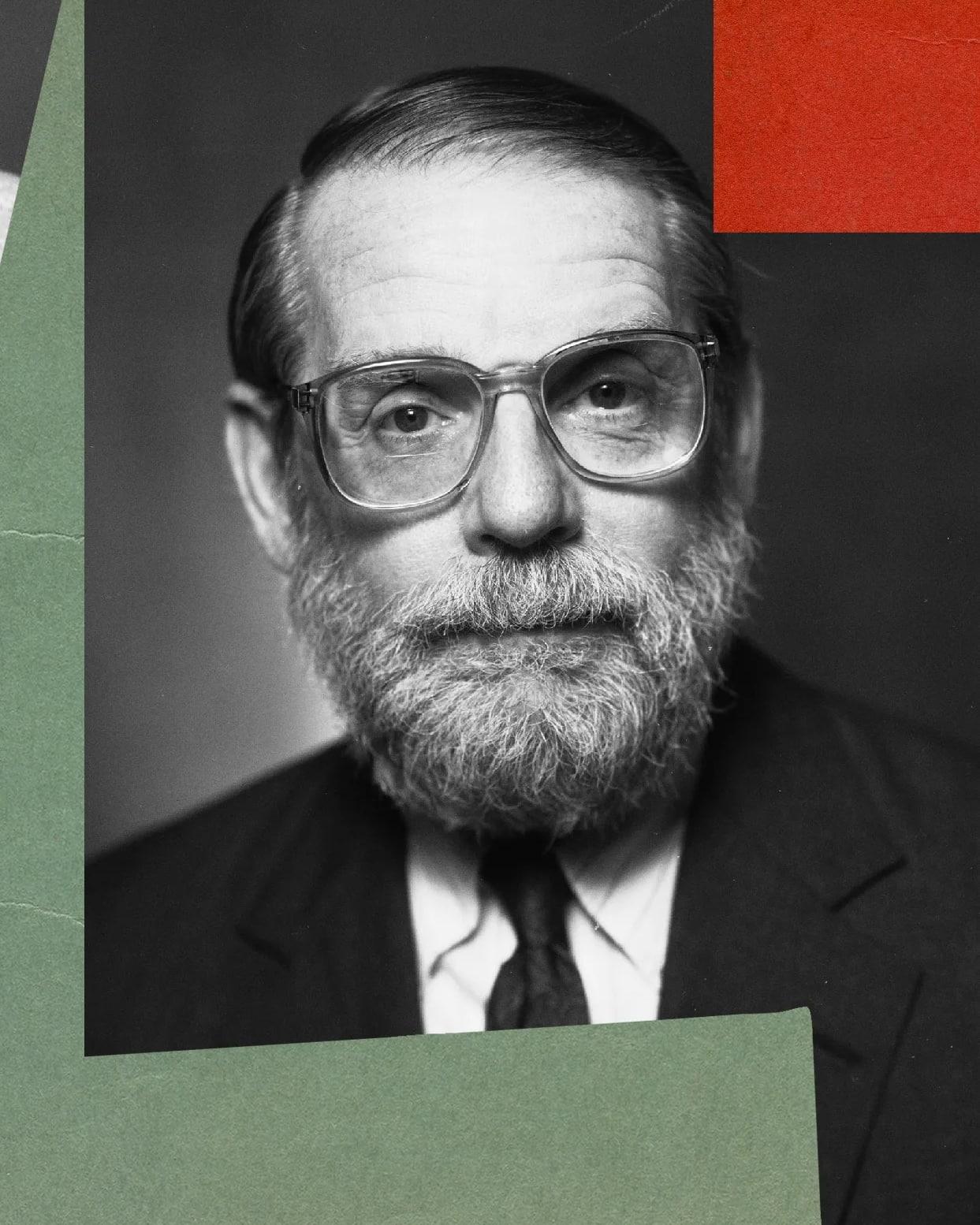
John McPhee.

Author · New Yorker writer · Journalism professor

John McPhee made creative nonfiction feel like fieldwork you could hold in your hands. Across decades at The New Yorker and Princeton, he turned geology, Alaska, river engineering, merchant ships, farmers’ markets and even oranges into tactile stories, projecting a calm professorial surface over a career built on chasing concrete reality and then shaping it with severe precision.

OBJECTIVE PERSONALITY CLASSIFICATIONFF-Se/Ti-CP/B(S) #4What does this mean?
PERSONALITY SYSTEMObjective Personality
LEAD FUNCTIONSe · Extroverted Sensing
SECOND SAVIOR FUNCTIONTi · Introverted Thinking
MBTI EQUIVALENTESTP
01 / BEHIND THE CLASSIFICATION

The personality behind the fame.

How does a recorded OPS classification like FF-Se/Ti-CP/B(S) #4 break down? Walk through nine coins and watch the proposed type take shape. These are deductions from the archived code, not independent evidence of typing accuracy.

Scroll below to see John McPhee take shape.

STARTING POINT512 possible OPS typesEach type combines core functions, an animal order, and sexual modalities.
THE FINISH LINEFF-Se/Ti-CP/B(S) #4One recorded classification, decoded from its components.
John McPhee’s HUMAN NEEDS 01—03
01
DECIDER OR OBSERVER?

Observer over Decider

Observers have more balanced Decider poles in the middle: Self (Di) and Tribe (De). Their own perspective and other people's perspectives tend to be easier to navigate. Things are the harder territory. Control (Oi) and Chaos (Oe) sit at the extremes, so disrupted plans, uncertainty, and a changing world can trigger the strongest reactions.

McPhee’s career is a catalogue of stubborn realities: the shifting Mississippi in “Atchafalaya,” the physical movement of coal across America, the geology that became Annals of the Former World. The recurring pressure is not, first of all, whether people approve of him. It is that the world keeps presenting complicated systems that do not simplify on command. That Observer focus is a strength; he can stay with a subject long enough to understand its terrain. The growth cost is obvious too: circumstances can become so fascinating that decision, priority, and closure get postponed in favor of one more layer of reality.
O
02
SELF OR TRIBE?

Di · Self over De · Tribe

Self (Di) is the stronger deciding pole. They check decisions against their own values or reasons first: what makes sense to me, what feels right to me? The strength is independent conviction; the recurring friction is the Tribe (De)—other people's standards, feedback, and expectations. As the portrait unfolds, notice how Self takes the lead.

McPhee’s subjects were often commercially awkward long before they looked prestigious: oranges, the Merchant Marine, farmers’ markets, lifting-body aircraft, a New Jersey wilderness. That points to Self over Tribe less as rebellion than as an internal standard for what is worth pursuing. The advantage is independence from trend pressure; he did not need a roomful of editors or readers to certify a topic before he went after it. The blind spot is that private conviction can overestimate how much context other people need. A subject may feel inherently gripping to him while still requiring far more bridge-building for everyone else.

Di
03
GATHER OR ORGANIZE?

Oe · Gather over Oi · Organize

Gather (Oe) leads with new information, experiences, and possibilities. Its strength is curiosity and adaptability; the recurring friction is narrowing the options and settling into what is already known. Another layer of the personality portrait comes into focus.

Few major writers have ranged as freely as McPhee. He could move from Bill Bradley’s college basketball career to nuclear physics, then to Alaska, then to river engineering, then back to memoir and teaching craft. Gather over Organize gives that eclecticism a clear public shape: he keeps finding another live thread in the world rather than settling permanently inside one established lane. The strength is freshness and range. The cost is selectivity. A life spent noticing the next compelling subject can make commitment feel artificially narrow, even when depth would grow by refusing ten promising detours.

Oe
FIRST THREE COINSO + Di + Oe

These establish the preferred human needs in the OPS framework.

John McPhee’s FUNCTIONS 04—05
04
FEELING OR THINKING?

Thinking · T over Feeling · F

Thinking (T) evaluates decisions through reasons, logic, and what works—not a lack of emotion. Its strength is analytical consistency; Feeling (F) provides balance through values, meaning, and the human consequences of a decision. Combined with Self (Di), this forms the recorded Savior Ti.

McPhee’s craft essays for The New Yorker—“Progression,” “Structure,” “Draft No. 4”—are unusually revealing because they treat writing like an engineering problem, not a mystical trance. That is Thinking in a very McPhee way: he dissects sequence, architecture, and how a piece holds together under pressure. The strength is obvious in both his books and his decades teaching at Princeton: he can make method teachable. The blind spot is subtler. A beautifully reasoned structure inside his own head can seem sufficient, while readers or students may still need more overt emotional or interpersonal signaling than the system itself provides.

T → Ti
05
SENSING OR INTUITION?

Sensing · S over Intuition · N

Sensing (S) focuses on concrete details, observable reality, and lived experience. Intuition (N) balances it by looking for broader patterns, concepts, and implications. Combined with Gather (Oe), this gives the recorded Savior Se.

McPhee is famous not for vague “ideas” about a subject but for making the subject physically present. The literary reputation rests on tactile reporting: wilderness terrain in The Pine Barrens, the concrete logistics of merchant shipping, the movement of coal, the visible behavior of rivers and rocks. Sensing here is not anti-intellectual; it is what keeps difficult material from floating away into abstraction. The strength is credibility through contact with reality. The cost is that immersion in what is immediately observable can delay the larger synthesis. Details accumulate brilliantly, yet the single governing pattern may arrive later than the notebook does.

S → Se
THE TWO SAVIOR FUNCTIONSSe / Ti

Opposing functions: Ni and Fe.

John McPhee’s ANIMAL STACK 06—07
06
CONSUME OR BLAST?

Consume over Blast

Consume gathers information for internal processing; Blast organizes and communicates information. The recorded order is Consume → Play → Blast → Sleep. This comparison follows their positions in that stack.

Consume comes earlier than Blast, and McPhee’s bibliography is almost a public argument for that order. He does not begin by declaring a thesis and hunting for examples. He goes into the field, studies the machinery, trails the people, and lets the subject become dense before he tries to make it clean. That creates tremendous authority; Annals of the Former World feels earned because so much was absorbed first. The weakness is the classic one: intake can masquerade as completion. Another interview, another trip, another technical nuance can seem more responsible than committing to the clearest takeaway.

C > B
07
PLAY OR SLEEP?

Play over Sleep

Play emphasizes external real-time engagement; Sleep emphasizes internal processing. The recorded stack places Play earlier.

Play arrives earlier than Sleep, which helps explain why McPhee’s work is not just solitary note-hoarding. He follows living systems and living people in motion—David Brower in Encounters with the Archdruid, Bradley through four college seasons, generations of students in a classroom where ideas must actually circulate. That earlier Play gives his reporting social traction and live responsiveness. Sleep being later has a cost: the world can keep supplying interaction, assignments, and exchanges faster than full internal settling happens. Productive engagement remains easy; stopping long enough to consolidate everything can be the more unnatural discipline.

P > S
John McPhee’s ANIMAL ORIENTATION 08—09
08
INFO OR ENERGY DOMINANT?

Info over Energy

Info dominant means Consume and Blast are both in the top three: gathering and communicating information are more balanced. Sleep last leaves the energy side uneven—Play can keep engagement going without enough private recovery.

McPhee’s stack is Info-dominant, and his public life shows why. He has spent decades doing the classic top-three information cycle: absorb specialized material, test it against reality and people, then turn it into books, essays, and instruction others can follow. The New Yorker work and the Princeton teaching chair both depend on that conversion from intake to explanation. The missing balance is Sleep last. The risk is not laziness or ignorance, but insufficient protected time to stop, digest, and recover before the next subject, semester, or structural problem presents itself.

Info
09
INTROVERSION OR EXTROVERSION?

Extroversion over Introversion

The last animal, Sleep, determines this OPS coin: Play or Blast last means Introversion; Consume or Sleep last means Extroversion. This describes animal orientation, not sociability or shyness.

Atlas records Extroversion here because Sleep sits last, not because McPhee fits a simplistic stereotype of being socially loud. His career is plainly public-facing: decades of field reporting, classroom teaching since 1974, and even youthful appearances on Twenty Questions show a life repeatedly moving outward into exchange and delivery. The pattern is that private processing comes after taking in, interacting, and explaining. That can make him exceptionally productive in the shared world. The growth cost is quieter and less glamorous: making deliberate room for reflection before the next project earns the right to occupy his attention.

E
Sexual Modalities

The four sexual modalities.

OPS uses masculine/feminine sensory and extroverted-deciding distinctions as framework-specific terms, not gender categories. The four modalities are already included in the original 512 types. The recorded modality is FF · Tester.

MM KinestheticMasculine Sensory · Masculine De
MF AudioMasculine Sensory · Feminine De
FF RECORDED MODALITYTesterFeminine Sensory · Feminine De
FM VisualFeminine Sensory · Masculine De
ADDITIONAL LAYER · SOCIAL TYPE

The four social types.

Social types are an additional layer on top of the original Objective Personality classification, introduced later in OPS research. They describe two proposed social preference coins: Flex vs. Friends and Generalize vs. Specialize. The combination and priority of these preferences produce four social types. John McPhee's recorded social type is #4.

SOCIAL #1 #1Flex · Generalize
SOCIAL #2 #2Generalize · Friends
SOCIAL #3 #3Specialize · Flex
SOCIAL #4 RECORDED SOCIAL TYPE#4Friends · Specialize
COMPLETE RECORDED OPS TYPE · MODALITY INCLUDED + SOCIAL TYPEFF-Se/Ti-CP/B(S) #4

Se leads, Ti supports, and the animal stack is Consume → Play → Blast → Sleep.

THE FINISHED PORTRAIT · ALL NINE COINS REVEALED

John McPhee's complete function and animal stack

ConsumePlayBlastSleepfSemTifFemNi
FF-Se/Ti-CP/B(S) #4DOUBLE ACTIVATED · PLAYExplore the Interactive Coin Builder →
THE JOHN MCPHEE LENS

The field reporter of bedrock

Annals of the Former World can make tectonic plates feel companionable, which gets closer to the real McPhee than the polished Princeton image does. The public impression is civilized authority. The engine is fieldwork: rivers, ships, wilderness, basketball gyms, geology outcrops. He built that authority by going where the subject physically lives.

His savior pair, Se and Ti, is a formidable nonfiction machine. Se stays with what can be seen and followed; Ti gives it a clean internal structure. That is why obscure subjects become readable without being flattened. The limit rides with the strength: vivid evidence and elegant design can still leave other people needing more overt context than the system itself supplies.

As an Observer and Double Decider, McPhee’s recurring imbalance is toward changing conditions more than people-drama. He can stay with complicated systems that would exhaust most writers. The cost is human-needs related: circumstances and information can take center stage while relational interpretation stays thinner. Neglected Ni, opposite his lead Se, asks what all those details are ultimately adding up to.

Consume → Play → Blast → Sleep shows the full rhythm: take in reality, engage it, explain it, then finally pull back. Sleep last makes the imbalance predictable. The work can keep moving before rest and inner consolidation get equal protection. The balancing move is specific: keep the reporting appetite, but schedule off-grid synthesis time between projects so the next book starts from digestion, not momentum.

Want to understand the Savior and Demon states behind these nine coins? Explore the complete explanation, visual examples, and typing principles on our Methodology page →

02 / KEEP EXPLORING

Different faces. Familiar patterns.

Explore other celebrities with related recorded OPS classifications. Related functions are not necessarily exact type matches.

Discover Type Twins
YOUR TURN

Curious about your own type?

Discover how your own personality might be classified through Objective Personality.

Get objectively typed
John McPhee's Personality Type & OPS Profile | The Personality Atlas