The Personality Atlas
THE CELEBRITY PERSONALITY ARCHIVE / AUTHOR & HOST

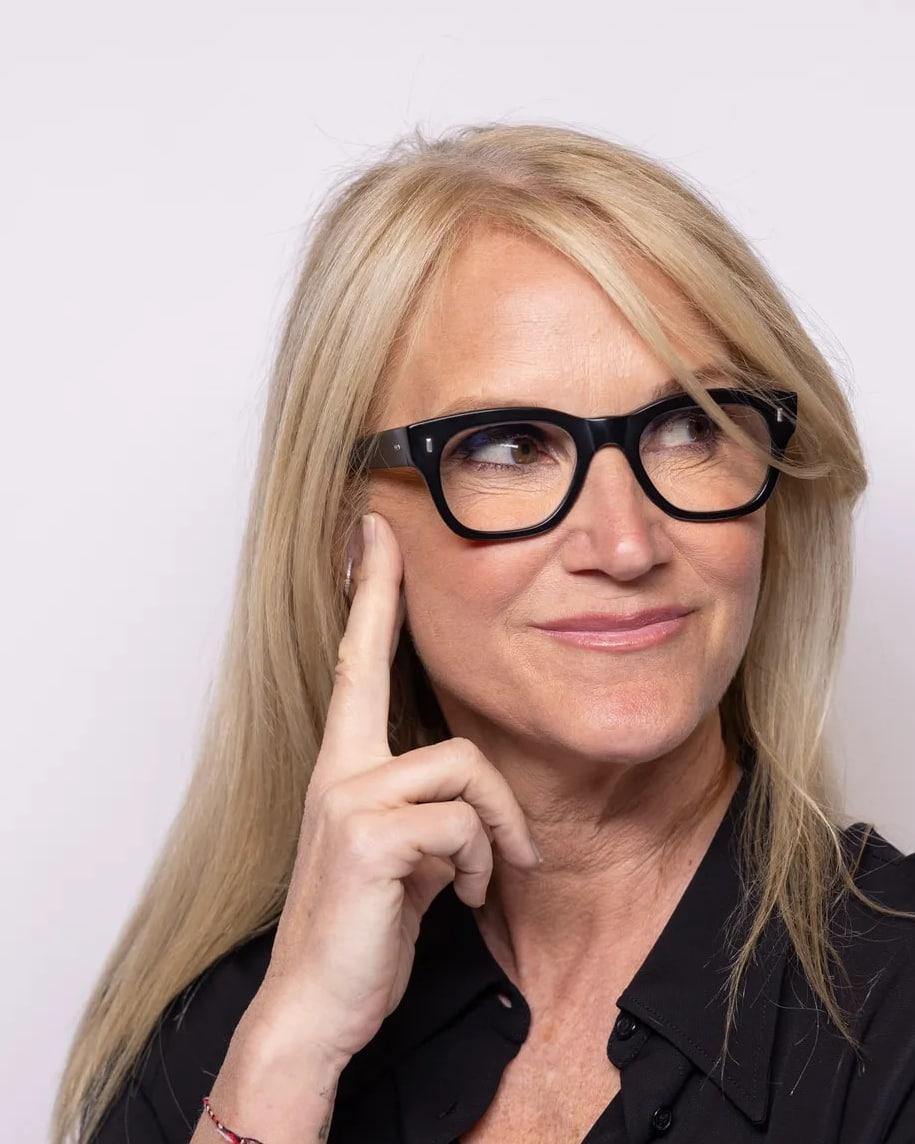
Mel Robbins.

Author · Podcast Host · Former Lawyer

Mel Robbins built a career on blunt public usefulness: a 2011 TEDx talk that went viral, bestselling books, CNN legal analysis, a hit podcast, and a 2025 world tour. Even her response to criticism of The Let Them Theory — “Yeah, it is a cheap trick – and it works” — captures the brand: practical, memorable, and willing to sound a little abrasive if the advice sticks.

OBJECTIVE PERSONALITY CLASSIFICATIONMM-Se/Te-PB/C(S)What does this mean?
PERSONALITY SYSTEMObjective Personality
LEAD FUNCTIONSe · Extroverted Sensing
SECOND SAVIOR FUNCTIONTe · Extroverted Thinking
MBTI EQUIVALENTESFP
01 / BEHIND THE CLASSIFICATION

The personality behind the fame.

How does a recorded OPS classification like MM-Se/Te-PB/C(S) break down? Walk through nine coins and watch the proposed type take shape. These are deductions from the archived code, not independent evidence of typing accuracy.

Scroll below to see Mel Robbins take shape.

STARTING POINT512 possible OPS typesEach type combines core functions, an animal order, and sexual modalities.
THE FINISH LINEMM-Se/Te-PB/C(S)One recorded classification, decoded from its components.
Mel Robbins’ HUMAN NEEDS 01—03
01
DECIDER OR OBSERVER?

Observer over Decider

Observers have more balanced Decider poles in the middle: Self (Di) and Tribe (De). Their own perspective and other people's perspectives tend to be easier to navigate. Things are the harder territory. Control (Oi) and Chaos (Oe) sit at the extremes, so disrupted plans, uncertainty, and a changing world can trigger the strongest reactions.

Mel Robbins’s public life keeps turning on changing conditions: from public defender to executive coach, from local radio to a viral TEDx stage, from a one-season daytime show to a podcast and a world tour. That pattern puts the friction in the environment—platforms, timing, reach, what can be controlled next—more than in a constant struggle over personal worth. Strength: she adapts fast when the lane changes. The blind spot is that a sharp tactic can start to look like a universal answer. Growth cost: staying with messier reality after the clean slogan has already landed.

O
02
SELF OR TRIBE?

De · Tribe over Di · Self

Tribe (De) is the stronger deciding pole. They check decisions against people, shared standards, and what works for the group: what do we need, what will others think? The strength is coordination and responsiveness; the recurring friction is the Self (Di)—knowing and defending their own position. As the portrait unfolds, notice how Tribe takes the lead.

Robbins built her brand by translating pressure into language other people can use. How to Stop Screwing Yourself Over, The 5 Second Rule, The Let Them Theory, and a podcast built on takeaways are not private notebooks; they are tribe-facing products. That De emphasis is a real strength: she can package an idea so an audience immediately knows where to put it in daily life. The blind spot is overvaluing usefulness as the only metric. Growth cost: letting a solution stay less polished long enough to account for disagreement, criticism, or a more complicated audience response.

De
03
GATHER OR ORGANIZE?

Oe · Gather over Oi · Organize

Gather (Oe) leads with new information, experiences, and possibilities. Its strength is curiosity and adaptability; the recurring friction is narrowing the options and settling into what is already known. Another layer of the personality portrait comes into focus.

Her résumé rarely sits still. Robbins moved from law into coaching, then local radio, CNN legal analysis, daytime television, bestselling books, podcasting, and live touring. That gather-first pattern thrives by spotting fresh openings rather than locking into one settled lane. Strength: she can pivot toward where attention and opportunity are already moving. The blind spot is mistaking expansion for clarity. Growth cost: turning down the next available format so an existing idea can be developed more deeply, tested more rigorously, and organized into something sturdier than a fast-moving media cycle.

Oe
FIRST THREE COINSO + De + Oe

These establish the preferred human needs in the OPS framework.

Mel Robbins’ FUNCTIONS 04—05
04
FEELING OR THINKING?

Thinking · T over Feeling · F

Thinking (T) evaluates decisions through reasons, logic, and what works—not a lack of emotion. Its strength is analytical consistency; Feeling (F) provides balance through values, meaning, and the human consequences of a decision. Combined with Tribe (De), this forms the recorded Savior Te.

When CNN brought Robbins on as a legal analyst during the Zimmerman trial, the job demanded concise reasoning under pressure, not vague reassurance. The same practical edge runs through her broader work: the appeal is usually a usable framework, a direct instruction, a next step. Thinking is the strength because it favors what can be stated, applied, and acted on. The blind spot appears in criticism of The Let Them Theory for lacking evidence or introspection. Growth cost: slowing the rollout of a tidy tool long enough to ask whether efficiency is oversimplifying a human problem.

T → Te
05
SENSING OR INTUITION?

Sensing · S over Intuition · N

Sensing (S) focuses on concrete details, observable reality, and lived experience. Intuition (N) balances it by looking for broader patterns, concepts, and implications. Combined with Gather (Oe), this gives the recorded Savior Se.

Robbins’s biggest public successes are concrete and immediate: a TEDx talk that broke through because it sounded actionable, books built around memorable phrases, a podcast that turns stress into something you can address now, and a live tour selling direct application rather than abstraction. Se gives her work traction in the present tense. Strength: she makes advice feel usable instead of theoretical. The blind spot is present-moment confidence crowding out longer-range patterning. Growth cost: staying with the less glamorous question of where a compelling tactic leads after the first burst of relief wears off.

S → Se
THE TWO SAVIOR FUNCTIONSSe / Te

Opposing functions: Ni and Fi. This is a jumper classification.

Mel Robbins’ ANIMAL STACK 06—07
06
PLAY OR SLEEP?

Play over Sleep

Play emphasizes external real-time engagement; Sleep emphasizes internal processing. The recorded stack places Play earlier.

Play comes earlier than Sleep, and Robbins’s public career keeps rewarding that choice. Radio, CNN panels, daytime television, podcast interviews, and a world tour all lean on live exchange, immediate momentum, and external interaction. Strength: she can energize people in real time and keep an idea moving once it is in the room. The blind spot is treating internal settling as optional because the outward response is already strong. Growth cost: giving herself quieter offstage time where a message is not being performed, sold, defended, or tested against instant audience feedback.

P > S
07
CONSUME OR BLAST?

Blast over Consume

Consume gathers information for internal processing; Blast organizes and communicates information. The recorded order is Play → Blast → Consume → Sleep. This comparison follows their positions in that stack.

Between Consume and Blast, Blast arrives earlier, which fits how Robbins became widely known: not as a hidden researcher first, but as a forceful messenger. A viral TEDx talk, bestselling books, and a top podcast all depend on delivering a conclusion people can remember. Strength: she turns scattered anxiety into a communicable frame. The blind spot is getting rewarded for the packaging speed itself. Growth cost: lingering with more sourcing, counterarguments, and competing interpretations before the lesson is finalized, especially when the public brand benefits from sounding certain and immediately useful.

B > C
Mel Robbins’ ANIMAL ORIENTATION 08—09
08
INFO OR ENERGY DOMINANT?

Info over Energy

Info dominant means Consume and Blast are both in the top three: gathering and communicating information are more balanced. Sleep last leaves the energy side uneven—Play can keep engagement going without enough private recovery.

Robbins lands on the Info side because her top three prioritize taking in and delivering information while Sleep drops to the bottom. Publicly, that looks like a career built on gathering material from coaching, media, and public commentary, then converting it into books, podcast episodes, interviews, and tours. Strength: information does not stay trapped in private reflection; it becomes portable advice. The blind spot is that private consolidation can lag behind public output. Growth cost: protecting enough unspectacular downtime for an idea to mature before the next platform asks for another crisp, shareable answer.

Info
09
INTROVERSION OR EXTROVERSION?

Extroversion over Introversion

The last animal, Sleep, determines this OPS coin: Play or Blast last means Introversion; Consume or Sleep last means Extroversion. This describes animal orientation, not sociability or shyness.

This profile also lands on the OPS Extroversion coin, which is not a synonym for being friendly or talkative. It means the stack ends with Sleep, so the lower-priority pressure point is private processing compared with the animals that engage, broadcast, and keep information moving outward. Robbins’s path through public defense, coaching, radio, CNN, television, podcasting, and touring makes that pattern easy to visualize. Strength: decisive traction in the outer world. The blind spot is equating motion with completion. Growth cost: pausing long enough for inner consolidation to challenge a message before that message becomes the next brand asset.

E
Sexual Modalities

The four sexual modalities.

OPS uses masculine/feminine sensory and extroverted-deciding distinctions as framework-specific terms, not gender categories. The four modalities are already included in the original 512 types. The recorded modality is MM · Kinesthetic.

MM RECORDED MODALITYKinestheticMasculine Sensory · Masculine De
MF AudioMasculine Sensory · Feminine De
FF TesterFeminine Sensory · Feminine De
FM VisualFeminine Sensory · Masculine De
COMPLETE RECORDED OPS TYPE · MODALITY INCLUDEDMM-Se/Te-PB/C(S)

Se leads, Te supports, and the animal stack is Play → Blast → Consume → Sleep.

THE FINISHED PORTRAIT · ALL NINE COINS REVEALED

Mel Robbins's complete function and animal stack

PlayBlastConsumeSleepmSefFimTefNi
MM-Se/Te-PB/C(S)DOUBLE ACTIVATED · PLAYExplore the Interactive Coin Builder →
THE MEL ROBBINS LENS

Urgency Built for the Mic

In June 2011, Robbins gave a TEDx talk called How to Stop Screwing Yourself Over and suddenly looked like a natural at urgency. The person behind that public impression was already built through public defense, coaching, and local radio. Her bluntness reads spontaneous, but the career underneath it is practiced: institutional training turned into mass communication.

Her Se/Te pairing is excellent at turning immediate pressure into a usable frame. You can hear it in The 5 Second Rule and in her move from CNN legal analysis to bestselling advice: what is happening now, and what can be done with it? The strength is traction. The limit is that present-tense practicality can sound complete before deeper patterning or contrary evidence complicates the message.

As an Observer and Double Decider, Robbins is less trapped by people-versus-self drama than by the circumstances out there that need managing. That can look socially decisive while still overworking uncertainty itself. The neglected function opposite her lead savior is Ni, so the missing human need is patient narrowing: what is all this fast, actionable information building toward over time?

Play → Blast → Consume → Sleep explains why her style feels mobilizing. She can energize a room, package a lesson, and keep material moving before sitting with it privately. With Sleep last, the imbalance is underweight internal consolidation. The balancing move is specific: keep the directness, but protect recurring off-mic blocks to pressure-test the next takeaway against longer evidence before it becomes another episode, chapter, or tour line.

Want to understand the Savior and Demon states behind these nine coins? Explore the complete explanation, visual examples, and typing principles on our Methodology page →

02 / KEEP EXPLORING

Different faces. Familiar patterns.

Explore other celebrities with related recorded OPS classifications. Related functions are not necessarily exact type matches.

Discover Type Twins
YOUR TURN

Curious about your own type?

Discover how your own personality might be classified through Objective Personality.

Get objectively typed
Mel Robbins's Personality Type & OPS Profile | The Personality Atlas