The Personality Atlas
THE CELEBRITY PERSONALITY ARCHIVE / FILM

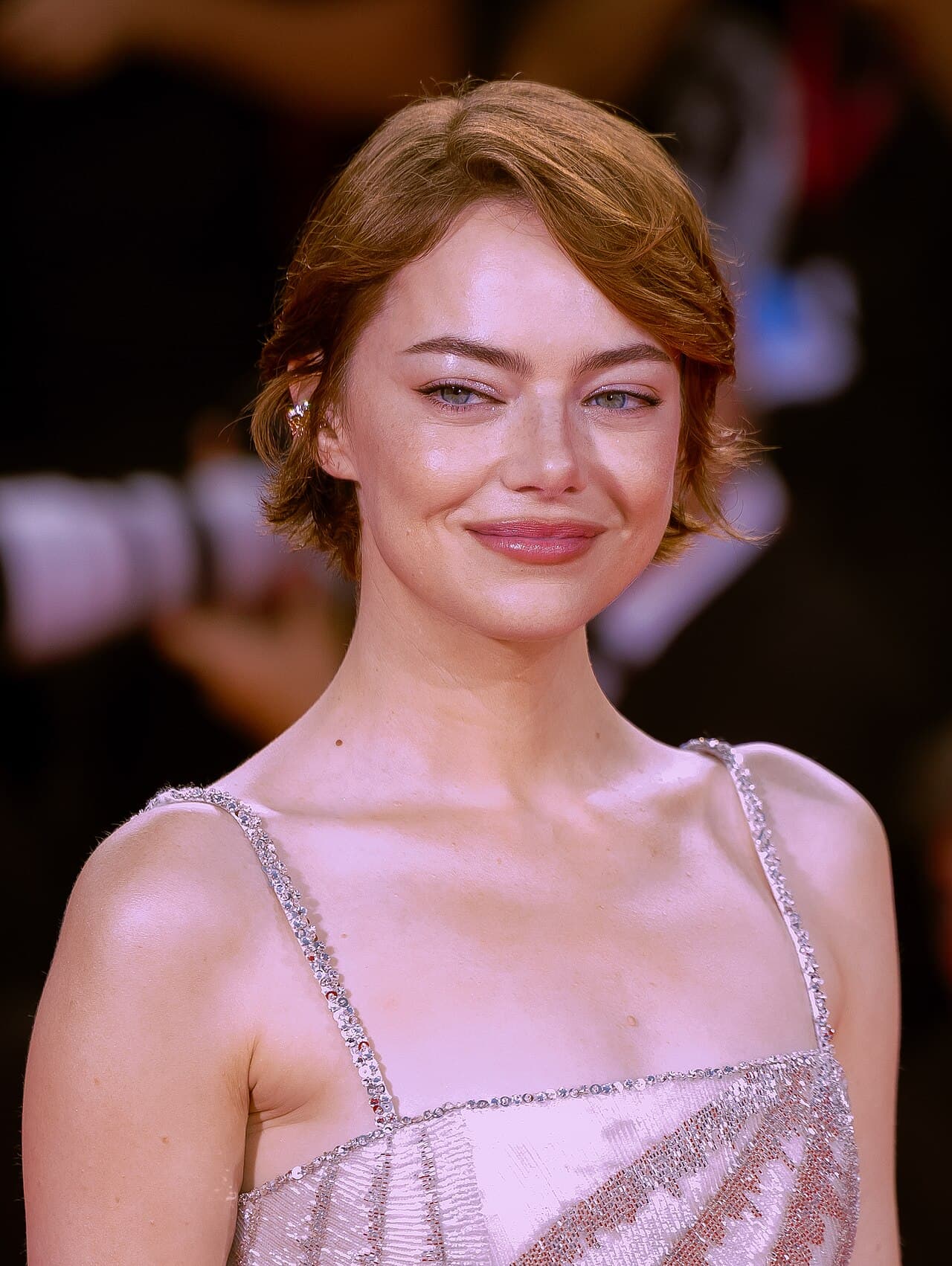
Emma Stone.

Actor · Oscar winner · Creative chameleon

The warmth of La La Land, the sharp comedy of Easy A, and the fearless strangeness of Poor Things reveal a performer who keeps reinventing herself. Discover the personality framework behind her choices.

OBJECTIVE PERSONALITY CLASSIFICATIONMM-Se/Te-PC/S(B)What does this mean?
PERSONALITY SYSTEMObjective Personality
LEAD FUNCTIONSe · Extroverted Sensing
SECOND SAVIOR FUNCTIONTe · Extroverted Thinking
MBTI EQUIVALENTESFP
01 / BEHIND THE CLASSIFICATION

The personality behind the fame.

How does a recorded OPS classification like MM-Se/Te-PC/S(B) break down? Walk through nine coins and watch the proposed type take shape. These are deductions from the archived code, not independent evidence of typing accuracy.

Scroll below to see Emma Stone take shape.

STARTING POINT512 possible OPS typesEach type combines core functions, an animal order, and sexual modalities.
THE FINISH LINEMM-Se/Te-PC/S(B)One recorded classification, decoded from its components.
Emma Stone’s HUMAN NEEDS 01—03
01
DECIDER OR OBSERVER?

Observer over Decider

Observers have more balanced Decider poles in the middle: Self (Di) and Tribe (De). Their own perspective and other people's perspectives tend to be easier to navigate. Things are the harder territory. Control (Oi) and Chaos (Oe) sit at the extremes, so disrupted plans, uncertainty, and a changing world can trigger the strongest reactions.

She moved from mainstream comedy to daring, unconventional films, building a career around creative risk. She's also spoken openly about childhood anxiety and panic attacks. The Observer tension is that even someone fearless about changing direction can feel the pressure of uncertainty and a world beyond her control.

O
02
SELF OR TRIBE?

De · Tribe over Di · Self

Tribe (De) is the stronger deciding pole. They check decisions against people, shared standards, and what works for the group: what do we need, what will others think? The strength is coordination and responsiveness; the recurring friction is the Self (Di)—knowing and defending their own position. As the portrait unfolds, notice how Tribe takes the lead.

She has built a career through daring collaborations with filmmakers such as Yorgos Lanthimos, trusting the creative exchange enough to take unusual risks. De's strength is working with others to make something bigger; the risk is being pulled between competing expectations. Under pressure, this OPS pattern suggests Emma Stone may neglect their own independent position. Greater balance comes from naming personal needs even when the group disagrees.

De
03
GATHER OR ORGANIZE?

Oe · Gather over Oi · Organize

Gather (Oe) leads with new information, experiences, and possibilities. Its strength is curiosity and adaptability; the recurring friction is narrowing the options and settling into what is already known. Another layer of the personality portrait comes into focus.

She has leapt from mainstream comedy to daring experiments such as Poor Things and Kinds of Kindness. That breadth is the advantage of Gather: it creates room to explore a new direction rather than repeating an old formula. But the same openness can make deciding what not to pursue the harder part. Under pressure, this OPS pattern suggests Emma Stone may neglect consistency, narrowing options, and following a settled plan. Greater balance comes from organizing what is already known and committing to a direction.

Oe
FIRST THREE COINSO + De + Oe

These establish the preferred human needs in the OPS framework.

Emma Stone’s FUNCTIONS 04—05
04
FEELING OR THINKING?

Thinking · T over Feeling · F

Thinking (T) evaluates decisions through reasons, logic, and what works—not a lack of emotion. Its strength is analytical consistency; Feeling (F) provides balance through values, meaning, and the human consequences of a decision. Combined with Tribe (De), this forms the recorded Savior Te.

She has worked with daring directors on unconventional films like Poor Things. Through a Thinking lens, effectiveness and internal consistency take priority when evaluating a choice. That clarity is useful, but it does not automatically answer how the decision lands with other people. Under pressure, this OPS pattern suggests Emma Stone may neglect values, emotional significance, and human consequences. Greater balance comes from considering what matters to people alongside logical effectiveness.

T → Te
05
SENSING OR INTUITION?

Sensing · S over Intuition · N

Sensing (S) focuses on concrete details, observable reality, and lived experience. Intuition (N) balances it by looking for broader patterns, concepts, and implications. Combined with Gather (Oe), this gives the recorded Savior Se.

From La La Land to Poor Things, she brings unusual characters to life through movement, voice, and visible behavior. Sensing (S) grounds the performance in tangible choices. A Sensing preference makes the tangible details especially important: what can be seen, heard, tested, or experienced directly. The risk is becoming so absorbed in what is immediately available that the broader interpretation gets less attention. Under pressure, this OPS pattern suggests Emma Stone may neglect the wider pattern, underlying meaning, and future possibilities. Greater balance comes from stepping beyond immediate facts to consider the bigger picture.

S → Se
THE TWO SAVIOR FUNCTIONSSe / Te

Opposing functions: Ni and Fi. This is a jumper classification.

Emma Stone’s ANIMAL STACK 06—07
06
PLAY OR SLEEP?

Play over Sleep

Play emphasizes external real-time engagement; Sleep emphasizes internal processing. The recorded stack places Play earlier.

Her energetic, physically inventive performances in La La Land and Poor Things make live responsiveness easy to picture. Play leads the energy exchange: momentum comes from real-time interaction and responding to what is happening around them. The difficult move is making space for solitary processing rather than staying in motion. Under pressure, this OPS pattern suggests Emma Stone may neglect private processing, rest, and reflection. Greater balance comes from slowing down to reflect before responding to the outside world.

P > S
07
CONSUME OR BLAST?

Consume over Blast

Consume gathers information for internal processing; Blast organizes and communicates information. The recorded order is Play → Consume → Sleep → Blast. This comparison follows their positions in that stack.

Stone learned to tap dance and rehearsed with Ryan Gosling for the dance sequences in La La Land. In this OPS stack, Consume comes before Blast. Consume describes taking in information; Blast describes organizing and communicating it.

C > B
Emma Stone’s ANIMAL ORIENTATION 08—09
08
INFO OR ENERGY DOMINANT?

Energy over Info

Energy dominant means Play and Sleep are both in the top three: there is access to expending energy through engagement and conserving it through internal processing. Blast last leaves the information side uneven—Consume may gather far more than gets communicated.

Stone appeared on Broadway as Sally Bowles in the Cabaret revival, performing the same stage role across a run of live shows. For Emma, this OPS stack prioritizes the Energy animals—Play and Sleep—over the Info animals, Consume and Blast. The strength is managing engagement and recovery: when to enter the world and when to retreat and integrate. Under pressure, that preference may leave information gathering or clear explanation underdeveloped. Universal balance means deliberately making time both to learn what is missing and to articulate what has been learned.

Energy
09
INTROVERSION OR EXTROVERSION?

Introversion over Extroversion

The last animal, Blast, determines this OPS coin: Play or Blast last means Introversion; Consume or Sleep last means Extroversion. This describes animal orientation, not sociability or shyness.

Stone and Dave McCary started Fruit Tree, which later worked on The Curse, a series Stone also appeared in. Emma's OPS Introversion is defined by Blast coming last in the animal stack—not by being quiet, private, or uncomfortable on stage. This order suggests the more demanding edge lies in organizing and broadcasting conclusions to others. The strength is directing energy toward preferred modes of processing; under pressure, the last animal can be postponed. Universal balance means practicing that last animal without treating public charisma as proof of extroversion.

I
Sexual Modalities

The four sexual modalities.

OPS uses masculine/feminine sensory and extroverted-deciding distinctions as framework-specific terms, not gender categories. The four modalities are already included in the original 512 types. The recorded modality is MM · Kinesthetic.

MM RECORDED MODALITYKinestheticMasculine Sensory · Masculine De
MF AudioMasculine Sensory · Feminine De
FF TesterFeminine Sensory · Feminine De
FM VisualFeminine Sensory · Masculine De
COMPLETE RECORDED OPS TYPE · MODALITY INCLUDEDMM-Se/Te-PC/S(B)

Se leads, Te supports, and the animal stack is Play → Consume → Sleep → Blast.

THE FINISHED PORTRAIT · ALL NINE COINS REVEALED

Emma Stone's complete function and animal stack

PlayConsumeSleepBlastmSefFimTefNi
MM-Se/Te-PC/S(B)DOUBLE ACTIVATED · CONSUMEExplore the Interactive Coin Builder →
THE EMMA STONE LENS

The courage to look ridiculous

From La La Land to The Favourite and Poor Things, Stone keeps choosing characters who can be messy, ambitious, and gloriously strange. Her comedy and dramatic work share a willingness to let discomfort become the most interesting part of the scene.

Poor Things and The Favourite reward her willingness to look strange, selfish, or foolish on screen. Her strength is embracing creative discomfort; the shadow is that perpetual reinvention can itself become an expectation she must keep satisfying.

Emma's Se Savior points toward immediate facts, opportunities, and real-time action. That strength can also become the reflex that gets overused when pressure rises. As a Double Decider, Emma has relatively more access to both Self and Tribe; winning approval or asserting an individual position is not the core imbalance. The sharper stressor is the missing Ni observer function: narrowing competing possibilities, looking beyond the next immediate reaction, and anticipating second-order consequences. Greater balance means practicing that less-preferred territory rather than pushing the dominant instinct harder.

Emma's animal stack (Play → Consume → Sleep → Blast) offers another pressure test. Play comes naturally first, while Blast sits last. In practical terms, balance would mean learning to put private conclusions into words and make them available for scrutiny. That is the uncomfortable growth edge worth looking for—not another flattering description of a strength.
Want to understand the Savior and Demon states behind these nine coins? Explore the complete explanation, visual examples, and typing principles on our Methodology page →

02 / KEEP EXPLORING

Different faces. Familiar patterns.

Explore other celebrities with related recorded OPS classifications. Related functions are not necessarily exact type matches.

Discover Type Twins
YOUR TURN

Curious about your own type?

Discover how your own personality might be classified through Objective Personality.

Get objectively typed
Emma Stone's Personality Type & OPS Profile | The Personality Atlas