The Personality Atlas
THE CELEBRITY PERSONALITY ARCHIVE / FILM & STAGE

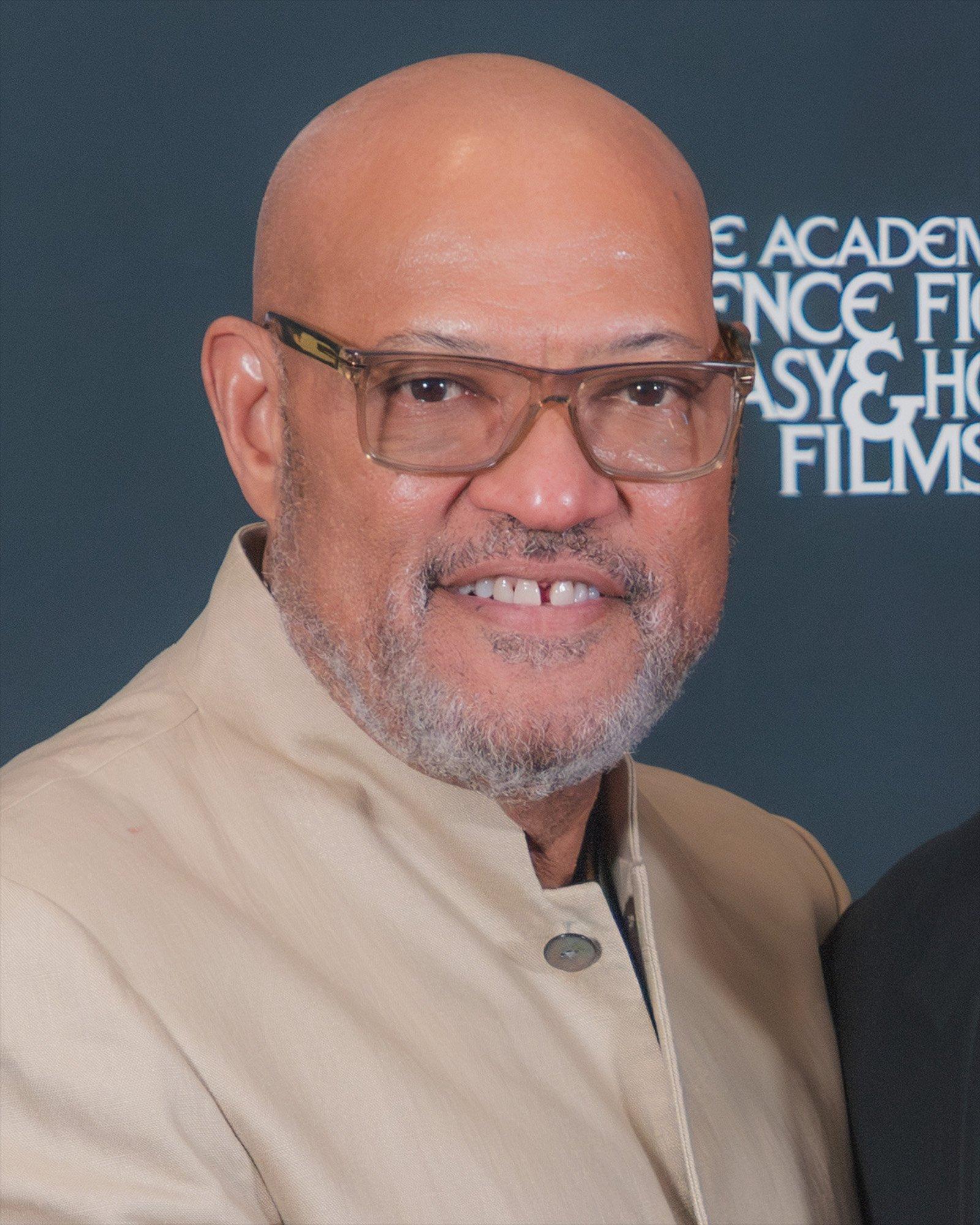
Laurence Fishburne.

Actor · Producer · Stage performer

Laurence Fishburne has spent half a century making authority look effortless: a teenage gunner in Apocalypse Now, a Tony-winning stage actor in Two Trains Running, the one-man force of Thurgood, Morpheus in The Matrix, the Bowery King in John Wick. Even when the material turns fantastical, he plays it as if it has weight, rules and consequences, which is why his gravitas never feels borrowed.

OBJECTIVE PERSONALITY CLASSIFICATIONMM-Se/Te-PC/S(B)What does this mean?
PERSONALITY SYSTEMObjective Personality
LEAD FUNCTIONSe · Extroverted Sensing
SECOND SAVIOR FUNCTIONTe · Extroverted Thinking
MBTI EQUIVALENTESFP
01 / BEHIND THE CLASSIFICATION

The personality behind the fame.

How does a recorded OPS classification like MM-Se/Te-PC/S(B) break down? Walk through nine coins and watch the proposed type take shape. These are deductions from the archived code, not independent evidence of typing accuracy.

Scroll below to see Laurence Fishburne take shape.

STARTING POINT512 possible OPS typesEach type combines core functions, an animal order, and sexual modalities.
THE FINISH LINEMM-Se/Te-PC/S(B)One recorded classification, decoded from its components.
Laurence Fishburne’s HUMAN NEEDS 01—03
01
DECIDER OR OBSERVER?

Observer over Decider

Observers have more balanced Decider poles in the middle: Self (Di) and Tribe (De). Their own perspective and other people's perspectives tend to be easier to navigate. Things are the harder territory. Control (Oi) and Chaos (Oe) sit at the extremes, so disrupted plans, uncertainty, and a changing world can trigger the strongest reactions.

Fishburne’s story keeps running straight into reality that will not hold still. He lied about his age to get Apocalypse Now, started filming at 14, and finished when he actually was 17. Later he moved across stage, television and blockbuster film as each opportunity changed shape around him. That is classic Observer pressure: the friction sits in circumstances, timing and what the world is doing now. The strength is adaptability under shifting conditions. The blind spot is expecting better conditions alone to resolve a deeper direction problem.

O
02
SELF OR TRIBE?

De · Tribe over Di · Self

Tribe (De) is the stronger deciding pole. They check decisions against people, shared standards, and what works for the group: what do we need, what will others think? The strength is coordination and responsiveness; the recurring friction is the Self (Di)—knowing and defending their own position. As the portrait unfolds, notice how Tribe takes the lead.

When William Petersen left CSI, Fishburne stepped into a major existing machine rather than building a vanity vehicle from scratch. The same pattern shows up in his executive producer work on Black-ish and Grown-ish and in his company’s overall deal with ABC Studios: he keeps meeting public, professional needs that already exist. Tribe-first gives him a practical instinct for what the production, the network or the audience requires. The strength is usefulness. The growth cost is that external standards can become so loud that his own preferred lane risks getting negotiated away.

De
03
GATHER OR ORGANIZE?

Oe · Gather over Oi · Organize

Gather (Oe) leads with new information, experiences, and possibilities. Its strength is curiosity and adaptability; the recurring friction is narrowing the options and settling into what is already known. Another layer of the personality portrait comes into focus.

Fishburne’s career is almost aggressively hard to box in: soap opera child actor, stage performer, Spike Lee collaborator, sci-fi icon, sitcom regular, Marvel player, audiobook narrator and Broadway one-man show lead. Gather over Organize fits that appetite for live openings better than a tidy single-lane career plan. The advantage is range that stays current across decades because he can move with what is available. The cost is that another interesting role can always appear. Gathering opportunities creates momentum; it does not automatically choose the one identity or mission to build around.

Oe
FIRST THREE COINSO + De + Oe

These establish the preferred human needs in the OPS framework.

Laurence Fishburne’s FUNCTIONS 04—05
04
FEELING OR THINKING?

Thinking · T over Feeling · F

Thinking (T) evaluates decisions through reasons, logic, and what works—not a lack of emotion. Its strength is analytical consistency; Feeling (F) provides balance through values, meaning, and the human consequences of a decision. Combined with Tribe (De), this forms the recorded Savior Te.

His public choices often read in straightforward, results-first terms. In 2011 he left CSI by opting not to renew his contract so he could return to movies and theatre. Earlier he wrote, directed and starred in Riff-Raff, and later he built producing roles through Cinema Gypsy and network deals. That external, executable logic is the useful edge of Thinking here: decisions become concrete work, not just atmosphere. The blind spot is that efficiency can sound final before everyone else has caught up. A workable plan is not always the same thing as a fully shared understanding.

T → Te
05
SENSING OR INTUITION?

Sensing · S over Intuition · N

Sensing (S) focuses on concrete details, observable reality, and lived experience. Intuition (N) balances it by looking for broader patterns, concepts, and implications. Combined with Gather (Oe), this gives the recorded Savior Se.

Fishburne’s authority is rarely abstract. Morpheus, Perry White, Jack Crawford and the Bowery King all land through physical presence, voice, timing and immediate command of the scene. Even his stage work in Thurgood depended on making a historical figure tangible in real time. Sensing gives him a gift for turning status into something an audience can actually see and hear. The strength is impact you do not have to explain twice. The cost is that immediate force can dominate the room so completely that the slower long-range reading of what it all means gets less attention.

S → Se
THE TWO SAVIOR FUNCTIONSSe / Te

Opposing functions: Ni and Fi. This is a jumper classification.

Laurence Fishburne’s ANIMAL STACK 06—07
06
PLAY OR SLEEP?

Play over Sleep

Play emphasizes external real-time engagement; Sleep emphasizes internal processing. The recorded stack places Play earlier.

Play over Sleep shows up in how often Fishburne’s strongest public work happens in active exchange: opposite Angela Bassett onstage, returning to Keanu Reeves in John Wick after The Matrix, joining ensembles from Black-ish to Hannibal and helping productions move through other people. The strength of Play first is momentum generated with others in real time. It keeps the work alive, responsive and socially useful. The blind spot is that constant engagement can outrun solitary recalibration. Growth sometimes costs him a pause before the next collaboration or obligation grabs the wheel.

P > S
07
CONSUME OR BLAST?

Consume over Blast

Consume gathers information for internal processing; Blast organizes and communicates information. The recorded order is Play → Consume → Sleep → Blast. This comparison follows their positions in that stack.

Consume arrives earlier than Blast, and that matters. Fishburne’s authority can make people assume he is always in declaration mode, but his career looks more like long accumulation before pronouncement: years of stage work, supporting roles, television runs, voice work and historical performance before or alongside the iconic mentor parts. Even his Audible reading of The Autobiography of Malcolm X points to depth of intake, not just projection. The strength is substance behind the voice. The blind spot is that gathering material can delay the moment of stating the thesis plainly and early enough for others to align around it.

C > B
Laurence Fishburne’s ANIMAL ORIENTATION 08—09
08
INFO OR ENERGY DOMINANT?

Energy over Info

Energy dominant means Play and Sleep are both in the top three: there is access to expending energy through engagement and conserving it through internal processing. Blast last leaves the information side uneven—Consume may gather far more than gets communicated.

This stack lands on Energy. Fishburne’s public life shows both sides of that balance: the outward activation of ensemble work and franchise acting, and the inward reset of returning to theatre, one-person performance and more self-contained projects. That combination helps explain his durability better than simple hustle does. He can engage and conserve. The missing balance sits at the Blast end, because Blast is last. The strength is sustained presence without pure overextension. The growth cost is that he can keep doing, absorbing and refining while leaving the larger message less explicitly organized for other people.

Energy
09
INTROVERSION OR EXTROVERSION?

Introversion over Extroversion

The last animal, Blast, determines this OPS coin: Play or Blast last means Introversion; Consume or Sleep last means Extroversion. This describes animal orientation, not sociability or shyness.

Fishburne’s Introversion coin should not be confused with shyness or lack of command. Few actors project public authority more convincingly. The point is structural: with Blast last, broadcasting a settled conclusion is less natural than engaging, taking things in and privately consolidating. That is why a towering performance can carry more of the explanation than an overt mission statement does. The strength is depth behind the presence. The blind spot is assuming the room understood the full point because the performance was undeniable. Growth means making the thesis more explicit off-camera, not performing smaller.

I
Sexual Modalities

The four sexual modalities.

OPS uses masculine/feminine sensory and extroverted-deciding distinctions as framework-specific terms, not gender categories. The four modalities are already included in the original 512 types. The recorded modality is MM · Kinesthetic.

MM RECORDED MODALITYKinestheticMasculine Sensory · Masculine De
MF AudioMasculine Sensory · Feminine De
FF TesterFeminine Sensory · Feminine De
FM VisualFeminine Sensory · Masculine De
COMPLETE RECORDED OPS TYPE · MODALITY INCLUDEDMM-Se/Te-PC/S(B)

Se leads, Te supports, and the animal stack is Play → Consume → Sleep → Blast.

THE FINISHED PORTRAIT · ALL NINE COINS REVEALED

Laurence Fishburne's complete function and animal stack

PlayConsumeSleepBlastmSefFimTefNi
MM-Se/Te-PC/S(B)DOUBLE ACTIVATED · CONSUMEExplore the Interactive Coin Builder →
THE LAURENCE FISHBURNE LENS

Authority that doesn’t need to shout

Fishburne’s public image is granite: Morpheus in dark glasses, the Bowery King issuing commands, Thurgood carrying a one-man show. But the career behind that authority is more restless than the persona suggests—child actor, stage craftsman, sitcom regular, producer, narrator, franchise anchor. The impression is steel; the actual working pattern is movement.

His Se/Te pairing makes him unusually useful in public work. Se gives him command of what is physically there: the room, the line, the stare, the timing. Te turns that presence into decisions, structure and professional clarity. The limit is that force can start to substitute for explanation. A role can feel settled before the wider pattern is.

As an Observer and Double Decider, Fishburne’s deeper pressure sits with circumstances, timing and control more than endless people drama. He can handle tribe demands, but unstable conditions are the sharper irritant. The human-needs imbalance is overworking what is immediate and changeable while underusing long-range meaning. Neglected Ni, opposite his lead Se, asks what all this motion is building toward.

Play → Consume → Sleep → Blast shows someone who engages, absorbs and privately consolidates before broadcasting a final thesis. Blast last can leave the message less explicit than the presence. The balancing move is not less authority; it is naming the point earlier and more clearly—before a production starts, before a collaboration drifts, before the performance has to explain everything alone.

Want to understand the Savior and Demon states behind these nine coins? Explore the complete explanation, visual examples, and typing principles on our Methodology page →

02 / KEEP EXPLORING

Different faces. Familiar patterns.

Explore other celebrities with related recorded OPS classifications. Related functions are not necessarily exact type matches.

Discover Type Twins
YOUR TURN

Curious about your own type?

Discover how your own personality might be classified through Objective Personality.

Get objectively typed
Laurence Fishburne's Personality Type & OPS Profile | The Personality Atlas