The Personality Atlas
THE CELEBRITY PERSONALITY ARCHIVE / FILM & THEATER

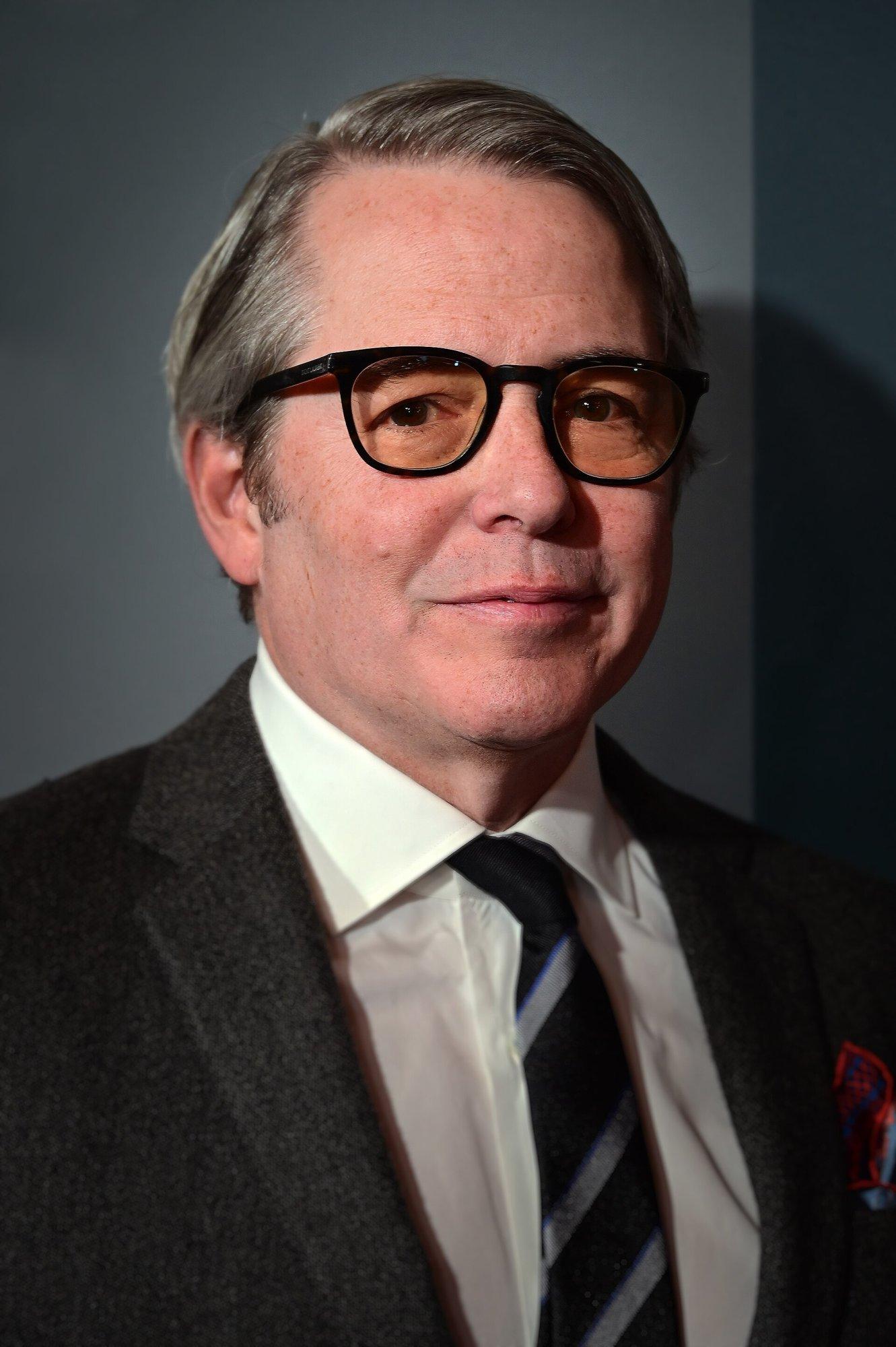
Matthew Broderick.

Actor · Broadway and Film Lead

Matthew Broderick built a career that looks lighter on the surface than it is underneath: the quick grin of Ferris Bueller, the clipped intelligence of WarGames, the tightly wound panic of Leo Bloom, and a Broadway résumé sturdy enough to earn two Tony Awards decades apart. The through line is not noisy reinvention so much as a precise, enduring center—an actor who keeps returning to the work itself, onstage and on camera, even after pop culture already turned him into a permanent reference point.

OBJECTIVE PERSONALITY CLASSIFICATIONFF-Fi/Ni-SC/B(P)What does this mean?
PERSONALITY SYSTEMObjective Personality
LEAD FUNCTIONFi · Introverted Feeling
SECOND SAVIOR FUNCTIONNi · Introverted Intuition
MBTI EQUIVALENTISFP
01 / BEHIND THE CLASSIFICATION

The personality behind the fame.

How does a recorded OPS classification like FF-Fi/Ni-SC/B(P) break down? Walk through nine coins and watch the proposed type take shape. These are deductions from the archived code, not independent evidence of typing accuracy.

Scroll below to see Matthew Broderick take shape.

STARTING POINT512 possible OPS typesEach type combines core functions, an animal order, and sexual modalities.
THE FINISH LINEFF-Fi/Ni-SC/B(P)One recorded classification, decoded from its components.
Matthew Broderick’s HUMAN NEEDS 01—03
01
DECIDER OR OBSERVER?

Decider over Observer

Deciders have more balanced Observer poles in the middle: Control (Oi) and Chaos (Oe). Organizing what's known and handling what's new tend to feel more manageable. People are the harder territory. Self (Di) and Tribe (De) sit at the extremes, so judgment, rejection, approval, and conflict can trigger the strongest reactions.

Broderick’s public story has often turned on other people’s judgments: Mel Gussow’s review helping move him from off-Broadway to wider notice, two Tony wins, later Emmy and Golden Globe nominations, and the enduring shorthand of “Ferris Bueller” following him for decades. That pattern fits a Decider pressure point, where the friction centers on significance, reputation, and what other people decide you are. His strength is making characters legible and human fast. The blind spot is how easily a career becomes a referendum—praised, boxed in, or reinterpreted by somebody else’s verdict.

D
02
SELF OR TRIBE?

Di · Self over De · Tribe

Self (Di) is the stronger deciding pole. They check decisions against their own values or reasons first: what makes sense to me, what feels right to me? The strength is independent conviction; the recurring friction is the Tribe (De)—other people's standards, feedback, and expectations. As the portrait unfolds, notice how Self takes the lead.

Even after becoming a film fixture, Broderick kept circling back to Broadway, took on off-Broadway work like The Foreigner, and even directed himself in Infinity instead of simply milking the Ferris-to-family-film lane. That looks more Self than Tribe: a career guided by an internal standard of what feels worth doing, not just by the market’s easiest request. The strength is independence. He does not need every choice to be publicly obvious before committing to it. The cost is that a personally coherent path can look oddly understated or underexplained to the people expected to follow along.

Di
03
GATHER OR ORGANIZE?

Oi · Organize over Oe · Gather

Organize (Oi) leads with refining, preserving, and structuring what is already known. Its strength is preparation and clear direction; the recurring friction is unexpected change that disrupts the plan. Another layer of the personality portrait comes into focus.

Broderick’s résumé is broad, but it is not random. Neil Simon shows up early and repeatedly, Nathan Lane becomes a recurring partner, and Broadway remains a reliable home base even as film and television opportunities expand around it. That tilt is more Organize than Gather: settling into trusted frameworks, proven collaborators, and enduring lanes rather than chasing every new possibility for its own sake. The strength is coherence. Decades later, the body of work still reads as one person’s career, not a pile of disconnected opportunities. The tradeoff is that the familiar structure can win out over wilder reinvention.

Oi
FIRST THREE COINSD + Di + Oi

These establish the preferred human needs in the OPS framework.

Matthew Broderick’s FUNCTIONS 04—05
04
FEELING OR THINKING?

Feeling · F over Thinking · T

Feeling (F) evaluates decisions through values, meaning, and what matters—not simply through emotion. Its strength is a clear sense of significance; Thinking (T) provides balance through impersonal reasons, consistency, and evidence. Combined with Self (Di), this forms the recorded Savior Fi.

On Who Do You Think You Are?, Broderick said tracing his family history emotionally reconnected him to Glory, and the research helped identify an ancestor’s previously unnamed grave. That is a useful public example of Feeling at work: private significance becoming the standard that gives an event its weight. The strength is sincerity that does not need to be manufactured for effect. Meaning matters because it actually matters to him. The blind spot is that inner conviction, however genuine, does not automatically answer the more external questions—what others need, what should be communicated, or how a deeply personal meaning lands beyond the self.

F → Fi
05
SENSING OR INTUITION?

Intuition · N over Sensing · S

Intuition (N) focuses on concepts, patterns, and what information might mean. Sensing (S) balances it through observable facts, physical detail, and direct experience. Combined with Organize (Oi), this gives the recorded Savior Ni.

Broderick’s landmark projects often turn on a clean underlying premise: a teenager gaming a military system in WarGames, a single outlaw day in Ferris Bueller’s Day Off, a doomed scheme spiraling in The Producers, even the historical through-line he drew between Glory and his own ancestry research. That pattern illustrates Intuition’s taste for the concept behind the performance, the thread that makes separate details hang together. The strength is elegant focus. He can carry a story by locking onto what it is really about. The cost is that the messier, more purely immediate details may matter less until they force themselves into the frame.

N → Ni
THE TWO SAVIOR FUNCTIONSFi / Ni

Opposing functions: Te and Se. This is a jumper classification.

Matthew Broderick’s ANIMAL STACK 06—07
06
PLAY OR SLEEP?

Sleep over Play

Play emphasizes external real-time engagement; Sleep emphasizes internal processing. The recorded stack places Sleep earlier.

Broderick’s stack starts with Sleep over Play, and his career makes that easy to picture. He trained at HB Studio, broke through in workshop and stage settings, and has spent decades returning to roles that reward internal calibration more than constant public improvising. Sleep’s strength is a centered performance: the part feels considered before it is released. That can make even light comedy look deceptively effortless. The cost is that Play comes later. Spontaneous back-and-forth, public overexposure, and living in endless real-time reaction may be less appealing than getting the part right first.

S > P
07
CONSUME OR BLAST?

Consume over Blast

Consume gathers information for internal processing; Blast organizes and communicates information. The recorded order is Sleep → Consume → Blast → Play. This comparison follows their positions in that stack.

After that, Broderick adds Consume over Blast. The combination with earlier Sleep helps explain a career built on taking in material—stage training, voice work, revivals, guest turns, and even ancestry research—before rushing to package one loud thesis about himself. The strength is range with substance behind it; he has actually accumulated craft across mediums instead of just projecting versatility. The weakness is that Blast comes later. A career this full can still undersell its own point, leaving other people to summarize him as Ferris, Simba, or Leo Bloom rather than hearing a sharper statement from Broderick himself.

C > B
Matthew Broderick’s ANIMAL ORIENTATION 08—09
08
INFO OR ENERGY DOMINANT?

Info over Energy

Info dominant means Consume and Blast are both in the top three: gathering and communicating information are more balanced. Play last leaves the energy side uneven—Sleep can conserve energy without enough spontaneous outward engagement.

Broderick lands on the Info side because Sleep, Consume, and Blast all arrive before Play. Publicly, that shows up in how much of his career depends on taking in a role, shaping it internally, and then delivering a polished version—whether that is Broadway comedy, voice acting in The Lion King, or a precise guest turn on Only Murders in the Building. The strength is clarity once the material is ready. The void sits with the missing Play: less appetite for constant unscripted exchange, quicker live iteration, or social momentum for its own sake.

Info
09
INTROVERSION OR EXTROVERSION?

Introversion over Extroversion

The last animal, Play, determines this OPS coin: Play or Blast last means Introversion; Consume or Sleep last means Extroversion. This describes animal orientation, not sociability or shyness.

Play comes last, which gives the system’s Introversion result—even for a man whose face is attached to one of cinema’s most extroverted charm offensives. That distinction matters. Broderick has spent a lifetime collaborating with casts, trading timing with Nathan Lane, and carrying major stage productions; the question is not shyness. It is whether outward spontaneity comes as naturally as private processing and prepared delivery. The strength is selectivity: he need not flood the room to land the scene. The growth cost is staying engaged long enough for real-time friction and surprise to improve the work, not just disturb it.

I
Sexual Modalities

The four sexual modalities.

OPS uses masculine/feminine sensory and extroverted-deciding distinctions as framework-specific terms, not gender categories. The four modalities are already included in the original 512 types. The recorded modality is FF · Tester.

MM KinestheticMasculine Sensory · Masculine De
MF AudioMasculine Sensory · Feminine De
FF RECORDED MODALITYTesterFeminine Sensory · Feminine De
FM VisualFeminine Sensory · Masculine De
COMPLETE RECORDED OPS TYPE · MODALITY INCLUDEDFF-Fi/Ni-SC/B(P)

Fi leads, Ni supports, and the animal stack is Sleep → Consume → Blast → Play.

THE FINISHED PORTRAIT · ALL NINE COINS REVEALED

Matthew Broderick's complete function and animal stack

SleepConsumeBlastPlaymFifSemNifTe
FF-Fi/Ni-SC/B(P)DOUBLE ACTIVATED · SLEEPExplore the Interactive Coin Builder →
THE MATTHEW BRODERICK LENS

The smile has a spine.

Ferris Bueller made Broderick look like effortless mischief in human form, but the longer public record is more disciplined than breezy. Before and after that movie, he kept building on stage, from Brighton Beach Memoirs to The Producers to Plaza Suite. Even his own comment about doors opening by chance hints at someone aware that the public image is lighter than the machinery underneath.

His Fi/Ni savior pairing gives him a sharp private standard and a narrow conceptual line. That is a real strength: performances and career choices tend to feel chosen rather than merely available. The limit is equally clear. What feels inwardly true and conceptually coherent can stay too sealed, leaving others to project their own summary onto work that is more deliberate than it first appears.

As a Decider and Double Observer, Broderick’s recurring pressure is less about controlling chaos than about human significance—who gets to define him, what counts, and how much weight to give his own judgment versus everyone else’s. The neglected function is Te, opposite his lead Fi. Growth means making the reasoning and external usefulness more visible instead of assuming the inner standard speaks for itself.

Sleep → Consume → Blast → Play describes a man more comfortable processing, absorbing, and then presenting than living in endless improvisational ping-pong. Play last can bottleneck fresh feedback even in a highly social profession. The balancing move is not becoming louder. It is entering more unfinished collaboration early—letting directors, castmates, or audiences complicate the idea before the performance has already been privately locked.

Want to understand the Savior and Demon states behind these nine coins? Explore the complete explanation, visual examples, and typing principles on our Methodology page →

02 / KEEP EXPLORING

Different faces. Familiar patterns.

Explore other celebrities with related recorded OPS classifications. Related functions are not necessarily exact type matches.

Discover Type Twins
YOUR TURN

Curious about your own type?

Discover how your own personality might be classified through Objective Personality.

Get objectively typed
Matthew Broderick's Personality Type & OPS Profile | The Personality Atlas