The Personality Atlas
THE CELEBRITY PERSONALITY ARCHIVE / BUSINESS & INNOVATION

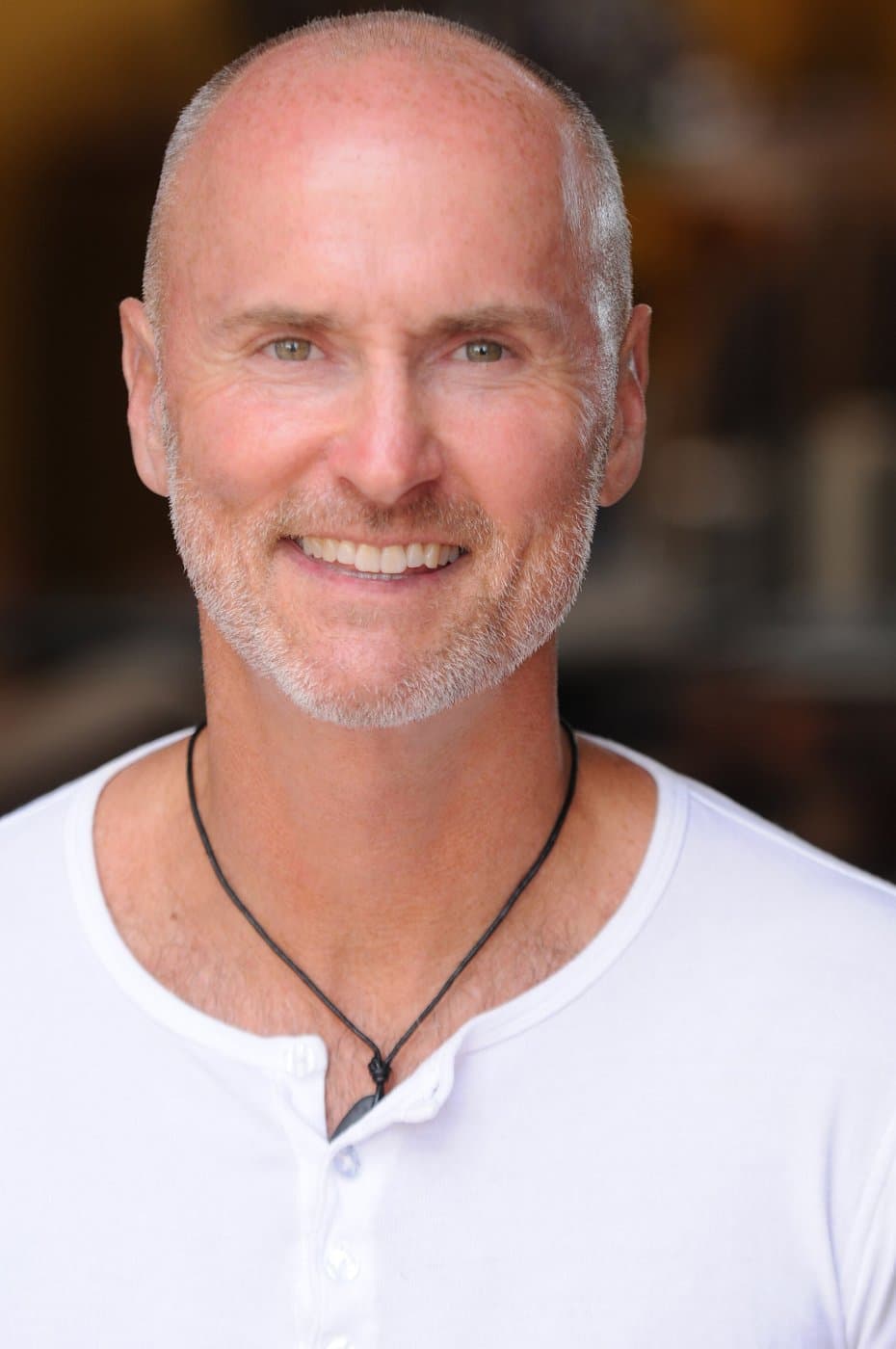
Marc Randolph.

Entrepreneur · Netflix Co-founder · Author

Marc Randolph didn't just co-found Netflix; he named it, built its early interface, and helped prove the idea by mailing a CD in a greeting-card envelope. His career reads like a chain of direct-mail experiments, startup pivots and teaching roles, with the revealing twist that he has always seemed more energized by the messy birth of a model than by the dignified job of running it forever.

OBJECTIVE PERSONALITY CLASSIFICATIONFF-Ne/Ti-CP/B(S) #2What does this mean?
PERSONALITY SYSTEMObjective Personality
LEAD FUNCTIONNe · Extroverted Intuition
SECOND SAVIOR FUNCTIONTi · Introverted Thinking
MBTI EQUIVALENTENTP
01 / BEHIND THE CLASSIFICATION

The personality behind the fame.

How does a recorded OPS classification like FF-Ne/Ti-CP/B(S) #2 break down? Walk through nine coins and watch the proposed type take shape. These are deductions from the archived code, not independent evidence of typing accuracy.

Scroll below to see Marc Randolph take shape.

STARTING POINT512 possible OPS typesEach type combines core functions, an animal order, and sexual modalities.
THE FINISH LINEFF-Ne/Ti-CP/B(S) #2One recorded classification, decoded from its components.
Marc Randolph’s HUMAN NEEDS 01—03
01
DECIDER OR OBSERVER?

Observer over Decider

Observers have more balanced Decider poles in the middle: Self (Di) and Tribe (De). Their own perspective and other people's perspectives tend to be easier to navigate. Things are the harder territory. Control (Oi) and Chaos (Oe) sit at the extremes, so disrupted plans, uncertainty, and a changing world can trigger the strongest reactions.

Randolph's most famous business insight began with a very unglamorous question: can a disc survive the mail? He and Reed Hastings bought a music CD, slid it into a greeting-card envelope, and waited to see whether the postal system would ruin the plan. That is classic Observer friction—less about status or approval than about conditions, logistics and stubborn reality. His strength is treating uncertainty like an experiment. The blind spot is spending so much energy solving the next external obstacle that a larger commitment can keep getting delayed by one more test.
O
02
SELF OR TRIBE?

Di · Self over De · Tribe

Self (Di) is the stronger deciding pole. They check decisions against their own values or reasons first: what makes sense to me, what feels right to me? The strength is independent conviction; the recurring friction is the Tribe (De)—other people's standards, feedback, and expectations. As the portrait unfolds, notice how Self takes the lead.

When Randolph says he was good at picking the three broken things that mattered and not the other ninety-seven, he sounds less attached to title than to his own read on fit. He ceded the CEO role to Hastings, moved into product work, and later said he preferred the startup stage. Self over Tribe gives him a useful independence: he can judge where he belongs without waiting for a crowd to certify it. The cost is that a strong private verdict can outrun consensus, leaving other people to decide whether his read becomes the company's direction.

Di
03
GATHER OR ORGANIZE?

Oe · Gather over Oi · Organize

Gather (Oe) leads with new information, experiences, and possibilities. Its strength is curiosity and adaptability; the recurring friction is narrowing the options and settling into what is already known. Another layer of the personality portrait comes into focus.

His career before and after Netflix is almost a catalog of open loops: Cherry Lane direct mail, MacUser, MacWarehouse, MicroWarehouse, Borland, Visioneer, Integrity QA, Netflix, boards, mentorships, speaking. Gather over Organize fits that appetite for fresh angles and moving targets. He keeps finding another business model, another delivery insight, another arena where customer behavior can be tested. The strength is adaptability. The growth cost is selectivity. A person who sees five viable directions can still avoid the harder discipline of staying long enough for one structure to become boring, durable and fully built.

Oe
FIRST THREE COINSO + Di + Oe

These establish the preferred human needs in the OPS framework.

Marc Randolph’s FUNCTIONS 04—05
04
FEELING OR THINKING?

Thinking · T over Feeling · F

Thinking (T) evaluates decisions through reasons, logic, and what works—not a lack of emotion. Its strength is analytical consistency; Feeling (F) provides balance through values, meaning, and the human consequences of a decision. Combined with Self (Di), this forms the recorded Savior Ti.

Randolph's recorded judging function is Ti, and Netflix's early design gives a concrete example. He built the site not just as a storefront but as a market-research system, constantly testing versions of the interface and using the data to refine queues, recommendations and inventory flow. The strength of Thinking here is precision: what is the mechanism, and does it actually work? The blind spot is assuming a clean model settles the whole issue. Even elegant systems still have to survive messy scale, competing priorities and other people's different conclusions about what to do next.

T → Ti
05
SENSING OR INTUITION?

Intuition · N over Sensing · S

Intuition (N) focuses on concepts, patterns, and what information might mean. Sensing (S) balances it through observable facts, physical detail, and direct experience. Combined with Gather (Oe), this gives the recorded Savior Ne.

Ne shows up in how Randolph kept connecting ideas that did not obviously belong together yet: Amazon's e-commerce model, direct-mail marketing, overnight shipping, new disc formats, user-interface testing and subscriber behavior. The Santa Cruz CD-in-an-envelope test worked because he was already mentally combining industries. Intuition's strength is seeing the opening before the category fully exists. Its cost is abundance. If every development hints at another possible pivot, then deciding which possibility deserves the company—not just a clever trial—becomes expensive, and some appealing ideas will have to stay unbuilt.

N → Ne
THE TWO SAVIOR FUNCTIONSNe / Ti

Opposing functions: Si and Fe.

Marc Randolph’s ANIMAL STACK 06—07
06
CONSUME OR BLAST?

Consume over Blast

Consume gathers information for internal processing; Blast organizes and communicates information. The recorded order is Consume → Play → Blast → Sleep. This comparison follows their positions in that stack.

Consume is the clearest starting point in Randolph's public record. Long before Netflix looked inevitable, he was studying customer buying behavior at Cherry Lane, learning circulation at MacUser and refining direct-to-consumer ideas through multiple companies. He did not begin with a grand speech; he began by taking in patterns until a workable opportunity emerged. The strength of Consume over Blast is depth before declaration. The cost is familiar to founders: more input can always be justified. At some point, gathering insight stops being preparation and starts postponing the clean public call about what the business is.

C > B
07
PLAY OR SLEEP?

Play over Sleep

Play emphasizes external real-time engagement; Sleep emphasizes internal processing. The recorded stack places Play earlier.

Play comes earlier than Sleep, and Randolph's career is full of live back-and-forth that made ideas move faster. The Netflix concept took shape during commutes with Hastings; later, he and Mitch Lowe tested the kiosk idea that became Redbox. After taking in information, he seems quickest when a concept can be pushed around with other people in real time. That gives him energy, speed and sharper iteration. The growth cost is quieter integration. Constant exchange can keep a venture lively while still shortchanging the slower internal reset that decides which experiments were actually worth repeating.

P > S
Marc Randolph’s ANIMAL ORIENTATION 08—09
08
INFO OR ENERGY DOMINANT?

Info over Energy

Info dominant means Consume and Blast are both in the top three: gathering and communicating information are more balanced. Sleep last leaves the energy side uneven—Play can keep engagement going without enough private recovery.

Randolph's stack is Info-dominant, which fits a founder who gathers lessons and then turns them into clear takeaways for teams, students, readers and keynote audiences. The same person who built market tests at Netflix later wrote That Will Never Work, hosts a podcast by the same name and serves as Entrepreneur in Residence at High Point. Information wants to move outward. The missing balance sits in Sleep last. He can keep learning, teaching and collaborating at a high clip, but private consolidation and genuine downtime are easier to underrate when the next audience or opportunity is already waiting.

Info
09
INTROVERSION OR EXTROVERSION?

Extroversion over Introversion

The last animal, Sleep, determines this OPS coin: Play or Blast last means Introversion; Consume or Sleep last means Extroversion. This describes animal orientation, not sociability or shyness.

OPS Extroversion here does not mean cocktail-party charisma; it means Sleep lands last, so the system naturally prioritizes outward information flow and engagement over prolonged internal settling. Randolph's own quote about startup triage captures it: he likes fixing the urgent three, not nursing all ninety-seven problems through a long private digest. That bias can be enormously productive in early-stage chaos and in a public second act of speaking, advising and podcasting. The blind spot is cumulative. Without deliberate pause, lessons can be repeated as anecdotes before they are fully metabolized into a steadier operating rhythm.

E
Sexual Modalities

The four sexual modalities.

OPS uses masculine/feminine sensory and extroverted-deciding distinctions as framework-specific terms, not gender categories. The four modalities are already included in the original 512 types. The recorded modality is FF · Tester.

MM KinestheticMasculine Sensory · Masculine De
MF AudioMasculine Sensory · Feminine De
FF RECORDED MODALITYTesterFeminine Sensory · Feminine De
FM VisualFeminine Sensory · Masculine De
ADDITIONAL LAYER · SOCIAL TYPE

The four social types.

Social types are an additional layer on top of the original Objective Personality classification, introduced later in OPS research. They describe two proposed social preference coins: Flex vs. Friends and Generalize vs. Specialize. The combination and priority of these preferences produce four social types. Marc Randolph's recorded social type is #2.

SOCIAL #1 #1Flex · Generalize
SOCIAL #2 RECORDED SOCIAL TYPE#2Generalize · Friends
SOCIAL #3 #3Specialize · Flex
SOCIAL #4 #4Friends · Specialize
COMPLETE RECORDED OPS TYPE · MODALITY INCLUDED + SOCIAL TYPEFF-Ne/Ti-CP/B(S) #2

Ne leads, Ti supports, and the animal stack is Consume → Play → Blast → Sleep.

THE FINISHED PORTRAIT · ALL NINE COINS REVEALED

Marc Randolph's complete function and animal stack

ConsumePlayBlastSleepmNemTifFefSi
FF-Ne/Ti-CP/B(S) #2DOUBLE ACTIVATED · PLAYExplore the Interactive Coin Builder →
THE MARC RANDOLPH LENS

The founder who would rather test than mythologize.

Netflix now looks like destiny, but Randolph's origin story is a man in Santa Cruz buying a music CD and a greeting card just to see if the mail would cooperate. The public image is founder wisdom; the person underneath is a tinkerer who trusts experiments more than mythology.

His Ne/Ti pairing is excellent at linking distant dots and stripping them into a workable mechanism. That helped him combine direct-mail lessons, software testing and customer data into a business model people could use. The limit is equally clear: a mind built for triage and invention can get restless when the job becomes maintenance, repetition and long-horizon organizational patience.

As an Observer and Double Decider, Randolph is freer with people than with the shifting puzzle of what to build or test next. That pairing leaves the deeper imbalance in control, certainty and practical constraints. Neglected Si sits opposite his lead Ne, so steady routines, proven procedures and staying with one established method can feel less compelling than the next useful possibility.

Consume → Play → Blast → Sleep explains why he can absorb patterns, spar with collaborators and then teach the lesson, yet still underrate quiet consolidation. Sleep last can look productive until the calendar fills with boards, talks and new experiments without a real pause to integrate. Keep the brainstorming, but block review time after each launch to write down what actually deserves repeating.

Want to understand the Savior and Demon states behind these nine coins? Explore the complete explanation, visual examples, and typing principles on our Methodology page →

02 / KEEP EXPLORING

Different faces. Familiar patterns.

Explore other celebrities with related recorded OPS classifications. Related functions are not necessarily exact type matches.

Discover Type Twins
YOUR TURN

Curious about your own type?

Discover how your own personality might be classified through Objective Personality.

Get objectively typed
Marc Randolph's Personality Type & OPS Profile | The Personality Atlas