The Personality Atlas
THE CELEBRITY PERSONALITY ARCHIVE / CHESS

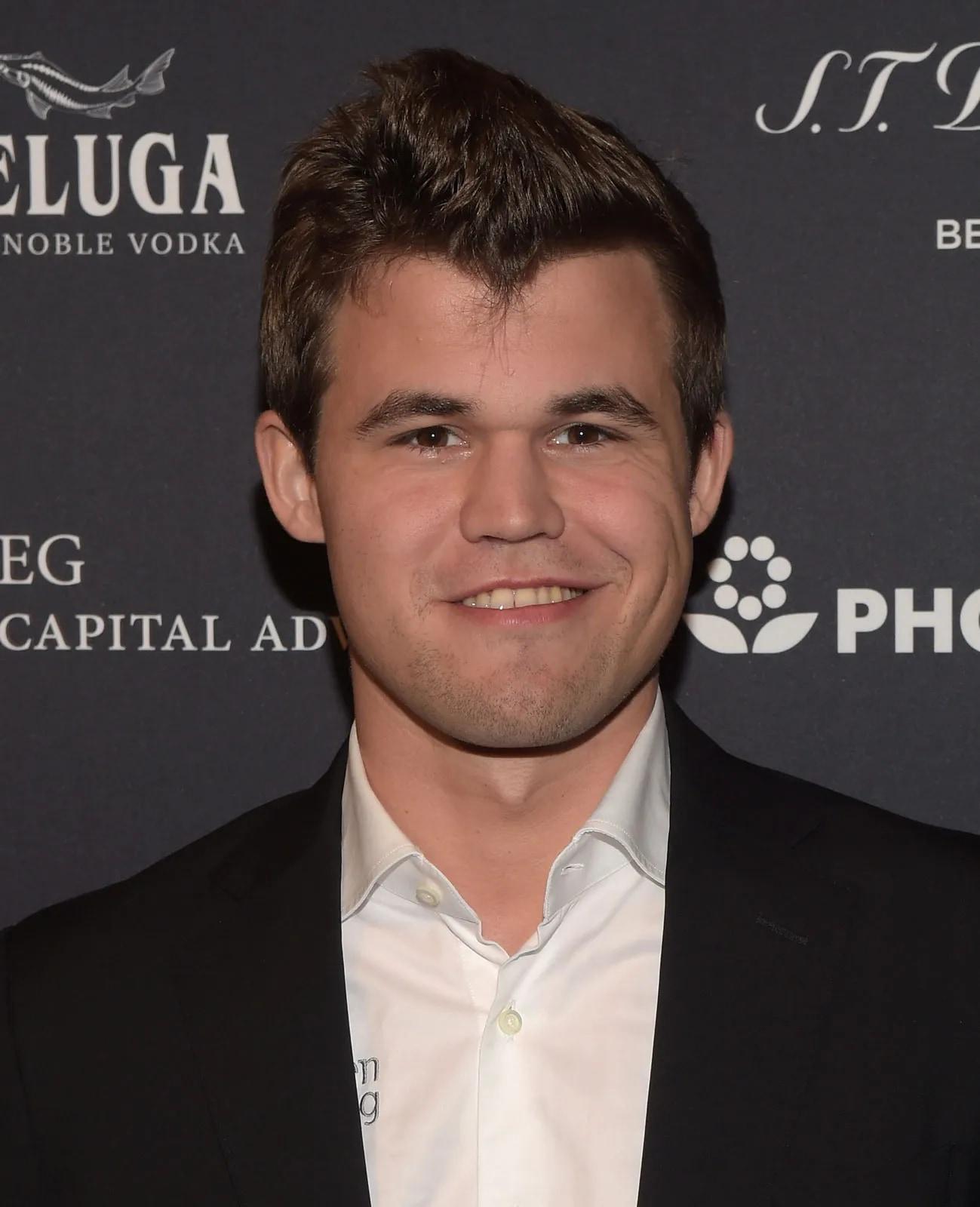
Magnus Carlsen.

Chess Grandmaster · World Champion

Magnus Carlsen turned chess greatness into a repetitive public inconvenience for everybody else: grandmaster at 13, world No. 1 at 19, world champion at 22, owner of the highest rating ever recorded, and a serial winner in classical, rapid, blitz and freestyle formats. His public image is icy control, but the career is just as marked by what he will not pretend to value—formats, obligations or prestige rituals that no longer meet his own bar.

OBJECTIVE PERSONALITY CLASSIFICATIONMF-Fi/Se-CP/S(B)What does this mean?
PERSONALITY SYSTEMObjective Personality
LEAD FUNCTIONFi · Introverted Feeling
SECOND SAVIOR FUNCTIONSe · Extroverted Sensing
MBTI EQUIVALENTISFP
01 / BEHIND THE CLASSIFICATION

The personality behind the fame.

How does a recorded OPS classification like MF-Fi/Se-CP/S(B) break down? Walk through nine coins and watch the proposed type take shape. These are deductions from the archived code, not independent evidence of typing accuracy.

Scroll below to see Magnus Carlsen take shape.

STARTING POINT512 possible OPS typesEach type combines core functions, an animal order, and sexual modalities.
THE FINISH LINEMF-Fi/Se-CP/S(B)One recorded classification, decoded from its components.
Magnus Carlsen’s HUMAN NEEDS 01—03
01
DECIDER OR OBSERVER?

Decider over Observer

Deciders have more balanced Observer poles in the middle: Control (Oi) and Chaos (Oe). Organizing what's known and handling what's new tend to feel more manageable. People are the harder territory. Self (Di) and Tribe (De) sit at the extremes, so judgment, rejection, approval, and conflict can trigger the strongest reactions.

Carlsen’s public friction shows up less in chaotic positions than in what the chess world expects him to endorse. He withdrew from the Candidates cycle after criticizing format changes as not “modern and fair,” and in 2023 declined to defend the classical title, citing a lack of motivation. That points to Decider pressure: significance, expectations and what other people want him to validate. The strength is refusing hollow status games. The blind spot is that when he stops believing in the ritual, everyone around him is left dealing with the consequences of his refusal.
D
02
SELF OR TRIBE?

Di · Self over De · Tribe

Self (Di) is the stronger deciding pole. They check decisions against their own values or reasons first: what makes sense to me, what feels right to me? The strength is independent conviction; the recurring friction is the Tribe (De)—other people's standards, feedback, and expectations. As the portrait unfolds, notice how Self takes the lead.

His protest over the world championship cycle and later choice to give up the title rather than defend it on autopilot show a strong internal bar for what counts as worth doing. Self-first can look ruthless in a sport built on tradition: he would rather keep his own standard intact than perform loyalty for applause. That independence is a strength; it keeps prestige from running his calendar. The cost is social. Fans, organizers and rivals still need a usable answer, and his private certainty does not automatically supply one.

Di
03
GATHER OR ORGANIZE?

Oe · Gather over Oi · Organize

Gather (Oe) leads with new information, experiences, and possibilities. Its strength is curiosity and adaptability; the recurring friction is narrowing the options and settling into what is already known. Another layer of the personality portrait comes into focus.

Carlsen was first praised as an attacking prodigy, then became a “universal player” who uses a wide variety of openings to make preparation against him harder. That is a vivid Gather advantage: instead of living inside one settled system, he keeps options moving and reads what the position will allow. It helps explain why he could dominate across classical, rapid, blitz and freestyle formats. The tax is selectivity. More possible approaches do not remove the need to commit, and endless optionality can make a simple declared direction feel artificially narrow.

Oe
FIRST THREE COINSD + Di + Oe

These establish the preferred human needs in the OPS framework.

Magnus Carlsen’s FUNCTIONS 04—05
04
FEELING OR THINKING?

Feeling · F over Thinking · T

Feeling (F) evaluates decisions through values, meaning, and what matters—not simply through emotion. Its strength is a clear sense of significance; Thinking (T) provides balance through impersonal reasons, consistency, and evidence. Combined with Self (Di), this forms the recorded Savior Fi.

When Carlsen called the championship cycle insufficiently modern and fair, the important word was not technical but evaluative. Feeling here is not softness; it is the use of an internal standard for what is worth backing. The same pattern shows up when he declined to defend the classical crown without enough motivation. The strength is integrity against prestige theater. The blind spot is that a personally clean verdict can sound incomplete to outsiders who want procedure, negotiation or a more publicly reasoned compromise.

F → Fi
05
SENSING OR INTUITION?

Sensing · S over Intuition · N

Sensing (S) focuses on concrete details, observable reality, and lived experience. Intuition (N) balances it by looking for broader patterns, concepts, and implications. Combined with Gather (Oe), this gives the recorded Savior Se.

Carlsen’s reputation was built not just on opening ideas but on the brutal practical art of squeezing equal positions until somebody cracked. He has been praised for elite endgame play and for outplaying top opponents from positions computers might call level. Add six World Rapid titles and nine World Blitz titles, and the Sensing case becomes public and concrete: he is devastating in the reality directly in front of him. The cost is that present-tense mastery does not automatically answer larger questions about legacy, format or what should matter next.

S → Se
THE TWO SAVIOR FUNCTIONSFi / Se

Opposing functions: Te and Ni.

Magnus Carlsen’s ANIMAL STACK 06—07
06
CONSUME OR BLAST?

Consume over Blast

Consume gathers information for internal processing; Blast organizes and communicates information. The recorded order is Consume → Play → Sleep → Blast. This comparison follows their positions in that stack.

Long before the rating records, Carlsen was the child who could recall countries, capitals, flags and populations, then the young player who studied chess for hours a day and played almost 300 rated tournament games from late 2000 through 2002. Consume first fits that appetite to take in huge amounts of material and make it usable. The advantage is obvious: a massive internal library. The opposite pressure is Blast. More games, more lines and more examples can always be gathered, while a clean outward summary or declared agenda arrives later than the world wants.

C > B
07
PLAY OR SLEEP?

Play over Sleep

Play emphasizes external real-time engagement; Sleep emphasizes internal processing. The recorded stack places Play earlier.

Carlsen’s career is not just solitary calculation. He helped Viswanathan Anand prepare for world championship matches, played a private 40-game blitz match against Hikaru Nakamura, and built an era of dominance in rapid, blitz and online tour events where constant live response matters. Earlier Play over later Sleep helps explain that willingness to test himself in motion, against another person, in real time. The strength is sharp adaptation under pressure. The growth cost is quieter consolidation: if the next challenge is always available, reflection can become something to squeeze in between competitions rather than protect on purpose.

P > S
Magnus Carlsen’s ANIMAL ORIENTATION 08—09
08
INFO OR ENERGY DOMINANT?

Energy over Info

Energy dominant means Play and Sleep are both in the top three: there is access to expending energy through engagement and conserving it through internal processing. Blast last leaves the information side uneven—Consume may gather far more than gets communicated.

The recorded stack makes Carlsen Energy-dominant: both interactive pressure and private reset sit in the top three, while Blast is last. Publicly, that tracks with a player who can carry classical preparation, elite endgames, rapid titles, blitz titles and freestyle experiments without needing one fixed format to define him. He has range because he can move between action and internal recalibration. The missing balance is communication. When he walks away from a cycle or title, the decision may be clear to him while the explanation lands thinner than the event itself.

Energy
09
INTROVERSION OR EXTROVERSION?

Introversion over Extroversion

The last animal, Blast, determines this OPS coin: Play or Blast last means Introversion; Consume or Sleep last means Extroversion. This describes animal orientation, not sociability or shyness.

Carlsen’s public life is hyper-visible, but the OPS Introversion coin is about animal order, not shyness. Blast sits last, which means broadcasting a settled conclusion for everyone else comes after taking in information, engaging in real-time competition and processing privately. That helps explain why he can be the face of world chess and still refuse to live by its script. The strength is independence from performance for its own sake. The blind spot is that a decisive move can leave institutions, rivals and fans interpreting the larger plan instead of hearing it plainly from him.

I
Sexual Modalities

The four sexual modalities.

OPS uses masculine/feminine sensory and extroverted-deciding distinctions as framework-specific terms, not gender categories. The four modalities are already included in the original 512 types. The recorded modality is MF · Audio.

MM KinestheticMasculine Sensory · Masculine De
MF RECORDED MODALITYAudioMasculine Sensory · Feminine De
FF TesterFeminine Sensory · Feminine De
FM VisualFeminine Sensory · Masculine De
COMPLETE RECORDED OPS TYPE · MODALITY INCLUDEDMF-Fi/Se-CP/S(B)

Fi leads, Se supports, and the animal stack is Consume → Play → Sleep → Blast.

THE FINISHED PORTRAIT · ALL NINE COINS REVEALED

Magnus Carlsen's complete function and animal stack

ConsumePlaySleepBlastmFimSefNifTe
MF-Fi/Se-CP/S(B)DOUBLE ACTIVATED · CONSUMEExplore the Interactive Coin Builder →
THE MAGNUS CARLSEN LENS

The champion who won’t fake belief

Carlsen’s public image is cold inevitability: world No. 1 for years, the highest rating ever recorded, and a talent for grinding equal positions until elite opponents cracked. But the biography is less obedient than the myth. He won the classical crown, defended it, then walked away when the format stopped feeling worth it.

Fi/Se is a brutal competitive pairing for chess. Fi keeps the standard internal, so prestige alone does not decide what deserves his time; Se meets the board as it is, which helps explain the endgame pressure and rapid-blitz dominance. The limit is that once his private verdict is set, slower public process can look secondary.

As a Decider and Double Observer, Carlsen is better equipped to navigate changing conditions than to stay balanced around people, expectations and shared buy-in. The recurring pressure is self versus tribe. Neglected Te, opposite his lead Fi, asks for the external case: the plain, structured explanation other people can actually follow.

Consume → Play → Sleep → Blast leaves Blast last, so the weaker link is not study, competition or private recalibration, but packaging a settled conclusion for everyone else. That is the Introversion coin here. A useful balance would be one clear public brief before a major format break, stating what standard failed and what challenge he is choosing next.

Want to understand the Savior and Demon states behind these nine coins? Explore the complete explanation, visual examples, and typing principles on our Methodology page →

02 / KEEP EXPLORING

Different faces. Familiar patterns.

Explore other celebrities with related recorded OPS classifications. Related functions are not necessarily exact type matches.

Discover Type Twins
YOUR TURN

Curious about your own type?

Discover how your own personality might be classified through Objective Personality.

Get objectively typed
Magnus Carlsen's Personality Type & OPS Profile | The Personality Atlas