The Personality Atlas
THE CELEBRITY PERSONALITY ARCHIVE / FILM & TELEVISION

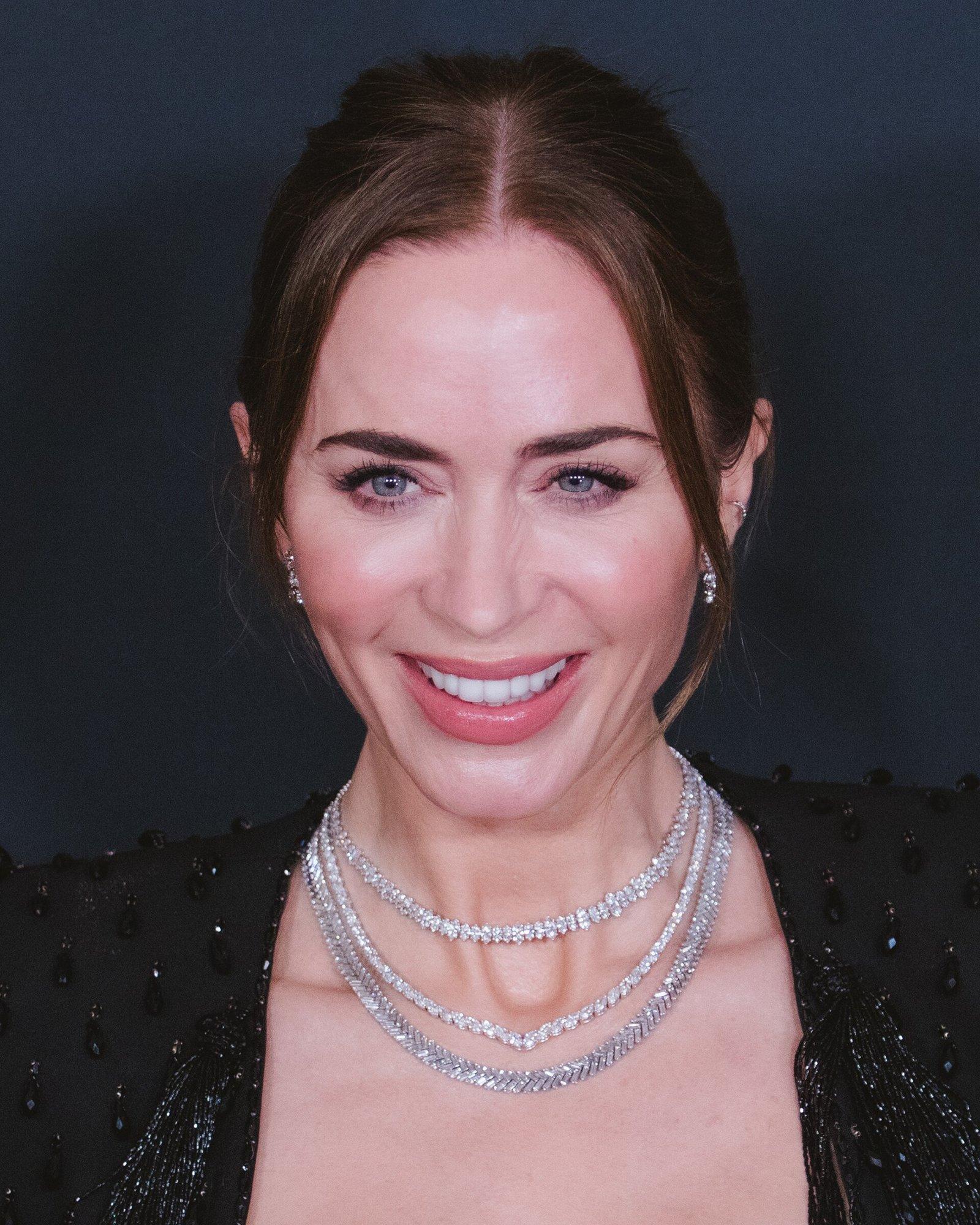
Emily Blunt.

Actor · Award-winning film and television performer

Emily Blunt built a career by refusing the safe version of prestige. She can steal The Devil Wears Prada with acid timing, turn Edge of Tomorrow into a physically commanding action performance, carry the stripped-down dread of A Quiet Place, and humanize the jagged social edges of Oppenheimer. Beneath the polish is someone who has spoken openly about childhood stuttering, early shyness, and discovering that performance could become both disguise and release.

OBJECTIVE PERSONALITY CLASSIFICATIONMF-Fi/Se-CP/S(B)What does this mean?
PERSONALITY SYSTEMObjective Personality
LEAD FUNCTIONFi · Introverted Feeling
SECOND SAVIOR FUNCTIONSe · Extroverted Sensing
MBTI EQUIVALENTISFP
01 / BEHIND THE CLASSIFICATION

The personality behind the fame.

How does a recorded OPS classification like MF-Fi/Se-CP/S(B) break down? Walk through nine coins and watch the proposed type take shape. These are deductions from the archived code, not independent evidence of typing accuracy.

Scroll below to see Emily Blunt take shape.

STARTING POINT512 possible OPS typesEach type combines core functions, an animal order, and sexual modalities.
THE FINISH LINEMF-Fi/Se-CP/S(B)One recorded classification, decoded from its components.
Emily Blunt’s HUMAN NEEDS 01—03
01
DECIDER OR OBSERVER?

Decider over Observer

Deciders have more balanced Observer poles in the middle: Control (Oi) and Chaos (Oe). Organizing what's known and handling what's new tend to feel more manageable. People are the harder territory. Self (Di) and Tribe (De) sit at the extremes, so judgment, rejection, approval, and conflict can trigger the strongest reactions.

Blunt’s public story keeps circling people-pressure more than circumstance-pressure. A teacher pushing a shy, stuttering child into class plays changed her life because the issue was not abstract chaos in the world; it was expression, exposure and how she came across to others. Later, she kept taking roles built on sharp interpersonal stakes, from The Devil Wears Prada to Oppenheimer. That is classic Decider terrain: identity, humiliation, status and significance. The strength is poise under social heat. The growth cost is that relational tension can start to feel like the whole battle.


D
02
SELF OR TRIBE?

Di · Self over De · Tribe

Self (Di) is the stronger deciding pole. They check decisions against their own values or reasons first: what makes sense to me, what feels right to me? The strength is independent conviction; the recurring friction is the Tribe (De)—other people's standards, feedback, and expectations. As the portrait unfolds, notice how Self takes the lead.

Her choices often sound anchored in a private barometer rather than the easiest consensus. She said A Quiet Place represented some of her deepest fears, and after reading the script on a plane she felt she needed to do it, despite initially not wanting to be cast. Her long work with the American Institute for Stuttering also grows from a deeply personal connection rather than trend-chasing philanthropy. Self over Tribe gives her decisions ownership. The blind spot is that inner certainty can get there first, while collaborators or audiences still need time, context or a different standard before they follow.

Di
03
GATHER OR ORGANIZE?

Oe · Gather over Oi · Organize

Gather (Oe) leads with new information, experiences, and possibilities. Its strength is curiosity and adaptability; the recurring friction is narrowing the options and settling into what is already known. Another layer of the personality portrait comes into focus.

Blunt’s career has stayed alive by moving, not by settling. She jumps from British stage work to period drama, from Looper to Edge of Tomorrow, from Into the Woods to The English. Even early on, she said My Summer of Love thrilled her because its improvisational process felt free, collaborative and unknown, and she kept chasing that terror-and-excitement afterward. Gather over Organize is useful here: another genre, accent or production style becomes fuel rather than disruption. The strength is adaptability with range. The cost is that endless promising directions can compete with building one fixed, repeatable system.

Oe
FIRST THREE COINSD + Di + Oe

These establish the preferred human needs in the OPS framework.

Emily Blunt’s FUNCTIONS 04—05
04
FEELING OR THINKING?

Feeling · F over Thinking · T

Feeling (F) evaluates decisions through values, meaning, and what matters—not simply through emotion. Its strength is a clear sense of significance; Thinking (T) provides balance through impersonal reasons, consistency, and evidence. Combined with Self (Di), this forms the recorded Savior Fi.

Blunt’s public throughline is not just taste but personal significance, which fits Fi. She has worked with the American Institute for Stuttering since 2006, serves on its board, and helps raise money for speech-therapy scholarships tied to a difficulty she has described from her own childhood. That same values filter shows up in the roles she publicly frames in deeply personal terms, like A Quiet Place. Fi’s strength is emotional sincerity with a clear internal standard. Its blind spot is assuming the feeling carries its own explanation, when other people may still need the rationale made explicit.

F → Fi
05
SENSING OR INTUITION?

Sensing · S over Intuition · N

Sensing (S) focuses on concrete details, observable reality, and lived experience. Intuition (N) balances it by looking for broader patterns, concepts, and implications. Combined with Gather (Oe), this gives the recorded Savior Se.

Edge of Tomorrow is the bluntest public example of Se. Blunt trained for three months with weights, sprints, yoga, aerial wire work, gymnastics and Krav Maga, and the result was not theoretical toughness but visible command of movement, pace and impact. The same concrete presence helps A Quiet Place and Mary Poppins Returns land; she gives the audience something specific to watch right now. Se’s strength is tangibility. It turns an idea into a body in motion. The blind spot is that the immediate challenge can dominate attention, while the longer arc or cleaner overarching interpretation arrives later.

S → Se
THE TWO SAVIOR FUNCTIONSFi / Se

Opposing functions: Te and Ni.

Emily Blunt’s ANIMAL STACK 06—07
06
CONSUME OR BLAST?

Consume over Blast

Consume gathers information for internal processing; Blast organizes and communicates information. The recorded order is Consume → Play → Sleep → Blast. This comparison follows their positions in that stack.

Before Emily Blunt looked inevitable, she spent years taking in material: West End theater at eighteen, British television, an improvisation-heavy indie in My Summer of Love, then research-based work like The Young Victoria. Consume over Blast fits that appetite to absorb craft, context and texture before reducing anything to a slogan. The strength is depth; there is usually real substance behind the performance. The blind spot is familiar to talented actors: gathering another layer of nuance can keep feeling productive even after a clearer, simpler statement would help everyone else understand the point.

C > B
07
PLAY OR SLEEP?

Play over Sleep

Play emphasizes external real-time engagement; Sleep emphasizes internal processing. The recorded stack places Play earlier.

With that Consume base already doing a lot of the work, Blunt’s career often looks more Play than Sleep next. She sparks in live exchange: the bite with Meryl Streep and Anne Hathaway in The Devil Wears Prada, the chemistry with Matt Damon and Ewan McGregor, the collaborative involvement in A Quiet Place pre-production. Play adds responsiveness and real-time contact rather than leaving everything in a sealed private chamber. The strength is aliveness with other people. The tradeoff is that quick engagement can outrun slower internal distillation, so the spark arrives before the final settled framing does.

P > S
Emily Blunt’s ANIMAL ORIENTATION 08—09
08
INFO OR ENERGY DOMINANT?

Energy over Info

Energy dominant means Play and Sleep are both in the top three: there is access to expending energy through engagement and conserving it through internal processing. Blast last leaves the information side uneven—Consume may gather far more than gets communicated.

Blunt’s stack lands on Energy, which makes sense of her public rhythm. She has both outward engagement and private regrouping among her first three priorities, letting her handle physically demanding sets, ensemble chemistry and then more inwardly held performances without seeming locked into one mode. The missing balance is organized delivery. When communication is the fourth priority, the work can stay richer than the explanation around it. That is a real strength; she avoids flattening herself into brand copy. The growth cost is that collaborators or audiences may need a clearer headline than she naturally feels compelled to give.

Energy
09
INTROVERSION OR EXTROVERSION?

Introversion over Extroversion

The last animal, Blast, determines this OPS coin: Play or Blast last means Introversion; Consume or Sleep last means Extroversion. This describes animal orientation, not sociability or shyness.

Blast comes last, which makes this OPS Introversion even though Emily Blunt has spent years in major franchises, awards campaigns and press tours. This coin is not about sociability. It is about how broadcasting a settled conclusion comes after taking in experience, engaging with others and privately processing it. Her public image reads less like a manifesto than a sequence of sharply inhabited roles. The strength is resistance to glib self-packaging. The blind spot is delayed declaration: sometimes the project’s throughline, boundary or ask would benefit from being stated sooner instead of left for others to infer.

I
Sexual Modalities

The four sexual modalities.

OPS uses masculine/feminine sensory and extroverted-deciding distinctions as framework-specific terms, not gender categories. The four modalities are already included in the original 512 types. The recorded modality is MF · Audio.

MM KinestheticMasculine Sensory · Masculine De
MF RECORDED MODALITYAudioMasculine Sensory · Feminine De
FF TesterFeminine Sensory · Feminine De
FM VisualFeminine Sensory · Masculine De
COMPLETE RECORDED OPS TYPE · MODALITY INCLUDEDMF-Fi/Se-CP/S(B)

Fi leads, Se supports, and the animal stack is Consume → Play → Sleep → Blast.

THE FINISHED PORTRAIT · ALL NINE COINS REVEALED

Emily Blunt's complete function and animal stack

ConsumePlaySleepBlastmFimSefNifTe
MF-Fi/Se-CP/S(B)DOUBLE ACTIVATED · CONSUMEExplore the Interactive Coin Builder →
THE EMILY BLUNT LENS

The poise had to be built.

Emily Blunt can look unnervingly composed: the razor in The Devil Wears Prada, the warrior in Edge of Tomorrow, the steel in Oppenheimer. But that poise grew out of a shakier start. She has described a debilitating childhood stutter, and acting became the strange workaround—another voice allowed her own to come through.

Her Fi/Se savior pairing helps explain the mix of conviction and vivid presence. Fi gives a private standard for what feels worth doing; Se makes it tangible on camera, whether through A Quiet Place’s parental terror or Rita Vrataski’s physical command. The strength is credibility. The limit is that personal certainty plus immediacy can outrun a cleaner, more strategic explanation.

As a Decider and Double Observer, Blunt’s core friction centers more on people, meaning and the self-versus-others tug than on changing circumstances. The benefit is adaptability without losing her footing. The imbalance shows up in significance and judgment. The neglected function opposite her lead savior is Te, which presses for clearer external criteria, structure and shared reasoning.

Consume → Play → Sleep → Blast is the full animal order. It favors taking in material, engaging live, then privately refining before broadcasting a conclusion. With Blast last, the imbalance is delayed declaration, not lack of charisma. The balancing move is simple: keep the layered performance, but state the premise or boundary one beat earlier so collaborators do not have to reverse-engineer the message.

Want to understand the Savior and Demon states behind these nine coins? Explore the complete explanation, visual examples, and typing principles on our Methodology page →

02 / KEEP EXPLORING

Different faces. Familiar patterns.

Explore other celebrities with related recorded OPS classifications. Related functions are not necessarily exact type matches.

Discover Type Twins
YOUR TURN

Curious about your own type?

Discover how your own personality might be classified through Objective Personality.

Get objectively typed
Emily Blunt's Personality Type & OPS Profile | The Personality Atlas