The Personality Atlas
THE CELEBRITY PERSONALITY ARCHIVE / COMEDY & SCREEN

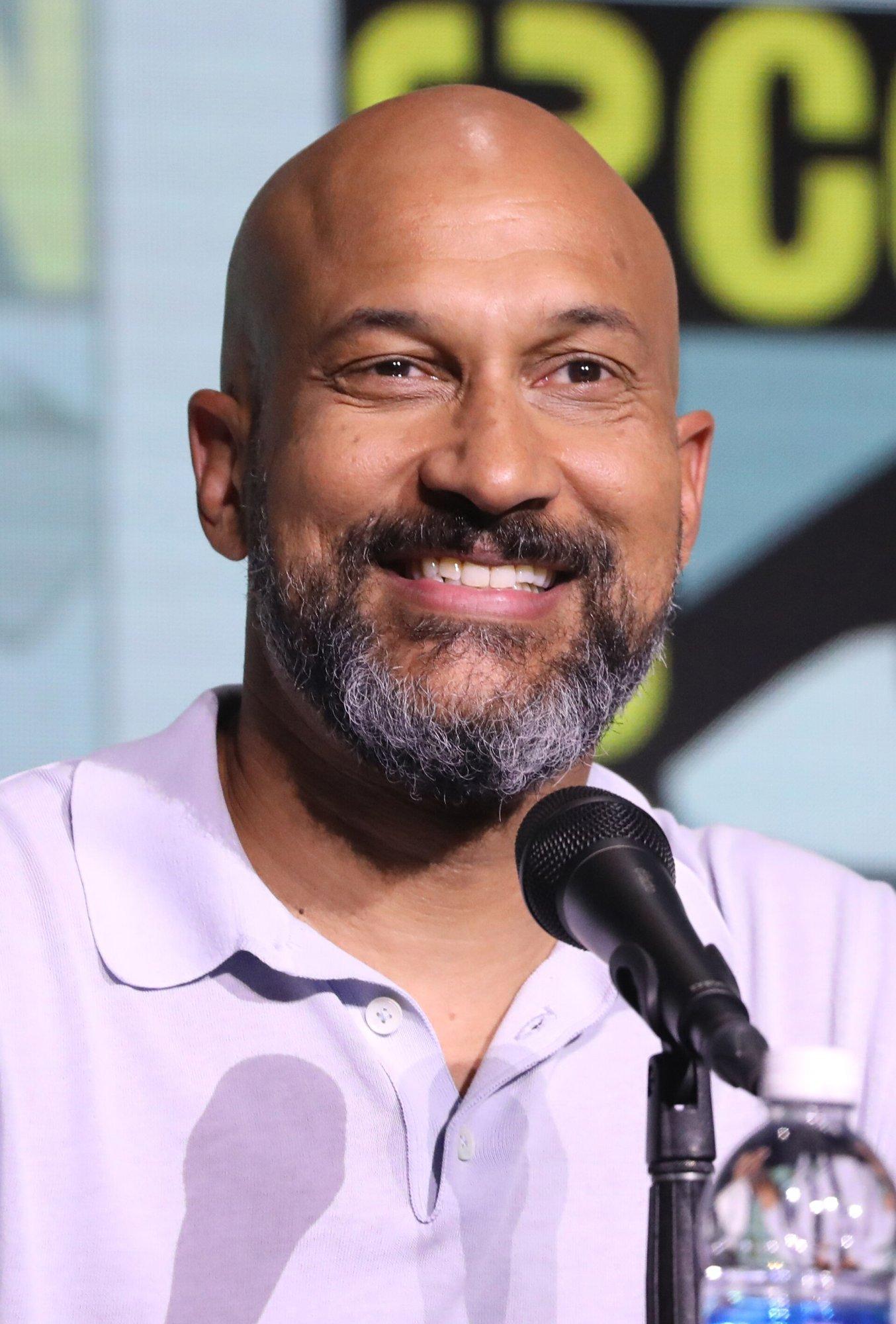
Keegan-Michael Key.

Actor · Comedian · Writer · Producer

Keegan-Michael Key built a career on making precision look effortless. From Mad TV and Key & Peele to the White House Correspondents' Dinner, Broadway, Shakespeare at the Public Theater, and a long list of animated roles, he keeps turning big comic energy into sharply engineered performance. The public impression is exuberance. The more interesting part is how often that exuberance arrives with structure: a clear premise, a defined voice, and a sense that the bit already knows exactly where it is going.

OBJECTIVE PERSONALITY CLASSIFICATIONMF-Ni/Te-BP/C(S)What does this mean?
PERSONALITY SYSTEMObjective Personality
LEAD FUNCTIONNi · Introverted Intuition
SECOND SAVIOR FUNCTIONTe · Extroverted Thinking
MBTI EQUIVALENTINTJ
01 / BEHIND THE CLASSIFICATION

The personality behind the fame.

How does a recorded OPS classification like MF-Ni/Te-BP/C(S) break down? Walk through nine coins and watch the proposed type take shape. These are deductions from the archived code, not independent evidence of typing accuracy.

Scroll below to see Keegan-Michael Key take shape.

STARTING POINT512 possible OPS typesEach type combines core functions, an animal order, and sexual modalities.
THE FINISH LINEMF-Ni/Te-BP/C(S)One recorded classification, decoded from its components.
Keegan-Michael Key’s HUMAN NEEDS 01—03
01
DECIDER OR OBSERVER?

Observer over Decider

Observers have more balanced Decider poles in the middle: Self (Di) and Tribe (De). Their own perspective and other people's perspectives tend to be easier to navigate. Things are the harder territory. Control (Oi) and Chaos (Oe) sit at the extremes, so disrupted plans, uncertainty, and a changing world can trigger the strongest reactions.

A lot of Key’s public career turns on changing circumstances rather than a simple fight for approval. He trained seriously in theater, spent years in sketch, then described returning to Hamlet as Horatio after a “19-year detour into sketch comedy.” That is classic Observer pressure: which format fits, when does the opening appear, how do you navigate an industry that keeps changing shape? The strength is adaptability across stage, television, hosting and voice work. The blind spot is waiting for the right setup to click into place instead of admitting that every lane also closes off another one.

O
02
SELF OR TRIBE?

De · Tribe over Di · Self

Tribe (De) is the stronger deciding pole. They check decisions against people, shared standards, and what works for the group: what do we need, what will others think? The strength is coordination and responsiveness; the recurring friction is the Self (Di)—knowing and defending their own position. As the portrait unfolds, notice how Tribe takes the lead.

Key’s work often shows an instinct to make the material usable for other people. The Luther “anger translator” bit worked because it clarified an unspoken tension for a whole room, all the way to the White House Correspondents’ Dinner. The Detroit Creativity Project is even more direct: teaching students improvisation to improve communication skills. Tribe-first strength is obvious here—he can shape a performance around what lands, teaches or works for others. The cost is subtle but real: if usefulness becomes the standard, the stranger or less immediately legible impulse can get edited out too early.

De
03
GATHER OR ORGANIZE?

Oi · Organize over Oe · Gather

Organize (Oi) leads with refining, preserving, and structuring what is already known. Its strength is preparation and clear direction; the recurring friction is unexpected change that disrupts the plan. Another layer of the personality portrait comes into focus.

Key’s career is full of repeatable structures rather than random novelty grabs. On Mad TV and Key & Peele, he didn’t just chase laughs; he built characters and formats people could recognize instantly, from Coach Hines to Luther. Even his return to theater has that same organized backbone: formal training, Shakespeare, then Broadway and the Public Theater. Organize-first creates strong architecture, so the audience never feels lost. The growth cost is rigidity. A premise can become so well-shaped that it leaves less room for a messier discovery that did not fit the original plan.

Oi
FIRST THREE COINSO + De + Oi

These establish the preferred human needs in the OPS framework.

Keegan-Michael Key’s FUNCTIONS 04—05
04
FEELING OR THINKING?

Thinking · T over Feeling · F

Thinking (T) evaluates decisions through reasons, logic, and what works—not a lack of emotion. Its strength is analytical consistency; Feeling (F) provides balance through values, meaning, and the human consequences of a decision. Combined with Tribe (De), this forms the recorded Savior Te.

The “anger translator” character is a good Te example because the joke is not vague emotion; it is execution. Key takes subtext, externalizes it, and makes it functional for an audience in seconds. That same practical clarity shows up in hosting work like Brain Games and in the Detroit Creativity Project’s emphasis on communication skills. Thinking here is a strength because it makes ideas portable and usable. The blind spot is that efficiency can start overruling texture. A sharp explanation or airtight bit may land cleanly while leaving less room for ambiguity, softness or contradiction.

T → Te
05
SENSING OR INTUITION?

Intuition · N over Sensing · S

Intuition (N) focuses on concepts, patterns, and what information might mean. Sensing (S) balances it through observable facts, physical detail, and direct experience. Combined with Organize (Oi), this gives the recorded Savior Ni.

Key has a gift for reducing a sprawling social pattern into one clean concept. Luther is not merely an impression of Obama; it is a distilled idea about public restraint and private frustration. His own NPR comment about code-switching growing up points in the same direction: he notices the hidden pattern underneath the performance. That is Intuition at its best—finding the throughline and building around it. The tradeoff is overcommitment to the pattern. Once the trajectory feels clear, immediate facts or small sensory detours can seem less important than the larger meaning already taking shape.

N → Ni
THE TWO SAVIOR FUNCTIONSNi / Te

Opposing functions: Se and Fi.

Keegan-Michael Key’s ANIMAL STACK 06—07
06
CONSUME OR BLAST?

Blast over Consume

Consume gathers information for internal processing; Blast organizes and communicates information. The recorded order is Blast → Play → Consume → Sleep. This comparison follows their positions in that stack.

Blast shows up earlier than Consume in the way Key works publicly. He is repeatedly cast as the person who can step in, frame the premise, and make it legible fast—on Key & Peele, as a host, or in a room as visible as the White House Correspondents’ Dinner. That is the strength of Blast over Consume: don’t just know the thing, say the thing. The cost is that polished delivery can outrun extra intake. A bit can be ready for the room before it has absorbed one more wrinkle that might have made it stranger or richer.

B > C
07
PLAY OR SLEEP?

Play over Sleep

Play emphasizes external real-time engagement; Sleep emphasizes internal processing. The recorded stack places Play earlier.

Play comes earlier than Sleep, and Key’s career gives that a very public face. He and Jordan Peele were kept together on Mad TV because of their chemistry, and Key later kept thriving in ensemble spaces like Whose Line Is It Anyway?, The 313, Parks and Recreation and Schmigadoon! The strength of Play over Sleep is live exchange: another person’s energy becomes material immediately. The cost is that interaction can become the engine. When the room is exciting, private consolidation is easier to postpone, even when it would sharpen what comes next.

P > S
Keegan-Michael Key’s ANIMAL ORIENTATION 08—09
08
INFO OR ENERGY DOMINANT?

Info over Energy

Info dominant means Consume and Blast are both in the top three: gathering and communicating information are more balanced. Sleep last leaves the energy side uneven—Play can keep engagement going without enough private recovery.

Key’s stack is Info-dominant, which fits a career built on taking in material and then turning it into something shareable. He has the range to absorb theater training, franchise voice work, sketch formats and hosting demands, then convert that into an accessible performance for a mass audience. That balance gives him enormous professional versatility. The missing piece is Sleep last. The void is not a lack of talent or effort; it is the private recovery and consolidation that do not advertise themselves. The growth cost is that outward usefulness can keep winning even when a quieter reset would improve the work.

Info
09
INTROVERSION OR EXTROVERSION?

Extroversion over Introversion

The last animal, Sleep, determines this OPS coin: Play or Blast last means Introversion; Consume or Sleep last means Extroversion. This describes animal orientation, not sociability or shyness.

Key’s last animal is Sleep, which makes this OPS Extroversion coin—not because he seems socially outgoing, but because his stack more readily moves outward into delivery, interaction and information exchange than into prolonged private processing. That fits someone who can jump from ensemble comedy to hosting to voice acting without looking underpowered. The strength is momentum. The blind spot is assuming momentum equals completion. Sleep last can leave the internal aftercare underbuilt, so the growth edge is protecting deliberate offstage reflection instead of only trusting the next performance to organize the experience.

E
Sexual Modalities

The four sexual modalities.

OPS uses masculine/feminine sensory and extroverted-deciding distinctions as framework-specific terms, not gender categories. The four modalities are already included in the original 512 types. The recorded modality is MF · Audio.

MM KinestheticMasculine Sensory · Masculine De
MF RECORDED MODALITYAudioMasculine Sensory · Feminine De
FF TesterFeminine Sensory · Feminine De
FM VisualFeminine Sensory · Masculine De
COMPLETE RECORDED OPS TYPE · MODALITY INCLUDEDMF-Ni/Te-BP/C(S)

Ni leads, Te supports, and the animal stack is Blast → Play → Consume → Sleep.

THE FINISHED PORTRAIT · ALL NINE COINS REVEALED

Keegan-Michael Key's complete function and animal stack

BlastPlayConsumeSleepfNifTemFimSe
MF-Ni/Te-BP/C(S)DOUBLE ACTIVATED · PLAYExplore the Interactive Coin Builder →
THE KEEGAN-MICHAEL KEY LENS

The exuberance is heavily engineered.

At the White House Correspondents’ Dinner, Key’s Luther turned presidential restraint into a surgical comic release. That public blast fits the impression of effortless exuberance. But behind it is a classically trained actor who moved from Mad TV and Key & Peele back to Shakespeare, Broadway and the Public Theater.

His exact savior pairing is Ni and Te. The strength is sharp compression: he spots the governing pattern, then makes it usable for other people fast. That helps explain Key & Peele premises, hosting and teaching improv through the Detroit Creativity Project. The limit is over-clarity. A clean frame can crowd out texture.

As an Observer and Double Decider, Key is more likely to wrestle with timing, uncertainty and how to shape the situation than to spiral forever in people drama. That creates a control-over-chaos imbalance. The neglected function opposite his lead savior is Se, so immediate facts can get discounted once the pattern feels settled.

Blast → Play → Consume → Sleep is the full animal order. The upside is obvious: he can explain, collaborate and perform quickly. Sleep last is the quieter cost. Internal consolidation is easiest to skip when another role opens up. Balance means keeping the sharp premise while scheduling protected decompression and note-taking before the next performance.

Want to understand the Savior and Demon states behind these nine coins? Explore the complete explanation, visual examples, and typing principles on our Methodology page →

02 / KEEP EXPLORING

Different faces. Familiar patterns.

Explore other celebrities with related recorded OPS classifications. Related functions are not necessarily exact type matches.

Discover Type Twins
YOUR TURN

Curious about your own type?

Discover how your own personality might be classified through Objective Personality.

Get objectively typed
Keegan-Michael Key's Personality Type & OPS Profile | The Personality Atlas