The Personality Atlas
THE CELEBRITY PERSONALITY ARCHIVE / MUSIC

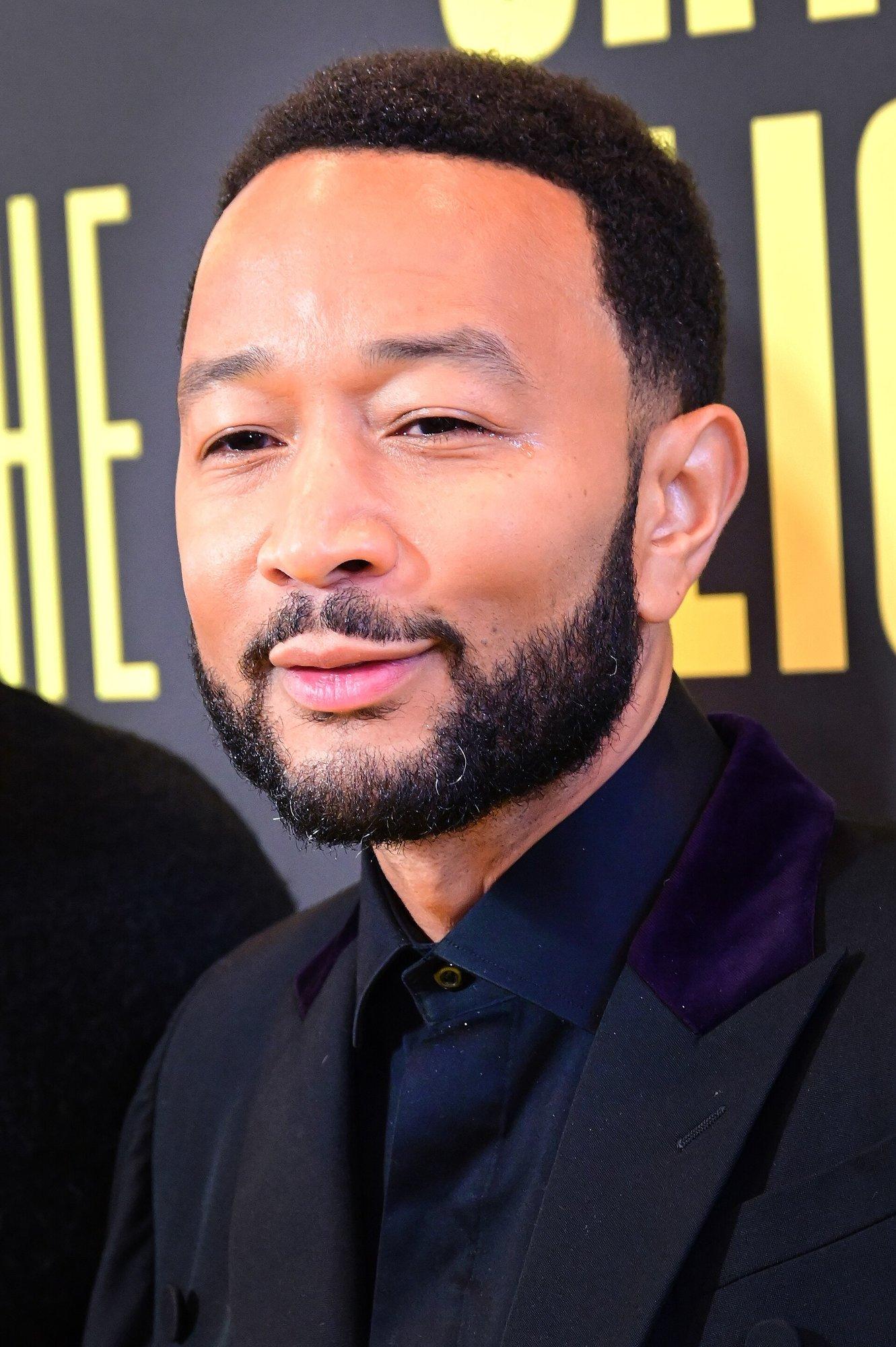
John Legend.

Singer · Songwriter · Producer · Television coach

From uncredited sessions with Lauryn Hill, Jay-Z and Alicia Keys to the diamond sweep of “All of Me,” an EGOT, and eleven seasons on The Voice since 2019, John Legend has built a career on polish that still leaves the workmanship visible beneath the charm.

OBJECTIVE PERSONALITY CLASSIFICATIONFF-Se/Fi-CS/P(B) #1What does this mean?
PERSONALITY SYSTEMObjective Personality
LEAD FUNCTIONSe · Extroverted Sensing
SECOND SAVIOR FUNCTIONFi · Introverted Feeling
MBTI EQUIVALENTESFP
01 / BEHIND THE CLASSIFICATION

The personality behind the fame.

How does a recorded OPS classification like FF-Se/Fi-CS/P(B) #1 break down? Walk through nine coins and watch the proposed type take shape. These are deductions from the archived code, not independent evidence of typing accuracy.

Scroll below to see John Legend take shape.

STARTING POINT512 possible OPS typesEach type combines core functions, an animal order, and sexual modalities.
THE FINISH LINEFF-Se/Fi-CS/P(B) #1One recorded classification, decoded from its components.
John Legend’s HUMAN NEEDS 01—03
01
DECIDER OR OBSERVER?

Observer over Decider

Observers have more balanced Decider poles in the middle: Self (Di) and Tribe (De). Their own perspective and other people's perspectives tend to be easier to navigate. Things are the harder territory. Control (Oi) and Chaos (Oe) sit at the extremes, so disrupted plans, uncertainty, and a changing world can trigger the strongest reactions.

Before “All of Me” became unavoidable, John Legend spent years in the machinery: piano on Lauryn Hill’s “Everything Is Everything,” background vocals for Jay-Z and Alicia Keys, demo CDs sold at his own shows, then the first artist signed to GOOD Music. That pattern fits an Observer problem: the bottleneck is often the setup, timing, access, and changing industry conditions. His strength is staying responsive when the lane shifts—from soul ballads to TV coaching to a Vegas residency. The blind spot is waiting for better conditions to clarify a choice that still needs his own decisive framing.

O
02
SELF OR TRIBE?

Di · Self over De · Tribe

Self (Di) is the stronger deciding pole. They check decisions against their own values or reasons first: what makes sense to me, what feels right to me? The strength is independent conviction; the recurring friction is the Tribe (De)—other people's standards, feedback, and expectations. As the portrait unfolds, notice how Self takes the lead.

Legend’s career is full of collaborations, but the throughline is still a personal standard. He was initially reluctant to adopt the stage name “John Legend,” then eventually owned it; later he described Love in the Future as an attempt to make “a modern soul album” on his own terms. Self over Tribe does not mean antisocial. It means the inner barometer gets the first vote. That produces work with authorship instead of committee haze. The cost is assuming a private conviction is already obvious to collaborators who are still waiting for the explicit brief.

Di
03
GATHER OR ORGANIZE?

Oe · Gather over Oi · Organize

Gather (Oe) leads with new information, experiences, and possibilities. Its strength is curiosity and adaptability; the recurring friction is narrowing the options and settling into what is already known. Another layer of the personality portrait comes into focus.

Get Lifted, Evolver, the Roots collaboration Wake Up!, a Christmas album, a children’s album, The Voice, and a Las Vegas residency—Legend’s public life keeps widening rather than settling into one protected lane. Gather over Organize favors fresh openings, new genres, and another context where the craft can land. That flexibility is a real advantage in a music career that punishes staleness. The tax is selectivity. A person can keep finding the next interesting format long after the harder question appears: which direction deserves sustained simplification, repetition, and long-range structure?

Oe
FIRST THREE COINSO + Di + Oe

These establish the preferred human needs in the OPS framework.

John Legend’s FUNCTIONS 04—05
04
FEELING OR THINKING?

Feeling · F over Thinking · T

Feeling (F) evaluates decisions through values, meaning, and what matters—not simply through emotion. Its strength is a clear sense of significance; Thinking (T) provides balance through impersonal reasons, consistency, and evidence. Combined with Self (Di), this forms the recorded Savior Fi.

When Legend appeared in Surviving R. Kelly, he was the rare major artist willing to go on camera and say plainly, “I believe these women.” That points to Fi as Feeling: judgment filtered through a personal values line he is willing to stand behind even when consensus is shaky or inconvenient. The strength is moral clarity with a signature on it. The limit is that conviction, however admirable, does not automatically solve the practical side of persuasion. A heartfelt standard can still meet resistance, misreading, or strategic complications in public.

F → Fi
05
SENSING OR INTUITION?

Sensing · S over Intuition · N

Sensing (S) focuses on concrete details, observable reality, and lived experience. Intuition (N) balances it by looking for broader patterns, concepts, and implications. Combined with Gather (Oe), this gives the recorded Savior Se.

Legend’s Se shows up in the sheer tangibility of the career: church piano from childhood, live albums, Super Bowl and WrestleMania performances, and the high-wire visibility of NBC’s Jesus Christ Superstar in front of millions. He does not have to hide behind abstraction; he can make the thing audible, visible, embodied right now. That is a serious strength for a performer and bandleader. The shadow is letting the immediacy of what works in the room carry too much weight, while slower pattern-building or long-horizon narrowing gets left for later.

S → Se
THE TWO SAVIOR FUNCTIONSSe / Fi

Opposing functions: Ni and Te.

John Legend’s ANIMAL STACK 06—07
06
CONSUME OR BLAST?

Consume over Blast

Consume gathers information for internal processing; Blast organizes and communicates information. The recorded order is Consume → Sleep → Play → Blast. This comparison follows their positions in that stack.

Consume comes before Blast, and his early career is almost a textbook illustration. Before the platinum albums and EGOT shorthand, Legend was absorbing craft at Penn, recording demo EPs, selling music at shows, playing for Lauryn Hill, and writing around other artists’ projects. The strength of Consume is range with receipts: he has actually taken in the material. The weakness is that collecting more input can feel productive long after the next step is no longer “learn more” but “state the point clearly enough for everyone else to rally around it.”

C > B
07
PLAY OR SLEEP?

Sleep over Play

Play emphasizes external real-time engagement; Sleep emphasizes internal processing. The recorded stack places Sleep earlier.

Sleep comes before Play, which helps explain why Legend’s public work often arrives with a polished center rather than pure spontaneity. He has described the concept behind Love in the Future, executive-produced albums himself, and built projects that feel internally digested before they are widely distributed. That inner consolidation is a strength: the work sounds considered, not sprayed out in real time. The tradeoff is that outside friction can arrive late. If the private version is already elegant, messier live exchange may feel like interruption rather than necessary pressure-testing.

S > P
John Legend’s ANIMAL ORIENTATION 08—09
08
INFO OR ENERGY DOMINANT?

Energy over Info

Energy dominant means Play and Sleep are both in the top three: there is access to expending energy through engagement and conserving it through internal processing. Blast last leaves the information side uneven—Consume may gather far more than gets communicated.

His stack lands on Energy over Info because private processing and outward engagement both make the top three, while Blast falls last. That balance is easy to picture in Legend’s career: repeated seasons on The Voice, touring, residencies, and constant live performance, all anchored by a clear internal center. He can alternate between conserving himself and showing up in the room. The missing piece is not more talent or more information. It is faster, plainer transmission—turning what he already knows into a crisp directive collaborators can use without decoding him first.

Energy
09
INTROVERSION OR EXTROVERSION?

Introversion over Extroversion

The last animal, Blast, determines this OPS coin: Play or Blast last means Introversion; Consume or Sleep last means Extroversion. This describes animal orientation, not sociability or shyness.

Legend’s public warmth does not cancel the Introversion coin. In OPS terms, Blast lands fourth in Consume → Sleep → Play → Blast, so the issue is not whether he can charm a crowd; obviously he can. The question is whether broadcasting a settled explanation comes as naturally as learning, refining, and then engaging live. Introversion here can still look like an arena singer, a TV coach, or an EGOT winner. The growth edge is simple and uncomfortable: say the larger point sooner, before the audience has to infer the blueprint from the elegance of the performance.

I
Sexual Modalities

The four sexual modalities.

OPS uses masculine/feminine sensory and extroverted-deciding distinctions as framework-specific terms, not gender categories. The four modalities are already included in the original 512 types. The recorded modality is FF · Tester.

MM KinestheticMasculine Sensory · Masculine De
MF AudioMasculine Sensory · Feminine De
FF RECORDED MODALITYTesterFeminine Sensory · Feminine De
FM VisualFeminine Sensory · Masculine De
ADDITIONAL LAYER · SOCIAL TYPE

The four social types.

Social types are an additional layer on top of the original Objective Personality classification, introduced later in OPS research. They describe two proposed social preference coins: Flex vs. Friends and Generalize vs. Specialize. The combination and priority of these preferences produce four social types. John Legend's recorded social type is #1.

SOCIAL #1 RECORDED SOCIAL TYPE#1Flex · Generalize
SOCIAL #2 #2Generalize · Friends
SOCIAL #3 #3Specialize · Flex
SOCIAL #4 #4Friends · Specialize
COMPLETE RECORDED OPS TYPE · MODALITY INCLUDED + SOCIAL TYPEFF-Se/Fi-CS/P(B) #1

Se leads, Fi supports, and the animal stack is Consume → Sleep → Play → Blast.

THE FINISHED PORTRAIT · ALL NINE COINS REVEALED

John Legend's complete function and animal stack

ConsumeSleepPlayBlastfSemFifTemNi
FF-Se/Fi-CS/P(B) #1DOUBLE ACTIVATED · CONSUMEExplore the Interactive Coin Builder →
THE JOHN LEGEND LENS

The craftsman behind the croon.

“All of Me” made John Legend look effortless, almost prepackaged for ubiquity. The public image leaves out the years of practical apprenticeship: piano on Lauryn Hill’s “Everything Is Everything,” background vocals for Jay-Z and Alicia Keys, independent CDs sold after shows, then the first GOOD Music signing. The shine arrived after a long season of usefulness.

His Se/Fi pairing gives him a rare mix of immediacy and authorship. He can make a performance feel physically present—church-bred piano, live television, a stadium anthem—then stamp it with a personal value line, as in “All of Me” or his Surviving R. Kelly stance. The limit is that sincerity and elegance still do not automatically communicate the whole blueprint.

As an Observer and Double Decider, Legend is more likely to get snagged by changing conditions than endless people drama. That pairing gives him more flexibility between self and tribe, while the larger imbalance sits in control, timing, and what to do with the next opening. Neglected Ni, opposite his lead Se, asks what enduring direction all this activity is serving.

Consume → Sleep → Play → Blast explains the rhythm: learn deeply, refine privately, engage generously, then postpone the stripped-down conclusion. Blast last creates the Introversion coin here, not a lack of warmth or stage presence. Balance looks practical: keep the nuance, but begin each album, tour, or television project with a one-sentence thesis collaborators can immediately build from.

Want to understand the Savior and Demon states behind these nine coins? Explore the complete explanation, visual examples, and typing principles on our Methodology page →

02 / KEEP EXPLORING

Different faces. Familiar patterns.

Explore other celebrities with related recorded OPS classifications. Related functions are not necessarily exact type matches.

Discover Type Twins
YOUR TURN

Curious about your own type?

Discover how your own personality might be classified through Objective Personality.

Get objectively typed
John Legend's Personality Type & OPS Profile | The Personality Atlas