The Personality Atlas
THE CELEBRITY PERSONALITY ARCHIVE / MUSIC

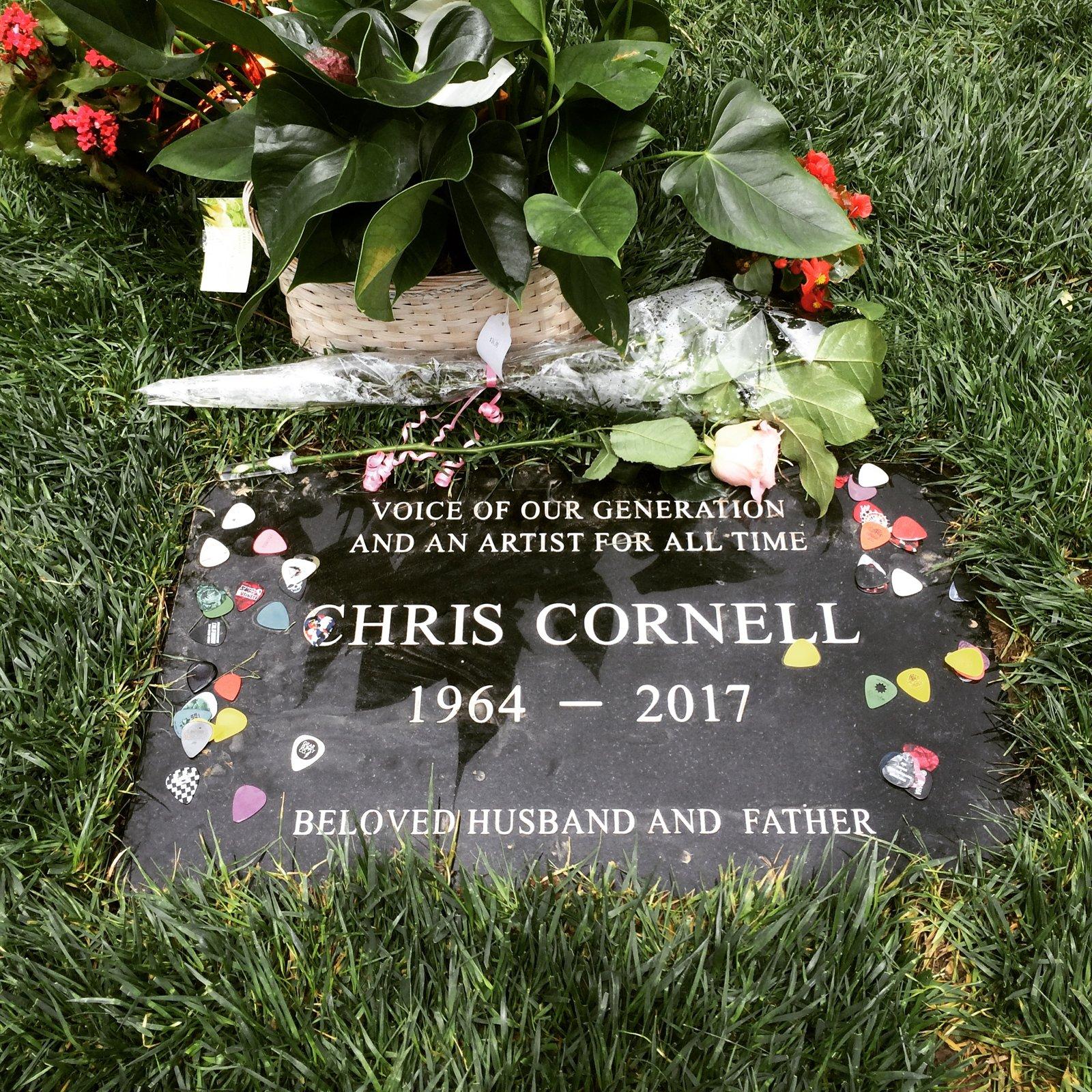
Chris Cornell.

Singer · Songwriter · Guitarist

Chris Cornell moved from Seattle's early grunge clubs to Soundgarden, Temple of the Dog, Audioslave and a restless solo career, carrying one of rock's most recognizable voices across memorial projects, soundtrack work and stylistic left turns that never let his catalog sit still.

OBJECTIVE PERSONALITY CLASSIFICATIONFF-Se/Fi-CS/P(B)What does this mean?
PERSONALITY SYSTEMObjective Personality
LEAD FUNCTIONSe · Extroverted Sensing
SECOND SAVIOR FUNCTIONFi · Introverted Feeling
MBTI EQUIVALENTESFP
01 / BEHIND THE CLASSIFICATION

The personality behind the fame.

How does a recorded OPS classification like FF-Se/Fi-CS/P(B) break down? Walk through nine coins and watch the proposed type take shape. These are deductions from the archived code, not independent evidence of typing accuracy.

Scroll below to see Chris Cornell take shape.

STARTING POINT512 possible OPS typesEach type combines core functions, an animal order, and sexual modalities.
THE FINISH LINEFF-Se/Fi-CS/P(B)One recorded classification, decoded from its components.
Chris Cornell’s HUMAN NEEDS 01—03
01
DECIDER OR OBSERVER?

Observer over Decider

Observers have more balanced Decider poles in the middle: Self (Di) and Tribe (De). Their own perspective and other people's perspectives tend to be easier to navigate. Things are the harder territory. Control (Oi) and Chaos (Oe) sit at the extremes, so disrupted plans, uncertainty, and a changing world can trigger the strongest reactions.

Cornell's career kept colliding with changing conditions: Seattle grunge exploded, Soundgarden broke up amid disputes over direction, Audioslave opened a second act, and the band later reunited in a very different music landscape. That pattern points to Observer pressure. The friction keeps landing in the environment—what sound fits now, what project is viable now, what reality refuses to hold still. The strength is adaptability under shifting circumstances. The blind spot is assuming the next setting, lineup or opening will clarify the direction by itself.

O
02
SELF OR TRIBE?

Di · Self over De · Tribe

Self (Di) is the stronger deciding pole. They check decisions against their own values or reasons first: what makes sense to me, what feels right to me? The strength is independent conviction; the recurring friction is the Tribe (De)—other people's standards, feedback, and expectations. As the portrait unfolds, notice how Self takes the lead.

When Cornell later restored the title Euphoria Mourning, he explained that it had been his original intention before being talked out of it. He also publicly called the heavily criticized Scream a career highlight. That is Self over Tribe in a very visible form: an internal standard sturdy enough to outlast fashion, reviews or group expectations. The advantage is unmistakable authorship; the work belongs to someone. The cost is that strong private conviction does not automatically make collaborators or listeners feel equally carried along.

Di
03
GATHER OR ORGANIZE?

Oe · Gather over Oi · Organize

Gather (Oe) leads with new information, experiences, and possibilities. Its strength is curiosity and adaptability; the recurring friction is narrowing the options and settling into what is already known. Another layer of the personality portrait comes into focus.

Few rock stars kept testing as many lanes as Cornell did: Soundgarden's metal edge, Temple of the Dog's memorial project, Audioslave's supergroup chemistry, solo acoustic tours, soundtrack work, even the Timbaland experiment on Scream. Gather over Organize fits that appetite for another opening, another texture, another possible version of the catalog. The strength is range without creative claustrophobia. The blind spot is selection. A career can keep finding fresh doors while still needing one door to walk through next, especially when bandmates want a steadier map.

Oe
FIRST THREE COINSO + Di + Oe

These establish the preferred human needs in the OPS framework.

Chris Cornell’s FUNCTIONS 04—05
04
FEELING OR THINKING?

Feeling · F over Thinking · T

Feeling (F) evaluates decisions through values, meaning, and what matters—not simply through emotion. Its strength is a clear sense of significance; Thinking (T) provides balance through impersonal reasons, consistency, and evidence. Combined with Self (Di), this forms the recorded Savior Fi.

Fi shows up in how personally Cornell attached meaning to the work. Temple of the Dog was not a branding exercise but a tribute to Andrew Wood. "Wave Goodbye" honored Jeff Buckley, and "The Promise" sent proceeds to refugees and vulnerable children. This Feeling axis is strongest when art carries a value-laden center instead of just a market calculation. The limit is that sincerity is not the same thing as consensus. A deeply felt direction can still create friction when other artists, executives or fans do not share the same inner standard.

F → Fi
05
SENSING OR INTUITION?

Sensing · S over Intuition · N

Sensing (S) focuses on concrete details, observable reality, and lived experience. Intuition (N) balances it by looking for broader patterns, concepts, and implications. Combined with Gather (Oe), this gives the recorded Savior Se.

Cornell's gift was not abstract mystique alone; it was physical. The four-octave range, the belting power, the rhythmic attack, the ability to make "Black Hole Sun," "Rusty Cage" or an acoustic Songbook set land in the body first—this is Sensing doing real work. Se gives immediacy, force and responsiveness to what is happening right now in the room or on the record. The blind spot is that a stunning moment can feel so complete that it delays the harder question of what long-range throughline all those moments are supposed to build.

S → Se
THE TWO SAVIOR FUNCTIONSSe / Fi

Opposing functions: Ni and Te.

Chris Cornell’s ANIMAL STACK 06—07
06
CONSUME OR BLAST?

Consume over Blast

Consume gathers information for internal processing; Blast organizes and communicates information. The recorded order is Consume → Sleep → Play → Blast. This comparison follows their positions in that stack.

Consume over Blast fits a musician who kept absorbing material before declaring a final thesis. As a child he disappeared into abandoned Beatles records; later he folded in hard rock, acoustic confession, soundtrack writing and outside collaborators without sounding like a tourist. The strength of Consume is depth of intake: there is always another tone, influence or lyrical angle to draw from. The weakness of Consume against Blast is postponement. More references can enrich a song while still delaying the plainspoken statement of what the project is and where it is headed.

C > B
07
PLAY OR SLEEP?

Sleep over Play

Play emphasizes external real-time engagement; Sleep emphasizes internal processing. The recorded stack places Sleep earlier.

With Consume already setting the pace, Sleep coming before Play helps explain why Cornell could strip songs down so effectively on the Songbook tour. He was not only performing material; he was reprocessing it into a more internal, settled perspective. Sleep gives a private center, the sense that the catalog has been lived with before it is handed back to an audience. The cost is that real-time exchange can arrive later than the inner conclusion. By the time other people enter, the vision may already feel finished from his side.

S > P
Chris Cornell’s ANIMAL ORIENTATION 08—09
08
INFO OR ENERGY DOMINANT?

Energy over Info

Energy dominant means Play and Sleep are both in the top three: there is access to expending energy through engagement and conserving it through internal processing. Blast last leaves the information side uneven—Consume may gather far more than gets communicated.

Cornell's stack lands on Energy, even though his public image was built on information-rich songwriting and a massive catalog. Sleep and Play both make the top three, which helps explain the unusual combination of intense private consolidation and fully committed live performance. He could retreat inward, then step into a band or a solo stage without losing force. The missing balance comes from Blast sitting last. The likely bottleneck is not passion or material; it is packaging the direction clearly enough for other people to follow. Creative richness can outrun shared clarity.

Energy
09
INTROVERSION OR EXTROVERSION?

Introversion over Extroversion

The last animal, Blast, determines this OPS coin: Play or Blast last means Introversion; Consume or Sleep last means Extroversion. This describes animal orientation, not sociability or shyness.

Blast lands fourth, which makes this an OPS Introversion result even for a man who fronted stadium bands and announced a reunion on Twitter. The question is not sociability; it is how naturally private understanding turns into a settled public direction. Cornell could absolutely deliver a song, a performance or an interview moment. But with Blast last, broadcasting the headline can come later than gathering, processing and doing. The growth edge is stating the point sooner—especially in collaborative settings—so other people are responding to the actual direction, not inferring it from fragments.

I
Sexual Modalities

The four sexual modalities.

OPS uses masculine/feminine sensory and extroverted-deciding distinctions as framework-specific terms, not gender categories. The four modalities are already included in the original 512 types. The recorded modality is FF · Tester.

MM KinestheticMasculine Sensory · Masculine De
MF AudioMasculine Sensory · Feminine De
FF RECORDED MODALITYTesterFeminine Sensory · Feminine De
FM VisualFeminine Sensory · Masculine De
COMPLETE RECORDED OPS TYPE · MODALITY INCLUDEDFF-Se/Fi-CS/P(B)

Se leads, Fi supports, and the animal stack is Consume → Sleep → Play → Blast.

THE FINISHED PORTRAIT · ALL NINE COINS REVEALED

Chris Cornell's complete function and animal stack

ConsumeSleepPlayBlastfSemFifTemNi
FF-Se/Fi-CS/P(B)DOUBLE ACTIVATED · CONSUMEExplore the Interactive Coin Builder →
THE CHRIS CORNELL LENS

The giant voice had a private center.

Cornell could be the volcanic voice at the center of Superunknown, then turn around and hold a room alone with an acoustic guitar on Songbook. That contrast matters. The public impression was sheer power, but the career behind it was full of reworking, revising and testing how the same voice fit very different containers.

His Se/Fi pairing gave him a rare ability to make music feel immediate without making it generic. The sensory hit was unmistakable, and the personal standard behind it kept the work from sounding interchangeable. The limit is that a vivid moment plus a deeply held conviction does not automatically provide bandmates, producers or audiences with the same roadmap.

As an Observer and Double Decider, Cornell's core imbalance leans less toward permanent people drama than toward pressure around changing circumstances, direction and what to do with the next opening. The neglected function opposite his lead savior is Ni, so the growth task is narrowing the flood of real-time material into a clearer long-view throughline that can hold steady.

Consume → Sleep → Play → Blast shows why his final tension is not lack of talent or intensity, but Blast last and the Introversion coin: explanation comes after intake, internal processing and engagement. A useful balance would be to name the destination earlier in a project—give collaborators the headline before adding more texture—so the exploratory richness stays intact instead of getting lost in translation.

Want to understand the Savior and Demon states behind these nine coins? Explore the complete explanation, visual examples, and typing principles on our Methodology page →

02 / KEEP EXPLORING

Different faces. Familiar patterns.

Explore other celebrities with related recorded OPS classifications. Related functions are not necessarily exact type matches.

Discover Type Twins
YOUR TURN

Curious about your own type?

Discover how your own personality might be classified through Objective Personality.

Get objectively typed
Chris Cornell's Personality Type & OPS Profile | The Personality Atlas