The Personality Atlas
THE CELEBRITY PERSONALITY ARCHIVE / FILM & COMEDY

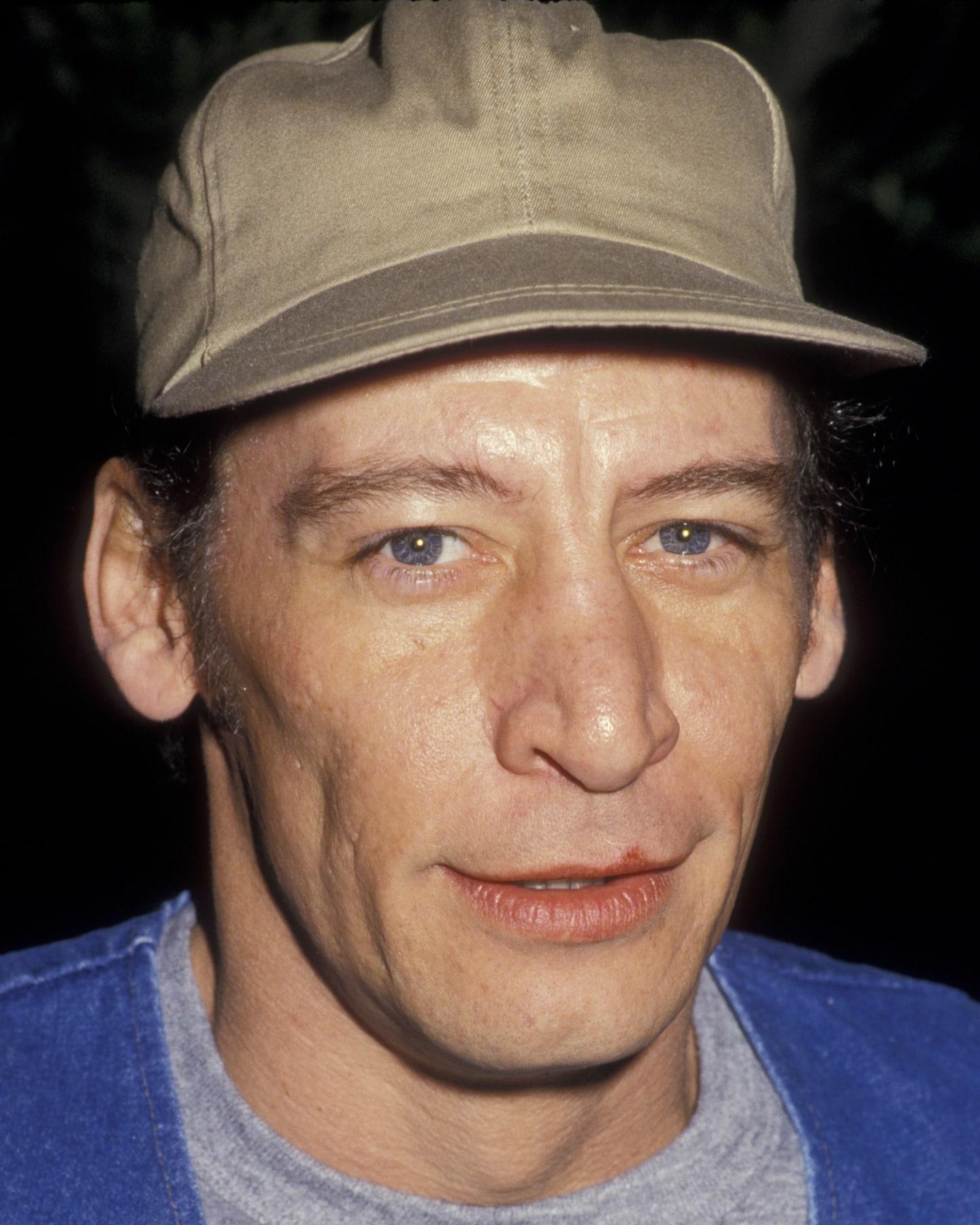
Jim Varney.

Actor · Comedian · Voice Actor

Jim Varney turned a regional commercial oddball into the Emmy-winning Ernest P. Worrell franchise, then kept surfacing across American pop culture as Jed Clampett, Slinky Dog, and a character actor with far more range than the hayseed grin suggested. His career was loud, physical, and instantly recognizable; the more interesting part is how much craft and comic engineering sat underneath the chaos.

OBJECTIVE PERSONALITY CLASSIFICATIONMF-Ti/Se-CP/S(B)What does this mean?
PERSONALITY SYSTEMObjective Personality
LEAD FUNCTIONTi · Introverted Thinking
SECOND SAVIOR FUNCTIONSe · Extroverted Sensing
MBTI EQUIVALENTISTP
01 / BEHIND THE CLASSIFICATION

The personality behind the fame.

How does a recorded OPS classification like MF-Ti/Se-CP/S(B) break down? Walk through nine coins and watch the proposed type take shape. These are deductions from the archived code, not independent evidence of typing accuracy.

Scroll below to see Jim Varney take shape.

STARTING POINT512 possible OPS typesEach type combines core functions, an animal order, and sexual modalities.
THE FINISH LINEMF-Ti/Se-CP/S(B)One recorded classification, decoded from its components.
Jim Varney’s HUMAN NEEDS 01—03
01
DECIDER OR OBSERVER?

Decider over Observer

Deciders have more balanced Observer poles in the middle: Control (Oi) and Chaos (Oe). Organizing what's known and handling what's new tend to feel more manageable. People are the harder territory. Self (Di) and Tribe (De) sit at the extremes, so judgment, rejection, approval, and conflict can trigger the strongest reactions.

Jim Varney’s public story is full of people judgments, not just changing circumstances. Ernest could be a box-office draw, a children’s-TV Emmy winner, and a punchline to critics in almost the same breath. That is classic Decider pressure: how do you keep moving when the room cannot agree on your value? His strength was refusing to let mixed approval stop the work, turning a regional commercial character into a national franchise. The blind spot is spending too much bandwidth on reputation battles, as if winning over every doubter matters more than deciding what career lane is actually worth claiming.

D
02
SELF OR TRIBE?

Di · Self over De · Tribe

Self (Di) is the stronger deciding pole. They check decisions against their own values or reasons first: what makes sense to me, what feels right to me? The strength is independent conviction; the recurring friction is the Tribe (De)—other people's standards, feedback, and expectations. As the portrait unfolds, notice how Self takes the lead.

Varney’s career keeps showing Self over Tribe. He did not build Ernest by waiting for a committee to hand him a tasteful prestige persona; he committed to a voice, a face, a rhythm, and kept sharpening it until audiences remembered it. The same streak shows up in creating other bits like Sgt. Glory and Auntie Nelda instead of protecting a single respectable image. The strength is unmistakable ownership: the work has a driver. The cost is that a strong private standard can outrun public consensus, leaving you brilliantly specific while the industry still files you under one loud character.

Di
03
GATHER OR ORGANIZE?

Oe · Gather over Oi · Organize

Gather (Oe) leads with new information, experiences, and possibilities. Its strength is curiosity and adaptability; the recurring friction is narrowing the options and settling into what is already known. Another layer of the personality portrait comes into focus.

His path is Gather over Organize almost to the point of comedy. Child actor, Shakespeare student, nightclub performer, ad chameleon, sitcom regular, film lead, voice actor, dulcimer player: Varney kept opening new doors instead of circling one settled lane. That flexibility let him move from Kentucky theater to Ernest, from Jed Clampett to Slinky Dog, and from broad slapstick to against-type indie roles. The strength is range powered by fresh options. The growth cost is consolidation. When you can do many versions of yourself, it becomes harder to force the world to understand which version should define the next chapter.

Oe
FIRST THREE COINSD + Di + Oe

These establish the preferred human needs in the OPS framework.

Jim Varney’s FUNCTIONS 04—05
04
FEELING OR THINKING?

Thinking · T over Feeling · F

Thinking (T) evaluates decisions through reasons, logic, and what works—not a lack of emotion. Its strength is analytical consistency; Feeling (F) provides balance through values, meaning, and the human consequences of a decision. Combined with Self (Di), this forms the recorded Savior Ti.

Varney’s recorded judging coin lands on Thinking, and the Ernest machine shows why. Those commercials were not just goofy mugging; they were built on exact internal mechanics—catchphrase cadence, camera address, timing, repeatable character logic, and the ability to swap the same bit across dairies, gas companies, and car dealers without losing the structure. That is Ti’s strength: make the system work from the inside out. The blind spot sits opposite it. A comic framework can be airtight and still leave softer people-calibration late, especially when a performer needs others to see range beyond the framework that made him famous.

T → Ti
05
SENSING OR INTUITION?

Sensing · S over Intuition · N

Sensing (S) focuses on concrete details, observable reality, and lived experience. Intuition (N) balances it by looking for broader patterns, concepts, and implications. Combined with Gather (Oe), this gives the recorded Savior Se.

Sensing fits the way Varney became unforgettable in public. As a child he imitated cartoon voices, memorized long poems and book passages, and later turned that physical-auditory precision into Ernest’s rubber-faced timing and Slinky Dog’s instantly recognizable drawl. Se gives him a grip on what an audience can actually hear and see right now. That makes performance vivid, specific, and hard to ignore. The tradeoff is horizon. Immediate impact can crowd out the slower task of steering a long career narrative, especially when the current bit lands so hard that everyone keeps asking for the same bit again.

S → Se
THE TWO SAVIOR FUNCTIONSTi / Se

Opposing functions: Fe and Ni.

Jim Varney’s ANIMAL STACK 06—07
06
CONSUME OR BLAST?

Consume over Blast

Consume gathers information for internal processing; Blast organizes and communicates information. The recorded order is Consume → Play → Sleep → Blast. This comparison follows their positions in that stack.

Consume comes earlier than Blast, and Varney’s biography is full of intake before declaration. He memorized books as a kid, studied Shakespeare in Virginia, absorbed accents and character patterns, and kept stockpiling material he could remix into commercials, shows, and films. That is the strength of Consume: there is always more texture in the toolbox than the audience first notices. The cost is that Blast arrives later. Gathering more craft can enrich the work while postponing the blunt public statement—here is who I am beyond Ernest, and here is the lane I want next.

C > B
07
PLAY OR SLEEP?

Play over Sleep

Play emphasizes external real-time engagement; Sleep emphasizes internal processing. The recorded stack places Play earlier.

Play comes earlier than Sleep, which helps explain how social the craft looked on camera without reducing him to just outgoing. Varney built his career in live theater, ad shoots, co-hosting gigs, ensemble television, and a franchise that depended on bouncing energy off an implied partner named Vern. Play’s strength is real-time interaction: throw the bit into the room and make it move. Sleep later can make private consolidation less immediate. The growth cost is that constant engagement can keep generating characters and momentum while the quieter work of narrowing the persona into a deliberate long-term repositioning arrives later.

P > S
Jim Varney’s ANIMAL ORIENTATION 08—09
08
INFO OR ENERGY DOMINANT?

Energy over Info

Energy dominant means Play and Sleep are both in the top three: there is access to expending energy through engagement and conserving it through internal processing. Blast last leaves the information side uneven—Consume may gather far more than gets communicated.

His stack lands on Energy rather than Info, which fits a career spent toggling between active performance and private reset instead of living mainly in research plus polished explanation. Varney could be the live-wire face of Ernest, then slip into a stage role, character voice, or smaller project without turning each move into a manifesto. That balance kept him versatile. The void comes from Blast being last: the bottleneck was not stamina or curiosity, but packaging his range into a simple message that gatekeepers and audiences could track beyond the clown suit.

Energy
09
INTROVERSION OR EXTROVERSION?

Introversion over Extroversion

The last animal, Blast, determines this OPS coin: Play or Blast last means Introversion; Consume or Sleep last means Extroversion. This describes animal orientation, not sociability or shyness.

Varney’s final animal is Blast, which makes this OPS Introversion even though his public persona was famously loud. Ernest talked at the camera for years; that does not mean straightforward broadcasting came easiest in the deeper stack. Blast last points to a recurring growth edge: turning private craft and active performance into a settled, shareable direction. He could inhabit a role, sell a gag, or voice Slinky Dog with total conviction. The harder move was repeatedly translating all that range into a clear public repositioning. The balancing action is simple and uncomfortable: state the thesis sooner, before another character steals the headline.

I
Sexual Modalities

The four sexual modalities.

OPS uses masculine/feminine sensory and extroverted-deciding distinctions as framework-specific terms, not gender categories. The four modalities are already included in the original 512 types. The recorded modality is MF · Audio.

MM KinestheticMasculine Sensory · Masculine De
MF RECORDED MODALITYAudioMasculine Sensory · Feminine De
FF TesterFeminine Sensory · Feminine De
FM VisualFeminine Sensory · Masculine De
COMPLETE RECORDED OPS TYPE · MODALITY INCLUDEDMF-Ti/Se-CP/S(B)

Ti leads, Se supports, and the animal stack is Consume → Play → Sleep → Blast.

THE FINISHED PORTRAIT · ALL NINE COINS REVEALED

Jim Varney's complete function and animal stack

ConsumePlaySleepBlastmTimSefNifFe
MF-Ti/Se-CP/S(B)DOUBLE ACTIVATED · CONSUMEExplore the Interactive Coin Builder →
THE JIM VARNEY LENS

The clown was never the whole machine.

Ernest P. Worrell looked like pure chaos: cap, denim vest, bug-eyed sincerity, “Knowhutimean, Vern?” But Varney had been training long before the catchphrase stuck. He started children’s theater at eight, won drama titles in high school, studied Shakespeare at Barter Theatre, and worked nightclubs and folk shows. The public clown was real; so was the disciplined actor under the grin.

Ti paired with Se gave him a brutal comic engine. Ti built the repeatable mechanism: character logic, phrasing, timing, and a structure sturdy enough to carry Ernest through ads for dairies, gas utilities, and car dealerships. Se made it visible and audible right now through voice, face, and physical timing. The strength was instant tangibility. The limit was typecasting.

As a Decider and Double Observer, Varney’s sharper pressure was people significance, not managing chaos and control. He could flex across formats and roles, but public judgment—beloved mascot, critical punchline, children’s Emmy winner—hit harder. The human-needs imbalance sits around self and tribe standards. With Ti leading, the neglected opposite function is Fe: collective values, emotional packaging, and what others need clearly signaled.

Consume → Play → Sleep → Blast shows the final imbalance. First he gathered material, then worked it live, then processed it internally; last came sustained broadcasting of a settled conclusion. That helps explain why he could dazzle as Ernest, Jed Clampett, or Slinky Dog yet still struggle to replace the Ernest headline with a cleaner thesis about his range. The balancing move is simple: state the broader case earlier, before the next character does it for him.

Want to understand the Savior and Demon states behind these nine coins? Explore the complete explanation, visual examples, and typing principles on our Methodology page →

02 / KEEP EXPLORING

Different faces. Familiar patterns.

Explore other celebrities with related recorded OPS classifications. Related functions are not necessarily exact type matches.

Discover Type Twins
YOUR TURN

Curious about your own type?

Discover how your own personality might be classified through Objective Personality.

Get objectively typed
Jim Varney's Personality Type & OPS Profile | The Personality Atlas