The Personality Atlas
THE CELEBRITY PERSONALITY ARCHIVE / BUSINESS & MARKETS

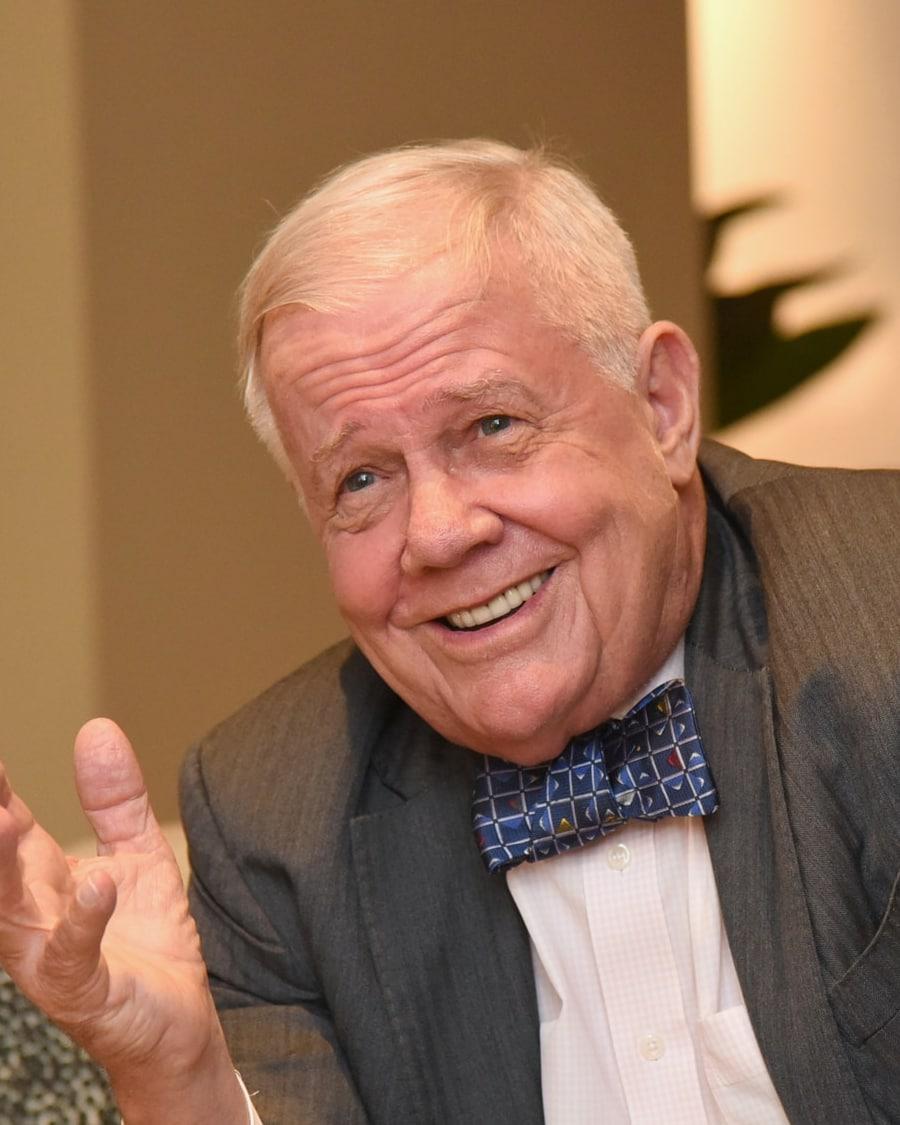
Jim Rogers.

Investor · Author · Financial Commentator

Jim Rogers turned investing into a globe-spanning field assignment: co-founding the Quantum Fund with George Soros, then leaving Wall Street to ride motorcycles across continents and later relocating to Singapore to follow what he saw as Asia’s rising center of gravity. The public image is the swaggering macro contrarian; the deeper pattern is an investor who keeps putting himself where the world’s next shift might become visible first.

OBJECTIVE PERSONALITY CLASSIFICATIONFF-Ne/Ti-CP/S(B)What does this mean?
PERSONALITY SYSTEMObjective Personality
LEAD FUNCTIONNe · Extroverted Intuition
SECOND SAVIOR FUNCTIONTi · Introverted Thinking
MBTI EQUIVALENTENTP
01 / BEHIND THE CLASSIFICATION

The personality behind the fame.

How does a recorded OPS classification like FF-Ne/Ti-CP/S(B) break down? Walk through nine coins and watch the proposed type take shape. These are deductions from the archived code, not independent evidence of typing accuracy.

Scroll below to see Jim Rogers take shape.

STARTING POINT512 possible OPS typesEach type combines core functions, an animal order, and sexual modalities.
THE FINISH LINEFF-Ne/Ti-CP/S(B)One recorded classification, decoded from its components.
Jim Rogers’ HUMAN NEEDS 01—03
01
DECIDER OR OBSERVER?

Observer over Decider

Observers have more balanced Decider poles in the middle: Self (Di) and Tribe (De). Their own perspective and other people's perspectives tend to be easier to navigate. Things are the harder territory. Control (Oi) and Chaos (Oe) sit at the extremes, so disrupted plans, uncertainty, and a changing world can trigger the strongest reactions.

Rogers’s career keeps circling back to conditions he cannot command: world markets shift, bubbles inflate, countries rise, and entire sectors fall out of favor. He left Wall Street for a motorcycle trip around the world, then later moved from New York to Singapore because he believed the next economic center of gravity was moving to Asia. That is classic Observer pressure: the problem sits in changing circumstances, not primarily in social approval. The strength is adaptability. The blind spot is assuming another move or another market cycle will finally make uncertainty behave.

O
02
SELF OR TRIBE?

Di · Self over De · Tribe

Self (Di) is the stronger deciding pole. They check decisions against their own values or reasons first: what makes sense to me, what feels right to me? The strength is independent conviction; the recurring friction is the Tribe (De)—other people's standards, feedback, and expectations. As the portrait unfolds, notice how Self takes the lead.

When Rogers said that if you were smart in 2007 you moved to Asia, he was not waiting for a comfortable consensus before acting. Selling his New York mansion, relocating his family to Singapore, and having his daughters learn Mandarin show a standard anchored in his own conclusion about where the world was going. Self over Tribe can make an investor unusually independent and early. The growth cost is social and strategic: an internally satisfying thesis can sound dismissive, and other people’s caution may contain practical constraints that pure conviction would rather brush aside.

Di
03
GATHER OR ORGANIZE?

Oe · Gather over Oi · Organize

Gather (Oe) leads with new information, experiences, and possibilities. Its strength is curiosity and adaptability; the recurring friction is narrowing the options and settling into what is already known. Another layer of the personality portrait comes into focus.

Rogers’s résumé is almost aggressively open-ended: a global fund, repeated round-the-world journeys, a commodities index, television hosting, guest teaching, and books built from road miles and market observation. Gather over Organize helps explain that appetite for fresh inputs. He keeps scanning for what is emerging rather than protecting one tidy domain. The advantage is range; he can spot opportunity where more settled personalities see only unfamiliar terrain. The blind spot is that the next promising frontier is always available, which can make committed focus feel narrower than it really is.

Oe
FIRST THREE COINSO + Di + Oe

These establish the preferred human needs in the OPS framework.

Jim Rogers’ FUNCTIONS 04—05
04
FEELING OR THINKING?

Thinking · T over Feeling · F

Thinking (T) evaluates decisions through reasons, logic, and what works—not a lack of emotion. Its strength is analytical consistency; Feeling (F) provides balance through values, meaning, and the human consequences of a decision. Combined with Self (Di), this forms the recorded Savior Ti.

Rogers’s recorded judging function is Ti, and his public statements often sound like they were stripped down to mechanism before diplomacy. Saying he left India because “one cannot invest based on hope,” or shorting U.S. financials and home builders before the crisis, shows the attraction of an internally coherent model over a comforting story. Thinking brings sharp diagnosis and the willingness to say the thesis out loud. Its cost is obvious: a logically consistent take can sound cold, premature, or blind to the political and human factors that keep markets irrational longer than a clean argument expects.

T → Ti
05
SENSING OR INTUITION?

Intuition · N over Sensing · S

Intuition (N) focuses on concepts, patterns, and what information might mean. Sensing (S) balances it through observable facts, physical detail, and direct experience. Combined with Gather (Oe), this gives the recorded Savior Ne.

Ne shows up in Rogers less as whimsy than as sweeping macro pattern recognition. He links eras and geographies with the confidence of someone constantly asking what today rhymes with: London in 1807, New York in 1907, Asia in 2007; stockbrokers driving taxis while farmers drive Lamborghinis. Intuition gives him a knack for seeing the next story before it becomes common language. The cost is timing and texture. A bold pattern can be directionally right while still flattening the messy local facts, delays, and exceptions that concrete reality loves to preserve.

N → Ne
THE TWO SAVIOR FUNCTIONSNe / Ti

Opposing functions: Si and Fe.

Jim Rogers’ ANIMAL STACK 06—07
06
CONSUME OR BLAST?

Consume over Blast

Consume gathers information for internal processing; Blast organizes and communicates information. The recorded order is Consume → Play → Sleep → Blast. This comparison follows their positions in that stack.

Consume comes earlier than Blast for Rogers, and his public life is full of evidence for that order. He did not build his reputation by staying in one office and issuing polished doctrine; he rode through more than 100 countries, wrote books from those journeys, and kept absorbing how different economies actually looked on the ground. The strength of Consume is depth through intake. The blind spot appears when more research keeps feeling useful after a conclusion is already available. Blast still matters, but it arrives later, after another layer of evidence.

C > B
07
PLAY OR SLEEP?

Play over Sleep

Play emphasizes external real-time engagement; Sleep emphasizes internal processing. The recorded stack places Play earlier.

Play comes earlier than Sleep, which fits how often Rogers has worked his ideas out in motion: co-founding the Quantum Fund with George Soros, moderating market television, advising investors, and repeatedly putting himself into active contact with changing places. Play keeps the thesis live against other people and real events. Its strength is responsiveness. The tradeoff is that Sleep sits later. Constant engagement can outrun the slower work of narrowing, consolidating, and sitting with one settled framework long enough to test whether it still holds when the conversation stops.

P > S
Jim Rogers’ ANIMAL ORIENTATION 08—09
08
INFO OR ENERGY DOMINANT?

Energy over Info

Energy dominant means Play and Sleep are both in the top three: there is access to expending energy through engagement and conserving it through internal processing. Blast last leaves the information side uneven—Consume may gather far more than gets communicated.

Rogers lands on Energy in Atlas decoding because Blast is last, leaving Consume, Play, and Sleep available before the pressure to package everything neatly for others. That balance suits a life of long travel, independent study, and active market debate: he can gather, engage, and privately refine without needing constant formal delivery. The missing balance shows up in communication. Even with books and television appearances, the risk is not silence but overloading the audience with a vast thesis that still resists clean structure. The growth cost is turning lived complexity into a message other people can actually use.

Energy
09
INTROVERSION OR EXTROVERSION?

Introversion over Extroversion

The last animal, Blast, determines this OPS coin: Play or Blast last means Introversion; Consume or Sleep last means Extroversion. This describes animal orientation, not sociability or shyness.

Rogers’s OPS Introversion does not mean shyness; a man who hosted television shows and became a regular financial guest can plainly operate in public. Here the pressure point is Blast last. Relative to gathering, engaging, and privately sorting, sustained top-down delivery comes later. He would rather keep exploring a market, a country, or a macro thesis than lock it into one final institutional script. That can preserve originality. It can also leave followers hearing the provocation without getting the simplest version of the roadmap. The growth edge is deliberate, repeatable explanation.

I
Sexual Modalities

The four sexual modalities.

OPS uses masculine/feminine sensory and extroverted-deciding distinctions as framework-specific terms, not gender categories. The four modalities are already included in the original 512 types. The recorded modality is FF · Tester.

MM KinestheticMasculine Sensory · Masculine De
MF AudioMasculine Sensory · Feminine De
FF RECORDED MODALITYTesterFeminine Sensory · Feminine De
FM VisualFeminine Sensory · Masculine De
COMPLETE RECORDED OPS TYPE · MODALITY INCLUDEDFF-Ne/Ti-CP/S(B)

Ne leads, Ti supports, and the animal stack is Consume → Play → Sleep → Blast.

THE FINISHED PORTRAIT · ALL NINE COINS REVEALED

Jim Rogers's complete function and animal stack

ConsumePlaySleepBlastmNemTifFefSi
FF-Ne/Ti-CP/S(B)DOUBLE ACTIVATED · CONSUMEExplore the Interactive Coin Builder →
THE JIM ROGERS LENS

The investor who wanted the whole map.

Rogers’s public image is almost cartoonishly confident: the investor who co-founded the Quantum Fund, then “retired” early enough to ride a motorcycle around the world and later logged Guinness-recognized mileage through 116 countries. But the bravado reveals a method. He keeps putting himself near change, as if markets become legible only after firsthand exposure.

His Ne/Ti savior pairing suits macro investing. Ne scans for patterns across countries, sectors and eras; Ti strips those patterns into an internal model he can defend against the crowd. That helps explain his bold calls on Asia, commodities and housing excess. The limit is that a clean framework can start treating timing, politics and local detail like noise when they are often the expensive part of reality.

As an Observer and Double Decider, Rogers is less trapped by interpersonal approval than by what the world is doing next. His attention floods toward cycles, sectors and geographic shifts, while human buy-in can get filtered through the thesis. The neglected function is Si, opposite his lead Ne: preserving what already works, respecting precedent, and staying with proven routines long enough to test whether the new frontier is actually better.

Consume → Play → Sleep → Blast shows the final imbalance. He learns by taking in, pressure-testing in public and then refining privately, with concise top-down delivery last. That keeps the edge alive, but it can leave listeners with the provocation more than the roadmap. A useful correction would be forcing each major thesis into a one-page checklist before the next trip or interview, so the insight becomes easier to apply without making it smaller.

Want to understand the Savior and Demon states behind these nine coins? Explore the complete explanation, visual examples, and typing principles on our Methodology page →

02 / KEEP EXPLORING

Different faces. Familiar patterns.

Explore other celebrities with related recorded OPS classifications. Related functions are not necessarily exact type matches.

Discover Type Twins
YOUR TURN

Curious about your own type?

Discover how your own personality might be classified through Objective Personality.

Get objectively typed
Jim Rogers's Personality Type & OPS Profile | The Personality Atlas