The Personality Atlas
THE CELEBRITY PERSONALITY ARCHIVE / FILM & MUSIC

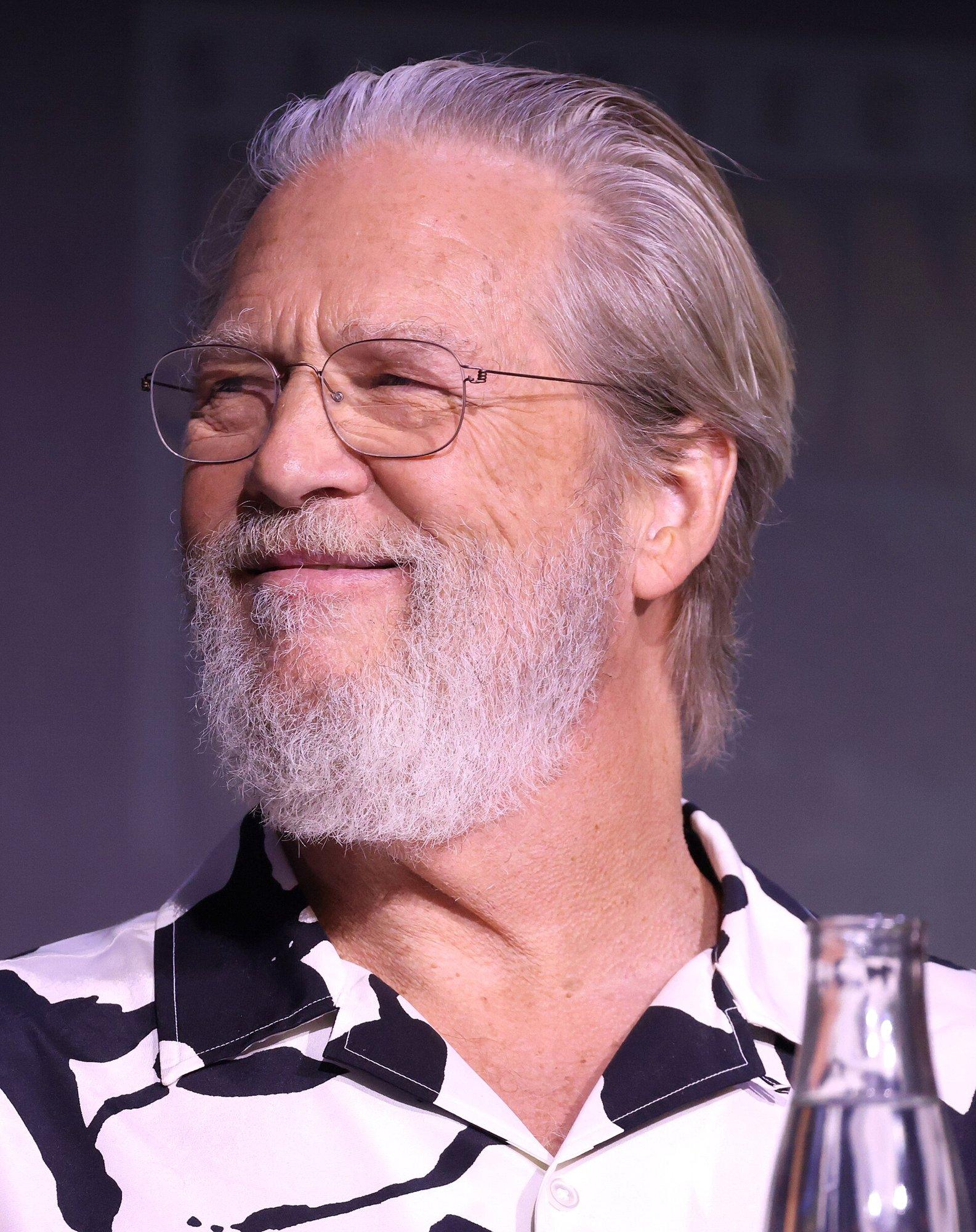
Jeff Bridges.

Actor · Musician · Storyteller

Jeff Bridges has made ease look like an art form: the California drawl, the laconic charisma, the man who could be The Dude one decade, Rooster Cogburn the next, then turn up narrating documentaries, releasing albums and fronting anti-hunger campaigns. The relaxed image is real enough, but it sits on top of a career built through family expectations, durable collaborations and a stubborn ability to translate big archetypal roles into something human.

OBJECTIVE PERSONALITY CLASSIFICATIONFM-Te/Ni-BP/S(C)What does this mean?
PERSONALITY SYSTEMObjective Personality
LEAD FUNCTIONTe · Extroverted Thinking
SECOND SAVIOR FUNCTIONNi · Introverted Intuition
MBTI EQUIVALENTENTJ
01 / BEHIND THE CLASSIFICATION

The personality behind the fame.

How does a recorded OPS classification like FM-Te/Ni-BP/S(C) break down? Walk through nine coins and watch the proposed type take shape. These are deductions from the archived code, not independent evidence of typing accuracy.

Scroll below to see Jeff Bridges take shape.

STARTING POINT512 possible OPS typesEach type combines core functions, an animal order, and sexual modalities.
THE FINISH LINEFM-Te/Ni-BP/S(C)One recorded classification, decoded from its components.
Jeff Bridges’ HUMAN NEEDS 01—03
01
DECIDER OR OBSERVER?

Decider over Observer

Deciders have more balanced Observer poles in the middle: Control (Oi) and Chaos (Oe). Organizing what's known and handling what's new tend to feel more manageable. People are the harder territory. Self (Di) and Tribe (De) sit at the extremes, so judgment, rejection, approval, and conflict can trigger the strongest reactions.

Bridges was born into an acting family, appeared on Sea Hunt with his father and brother, and then spent the rest of his life being measured in public: first as Lloyd Bridges’ son, later as Beau’s brother, later as the man from The Big Lebowski. That is classic Decider pressure. The recurring problem is not whether the world contains enough options; it is how a person carries expectation, comparison and reputation without getting trapped by them. His strength is staying human inside the attention. The blind spot is treating significance as a question that can ever be permanently settled.
D
02
SELF OR TRIBE?

De · Tribe over Di · Self

Tribe (De) is the stronger deciding pole. They check decisions against people, shared standards, and what works for the group: what do we need, what will others think? The strength is coordination and responsiveness; the recurring friction is the Self (Di)—knowing and defending their own position. As the portrait unfolds, notice how Tribe takes the lead.

Bridges’ career keeps circling shared standards: ensemble casts, work with family, narration, hosting, and eventually becoming spokesman for No Kid Hungry. Tribe-first does not mean he lacks individuality; it means he naturally looks outward to what is useful, workable and needed by other people. That can make him unusually dependable in public-facing roles, whether carrying a film or lending credibility to a cause. The cost is quieter and more personal. If the room already needs something from him, his own preference can be the first thing edited out.

De
03
GATHER OR ORGANIZE?

Oi · Organize over Oe · Gather

Organize (Oi) leads with refining, preserving, and structuring what is already known. Its strength is preparation and clear direction; the recurring friction is unexpected change that disrupts the plan. Another layer of the personality portrait comes into focus.

For someone with actor, musician, photographer, painter and sculptor in the same biography, Bridges’ career is oddly coherent. He returns to long arcs and enduring motifs: family craft, recurring collaborations, Tron decades after the original, photography books years apart, meditation as a daily discipline on set. Organize-first prefers a map over a scavenger hunt. The strength is continuity; he can build a body of work that feels connected rather than randomly accumulated. The blind spot is that a settled direction can start looking so sensible that the next genuinely new path gets dismissed before it has a chance to prove itself.

Oi
FIRST THREE COINSD + De + Oi

These establish the preferred human needs in the OPS framework.

Jeff Bridges’ FUNCTIONS 04—05
04
FEELING OR THINKING?

Thinking · T over Feeling · F

Thinking (T) evaluates decisions through reasons, logic, and what works—not a lack of emotion. Its strength is analytical consistency; Feeling (F) provides balance through values, meaning, and the human consequences of a decision. Combined with Tribe (De), this forms the recorded Savior Te.

When Bridges backed anti-hunger work, he did not present himself as a vague celebrity conscience. He became a spokesman for No Kid Hungry, a campaign built around a state-by-state strategy. That is Thinking in the recorded sense: prioritizing effectiveness, structure and public utility over merely having heartfelt intentions. The same quality helps explain why he can anchor everything from Crazy Heart to True Grit without disappearing into sentimentality. The strength is making the work function in the real world. The void is that efficiency can outrun tenderness, leaving private values or softer relational nuance underexplained.

T → Te
05
SENSING OR INTUITION?

Intuition · N over Sensing · S

Intuition (N) focuses on concepts, patterns, and what information might mean. Sensing (S) balances it through observable facts, physical detail, and direct experience. Combined with Organize (Oi), this gives the recorded Savior Ni.

Bridges keeps gravitating toward roles and projects with an almost mythic through-line: the alien of Starman, the digital pioneer of Tron, the drifting antihero of The Big Lebowski, the Zen-inflected reflection of The Dude and the Zen Master. Intuition narrows toward the pattern underneath the surface details. His gift is seeing the larger shape of a character or career and leaning into what it represents. The tradeoff is that once the through-line feels clear, immediate facts can start to look secondary. A strong inner sense of meaning still needs fresh contact with what is actually changing around it.

N → Ni
THE TWO SAVIOR FUNCTIONSTe / Ni

Opposing functions: Fi and Se.

Jeff Bridges’ ANIMAL STACK 06—07
06
CONSUME OR BLAST?

Blast over Consume

Consume gathers information for internal processing; Blast organizes and communicates information. The recorded order is Blast → Play → Sleep → Consume. This comparison follows their positions in that stack.

Blast lands earlier than Consume here, and Bridges’ public record makes that easy to picture. He has hosted VH1 specials, narrated documentaries, fronted campaigns, sung on television and spent a career delivering a role so clearly that millions can recognize it in a line reading. The advantage of Consume versus Blast landing this way is decisive communication: he can move from material to message without much hand-wringing. The growth cost is subtler. When expression comes first, more research or more intake can feel optional, even when the next layer of understanding would sharpen the message rather than slow it down.

B > C
07
PLAY OR SLEEP?

Play over Sleep

Play emphasizes external real-time engagement; Sleep emphasizes internal processing. The recorded stack places Play earlier.

Play also arrives earlier than Sleep, which fits how often Bridges’ work becomes a live exchange instead of a sealed private process. He acted with his father and brother, played guitar between takes with Kris Kristofferson, toured music, showed up at benefit concerts, and kept returning to ensemble-driven projects. The strength is responsiveness: other people energize the performance instead of diluting it. The blind spot is that activity can crowd out deeper private consolidation. If there is always another set, collaboration or public appearance, the quieter work of sitting with what the experience changed can get pushed back.

P > S
Jeff Bridges’ ANIMAL ORIENTATION 08—09
08
INFO OR ENERGY DOMINANT?

Energy over Info

Energy dominant means Play and Sleep are both in the top three: there is access to expending energy through engagement and conserving it through internal processing. Consume last leaves the information side uneven—Blast may broadcast more than gets taken in.

With Blast, Play and Sleep all arriving before Consume, Bridges reads as Energy-dominant. That helps explain the odd but durable mix in his public life: long stretches of outward work, real-time collaboration, and a private reset practice like daily meditation, all without needing endless new input to stay in motion. The strength is momentum with enough inner ballast to keep it from becoming pure frenzy. The missing balance shows up at Consume last. He can keep producing, connecting and recentering while fresh research, unfamiliar material or a slower learner phase arrives later than the schedule might need.

Energy
09
INTROVERSION OR EXTROVERSION?

Extroversion over Introversion

The last animal, Consume, determines this OPS coin: Play or Blast last means Introversion; Consume or Sleep last means Extroversion. This describes animal orientation, not sociability or shyness.

Consume sitting fourth makes this OPS Extroversion, even though Bridges often presents as mellow, reflective and almost monkish. The point is not sociability; it is sequence. He tends to move toward expression, collaboration and internal reset before circling back for more intake. A 27-year gap between Saturday Night Live hosting appearances did not stop him from stepping back into public delivery, just as decades of roles never stopped the next one from needing a shared performance. The strength is visible momentum. The cost is that learning can become a trailing step unless he deliberately stays in beginner mode long enough to be changed by it.

E
Sexual Modalities

The four sexual modalities.

OPS uses masculine/feminine sensory and extroverted-deciding distinctions as framework-specific terms, not gender categories. The four modalities are already included in the original 512 types. The recorded modality is FM · Visual.

MM KinestheticMasculine Sensory · Masculine De
MF AudioMasculine Sensory · Feminine De
FF TesterFeminine Sensory · Feminine De
FM RECORDED MODALITYVisualFeminine Sensory · Masculine De
COMPLETE RECORDED OPS TYPE · MODALITY INCLUDEDFM-Te/Ni-BP/S(C)

Te leads, Ni supports, and the animal stack is Blast → Play → Sleep → Consume.

THE FINISHED PORTRAIT · ALL NINE COINS REVEALED

Jeff Bridges's complete function and animal stack

BlastPlaySleepConsumemTemNifSefFi
FM-Te/Ni-BP/S(C)DOUBLE ACTIVATED · BLASTExplore the Interactive Coin Builder →
THE JEFF BRIDGES LENS

The laid-back pro with a public engine

The public tends to remember Bridges as The Dude: shaggy, amused, impossible to hurry. That image is not wrong, just incomplete. Behind it is a man who started on camera as a child, kept a seven-decade career alive across hits, bombs, franchises and awards, and kept adding music, photography and advocacy without turning himself into a brand slogan.

Te/Ni gives him a distinctive professional gift: he can take a large idea and make it usable. You can see it in roles as different as Tron, Crazy Heart and The Old Man, and in lending his voice to No Kid Hungry’s state-by-state campaign. The limit is that usefulness and direction can get decided publicly before quieter personal preferences get equal airtime.

As a Decider and Double Observer, Bridges is built to handle changing conditions better than the average person while still feeling the sharper pressure around people, expectations and significance. The human-needs imbalance is on the Decider side: who needs what from me, and what do I owe back? Neglected Fi, opposite his lead Te, can leave the private standard softer than the role he is serving.

Blast → Play → Sleep → Consume puts delivery first and fresh input last. That helps explain the durable public engine: perform, collaborate, reset, then gather more. The imbalance is skipping past the learner phase because the message already works. A useful correction is deliberately taking on new scripts, music or photo projects with no immediate plan to explain them—just let the intake lead for a while.

Want to understand the Savior and Demon states behind these nine coins? Explore the complete explanation, visual examples, and typing principles on our Methodology page →

02 / KEEP EXPLORING

Different faces. Familiar patterns.

Explore other celebrities with related recorded OPS classifications. Related functions are not necessarily exact type matches.

Discover Type Twins
YOUR TURN

Curious about your own type?

Discover how your own personality might be classified through Objective Personality.

Get objectively typed
Jeff Bridges's Personality Type & OPS Profile | The Personality Atlas