The Personality Atlas
THE CELEBRITY PERSONALITY ARCHIVE / SCIENCE & PUBLIC COMMENTARY

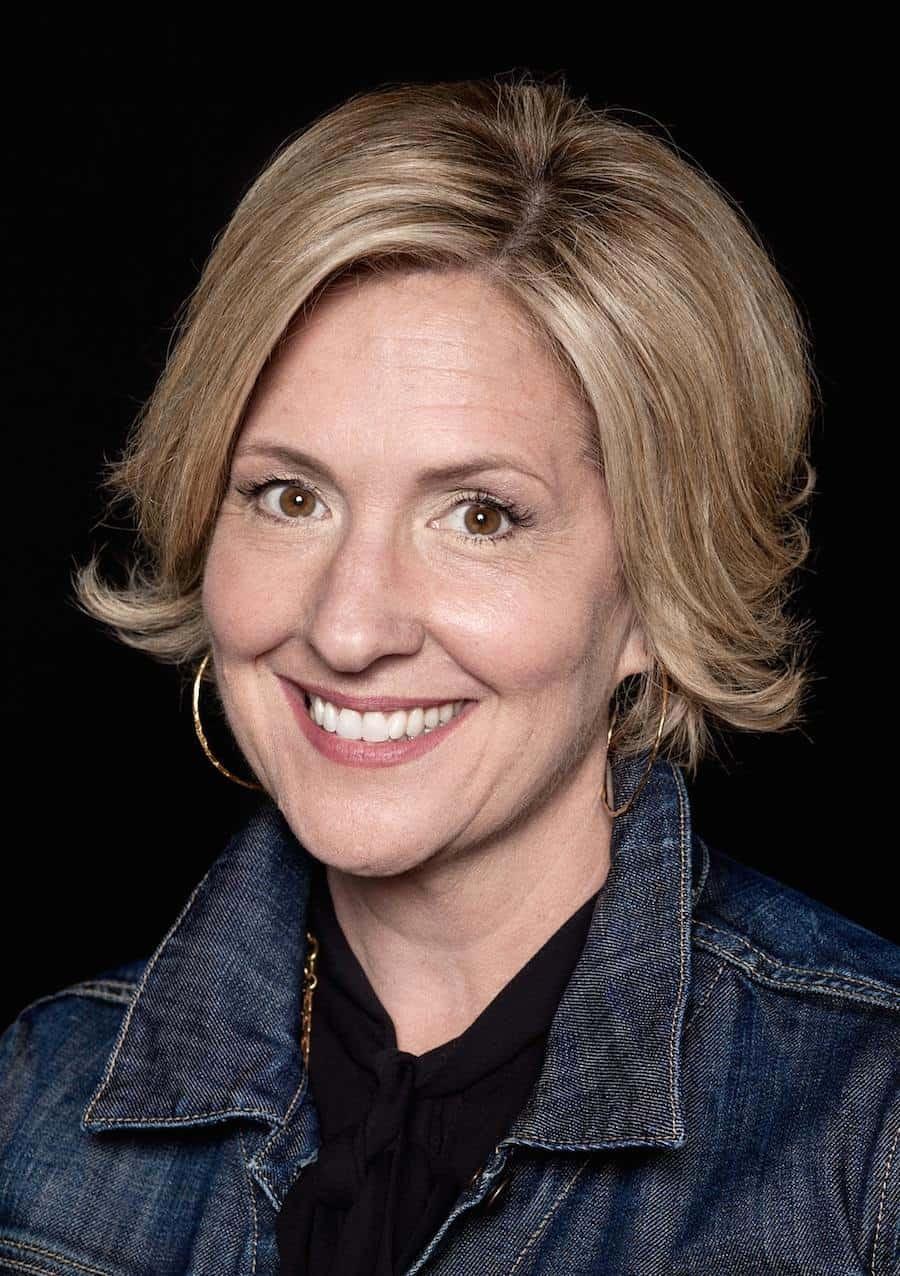
Heather Heying.

Evolutionary biologist · Author · Podcast host

Heather Heying moved from field biology and years teaching at Evergreen State College into a far more combustible role: public intellectual, podcast host and recurring critic of academic and cultural orthodoxies after the 2017 protests pushed her name into national circulation.

OBJECTIVE PERSONALITY CLASSIFICATIONFM-Si/Te-BS/C(P)What does this mean?
PERSONALITY SYSTEMObjective Personality
LEAD FUNCTIONSi · Introverted Sensing
SECOND SAVIOR FUNCTIONTe · Extroverted Thinking
MBTI EQUIVALENTISTJ
01 / BEHIND THE CLASSIFICATION

The personality behind the fame.

How does a recorded OPS classification like FM-Si/Te-BS/C(P) break down? Walk through nine coins and watch the proposed type take shape. These are deductions from the archived code, not independent evidence of typing accuracy.

Scroll below to see Heather Heying take shape.

STARTING POINT512 possible OPS typesEach type combines core functions, an animal order, and sexual modalities.
THE FINISH LINEFM-Si/Te-BS/C(P)One recorded classification, decoded from its components.
Heather Heying’s HUMAN NEEDS 01—03
01
DECIDER OR OBSERVER?

Observer over Decider

Observers have more balanced Decider poles in the middle: Self (Di) and Tribe (De). Their own perspective and other people's perspectives tend to be easier to navigate. Things are the harder territory. Control (Oi) and Chaos (Oe) sit at the extremes, so disrupted plans, uncertainty, and a changing world can trigger the strongest reactions.

Heying came to national attention when Evergreen State College shifted from a biology campus into a national story about protests, disruption and institutional breakdown. That framing matters. The recurring pressure in her public life shows up as unstable conditions to navigate, not mainly as a plea to be liked. Observer friction keeps attention on what is happening, what rules are breaking, and what environment no longer feels workable. The strength is steadiness inside upheaval. The blind spot is treating the chaotic setting as the whole problem while the human fallout and competing loyalties become harder to hold.

O
02
SELF OR TRIBE?

De · Tribe over Di · Self

Tribe (De) is the stronger deciding pole. They check decisions against people, shared standards, and what works for the group: what do we need, what will others think? The strength is coordination and responsiveness; the recurring friction is the Self (Di)—knowing and defending their own position. As the portrait unfolds, notice how Tribe takes the lead.

After Evergreen, Heying did not disappear into private expertise. She wrote opinion pieces for The New York Times and The Chronicle of Higher Education, testified at the Department of Justice forum on free speech, and built a weekly podcast audience. That pattern fits Tribe-first judgment: making the case in terms other people can evaluate, share or reject. The strength is public legibility. Her ideas are packaged for a real audience, not sealed in a specialist silo. The growth cost is over-investing in the audience’s standard, even when a narrower, more privately bounded claim would be stronger.

De
03
GATHER OR ORGANIZE?

Oi · Organize over Oe · Gather

Organize (Oi) leads with refining, preserving, and structuring what is already known. Its strength is preparation and clear direction; the recurring friction is unexpected change that disrupts the plan. Another layer of the personality portrait comes into focus.

Her PhD on Mantella laevigata was not a vague affection for nature; it was a highly bounded study of a specific Madagascan poison frog, later echoed in Antipode, her book about research and life in Madagascar. Organize-first personalities tend to trust what can be tracked, stabilized and revisited. The strength is durable structure: a careful model, a settled frame, a body of work that holds together over time. The blind spot is that a strong framework can become a fortress. Messy exceptions and rapidly changing conditions may look like noise before they look important.

Oi
FIRST THREE COINSO + De + Oi

These establish the preferred human needs in the OPS framework.

Heather Heying’s FUNCTIONS 04—05
04
FEELING OR THINKING?

Thinking · T over Feeling · F

Thinking (T) evaluates decisions through reasons, logic, and what works—not a lack of emotion. Its strength is analytical consistency; Feeling (F) provides balance through values, meaning, and the human consequences of a decision. Combined with Tribe (De), this forms the recorded Savior Te.

Heying’s public voice is unusually comfortable making explicit claims: filing a lawsuit against Evergreen, testifying about campus speech, co-presenting a theory about consciousness, and arguing publicly about pandemic questions. That pattern fits Thinking through Te—pushing toward external reasoning, conclusions and practical consequences. The strength is clarity. She rarely sounds content to leave an issue as a cloud of impressions. The cost is that a forceful framework can outrun sensitivity to how a claim lands, or how much trust has to be earned before an argument feels usable to people who do not already share the premises.

T → Te
05
SENSING OR INTUITION?

Sensing · S over Intuition · N

Sensing (S) focuses on concrete details, observable reality, and lived experience. Intuition (N) balances it by looking for broader patterns, concepts, and implications. Combined with Organize (Oi), this gives the recorded Savior Si.

Si shows up most cleanly in the texture of Heying’s career: doctoral work on sexual selection in a specific frog species, detailed field experience in Madagascar, and years teaching biology before becoming a public commentator. Sensing here is not about being conventional; it is about building from concrete, accumulated reality. The strength is specificity. She has public credibility when speaking from lived research and observed detail rather than trend-chasing abstraction. The blind spot is that yesterday’s reliable pattern can become today’s overextended analogy. Concrete precedent is powerful, but it does not automatically scale to every new arena.

S → Si
THE TWO SAVIOR FUNCTIONSSi / Te

Opposing functions: Ne and Fi.

Heather Heying’s ANIMAL STACK 06—07
06
CONSUME OR BLAST?

Blast over Consume

Consume gathers information for internal processing; Blast organizes and communicates information. The recorded order is Blast → Sleep → Consume → Play. This comparison follows their positions in that stack.

Between the classroom, opinion essays, public testimony, a weekly podcast and a trade book for general readers, Heying’s rhythm leans earlier toward Blast than Consume. The strength of that ordering is compression: she can turn research, experience and interpretation into a thesis other people can grasp. It is useful in a media environment that rewards plain statements over careful hedging. The tradeoff is familiar. When Blast outruns Consume, the push to explain can arrive before enough fresh intake or revision has tested the conclusion against newer, less convenient information.

B > C
07
PLAY OR SLEEP?

Sleep over Play

Play emphasizes external real-time engagement; Sleep emphasizes internal processing. The recorded stack places Sleep earlier.

Sleep earlier than Play gives Heying a public style that often sounds pre-digested rather than improvised. You can hear it in the way the Darkhorse podcast, the Princeton fellowship work, and A Hunter-Gatherer’s Guide to the 21st Century present broad claims as parts of an already integrated worldview. The strength is coherence: the pieces connect. The cost is that live friction can arrive after the model feels finished. When Sleep gets there first, outside pushback is more likely to feel like interruption than raw material that should reshape the frame in real time.

S > P
Heather Heying’s ANIMAL ORIENTATION 08—09
08
INFO OR ENERGY DOMINANT?

Info over Energy

Info dominant means Consume and Blast are both in the top three: gathering and communicating information are more balanced. Play last leaves the energy side uneven—Sleep can conserve energy without enough spontaneous outward engagement.

Her top three animals create an Info emphasis, and her career makes that easy to spot. Heying has repeatedly alternated between taking in material—research, fieldwork, reading and cultural observation—and broadcasting conclusions through teaching, essays, podcasts and books. That balance can make a public intellectual unusually legible: there is both substance and a delivery system. The missing pressure lands on Play. The blind spot is not being unsocial; it is undervaluing the usefulness of messy, unscripted exchange. A polished framework can keep circulating after it would benefit from harder real-time collision with other minds.

Info
09
INTROVERSION OR EXTROVERSION?

Introversion over Extroversion

The last animal, Play, determines this OPS coin: Play or Blast last means Introversion; Consume or Sleep last means Extroversion. This describes animal orientation, not sociability or shyness.

Heying’s recorded animal order is Blast → Sleep → Consume → Play, which makes this Atlas coin Introversion because Play lands last. That does not mean shy, antisocial or absent from public life; a weekly podcast should cure that stereotype. It means private processing and prepared explanation come more naturally than spontaneous engagement with whatever another person throws into the room. The strength is a firm internal center behind the public voice. The growth cost is that truly live exchange may arrive later, after positions have already solidified and become harder to update without losing face.

I
Sexual Modalities

The four sexual modalities.

OPS uses masculine/feminine sensory and extroverted-deciding distinctions as framework-specific terms, not gender categories. The four modalities are already included in the original 512 types. The recorded modality is FM · Visual.

MM KinestheticMasculine Sensory · Masculine De
MF AudioMasculine Sensory · Feminine De
FF TesterFeminine Sensory · Feminine De
FM RECORDED MODALITYVisualFeminine Sensory · Masculine De
COMPLETE RECORDED OPS TYPE · MODALITY INCLUDEDFM-Si/Te-BS/C(P)

Si leads, Te supports, and the animal stack is Blast → Sleep → Consume → Play.

THE FINISHED PORTRAIT · ALL NINE COINS REVEALED

Heather Heying's complete function and animal stack

BlastSleepConsumePlayfSimTefFimNe
FM-Si/Te-BS/C(P)DOUBLE ACTIVATED · SLEEPExplore the Interactive Coin Builder →
THE HEATHER HEYING LENS

The biologist who prefers a settled frame.

To many people, Heying’s name arrives through Evergreen: a biology professor recast as a national symbol during the 2017 campus protests, then a plaintiff in the college lawsuit, then a podcasting dissenter. Behind that impression, though, is a field biologist who spent years teaching, researching frogs and building arguments from close observation. The public role changed fast; the underlying habit of tracking details did not.

Si/Te gives her a distinct public strength. She can ground arguments in remembered specifics, settled patterns and practical conclusions, whether the setting is Madagascar fieldwork, a classroom, an op-ed or the Darkhorse podcast. That pairing turns complexity into an organized takeaway. Its limit is visible too: once a framework feels well built, novelty can look less like discovery than like another disruption to fit into the existing map.

As an Observer and Double Decider, Heying is balancing changing conditions more than social approval. That exact pairing matters: an Observer is a Double Decider, so the main strain lands less in people drama than in getting reality to cohere. The human-needs imbalance is over-trusting what is already known and organized. Neglected Ne, opposite her lead Si savior, asks for real alternatives before the conclusion hardens.

Blast → Sleep → Consume → Play helps explain why her public style can sound composed and declarative. The last-animal pressure is Play: less appetite for unpredictable back-and-forth before a message is formed. Balance does not mean becoming vague. It means stress-testing major claims earlier—inviting sharper disagreement, narrower evidence checks and more live correction before the thesis goes fully public.

Want to understand the Savior and Demon states behind these nine coins? Explore the complete explanation, visual examples, and typing principles on our Methodology page →

02 / KEEP EXPLORING

Different faces. Familiar patterns.

Explore other celebrities with related recorded OPS classifications. Related functions are not necessarily exact type matches.

Discover Type Twins
YOUR TURN

Curious about your own type?

Discover how your own personality might be classified through Objective Personality.

Get objectively typed
Heather Heying's Personality Type & OPS Profile | The Personality Atlas