The Personality Atlas
THE CELEBRITY PERSONALITY ARCHIVE / FILM MUSIC

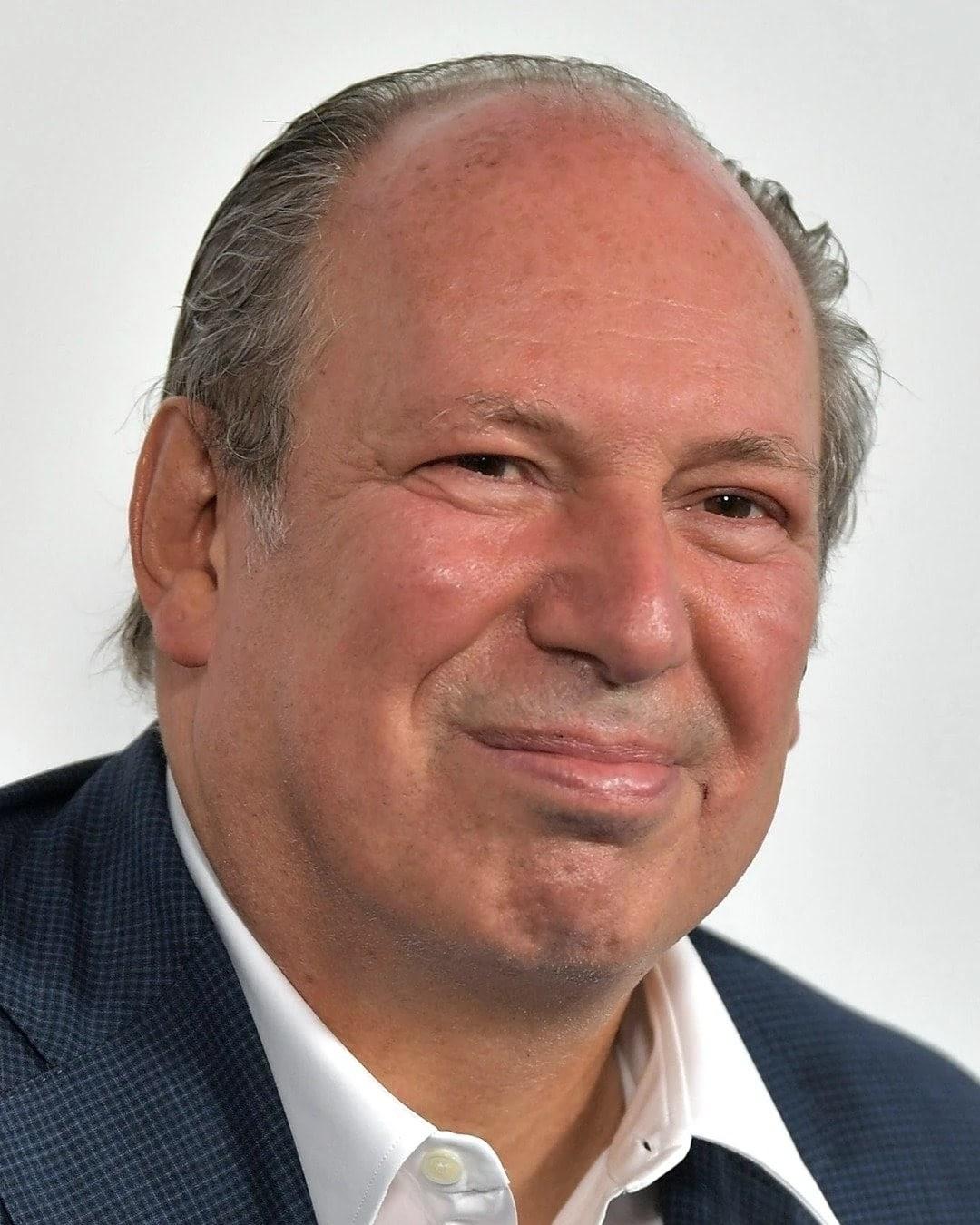
Hans Zimmer.

Film Composer · Music Producer

Hans Zimmer turned film scoring into blockbuster architecture: the ticking dread of Dunkirk, the one-note menace of the Joker, the desert howl of Dune. Behind the stadium-sized sound is a composer-producer who keeps rebuilding the sonic world around a story, then coordinating armies of musicians to make it land.

OBJECTIVE PERSONALITY CLASSIFICATIONFF-Ne/Fe-PC/B(S) #4What does this mean?
PERSONALITY SYSTEMObjective Personality
LEAD FUNCTIONNe · Extroverted Intuition
SECOND SAVIOR FUNCTIONFe · Extroverted Feeling
MBTI EQUIVALENTENTP
01 / BEHIND THE CLASSIFICATION

The personality behind the fame.

How does a recorded OPS classification like FF-Ne/Fe-PC/B(S) #4 break down? Walk through nine coins and watch the proposed type take shape. These are deductions from the archived code, not independent evidence of typing accuracy.

Scroll below to see Hans Zimmer take shape.

STARTING POINT512 possible OPS typesEach type combines core functions, an animal order, and sexual modalities.
THE FINISH LINEFF-Ne/Fe-PC/B(S) #4One recorded classification, decoded from its components.
Hans Zimmer’s HUMAN NEEDS 01—03
01
DECIDER OR OBSERVER?

Observer over Decider

Observers have more balanced Decider poles in the middle: Self (Di) and Tribe (De). Their own perspective and other people's perspectives tend to be easier to navigate. Things are the harder territory. Control (Oi) and Chaos (Oe) sit at the extremes, so disrupted plans, uncertainty, and a changing world can trigger the strongest reactions.

Zimmer’s breakthrough with Rain Man says more about circumstances than image. Barry Levinson found him after hearing A World Apart, and Zimmer answered with synthesizers and steel drums instead of a standard road-movie palette. Later, each project kept changing the problem: African choirs for The Lion King, Japanese research for The Last Samurai, a ticking watch folded into Dunkirk. That is classic Observer pressure—what is the world asking for now? His strength is adaptive invention. The blind spot is waiting for one more variable, tool or piece of context before committing to a direction.

O
02
SELF OR TRIBE?

De · Tribe over Di · Self

Tribe (De) is the stronger deciding pole. They check decisions against people, shared standards, and what works for the group: what do we need, what will others think? The strength is coordination and responsiveness; the recurring friction is the Self (Di)—knowing and defending their own position. As the portrait unfolds, notice how Tribe takes the lead.

Zimmer’s career is packed with public examples of Tribe-first decision-making. He built Remote Control Productions as a collaborative hub, argued that modern film scoring should credit a whole community, and fought to reverse The Dark Knight’s Oscar disqualification so collaborators would be properly acknowledged. That outward social calibration is a real strength: directors, studios and other composers can feel the score is being built with them, not merely imposed on them. The cost is obvious too. When everyone’s needs stay vivid, his own simpler preference can get buried under the job of keeping the tribe aligned.

De
03
GATHER OR ORGANIZE?

Oe · Gather over Oi · Organize

Gather (Oe) leads with new information, experiences, and possibilities. Its strength is curiosity and adaptability; the recurring friction is narrowing the options and settling into what is already known. Another layer of the personality portrait comes into focus.

From ad jingles and new-wave synth bands to Gladiator, Planet Earth II and Dune, Zimmer’s public career keeps expanding by chasing the next opening rather than guarding one fixed formula. He fused electronics with orchestra when that mix still felt unusual, then kept jumping mediums, directors and sound worlds. Gather-first lives in that appetite for fresh options. The advantage is range: he can reinvent the toolkit for a lion cub, a superhero or a desert messiah. The growth cost is selectivity. Not every intriguing possibility deserves years of work, and constant expansion can make it harder to protect a settled process.

Oe
FIRST THREE COINSO + De + Oe

These establish the preferred human needs in the OPS framework.

Hans Zimmer’s FUNCTIONS 04—05
04
FEELING OR THINKING?

Feeling · F over Thinking · T

Feeling (F) evaluates decisions through values, meaning, and what matters—not simply through emotion. Its strength is a clear sense of significance; Thinking (T) provides balance through impersonal reasons, consistency, and evidence. Combined with Tribe (De), this forms the recorded Savior Fe.

When Zimmer talks about music, he often talks about people first: honoring Daniel Craig’s long Bond run, designing collaborative credits on Gladiator, or finding the emotional world that lets a director trust him. That points to Feeling through Fe, not as sentimentality but as attunement to shared impact. His strength is making enormous scores feel socially legible—music that tells an audience what kind of human stakes they are hearing. The blind spot is that emotional alignment can become its own pressure. A score can beautifully serve the room while leaving less space for a colder, more impersonal verdict.

F → Fe
05
SENSING OR INTUITION?

Intuition · N over Sensing · S

Intuition (N) focuses on concepts, patterns, and what information might mean. Sensing (S) balances it through observable facts, physical detail, and direct experience. Combined with Gather (Oe), this gives the recorded Savior Ne.

Zimmer’s most famous ideas are rarely just sounds; they are concepts with cinematic consequences. The Joker becomes a single nagging note. Inception turns manipulated Edith Piaf into a whole architecture of time. Dune becomes a harsh, almost alien vocal-and-duduk landscape. That is Intuition through Ne: spotting patterns, symbols and alternate sonic possibilities before the practical world catches up. The strength is obvious originality. The limit is equally concrete. Big conceptual leaps still have to survive players, deadlines, scenes and directors, which means reality eventually forces one possibility to stop multiplying and become an actual choice.

N → Ne
THE TWO SAVIOR FUNCTIONSNe / Fe

Opposing functions: Si and Ti. This is a jumper classification.

Hans Zimmer’s ANIMAL STACK 06—07
06
PLAY OR SLEEP?

Play over Sleep

Play emphasizes external real-time engagement; Sleep emphasizes internal processing. The recorded stack places Play earlier.

Zimmer’s public working style leans hard toward Play over Sleep. Christopher Nolan became a six-film collaboration, his Santa Monica studio is built for rapid demo creation, and his career repeatedly puts him in active exchange with directors, musicians and technical teams. The upside is momentum: ideas get tested in motion, with other people, against a living project. The blind spot is quieter and less glamorous. When Play outruns Sleep, reflection becomes the task that keeps getting postponed. The growth cost is making room for private consolidation before the next deadline or partnership immediately starts speaking again.

P > S
07
CONSUME OR BLAST?

Consume over Blast

Consume gathers information for internal processing; Blast organizes and communicates information. The recorded order is Play → Consume → Blast → Sleep. This comparison follows their positions in that stack.

After that interactive front edge, Zimmer leans Consume over Blast. You can see it in the extensive research he described for The Last Samurai, in the travel and study behind Sherlock Holmes: A Game of Shadows, and in the way his studio can generate demos quickly while he keeps absorbing references. The strength is depth: he does not just announce a sound world, he feeds it with material. The cost is that more input can always feel useful. At some point the score still has to stop gathering and tell everyone, plainly, what the musical argument is.

C > B
Hans Zimmer’s ANIMAL ORIENTATION 08—09
08
INFO OR ENERGY DOMINANT?

Info over Energy

Info dominant means Consume and Blast are both in the top three: gathering and communicating information are more balanced. Sleep last leaves the energy side uneven—Play can keep engagement going without enough private recovery.

Zimmer’s type lands on Info dominance, which fits a career built on taking in material and turning it outward at industrial scale. Over 150 film scores, television themes, game music, online teaching, live concerts and a studio system that can mock up ideas fast all show that intake and delivery are both heavily exercised. The missing balance sits with Sleep last. His strength is throughput: learn, shape, communicate. The growth cost is internal recovery. When the machine works this well, stopping to let an idea ripen privately can feel less urgent than one more commission, revision or collaboration.

Info
09
INTROVERSION OR EXTROVERSION?

Extroversion over Introversion

The last animal, Sleep, determines this OPS coin: Play or Blast last means Introversion; Consume or Sleep last means Extroversion. This describes animal orientation, not sociability or shyness.

Zimmer’s recorded animal order is Play → Consume → Blast → Sleep, which gives the final coin as OPS Extroversion because Sleep is last. That does not mean he is simply more social than private; plenty of composing still happens alone. It means the overall system more readily moves outward—through interaction, intake and delivery—than into extended inner stillness. The strength is obvious public output and responsiveness. The blind spot is letting retreat become purely functional. A useful balancing move is protecting scheduled quiet review time before the next film immediately fills the space.

E
Sexual Modalities

The four sexual modalities.

OPS uses masculine/feminine sensory and extroverted-deciding distinctions as framework-specific terms, not gender categories. The four modalities are already included in the original 512 types. The recorded modality is FF · Tester.

MM KinestheticMasculine Sensory · Masculine De
MF AudioMasculine Sensory · Feminine De
FF RECORDED MODALITYTesterFeminine Sensory · Feminine De
FM VisualFeminine Sensory · Masculine De
ADDITIONAL LAYER · SOCIAL TYPE

The four social types.

Social types are an additional layer on top of the original Objective Personality classification, introduced later in OPS research. They describe two proposed social preference coins: Flex vs. Friends and Generalize vs. Specialize. The combination and priority of these preferences produce four social types. Hans Zimmer's recorded social type is #4.

SOCIAL #1 #1Flex · Generalize
SOCIAL #2 #2Generalize · Friends
SOCIAL #3 #3Specialize · Flex
SOCIAL #4 RECORDED SOCIAL TYPE#4Friends · Specialize
COMPLETE RECORDED OPS TYPE · MODALITY INCLUDED + SOCIAL TYPEFF-Ne/Fe-PC/B(S) #4

Ne leads, Fe supports, and the animal stack is Play → Consume → Blast → Sleep.

THE FINISHED PORTRAIT · ALL NINE COINS REVEALED

Hans Zimmer's complete function and animal stack

PlayConsumeBlastSleepmNemTifFefSi
FF-Ne/Fe-PC/B(S) #4DOUBLE ACTIVATED · PLAYExplore the Interactive Coin Builder →
THE HANS ZIMMER LENS

The architect of sonic worlds

The public impression is thunder: the BRAAAM of Inception, the ticking dread of Dunkirk, the desert ritual of Dune. But the biography behind that spectacle is less rock-star mystique than relentless adaptive work—bands, jingles, synthesizers, fast demos, research trips, and a composer who keeps rebuilding the musical world around whatever story is in front of him.

His Ne/Fe pairing is a formidable engine. Ne keeps opening fresh sonic possibilities; Fe keeps those possibilities aimed at shared human impact, whether he is honoring a director’s vision or making a blockbuster emotion instantly readable. That combination can produce iconic music fast. Its limit is drift toward external usefulness: another idea, another collaboration, another emotional target, before a private standard has fully settled.

As an Observer and Double Decider, Zimmer’s core imbalance is not mainly people drama but the changing conditions of the work itself: what does this film need, what world does it live in, what new angle is missing? Double Decider helps him flex with people on both Self and Tribe needs. The neglected function opposite his lead savior is Si, so stable routines, preservation and trusted repetition can be the harder discipline.

Play → Consume → Blast → Sleep explains why the career feels so outwardly generative. He engages, absorbs, communicates, and only then tends to deeply withdraw. Sleep last can make rest, distillation and private integration feel optional right when they are most needed. The balance is not becoming less collaborative. It is blocking protected off-grid composing days between major projects so the next bold idea arrives from depth, not just velocity.

Want to understand the Savior and Demon states behind these nine coins? Explore the complete explanation, visual examples, and typing principles on our Methodology page →

02 / KEEP EXPLORING

Different faces. Familiar patterns.

Explore other celebrities with related recorded OPS classifications. Related functions are not necessarily exact type matches.

Discover Type Twins
YOUR TURN

Curious about your own type?

Discover how your own personality might be classified through Objective Personality.

Get objectively typed
Hans Zimmer's Personality Type & OPS Profile | The Personality Atlas