The Personality Atlas
THE CELEBRITY PERSONALITY ARCHIVE / ECONOMIC HISTORY

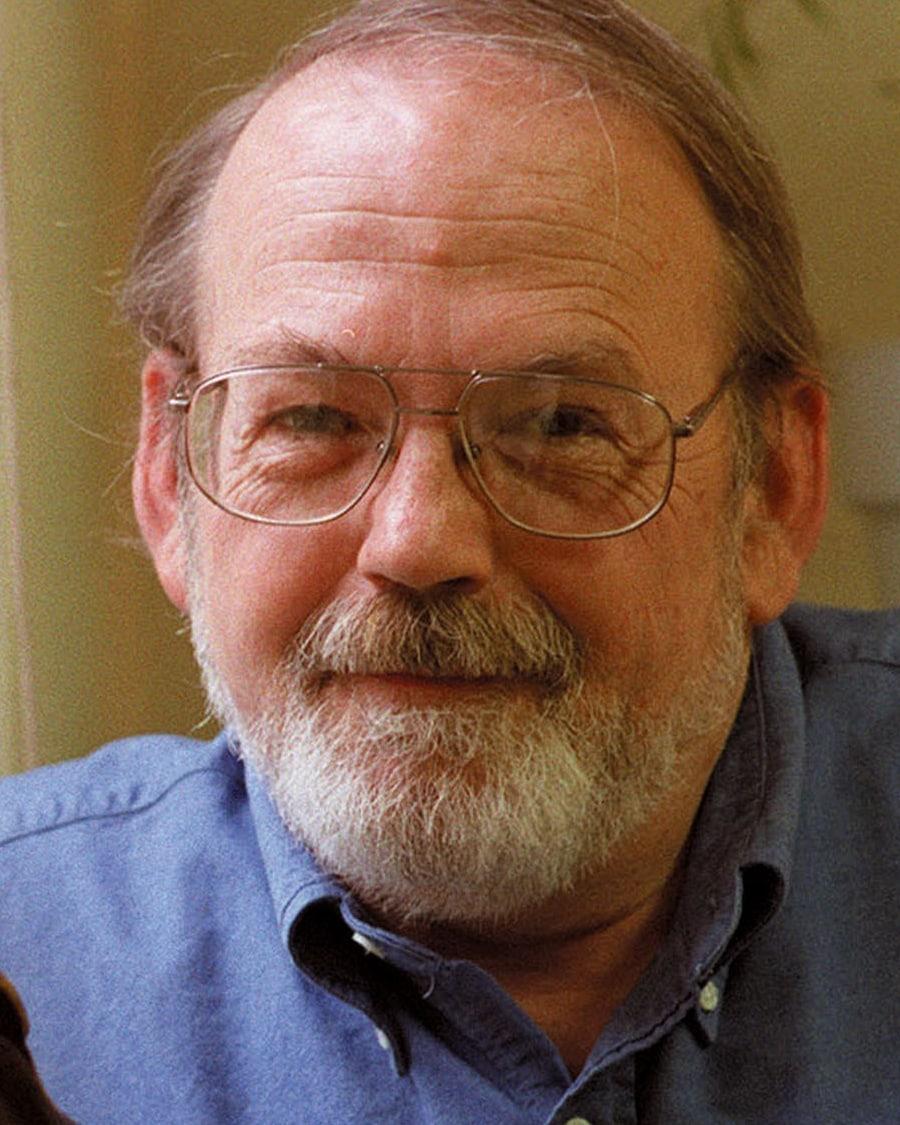
Gregory Clark.

Economist · Economic Historian · Professor

Gregory Clark built a career by making polite stories about progress answer to very long data. From A Farewell to Alms to surname-based mobility research and a 2023 PNAS study tracking 422,374 people in England, he works at a scale that invites argument—then publicly marks the limits of what those arguments can prove.

OBJECTIVE PERSONALITY CLASSIFICATIONFF-Ne/Ti-CP/B(S)What does this mean?
PERSONALITY SYSTEMObjective Personality
LEAD FUNCTIONNe · Extroverted Intuition
SECOND SAVIOR FUNCTIONTi · Introverted Thinking
MBTI EQUIVALENTENTP
01 / BEHIND THE CLASSIFICATION

The personality behind the fame.

How does a recorded OPS classification like FF-Ne/Ti-CP/B(S) break down? Walk through nine coins and watch the proposed type take shape. These are deductions from the archived code, not independent evidence of typing accuracy.

Scroll below to see Gregory Clark take shape.

STARTING POINT512 possible OPS typesEach type combines core functions, an animal order, and sexual modalities.
THE FINISH LINEFF-Ne/Ti-CP/B(S)One recorded classification, decoded from its components.
Gregory Clark’s HUMAN NEEDS 01—03
01
DECIDER OR OBSERVER?

Observer over Decider

Observers have more balanced Decider poles in the middle: Self (Di) and Tribe (De). Their own perspective and other people's perspectives tend to be easier to navigate. Things are the harder territory. Control (Oi) and Chaos (Oe) sit at the extremes, so disrupted plans, uncertainty, and a changing world can trigger the strongest reactions.

Clark’s public work keeps returning to problems no one can settle by force of opinion alone: why economies diverge, how status persists, what a 422,374-person lineage can and cannot show across four centuries of England. That is classic Observer pressure—the friction sits in reality, scale and missing certainty more than in personal approval. The strength is stamina with stubborn conditions; he will stay with the archive, the dataset and the long horizon. The blind spot is that another layer of evidence can start to feel like the answer, even when the harder task is narrowing what question the evidence should serve.


O
02
SELF OR TRIBE?

Di · Self over De · Tribe

Self (Di) is the stronger deciding pole. They check decisions against their own values or reasons first: what makes sense to me, what feels right to me? The strength is independent conviction; the recurring friction is the Tribe (De)—other people's standards, feedback, and expectations. As the portrait unfolds, notice how Self takes the lead.

In The Son Also Rises and the later England lineage paper, Clark publicly advances a distinctive way of reading status persistence across generations while also noting limits on what the mechanism can be. Self over Tribe fits that willingness to hold an internal standard instead of waiting for collective comfort first. The advantage is independence: a line of inquiry can survive fashion and disagreement. The growth cost is obvious in contested fields. A framework can be internally convincing and still require more translation, concession or revision before other experts regard the claim as responsibly bounded.

Di
03
GATHER OR ORGANIZE?

Oe · Gather over Oi · Organize

Gather (Oe) leads with new information, experiences, and possibilities. Its strength is curiosity and adaptability; the recurring friction is narrowing the options and settling into what is already known. Another layer of the personality portrait comes into focus.

Clark’s output does not stay in one neatly fenced corner. A Farewell to Alms ranges across economic growth and the Industrial Revolution; later work follows surnames, kinship lines and mobility across centuries; at SDU he applied those historical methods within a Nordic human-capital program. Gather over Organize gives that roaming scope a real advantage: new evidence and new domains can refresh the model. The tradeoff is selectivity. Expanding to another archive or national setting can keep the project fertile while postponing the brutal narrowing that turns many intriguing comparisons into one settled roadmap.

Oe
FIRST THREE COINSO + Di + Oe

These establish the preferred human needs in the OPS framework.

Gregory Clark’s FUNCTIONS 04—05
04
FEELING OR THINKING?

Thinking · T over Feeling · F

Thinking (T) evaluates decisions through reasons, logic, and what works—not a lack of emotion. Its strength is analytical consistency; Feeling (F) provides balance through values, meaning, and the human consequences of a decision. Combined with Self (Di), this forms the recorded Savior Ti.

The 2023 PNAS paper is revealing not just for its scale, but for its restraint: after comparing distant relatives, it explicitly limits what the persistence can tell us about underlying mechanism. Ti shows up there as a drive for cleaner inference and internally consistent claims. The strength is intellectual sharpness—refusing to pretend a correlation has explained more than it has. The blind spot is that precision can feel complete from the inside while listeners still need a plainer account of stakes, assumptions and where the argument stops before interpretation starts.

T → Ti
05
SENSING OR INTUITION?

Intuition · N over Sensing · S

Intuition (N) focuses on concepts, patterns, and what information might mean. Sensing (S) balances it through observable facts, physical detail, and direct experience. Combined with Gather (Oe), this gives the recorded Savior Ne.

Ne gives Clark’s work its appetite for patterns that stretch far beyond one case file. A historian can study one place or one reform; Clark repeatedly asks whether the same deeper shape appears across centuries, families and national contexts. That intuition can produce unusually ambitious questions, which is part of why his books invite discussion beyond a single technical subfield. The cost is that a big pattern can become seductive. Once the mind sees a recurring structure, concrete institutional differences risk looking like noise instead of the exact local details that might change the conclusion.

N → Ne
THE TWO SAVIOR FUNCTIONSNe / Ti

Opposing functions: Si and Fe.

Gregory Clark’s ANIMAL STACK 06—07
06
CONSUME OR BLAST?

Consume over Blast

Consume gathers information for internal processing; Blast organizes and communicates information. The recorded order is Consume → Play → Blast → Sleep. This comparison follows their positions in that stack.

Consume comes before Blast, and Clark’s career supplies the obvious public image: long-range reading, archival digestion, large datasets and book-length synthesis before the microphone or verdict. A Farewell to Alms and The Son Also Rises both read like work built from massive intake rather than quick proclamation. That is a strength because it gives the argument depth. The cost is familiar to heavy researchers: another source, another comparison or another qualification can feel more responsible than stating the clearest version of the claim and letting others attack it.

C > B
07
PLAY OR SLEEP?

Play over Sleep

Play emphasizes external real-time engagement; Sleep emphasizes internal processing. The recorded stack places Play earlier.

Play arrives earlier than Sleep, which helps explain why Clark’s research life is not only solitary accumulation. UC Davis lists editorial service for the European Review of Economic History and a steering role in the All-UC Group in Economic History, while SDU placed him inside a collaborative research program. The strength in Play is active exchange: methods get tested in real institutional traffic, not just in private notebooks. The growth cost is that ongoing engagement can keep the work moving outward, while slower internal consolidation becomes the later, less preferred checkpoint.

P > S
Gregory Clark’s ANIMAL ORIENTATION 08—09
08
INFO OR ENERGY DOMINANT?

Info over Energy

Info dominant means Consume and Blast are both in the top three: gathering and communicating information are more balanced. Sleep last leaves the energy side uneven—Play can keep engagement going without enough private recovery.

Clark’s stack lands on Info rather than Energy because Consume and Blast both make the top three. Publicly, that looks like someone who can absorb an enormous span of historical material and then turn it into books, papers and interviews that state a thesis. The void sits with the missing fourth animal, Sleep. More data and more explanation are not the same as full internal settling. The risk is not lack of brilliance or effort; it is pushing the research cycle forward before the model has been compressed into a simpler, quieter internal standard.

Info
09
INTROVERSION OR EXTROVERSION?

Extroversion over Introversion

The last animal, Sleep, determines this OPS coin: Play or Blast last means Introversion; Consume or Sleep last means Extroversion. This describes animal orientation, not sociability or shyness.

Sleep lands last, which makes this an OPS Extroversion result even though the stereotype of “extrovert” tells you almost nothing useful here. The point is order: taking in, engaging and then explaining come more readily than withdrawing long enough to consolidate everything privately. Clark’s public career—major books, ongoing papers, editorial work and a later chair at SDU—illustrates a life organized around output and contact with the wider field. The blind spot is subtle exhaustion of the framework itself. Another project can begin before the previous one has been fully distilled into what should remain.

E
Sexual Modalities

The four sexual modalities.

OPS uses masculine/feminine sensory and extroverted-deciding distinctions as framework-specific terms, not gender categories. The four modalities are already included in the original 512 types. The recorded modality is FF · Tester.

MM KinestheticMasculine Sensory · Masculine De
MF AudioMasculine Sensory · Feminine De
FF RECORDED MODALITYTesterFeminine Sensory · Feminine De
FM VisualFeminine Sensory · Masculine De
COMPLETE RECORDED OPS TYPE · MODALITY INCLUDEDFF-Ne/Ti-CP/B(S)

Ne leads, Ti supports, and the animal stack is Consume → Play → Blast → Sleep.

THE FINISHED PORTRAIT · ALL NINE COINS REVEALED

Gregory Clark's complete function and animal stack

ConsumePlayBlastSleepmNemTifFefSi
FF-Ne/Ti-CP/B(S)DOUBLE ACTIVATED · PLAYExplore the Interactive Coin Builder →
THE GREGORY CLARK LENS

The giant pattern needs a pause.

Gregory Clark’s public image is the economist who will chase status across centuries and test family lines against comfortable stories about mobility. The more revealing detail is the restraint inside that ambition. In the England lineage study, he pushes scale hard and then limits what the result can explain. The public boldness comes with real methodological brakes.

The Ne/Ti savior pairing is the engine. Ne opens the frame from industrial growth to surnames to long-run kinship patterns; Ti keeps trimming the claim to what the inference can actually hold. That combination can produce daring, coherent work. Its limit is that a model satisfying his inner logic can still leave outsiders wanting more institutional texture, caveats, or simpler terms.

As an Observer and Double Decider, Clark is more likely to get chronically stretched by uncertain conditions, incomplete evidence, and the pressure to map reality than by endless tribe-versus-self drama. That Double Decider pairing does not remove people questions; it means the enduring imbalance tilts toward the world itself. The neglected function is Si, opposite lead Ne: stabilizing, preserving, and returning to a narrower concrete baseline.

Consume → Play → Blast → Sleep shows the final pressure point. He can gather immense material, test it in active exchange, and present a thesis before full private consolidation arrives. Sleep last is the imbalance: inward compression and recovery are easiest to defer. The corrective is not smaller questions. It is scheduling real quiet after each major project, then reducing the model to the few claims worth carrying forward.

Want to understand the Savior and Demon states behind these nine coins? Explore the complete explanation, visual examples, and typing principles on our Methodology page →

02 / KEEP EXPLORING

Different faces. Familiar patterns.

Explore other celebrities with related recorded OPS classifications. Related functions are not necessarily exact type matches.

Discover Type Twins
YOUR TURN

Curious about your own type?

Discover how your own personality might be classified through Objective Personality.

Get objectively typed
Gregory Clark's Personality Type & OPS Profile | The Personality Atlas