The Personality Atlas
THE CELEBRITY PERSONALITY ARCHIVE / FILM & TELEVISION

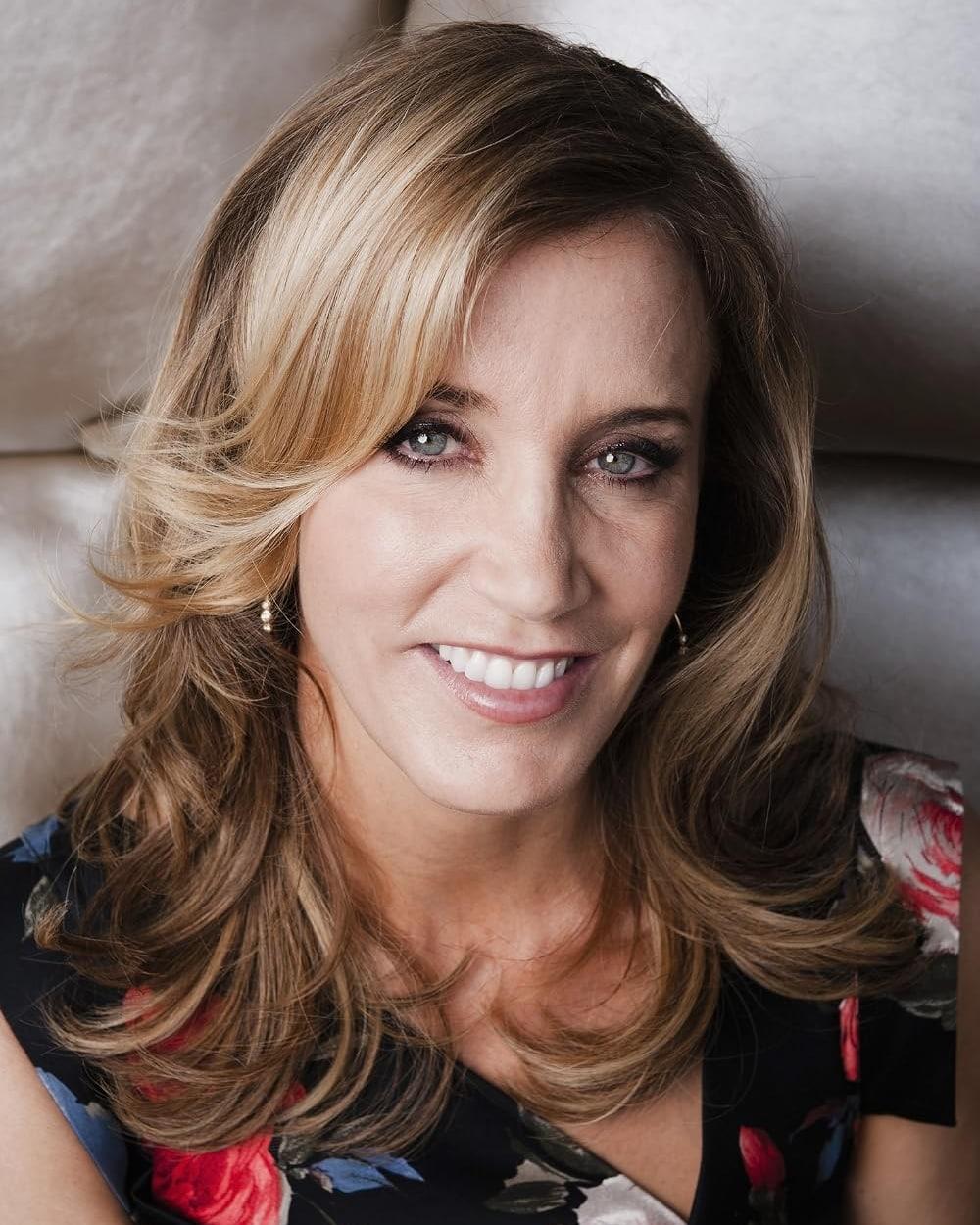
Felicity Huffman.

Actor · Emmy-winning screen and stage performer

Felicity Huffman built her reputation the long way: theater training, years of supporting parts, a sharp breakout on Sports Night, then the Emmy-winning force of Lynette Scavo on Desperate Housewives and the Oscar-nominated precision of Transamerica. Even when public attention later narrowed around a very different story, the larger pattern remained a career defined by craft, range, and an ability to make complicated women feel immediate.

OBJECTIVE PERSONALITY CLASSIFICATIONFM-Se/Fi-CS/B(P)What does this mean?
PERSONALITY SYSTEMObjective Personality
LEAD FUNCTIONSe · Extroverted Sensing
SECOND SAVIOR FUNCTIONFi · Introverted Feeling
MBTI EQUIVALENTESFP
01 / BEHIND THE CLASSIFICATION

The personality behind the fame.

How does a recorded OPS classification like FM-Se/Fi-CS/B(P) break down? Walk through nine coins and watch the proposed type take shape. These are deductions from the archived code, not independent evidence of typing accuracy.

Scroll below to see Felicity Huffman take shape.

STARTING POINT512 possible OPS typesEach type combines core functions, an animal order, and sexual modalities.
THE FINISH LINEFM-Se/Fi-CS/B(P)One recorded classification, decoded from its components.
Felicity Huffman’s HUMAN NEEDS 01—03
01
DECIDER OR OBSERVER?

Observer over Decider

Observers have more balanced Decider poles in the middle: Self (Di) and Tribe (De). Their own perspective and other people's perspectives tend to be easier to navigate. Things are the harder territory. Control (Oi) and Chaos (Oe) sit at the extremes, so disrupted plans, uncertainty, and a changing world can trigger the strongest reactions.

Huffman’s career is full of circumstance shifts she had to meet rather than control: long theater years, a sharp breakout on Sports Night, the eight-season lock of Desperate Housewives, then her own admission that audiences could struggle to see past Lynette Scavo. That pattern fits an Observer life problem—less about people approval by itself, more about adapting to role, timing, and the public frame already in place. The strength is resilience inside changing conditions. The blind spot is assuming the next external change will clarify a direction that still requires a deliberate choice.

O
02
SELF OR TRIBE?

Di · Self over De · Tribe

Self (Di) is the stronger deciding pole. They check decisions against their own values or reasons first: what makes sense to me, what feels right to me? The strength is independent conviction; the recurring friction is the Tribe (De)—other people's standards, feedback, and expectations. As the portrait unfolds, notice how Self takes the lead.

Her public explanation of the 2019 admissions case—saying in 2023 that she felt she would be a bad mother if she did not do it—shows how much weight her own inner verdict can carry. Di / Self is not selfishness; it means the personal standard lands first. That same independence likely helped her move from theater training and supporting parts into a sustained screen career without waiting for universal permission. The cost is severe: a self-justifying answer can feel morally complete from the inside while failing to account for rules, consequences, and the broader field of people affected.

Di
03
GATHER OR ORGANIZE?

Oe · Gather over Oi · Organize

Gather (Oe) leads with new information, experiences, and possibilities. Its strength is curiosity and adaptability; the recurring friction is narrowing the options and settling into what is already known. Another layer of the personality portrait comes into focus.

Huffman’s resume refuses one lane: Broadway and Off-Broadway, Sports Night, Desperate Housewives, Transamerica, American Crime, indie films, network pilots, and later returns to guest and limited-series work. Gather over Organize fits that willingness to keep moving toward the next opening instead of freezing herself into one settled brand. The strength is range and responsiveness; she can pivot when a part offers a new texture or challenge. The growth cost is selectivity. A career built on fresh possibilities still has to decide which direction deserves years of commitment, not just immediate interest.

Oe
FIRST THREE COINSO + Di + Oe

These establish the preferred human needs in the OPS framework.

Felicity Huffman’s FUNCTIONS 04—05
04
FEELING OR THINKING?

Feeling · F over Thinking · T

Feeling (F) evaluates decisions through values, meaning, and what matters—not simply through emotion. Its strength is a clear sense of significance; Thinking (T) provides balance through impersonal reasons, consistency, and evidence. Combined with Self (Di), this forms the recorded Savior Fi.

Transamerica is the cleanest public example of Huffman’s Fi at work. Her performance as Bree earned a Golden Globe, an Academy Award nomination, and widespread praise because the character felt anchored by a private moral center rather than performed as a thesis. Feeling here is not softness or sentimentality; it is the ability to make a role matter from the inside out. That gives her portrayals unusual human specificity. The blind spot is that a deeply felt position can start to look self-validating, as if sincerity alone settles questions that still need outside challenge, context, or practical limits.

F → Fi
05
SENSING OR INTUITION?

Sensing · S over Intuition · N

Sensing (S) focuses on concrete details, observable reality, and lived experience. Intuition (N) balances it by looking for broader patterns, concepts, and implications. Combined with Gather (Oe), this gives the recorded Savior Se.

After eight years as Lynette Scavo, Huffman said she wanted a role that felt like a distinctive departure because audiences had fixed her so strongly to one visible identity. That is a useful Se lens: what people can concretely see now has enormous power. It helps explain the sharp embodiment in her work, from Lynette’s pressured domestic momentum to Bree’s physical precision in Transamerica and Barb’s abrasive force in American Crime. The strength is tangibility. The cost is that the immediate impression can dominate, making it harder to steer how those vivid moments fit a longer narrative.

S → Se
THE TWO SAVIOR FUNCTIONSSe / Fi

Opposing functions: Ni and Te.

Felicity Huffman’s ANIMAL STACK 06—07
06
CONSUME OR BLAST?

Consume over Blast

Consume gathers information for internal processing; Blast organizes and communicates information. The recorded order is Consume → Sleep → Blast → Play. This comparison follows their positions in that stack.

Consume comes earlier than Blast in Huffman’s stack, and her career reads like someone willing to build a reservoir before making a declaration. She trained at NYU, Circle in the Square, and RADA, then spent years in theater and supporting screen roles before the household-name stretch arrived. The strength of Consume is substance: when a major part lands, there is already craft and observation to draw from. The blind spot is delay. More preparation can feel responsible even after the material is strong enough to say plainly what she does well and where she wants to go next.

C > B
07
PLAY OR SLEEP?

Sleep over Play

Play emphasizes external real-time engagement; Sleep emphasizes internal processing. The recorded stack places Sleep earlier.

Sleep comes earlier than Play, which helps explain the contrast between Huffman’s public profession and the more measured way she seems to consolidate demanding material. An actor can spend years on sets, stages, and in press cycles without leading with improvisational back-and-forth as a default mode. The strength of earlier Sleep is internal distillation: work like Transamerica or American Crime arrives with a centered, considered shape. The cost is that real-time exchange can arrive later. Spontaneous engagement may be less comfortable than getting clear privately first, even in a career built in front of other people.

S > P
Felicity Huffman’s ANIMAL ORIENTATION 08—09
08
INFO OR ENERGY DOMINANT?

Info over Energy

Info dominant means Consume and Blast are both in the top three: gathering and communicating information are more balanced. Play last leaves the energy side uneven—Sleep can conserve energy without enough spontaneous outward engagement.

Huffman’s stack is Info-dominant because Consume and Blast both sit in the top three. Publicly, that looks less like nonstop talking than a repeatable cycle: absorb technique through training and varied roles, then deliver polished, legible work onstage or onscreen. She also moved into writing, directing, and co-authoring, not just performing. The missing pressure point is Play last. The issue is not whether she can collaborate; her career obviously required it. The void is narrower: live exchange and rapid collective adjustment can lag behind preparation, leaving prepared delivery more comfortable than unstructured interaction.

Info
09
INTROVERSION OR EXTROVERSION?

Introversion over Extroversion

The last animal, Play, determines this OPS coin: Play or Blast last means Introversion; Consume or Sleep last means Extroversion. This describes animal orientation, not sociability or shyness.

Play lands fourth in Huffman’s recorded animal order, which makes this the OPS Introversion coin even though her profession is irreducibly public. An actor can handle premieres, ensemble casts, and interviews and still prefer life arranged through prior intake, private processing, and prepared delivery before open-ended interaction. That distinction matters here. Her public record shows long-form craft more than improvisational overflow: theater training, carefully built performances, and a career of defined roles rather than a personality-driven talk-show identity. The growth edge is letting other people in sooner—inviting messier conversation before the interpretation is finished, not after it has hardened.

I
Sexual Modalities

The four sexual modalities.

OPS uses masculine/feminine sensory and extroverted-deciding distinctions as framework-specific terms, not gender categories. The four modalities are already included in the original 512 types. The recorded modality is FM · Visual.

MM KinestheticMasculine Sensory · Masculine De
MF AudioMasculine Sensory · Feminine De
FF TesterFeminine Sensory · Feminine De
FM RECORDED MODALITYVisualFeminine Sensory · Masculine De
COMPLETE RECORDED OPS TYPE · MODALITY INCLUDEDFM-Se/Fi-CS/B(P)

Se leads, Fi supports, and the animal stack is Consume → Sleep → Blast → Play.

THE FINISHED PORTRAIT · ALL NINE COINS REVEALED

Felicity Huffman's complete function and animal stack

ConsumeSleepBlastPlayfSefFimTemNi
FM-Se/Fi-CS/B(P)DOUBLE ACTIVATED · SLEEPExplore the Interactive Coin Builder →
THE FELICITY HUFFMAN LENS

Craft before the public label

Eight seasons as Lynette Scavo made Huffman look like a natural specialist in controlled domestic chaos, the actor who could turn exasperation into comedy and pain into momentum. But the public image sat on a longer apprenticeship: theater training, years of supporting roles, a breakthrough on Sports Night, and a later push to escape being seen only as Lynette.

Her Se/Fi pairing gives her work a concrete emotional authority. Se locks onto what an audience can actually see—the gesture, pace, body, and lived detail—while Fi gives the character an inner standard strong enough to resist generic likability. That combination helped Transamerica and American Crime land so hard. Its limit is clear too: what feels immediate and true can crowd out outside calibration or longer-range framing.

As an Observer and therefore a Double Decider, Huffman’s recurring strain centers more on circumstances, uncertainty, and adapting to what is in front of her than on getting trapped in people problems alone. The human-needs imbalance leans toward tracking and responding to reality as it arrives, sometimes without enough narrowing forecast. Her neglected function is Ni, opposite lead Se: the quieter question of what these vivid moments are adding up to.

Consume → Sleep → Blast → Play explains how she can look fully public while still leaning on prior intake, private processing, and prepared delivery before freer interaction. With Play last, the missing balance is not talent or sociability; it is earlier live exchange before the read is settled. A useful counterweight is to bring collaborators in sooner—test the scene, invite pushback, and keep the craft depth intact.

Want to understand the Savior and Demon states behind these nine coins? Explore the complete explanation, visual examples, and typing principles on our Methodology page →

02 / KEEP EXPLORING

Different faces. Familiar patterns.

Explore other celebrities with related recorded OPS classifications. Related functions are not necessarily exact type matches.

Discover Type Twins
YOUR TURN

Curious about your own type?

Discover how your own personality might be classified through Objective Personality.

Get objectively typed
Felicity Huffman's Personality Type & OPS Profile | The Personality Atlas