The Personality Atlas
THE CELEBRITY PERSONALITY ARCHIVE / DIGITAL ENTERTAINMENT

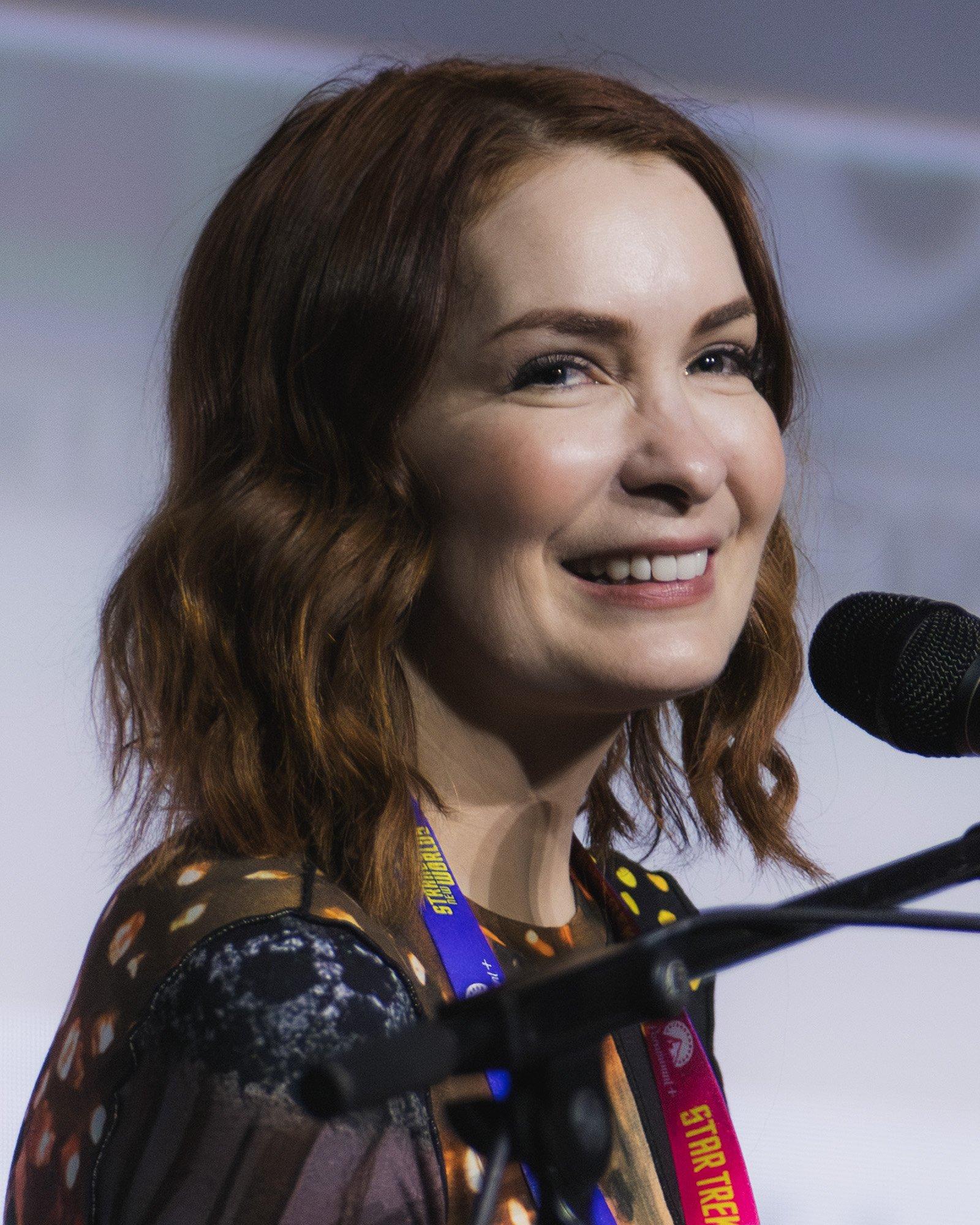
Felicia Day.

Actor · Writer · Web Series Creator

Felicia Day did not wait for Hollywood to notice that internet fandom was already a stage. She turned her own gaming life into The Guild, helped build Geek & Sundry into a hub for online genre culture, and later nudged Critical Role from a home game into a streaming phenomenon. The public image is quirky and hyper-capable; the career underneath is a long pattern of spotting an opening early and then organizing people fast enough to make it real.

OBJECTIVE PERSONALITY CLASSIFICATIONMF-Ne/Te-PB/S(C)What does this mean?
PERSONALITY SYSTEMObjective Personality
LEAD FUNCTIONNe · Extroverted Intuition
SECOND SAVIOR FUNCTIONTe · Extroverted Thinking
MBTI EQUIVALENTENFP
01 / BEHIND THE CLASSIFICATION

The personality behind the fame.

How does a recorded OPS classification like MF-Ne/Te-PB/S(C) break down? Walk through nine coins and watch the proposed type take shape. These are deductions from the archived code, not independent evidence of typing accuracy.

Scroll below to see Felicia Day take shape.

STARTING POINT512 possible OPS typesEach type combines core functions, an animal order, and sexual modalities.
THE FINISH LINEMF-Ne/Te-PB/S(C)One recorded classification, decoded from its components.
Felicia Day’s HUMAN NEEDS 01—03
01
DECIDER OR OBSERVER?

Observer over Decider

Observers have more balanced Decider poles in the middle: Self (Di) and Tribe (De). Their own perspective and other people's perspectives tend to be easier to navigate. Things are the harder territory. Control (Oi) and Chaos (Oe) sit at the extremes, so disrupted plans, uncertainty, and a changing world can trigger the strongest reactions.

When Day built The Guild out of her own gaming experience, the hard part was not getting a personal emotion approved by strangers. The hard part was that the web itself was still a shaky frontier: niche subject matter, uncertain distribution, and a career path that barely existed yet. That is Observer pressure—circumstances, timing, and making something work in a changing landscape. Her strength is adaptive resourcefulness. The blind spot is assuming one more platform move or format change will solve a problem that also requires drawing firmer lines about what to pursue next.

O
02
SELF OR TRIBE?

De · Tribe over Di · Self

Tribe (De) is the stronger deciding pole. They check decisions against people, shared standards, and what works for the group: what do we need, what will others think? The strength is coordination and responsiveness; the recurring friction is the Self (Di)—knowing and defending their own position. As the portrait unfolds, notice how Tribe takes the lead.

Day’s career is full of outward-facing decisions. She did not just make The Guild; she built casts, crews, and later a company organized around shared audience interests. Suggesting that the original Critical Role home game become a show is a sharp Tribe-first example: seeing what could work for a group, a channel, and an audience. The strength is practical responsiveness to other people’s needs and momentum. The growth cost is obvious in her 2016 comment about becoming fatigued in a more managerial role. Living by external demands can scale a brand while draining the person running it.

De
03
GATHER OR ORGANIZE?

Oe · Gather over Oi · Organize

Gather (Oe) leads with new information, experiences, and possibilities. Its strength is curiosity and adaptability; the recurring friction is narrowing the options and settling into what is already known. Another layer of the personality portrait comes into focus.

Her résumé almost refuses to sit still: child stage actor, violin performance major, math graduate, Buffy recur, web-series creator, producer, podcaster, audiobook narrator, stage guest in an immersive Dungeons & Dragons show. Gather over Organize is all over that pattern. New formats and fresh openings are not interruptions; they are fuel. That flexibility helped Day move early into digital entertainment before many traditional careers knew what to do with it. The tradeoff is selectivity. A life rich in possibilities can become crowded enough that the next intriguing lane competes with protecting depth in the current one.

Oe
FIRST THREE COINSO + De + Oe

These establish the preferred human needs in the OPS framework.

Felicia Day’s FUNCTIONS 04—05
04
FEELING OR THINKING?

Thinking · T over Feeling · F

Thinking (T) evaluates decisions through reasons, logic, and what works—not a lack of emotion. Its strength is analytical consistency; Feeling (F) provides balance through values, meaning, and the human consequences of a decision. Combined with Tribe (De), this forms the recorded Savior Te.

When Microsoft made a deal for The Guild’s second season, the shift was not just artistic validation; it was a concrete system that finally paid Day, her cast, and crew for the work. That result-oriented emphasis fits Te’s public logic: make the idea function in the real world, not merely feel meaningful in private. Her strength is turning subcultural enthusiasm into workable structure—shows, channels, deals, schedules, deliverables. The blind spot is that efficiency can quietly become the metric. A project can be operationally successful and still leave its creator feeling stuck in a role that no longer fits.

T → Te
05
SENSING OR INTUITION?

Intuition · N over Sensing · S

Intuition (N) focuses on concepts, patterns, and what information might mean. Sensing (S) balances it through observable facts, physical detail, and direct experience. Combined with Gather (Oe), this gives the recorded Savior Ne.

Day’s biggest moves often start with a possibility other people could have dismissed as too niche. A gamer’s life becomes The Guild. A tabletop home game becomes Critical Role. A scripted fantasy podcast becomes Third Eye. Ne keeps spotting the unseen doorway inside the obvious thing. The strength is conceptual range: she can connect fandom, performance, technology, and audience behavior before the opportunity looks mainstream. The cost is that possibilities multiply faster than reality can hold them. A clever new angle is exciting, but it does not automatically answer which vision deserves long-term commitment and maintenance.

N → Ne
THE TWO SAVIOR FUNCTIONSNe / Te

Opposing functions: Si and Fi. This is a jumper classification.

Felicia Day’s ANIMAL STACK 06—07
06
PLAY OR SLEEP?

Play over Sleep

Play emphasizes external real-time engagement; Sleep emphasizes internal processing. The recorded stack places Play earlier.

Play over Sleep shows up in how often Day makes creativity social in real time. She hosted multiple Geek & Sundry shows, appeared regularly on TableTop, and later organized a 12-hour Twitch charity livestream that raised more than $212,000 for RAICES. The strength of Play is momentum through interaction: ideas sharpen once other people are in the room, on camera, or in the stream. Sleep’s quieter alternative would linger longer with a single inner version. The cost of favoring Play is that constant engagement can outrun the pause needed to consolidate what is actually worth keeping.

P > S
07
CONSUME OR BLAST?

Blast over Consume

Consume gathers information for internal processing; Blast organizes and communicates information. The recorded order is Play → Blast → Sleep → Consume. This comparison follows their positions in that stack.

If Play gets the room moving, Blast is what lets Day point that motion somewhere. Launching Geek & Sundry, creating promotional rollouts around new Guild seasons, and later hosting The Lord of the Rings: The Rings of Power podcast all show a readiness to package information for an audience rather than endlessly gather more of it. The strength is clarity under deadlines: she can turn fandom chaos into a shared format people can follow. The blind spot is Consume getting less oxygen. More output is not always the same thing as deeper study or quieter replenishment.

B > C
Felicia Day’s ANIMAL ORIENTATION 08—09
08
INFO OR ENERGY DOMINANT?

Energy over Info

Energy dominant means Play and Sleep are both in the top three: there is access to expending energy through engagement and conserving it through internal processing. Consume last leaves the information side uneven—Blast may broadcast more than gets taken in.

Day’s recorded stack puts both Play and Sleep in her top three, making Energy the visible balance: outward activity backed by periodic internal reset. That combination helps explain a career that can swing from acting and hosting to writing memoir and fantasy audio fiction without losing its center. The void comes from last Consume. Publicly, her years of creating, producing, hosting, and building Geek & Sundry suggest a life tilted toward making and transmitting. Her own comment about leaving after becoming fatigued in a more managerial role captures the cost: output can outrun the slower intake that keeps it fresh.

Energy
09
INTROVERSION OR EXTROVERSION?

Extroversion over Introversion

The last animal, Consume, determines this OPS coin: Play or Blast last means Introversion; Consume or Sleep last means Extroversion. This describes animal orientation, not sociability or shyness.

In OPS terms, last Consume makes Day Extroverted, which is not a claim about party behavior or friendliness. It means the harder move is sustained intake for its own sake, especially when there is already something to build, host, explain, or launch. Play → Blast → Sleep → Consume fits a public pattern of externalizing ideas quickly—from The Guild to Geek & Sundry to podcasts and live events. The strength is visible momentum. The growth edge is deliberate replenishment: protected reading, research, and apprentice-mode curiosity before the next production machine starts asking her to speak for everyone again.

E
Sexual Modalities

The four sexual modalities.

OPS uses masculine/feminine sensory and extroverted-deciding distinctions as framework-specific terms, not gender categories. The four modalities are already included in the original 512 types. The recorded modality is MF · Audio.

MM KinestheticMasculine Sensory · Masculine De
MF RECORDED MODALITYAudioMasculine Sensory · Feminine De
FF TesterFeminine Sensory · Feminine De
FM VisualFeminine Sensory · Masculine De
COMPLETE RECORDED OPS TYPE · MODALITY INCLUDEDMF-Ne/Te-PB/S(C)

Ne leads, Te supports, and the animal stack is Play → Blast → Sleep → Consume.

THE FINISHED PORTRAIT · ALL NINE COINS REVEALED

Felicia Day's complete function and animal stack

PlayBlastSleepConsumefNemFifTemSi
MF-Ne/Te-PB/S(C)DOUBLE ACTIVATED · BLASTExplore the Interactive Coin Builder →
THE FELICIA DAY LENS

A side quest that became infrastructure

Day can read like an effortlessly quirky internet polymath, but The Guild is the better anchor. She took her own gaming experience and turned it into a web series before “creator economy” became a cliché, then helped build Geek & Sundry and incubate Critical Role. The public wit sits on serious career pattern recognition.

Her exact savior pairing, Ne with Te, is excellent at spotting an opening and getting it operational fast. That is the strength behind niche ideas becoming actual shows, channels, and recurring audience habits. The limit is equally concrete: once the machine works, efficiency can trap her inside maintenance, management, and continual output.

As an Observer and Double Decider, Day is balancing chaos and control more than people-versus-self worth questions. That pairing can look socially capable while still over-focusing on shifting circumstances, formats, and opportunities. The neglected function is Si, opposite her lead Ne: routine, preservation, and staying with what is already known long enough to stabilize it.

Play → Blast → Sleep → Consume gives her a lively outward cadence, with Consume last creating the Extroversion result in OPS terms. The imbalance is not sociability; it is under-prioritizing fresh intake once there is already a project to move. The useful correction is simple and specific: schedule research-only windows before the next launch, so the broadcaster keeps feeding the creator.

Want to understand the Savior and Demon states behind these nine coins? Explore the complete explanation, visual examples, and typing principles on our Methodology page →

02 / KEEP EXPLORING

Different faces. Familiar patterns.

Explore other celebrities with related recorded OPS classifications. Related functions are not necessarily exact type matches.

Discover Type Twins
YOUR TURN

Curious about your own type?

Discover how your own personality might be classified through Objective Personality.

Get objectively typed
Felicia Day's Personality Type & OPS Profile | The Personality Atlas