The Personality Atlas
THE CELEBRITY PERSONALITY ARCHIVE / FILM & TELEVISION

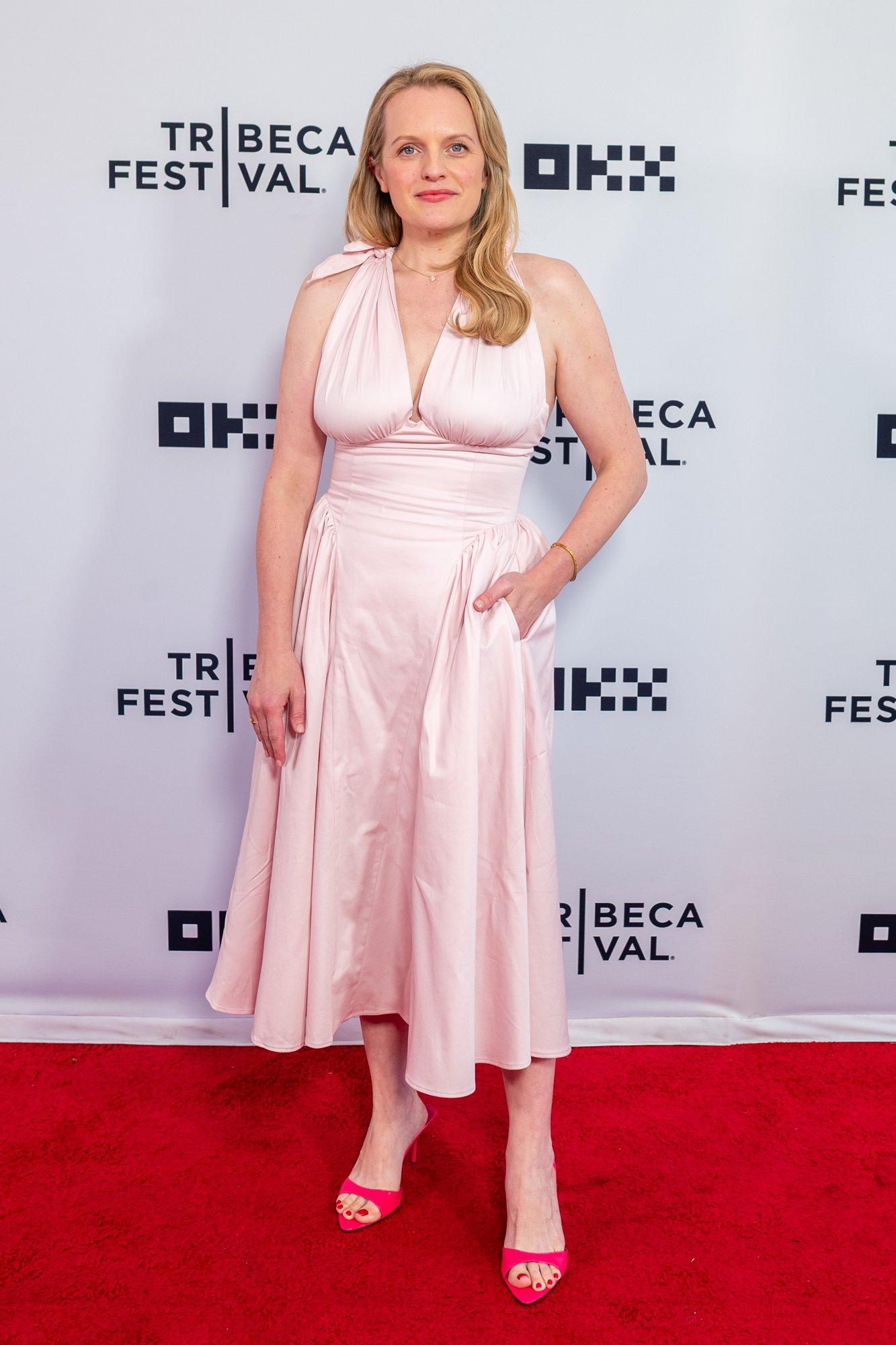
Elisabeth Moss.

Actor · Director · Producer

Elisabeth Moss built one of modern television’s most exacting careers by making precision look combustible. From The West Wing and Mad Men to The Handmaid’s Tale, then into producing and directing, she keeps returning to projects that demand stamina, control and a startling ability to hold tension without wasting a move.

OBJECTIVE PERSONALITY CLASSIFICATIONFF-Si/Te-BP/C(S)What does this mean?
PERSONALITY SYSTEMObjective Personality
LEAD FUNCTIONSi · Introverted Sensing
SECOND SAVIOR FUNCTIONTe · Extroverted Thinking
MBTI EQUIVALENTISTJ
01 / BEHIND THE CLASSIFICATION

The personality behind the fame.

How does a recorded OPS classification like FF-Si/Te-BP/C(S) break down? Walk through nine coins and watch the proposed type take shape. These are deductions from the archived code, not independent evidence of typing accuracy.

Scroll below to see Elisabeth Moss take shape.

STARTING POINT512 possible OPS typesEach type combines core functions, an animal order, and sexual modalities.
THE FINISH LINEFF-Si/Te-BP/C(S)One recorded classification, decoded from its components.
Elisabeth Moss’ HUMAN NEEDS 01—03
01
DECIDER OR OBSERVER?

Observer over Decider

Observers have more balanced Decider poles in the middle: Self (Di) and Tribe (De). Their own perspective and other people's perspectives tend to be easier to navigate. Things are the harder territory. Control (Oi) and Chaos (Oe) sit at the extremes, so disrupted plans, uncertainty, and a changing world can trigger the strongest reactions.

Moss’s career has been a long negotiation with demanding circumstances: child acting while homeschooling, serious ballet training in New York and Washington, then shifting between network TV, Broadway, prestige cable and streaming thrillers. That pattern fits an Observer problem better than a people-problem story. The strength is composure when the environment keeps changing; she can re-enter a new system and make it work. The blind spot is assuming the next obstacle is mainly logistical or situational, when a conflict may also need slower attention to expectations, loyalties or human fallout.


O
02
SELF OR TRIBE?

De · Tribe over Di · Self

Tribe (De) is the stronger deciding pole. They check decisions against people, shared standards, and what works for the group: what do we need, what will others think? The strength is coordination and responsiveness; the recurring friction is the Self (Di)—knowing and defending their own position. As the portrait unfolds, notice how Tribe takes the lead.

Her move from actor to executive producer, director and production-company founder makes the tribe-side standard unusually visible. On Shining Girls and The Veil, the public job is not merely to have a personal vision but to make the production function for many people at once. That outside-results focus is a real strength: projects get clearer, more workable, less romantic. The cost is that external proof—what lands, what sells, what solves the problem—can start outranking slower personal calibration. Efficiency can answer the room while skipping what she herself has not fully sorted.

De
03
GATHER OR ORGANIZE?

Oi · Organize over Oe · Gather

Organize (Oi) leads with refining, preserving, and structuring what is already known. Its strength is preparation and clear direction; the recurring friction is unexpected change that disrupts the plan. Another layer of the personality portrait comes into focus.

Moss’s résumé is strikingly structured: years of ballet discipline, then long-form inhabiting of Zoey Bartlet, Peggy Olson and June Osborne across extended runs rather than a career built only on one-off novelty. Organize over Gather shows up as depth through repetition, consistency and trusted craft. The strength is cumulative precision; she can keep refining within a defined world until it becomes hers. The blind spot is that a stable lane can become persuasive enough to crowd out messier experimentation. Growth costs her the comfort of the proven system and asks for risk before the new structure looks reliable.

Oi
FIRST THREE COINSO + De + Oi

These establish the preferred human needs in the OPS framework.

Elisabeth Moss’ FUNCTIONS 04—05
04
FEELING OR THINKING?

Thinking · T over Feeling · F

Thinking (T) evaluates decisions through reasons, logic, and what works—not a lack of emotion. Its strength is analytical consistency; Feeling (F) provides balance through values, meaning, and the human consequences of a decision. Combined with Tribe (De), this forms the recorded Savior Te.

When Moss described Shining Girls as “one of the most complicated things I’ve ever done,” the keyword is complicated, not confessional. As a performer who also executive produced and directed episodes, she is repeatedly judged on whether the machine runs. Thinking here looks like clear standards, decisive calls and an ability to turn taste into execution. That is a professional advantage in television, where vagueness burns money. The blind spot is that a workable solution can start to look like the only important solution. The growth cost is pausing long enough to hear value-based concerns that are not solved by competence alone.

T → Te
05
SENSING OR INTUITION?

Sensing · S over Intuition · N

Sensing (S) focuses on concrete details, observable reality, and lived experience. Intuition (N) balances it by looking for broader patterns, concepts, and implications. Combined with Organize (Oi), this gives the recorded Savior Si.

Before television made her famous, Moss trained seriously in ballet at the School of American Ballet and studied with Suzanne Farrell. That background helps explain the concrete rigor of her public career: exact repetition, physical control and respect for what has to be done correctly, not just imagined interestingly. Sensing gives her credibility through detail, whether in period work like Mad Men or tightly calibrated thrillers. Its strength is believability that feels earned. Its blind spot is that fidelity to what is known and tested can make looser speculation seem indulgent until the leap is already overdue.

S → Si
THE TWO SAVIOR FUNCTIONSSi / Te

Opposing functions: Ne and Fi.

Elisabeth Moss’ ANIMAL STACK 06—07
06
CONSUME OR BLAST?

Blast over Consume

Consume gathers information for internal processing; Blast organizes and communicates information. The recorded order is Blast → Play → Consume → Sleep. This comparison follows their positions in that stack.

Blast comes earlier than Consume in Moss’s recorded pattern, and her public career often looks like that advantage. She does not merely disappear into performances; she increasingly fronts projects, carries their center of gravity and helps make the work legible to an audience and a production team. Launching Love & Squalor Pictures and taking producing duties pushes that farther. The strength is decisive delivery. The blind spot is moving to the usable conclusion before every stray question or alternative has been fully taken in. Growth costs time, patience and a willingness to study before declaring.

B > C
07
PLAY OR SLEEP?

Play over Sleep

Play emphasizes external real-time engagement; Sleep emphasizes internal processing. The recorded stack places Play earlier.

The same outward tilt shows up again with Play earlier than Sleep. Moss has spent decades working inside ensembles—The West Wing, Mad Men, Broadway, major streaming productions—where momentum depends on real-time interaction, adjustment and shared pacing. Combined with Blast earlier than Consume, it creates a profile that gets the work moving publicly. The strength is collaborative activation: scenes, sets and productions do not just get imagined, they get done. The cost is that private decompression can become the negotiable item. Growth is expensive here because it requires stepping out of useful momentum before exhaustion or overextension makes the pause unavoidable.

P > S
Elisabeth Moss’ ANIMAL ORIENTATION 08—09
08
INFO OR ENERGY DOMINANT?

Info over Energy

Info dominant means Consume and Blast are both in the top three: gathering and communicating information are more balanced. Sleep last leaves the energy side uneven—Play can keep engagement going without enough private recovery.

Her stack lands on Info over Energy, which suits a career built on both delivering and managing material. Moss can absorb a script world, embody it, then help present it clearly enough to carry a series or guide a production. Shining Girls is the sharpest public example: star, executive producer, director, and by her own description a highly complicated job. The missing balance is Sleep last, not a lack of talent or seriousness. The cost is that information and output can keep moving while private recovery and deeper consolidation get postponed until they start collecting interest.

Info
09
INTROVERSION OR EXTROVERSION?

Extroversion over Introversion

The last animal, Sleep, determines this OPS coin: Play or Blast last means Introversion; Consume or Sleep last means Extroversion. This describes animal orientation, not sociability or shyness.

Moss’s final coin is OPS Extroversion because Sleep is last. That does not mean bubbly, chatty or socially indiscriminate; it means the stack more readily goes outward—delivering, engaging, working with what is in front of her—than retreating to process everything privately first. Her career makes that legible: long ensemble runs, stage work, streaming leads, producing and directing all keep her in circulation with people and projects. The strength is sustained public usefulness. The blind spot is mistaking momentum for clarity. Growth means protecting real off-camera processing so outward excellence is not asked to replace inward orientation.

E
Sexual Modalities

The four sexual modalities.

OPS uses masculine/feminine sensory and extroverted-deciding distinctions as framework-specific terms, not gender categories. The four modalities are already included in the original 512 types. The recorded modality is FF · Tester.

MM KinestheticMasculine Sensory · Masculine De
MF AudioMasculine Sensory · Feminine De
FF RECORDED MODALITYTesterFeminine Sensory · Feminine De
FM VisualFeminine Sensory · Masculine De
COMPLETE RECORDED OPS TYPE · MODALITY INCLUDEDFF-Si/Te-BP/C(S)

Si leads, Te supports, and the animal stack is Blast → Play → Consume → Sleep.

THE FINISHED PORTRAIT · ALL NINE COINS REVEALED

Elisabeth Moss's complete function and animal stack

BlastPlayConsumeSleepfSifTemFimNe
FF-Si/Te-BP/C(S)DOUBLE ACTIVATED · PLAYExplore the Interactive Coin Builder →
THE ELISABETH MOSS LENS

Precision Under Pressure

Elisabeth Moss often reads as steel under pressure: Peggy Olson on Mad Men, June Osborne on The Handmaid’s Tale, Kirby Mazrachi in Shining Girls while also producing and directing. Behind that intensity is a career built on exactness, endurance and repeatable craft across television, film and stage.

Her savior pairing, Si with Te, combines disciplined continuity with executable standards. That strength shows in long-running performances and her move into producing: she can stabilize a demanding project and make useful decisions inside it. The limit is that what is proven and workable can crowd out newer possibilities or softer concerns.

As an Observer and Double Decider, Moss is more likely to get preoccupied with conditions, complexity and control than to live perpetually stuck on people drama alone. The neglected function opposite her lead savior is Ne, so growth asks for more tolerance of alternatives, surprise and options she did not already trust.

Blast → Play → Consume → Sleep shows a career that moves outward before it retreats inward. With Sleep last, the imbalance is under-valuing private consolidation while the work keeps rolling. The balancing action is practical: protect real unscheduled recovery between acting, producing and directing stretches so momentum does not impersonate clarity.

Want to understand the Savior and Demon states behind these nine coins? Explore the complete explanation, visual examples, and typing principles on our Methodology page →

02 / KEEP EXPLORING

Different faces. Familiar patterns.

Explore other celebrities with related recorded OPS classifications. Related functions are not necessarily exact type matches.

Discover Type Twins
YOUR TURN

Curious about your own type?

Discover how your own personality might be classified through Objective Personality.

Get objectively typed
Elisabeth Moss's Personality Type & OPS Profile | The Personality Atlas