The Personality Atlas
THE CELEBRITY PERSONALITY ARCHIVE / FILM & HORROR

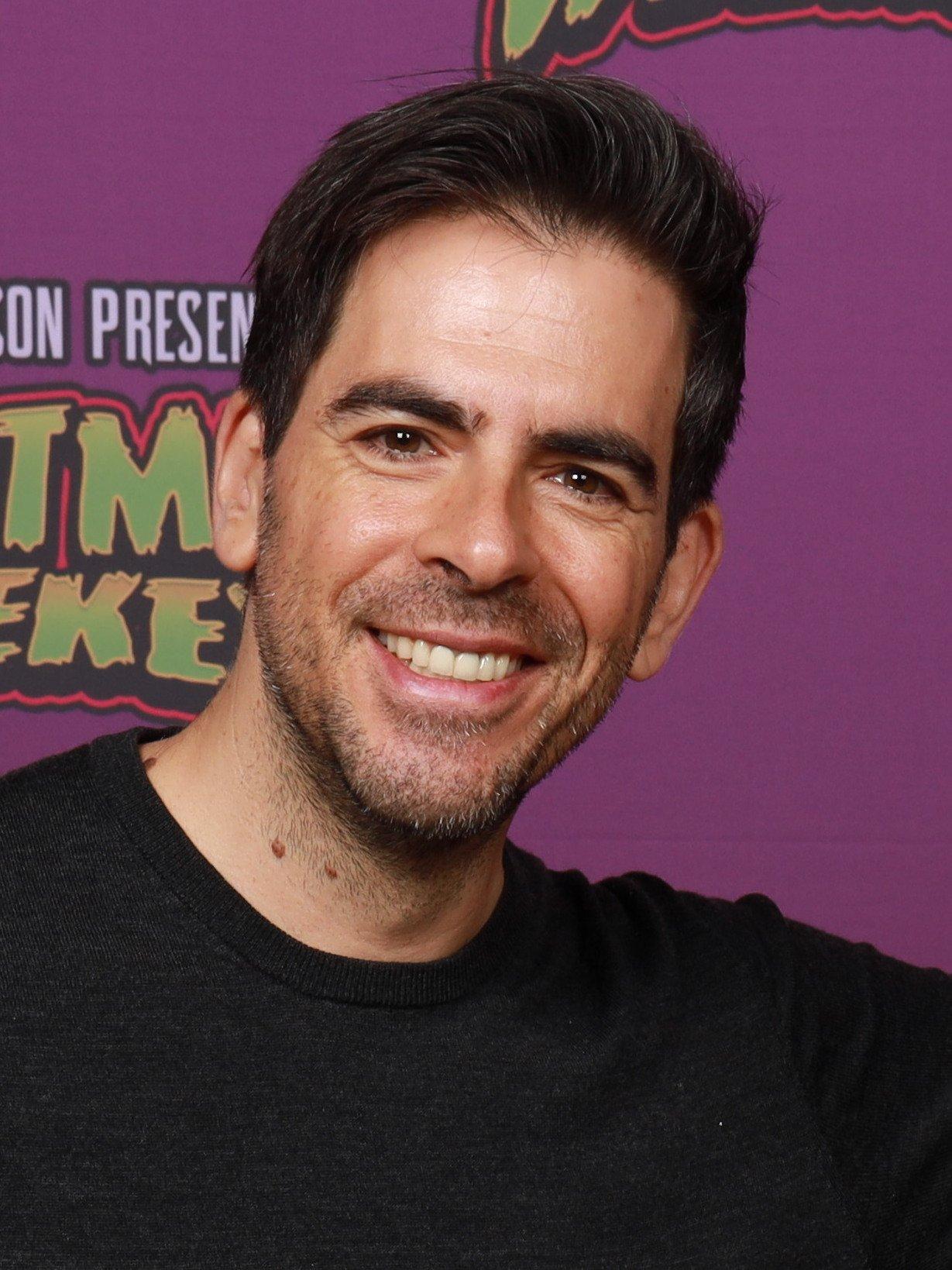
Eli Roth.

Director · Screenwriter · Producer · Actor

From Cabin Fever and Hostel to Shark Week specials, Inglourious Basterds, and the launch of The Horror Section, Eli Roth has turned obsessive genre knowledge into a career that keeps mutating. Publicly he is the impresario of blood, provocation, and cult-film enthusiasm; underneath that image is a filmmaker who keeps scanning for the next format, audience, and opening.

OBJECTIVE PERSONALITY CLASSIFICATIONMF-Ne/Ti-CP/B(S)What does this mean?
PERSONALITY SYSTEMObjective Personality
LEAD FUNCTIONNe · Extroverted Intuition
SECOND SAVIOR FUNCTIONTi · Introverted Thinking
MBTI EQUIVALENTENTP
01 / BEHIND THE CLASSIFICATION

The personality behind the fame.

How does a recorded OPS classification like MF-Ne/Ti-CP/B(S) break down? Walk through nine coins and watch the proposed type take shape. These are deductions from the archived code, not independent evidence of typing accuracy.

Scroll below to see Eli Roth take shape.

STARTING POINT512 possible OPS typesEach type combines core functions, an animal order, and sexual modalities.
THE FINISH LINEMF-Ne/Ti-CP/B(S)One recorded classification, decoded from its components.
Eli Roth’s HUMAN NEEDS 01—03
01
DECIDER OR OBSERVER?

Observer over Decider

Observers have more balanced Decider poles in the middle: Self (Di) and Tribe (De). Their own perspective and other people's perspectives tend to be easier to navigate. Things are the harder territory. Control (Oi) and Chaos (Oe) sit at the extremes, so disrupted plans, uncertainty, and a changing world can trigger the strongest reactions.

Roth’s career keeps running into brute external variables: Cabin Fever broke out of Toronto with the festival’s biggest sale that year, Hostel: Part II was hammered by a leaked workprint and widespread piracy, and later projects swung from hit to backlash to misfire. That pattern reads like classic Observer friction. The pressure point is not mainly whether people validate him; it is whether the environment cooperates, whether distribution holds, whether the timing works. His strength is adapting fast. The blind spot is assuming the next logistical fix will tame a chaotic reality that never stays tamed.

O
02
SELF OR TRIBE?

Di · Self over De · Tribe

Self (Di) is the stronger deciding pole. They check decisions against their own values or reasons first: what makes sense to me, what feels right to me? The strength is independent conviction; the recurring friction is the Tribe (De)—other people's standards, feedback, and expectations. As the portrait unfolds, notice how Self takes the lead.

When Roth reportedly turned down studio directing jobs and accepted only a $10,000 directing salary on Hostel to keep the budget low and the violence unrestricted, he looked less like a committee-made filmmaker than someone backing his own internal standard. The same independent streak shows up in later bets like founding The Horror Section in 2025. Self over Tribe can protect a distinctive voice in a risk-averse industry. The cost is obvious: a private verdict can feel so convincing that outside pushback, market concerns, or collaborators’ priorities register as obstacles before they register as useful data.

Di
03
GATHER OR ORGANIZE?

Oe · Gather over Oi · Organize

Gather (Oe) leads with new information, experiences, and possibilities. Its strength is curiosity and adaptability; the recurring friction is narrowing the options and settling into what is already known. Another layer of the personality portrait comes into focus.

Roth rarely stays inside one lane for long. The same public career includes splatter landmarks like Cabin Fever and Hostel, a PG fantasy hit with The House with a Clock in Its Walls, Shark Week hosting, a shark-conservation documentary in Fin, and a video-game adaptation with Borderlands. Gather over Organize fits that restless range. The strength is optionality: another genre, platform, or partnership can become the next opening. The growth cost is selectivity. Not every intriguing branch deserves years of attention, and novelty alone does not decide which experiment should become the main road.

Oe
FIRST THREE COINSO + Di + Oe

These establish the preferred human needs in the OPS framework.

Eli Roth’s FUNCTIONS 04—05
04
FEELING OR THINKING?

Thinking · T over Feeling · F

Thinking (T) evaluates decisions through reasons, logic, and what works—not a lack of emotion. Its strength is analytical consistency; Feeling (F) provides balance through values, meaning, and the human consequences of a decision. Combined with Self (Di), this forms the recorded Savior Ti.

His Discovery episode How Evil Are You? is a useful Ti example because he didn’t just perform a horror persona; he built a public investigation around brain scans, DNA sequencing, and a recreation of the Milgram experiments. Thinking here is about wanting the mechanism, not merely the mood. That same sharp internal logic helps him construct tightly marketable concepts, from a fake trailer like Thanksgiving to a feature-length payoff years later. The limit is reception. A framework can make sense to him and still strike other people as cold, reductive, or insufficiently attentive to wider human consequences.

T → Ti
05
SENSING OR INTUITION?

Intuition · N over Sensing · S

Intuition (N) focuses on concepts, patterns, and what information might mean. Sensing (S) balances it through observable facts, physical detail, and direct experience. Combined with Gather (Oe), this gives the recorded Savior Ne.

Roth’s imagination tends to work by expansion. Watching Alien at eight helped launch more than 100 childhood shorts with his brothers; a skin infection he got in Iceland later became part of the premise for Cabin Fever; a Grindhouse faux trailer eventually became Thanksgiving. That is Intuition in a very visible form: one charged image becomes a chain of possibilities. The advantage is creative multiplication. The blind spot is that a compelling concept can start to feel self-justifying. Reality still asks for boundaries, tone control, and the unglamorous decisions that keep an idea from eating the whole project.

N → Ne
THE TWO SAVIOR FUNCTIONSNe / Ti

Opposing functions: Si and Fe.

Eli Roth’s ANIMAL STACK 06—07
06
CONSUME OR BLAST?

Consume over Blast

Consume gathers information for internal processing; Blast organizes and communicates information. The recorded order is Consume → Play → Blast → Sleep. This comparison follows their positions in that stack.

Consume shows up in how much horror history Roth seems determined to absorb before he repackages it. He recorded DVD commentary as a “Blood and Guts Expert” before directing his first feature, contributed extras for favorite cult titles, curated the Museum of Pop Culture’s horror exhibit, and spent years steeped in the genre’s archive. That depth gives his work a real reservoir instead of empty shock. Compared with Blast, though, the risk is familiar: taking in more references can feel productive long after the project actually needs a cleaner conclusion and a firmer statement.

C > B
07
PLAY OR SLEEP?

Play over Sleep

Play emphasizes external real-time engagement; Sleep emphasizes internal processing. The recorded stack places Play earlier.

Play arrives earlier than Sleep in a career built on visible collaboration and live exchange. Roth jumps into other people’s worlds—acting for Tarantino in Inglourious Basterds, producing with RZA, hosting Discovery projects, launching Crypt TV with Jack Davis, partnering on The Horror Section, investing in Jomboy Media. The strength is momentum generated with other people in real time. The cost is that private consolidation can get outpaced by the next conversation, set, or venture. When Play outruns Sleep, movement is easy; stepping back long enough to integrate what just happened is harder.

P > S
Eli Roth’s ANIMAL ORIENTATION 08—09
08
INFO OR ENERGY DOMINANT?

Info over Energy

Info dominant means Consume and Blast are both in the top three: gathering and communicating information are more balanced. Sleep last leaves the energy side uneven—Play can keep engagement going without enough private recovery.

Roth’s stack is Info-dominant, which fits how often he turns accumulated material into something public: films, faux trailers, commentary tracks, museum curation, TV hosting, PSA work, and a documentary campaign around Fin. Consume and Blast both sit high enough to keep the loop moving from intake to output. That is a real strength; he can translate niche fascination into a product, pitch, or public argument. The missing balance sits with Sleep last. The growth edge is not more facts or more platforms, but more protected time to digest before the next rollout claims his attention.

Info
09
INTROVERSION OR EXTROVERSION?

Extroversion over Introversion

The last animal, Sleep, determines this OPS coin: Play or Blast last means Introversion; Consume or Sleep last means Extroversion. This describes animal orientation, not sociability or shyness.

This profile lands on OPS Extroversion because Sleep is last, not because Roth happens to work in loud genres or appears comfortable on camera. The evidence in public life is the repeated outward push: directing, acting, hosting, curating, advocating, founding companies, and jumping quickly toward the next visible project. Earlier Consume, Play, and Blast keep him moving through information and people before retreat becomes a priority. The strength is reach. The blind spot is subtler: without deliberate recovery and internal review, the next launch can arrive before the previous one has been fully sorted.

E
Sexual Modalities

The four sexual modalities.

OPS uses masculine/feminine sensory and extroverted-deciding distinctions as framework-specific terms, not gender categories. The four modalities are already included in the original 512 types. The recorded modality is MF · Audio.

MM KinestheticMasculine Sensory · Masculine De
MF RECORDED MODALITYAudioMasculine Sensory · Feminine De
FF TesterFeminine Sensory · Feminine De
FM VisualFeminine Sensory · Masculine De
COMPLETE RECORDED OPS TYPE · MODALITY INCLUDEDMF-Ne/Ti-CP/B(S)

Ne leads, Ti supports, and the animal stack is Consume → Play → Blast → Sleep.

THE FINISHED PORTRAIT · ALL NINE COINS REVEALED

Eli Roth's complete function and animal stack

ConsumePlayBlastSleepfNemTifFemSi
MF-Ne/Ti-CP/B(S)DOUBLE ACTIVATED · PLAYExplore the Interactive Coin Builder →
THE ELI ROTH LENS

The showman behind the gore machine

Roth’s public image is easy to caricature: Hostel, Thanksgiving, the Splat Pack label, and a career built on making audiences squirm. But the same biography also shows the kid who made more than 100 shorts, the genre historian who surfaced a shot-for-shot Raiders remake for Spielberg, and the curator who keeps turning fandom into infrastructure.

Ne and Ti make him dangerous in the useful creative sense: fast at spotting a concept, faster at figuring out the internal gimmick that makes it marketable. Cabin Fever, Thanksgiving, and even Fin all show that pairing’s strength. Its limit is that a clever framework can outrun patience, context, or the slower discipline of asking what deserves less escalation.

As an Observer and Double Decider, Roth is still dealing with the Observer problem first: outer chaos, timing, genre opportunity, distribution, and the sheer unpredictability of what the world will do with a project. That pairing can steady the people side while circumstances stay noisy. The neglected function is Si, the opposite of his lead Ne, which asks for steadier limits, precedent, and what repeated experience is already teaching.

Consume → Play → Blast → Sleep shows why he can absorb horror history, energize other people, and then package the result for an audience before real retreat gets its due. Sleep last can make reflection feel optional right when it is most useful. Keep the curiosity and public swing, but after each release, block off a real postmortem—notes, cuts, and quiet review—before greenlighting the next provocation.

Want to understand the Savior and Demon states behind these nine coins? Explore the complete explanation, visual examples, and typing principles on our Methodology page →

02 / KEEP EXPLORING

Different faces. Familiar patterns.

Explore other celebrities with related recorded OPS classifications. Related functions are not necessarily exact type matches.

Discover Type Twins
YOUR TURN

Curious about your own type?

Discover how your own personality might be classified through Objective Personality.

Get objectively typed
Eli Roth's Personality Type & OPS Profile | The Personality Atlas