The Personality Atlas
THE CELEBRITY PERSONALITY ARCHIVE / STREAMING & COMMENTARY

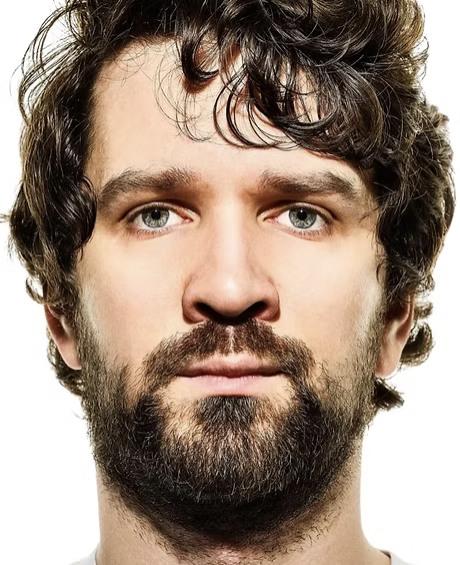
Destiny (Steven Bonnell)

Livestreamer · Political commentator

Destiny (Steven Bonnell) built a career by turning live argument into a profession: first through full-time StarCraft II streaming, then through years of political conversations, and eventually through marathon interviews and tightly moderated debates where the subject can jump from Ukraine to AI to institutional trust without warning. The public impression is combative and fast; the more revealing pattern is how relentlessly he tracks changing information, formats and unresolved questions.

OBJECTIVE PERSONALITY CLASSIFICATIONMM-Ne/Ti-CP/B(S) #1What does this mean?
PERSONALITY SYSTEMObjective Personality
LEAD FUNCTIONNe · Extroverted Intuition
SECOND SAVIOR FUNCTIONTi · Introverted Thinking
MBTI EQUIVALENTENTP
01 / BEHIND THE CLASSIFICATION

The personality behind the fame.

How does a recorded OPS classification like MM-Ne/Ti-CP/B(S) #1 break down? Walk through nine coins and watch the proposed type take shape. These are deductions from the archived code, not independent evidence of typing accuracy.

Scroll below to see Destiny take shape.

STARTING POINT512 possible OPS typesEach type combines core functions, an animal order, and sexual modalities.
THE FINISH LINEMM-Ne/Ti-CP/B(S) #1One recorded classification, decoded from its components.
Destiny’s HUMAN NEEDS 01—03
01
DECIDER OR OBSERVER?

Observer over Decider

Observers have more balanced Decider poles in the middle: Self (Di) and Tribe (De). Their own perspective and other people's perspectives tend to be easier to navigate. Things are the harder territory. Control (Oi) and Chaos (Oe) sit at the extremes, so disrupted plans, uncertainty, and a changing world can trigger the strongest reactions.

Destiny’s career is practically a case study in changing terrain: full-time StarCraft II streams, then political conversations from 2016 onward, then a three-hour Lex Fridman interview spanning Ukraine, AI, institutions and free speech, then a tightly moderated debate with Ben Shapiro. The recurring pressure is not merely whether people like him; it is how quickly the subject matter, format and facts keep moving. That Observer tilt can make him adaptable in volatile environments. The blind spot is treating one more variable, article or wrinkle in the situation as the thing that will finally make the whole landscape settle.
O
02
SELF OR TRIBE?

Di · Self over De · Tribe

Self (Di) is the stronger deciding pole. They check decisions against their own values or reasons first: what makes sense to me, what feels right to me? The strength is independent conviction; the recurring friction is the Tribe (De)—other people's standards, feedback, and expectations. As the portrait unfolds, notice how Self takes the lead.

Across both his solo Lex interview and the Ben Shapiro debate, Bonnell’s style is conspicuously his own: he does not wait for a room to hand him a script before he starts making distinctions. Self over Tribe is not social isolation; it is where the final standard lives. That independence is a strength in adversarial media because he can hold a line even when the audience, chat or opponent wants a simpler team slogan. The cost is obvious. A standard that feels internally precise can sound abrasive if he assumes the conclusion being clear to him automatically makes it clear—or persuasive—to everyone else.

Di
03
GATHER OR ORGANIZE?

Oe · Gather over Oi · Organize

Gather (Oe) leads with new information, experiences, and possibilities. Its strength is curiosity and adaptability; the recurring friction is narrowing the options and settling into what is already known. Another layer of the personality portrait comes into focus.

His public record keeps widening rather than narrowing: competitive gaming, livestreaming, politics, war in Ukraine, AI, free speech, foreign policy, polarization. Even the formats change—game broadcasts, long-form solo interviews, moderated debates. Gather over Organize fits that roaming appetite for fresh inputs and open threads. The strength is range: another topic or platform can become usable material instead of a threat. The growth cost is commitment. A career built on chasing what is newly relevant can postpone the harder move of deciding which lines of inquiry deserve repetition, structure and a stable long-term frame.

Oe
FIRST THREE COINSO + Di + Oe

These establish the preferred human needs in the OPS framework.

Destiny’s FUNCTIONS 04—05
04
FEELING OR THINKING?

Thinking · T over Feeling · F

Thinking (T) evaluates decisions through reasons, logic, and what works—not a lack of emotion. Its strength is analytical consistency; Feeling (F) provides balance through values, meaning, and the human consequences of a decision. Combined with Self (Di), this forms the recorded Savior Ti.

In the Lex Fridman conversation, Destiny does not just declare positions; he keeps breaking issues into mechanisms—how institutions work, what government is for, where moderation changes the exchange, why one framing fails and another holds together better. That points to Ti’s strength: building an internally consistent map instead of settling for applause lines. It is useful in debate because he can test an argument from the inside. The limit is that a logically cleaner answer is not always a socially cleaner one. Precision can expose weak reasoning while still leaving listeners unconvinced, irritated or lost in the scaffolding.

T → Ti
05
SENSING OR INTUITION?

Intuition · N over Sensing · S

Intuition (N) focuses on concepts, patterns, and what information might mean. Sensing (S) balances it through observable facts, physical detail, and direct experience. Combined with Gather (Oe), this gives the recorded Savior Ne.

Destiny’s public work is full of jumps between domains that many commentators keep separate: a gaming career turning into political analysis, then discussions that move from Ukraine to AI to free speech without treating those subjects as sealed boxes. Ne shows up in that readiness to chase connections and test adjacent possibilities. The strength is intellectual agility; he can pivot as the conversation opens. The counterweight is reality’s refusal to become a concept map. Not every interesting connection is equally weighty, and rapid pattern-building can outrun the slower work of narrowing what matters most in a given exchange.

N → Ne
THE TWO SAVIOR FUNCTIONSNe / Ti

Opposing functions: Si and Fe.

Destiny’s ANIMAL STACK 06—07
06
CONSUME OR BLAST?

Consume over Blast

Consume gathers information for internal processing; Blast organizes and communicates information. The recorded order is Consume → Play → Blast → Sleep. This comparison follows their positions in that stack.

In the 2022 Lex interview, the sheer spread of chapters—Ukraine, AI, institutions, free speech—looks more like someone pulling in material than racing to package one single doctrine. With Consume earlier than Blast, the strength is obvious: he can stockpile context, distinctions and edge cases before drawing a conclusion. The cost is that gathering can keep expanding the frame. More inputs often improve the argument, but they can also delay the moment when he states the central point plainly enough for other people to follow without the whole archive.

C > B
07
PLAY OR SLEEP?

Play over Sleep

Play emphasizes external real-time engagement; Sleep emphasizes internal processing. The recorded stack places Play earlier.

After that early Consume, Play shows up earlier than Sleep. You can see it in the difference between a long solo interview and episode 410’s moderated debate with Ben Shapiro: Bonnell does not only want a refined position; he is willing to test it in real time against another person, under constraints he did not design. That earlier Play is a strength because it pressure-tests ideas publicly. The bill comes due later. Fast interaction can crowd out slower internal consolidation, making it easier to keep sparring, clarifying and responding than to step back long enough to decide what the exchange actually changed.

P > S
Destiny’s ANIMAL ORIENTATION 08—09
08
INFO OR ENERGY DOMINANT?

Info over Energy

Info dominant means Consume and Blast are both in the top three: gathering and communicating information are more balanced. Sleep last leaves the energy side uneven—Play can keep engagement going without enough private recovery.

Destiny’s stack is Info-dominant, which fits a career built on taking in material and then turning it into explanation. The public examples are obvious: a chapter-heavy Lex interview and a moderated political debate both reward someone who can gather context and then broadcast a usable case. That balance can make him formidable in public discourse. The missing pressure point is Sleep sitting last. The danger is not lack of ideas; it is underweighting the quieter reset that turns constant reaction into settled perspective. When the machine is always processing outwardly, reflection can become something postponed until after the next topic arrives.

Info
09
INTROVERSION OR EXTROVERSION?

Extroversion over Introversion

The last animal, Sleep, determines this OPS coin: Play or Blast last means Introversion; Consume or Sleep last means Extroversion. This describes animal orientation, not sociability or shyness.

This OPS Extroversion result is not a claim about charisma or friendliness. It comes from Sleep landing fourth, with Consume, Play and Blast all arriving earlier in the workflow. Bonnell’s public formats make that legible: he learns, engages and explains in public-facing arenas, whether the setting is a solo interview or a live debate. The advantage is momentum; ideas do not stay trapped in private draft form. The growth cost is that inner consolidation can become the last stop rather than the steering wheel. He benefits from building deliberate off-camera synthesis before the next argument demands instant output.

E
Sexual Modalities

The four sexual modalities.

OPS uses masculine/feminine sensory and extroverted-deciding distinctions as framework-specific terms, not gender categories. The four modalities are already included in the original 512 types. The recorded modality is MM · Kinesthetic.

MM RECORDED MODALITYKinestheticMasculine Sensory · Masculine De
MF AudioMasculine Sensory · Feminine De
FF TesterFeminine Sensory · Feminine De
FM VisualFeminine Sensory · Masculine De
ADDITIONAL LAYER · SOCIAL TYPE

The four social types.

Social types are an additional layer on top of the original Objective Personality classification, introduced later in OPS research. They describe two proposed social preference coins: Flex vs. Friends and Generalize vs. Specialize. The combination and priority of these preferences produce four social types. Destiny's recorded social type is #1.

SOCIAL #1 RECORDED SOCIAL TYPE#1Flex · Generalize
SOCIAL #2 #2Generalize · Friends
SOCIAL #3 #3Specialize · Flex
SOCIAL #4 #4Friends · Specialize
COMPLETE RECORDED OPS TYPE · MODALITY INCLUDED + SOCIAL TYPEMM-Ne/Ti-CP/B(S) #1

Ne leads, Ti supports, and the animal stack is Consume → Play → Blast → Sleep.

THE FINISHED PORTRAIT · ALL NINE COINS REVEALED

Destiny's complete function and animal stack

ConsumePlayBlastSleepfNefTimFemSi
MM-Ne/Ti-CP/B(S) #1DOUBLE ACTIVATED · PLAYExplore the Interactive Coin Builder →
THE DESTINY LENS

The argument machine needs a brake.

Destiny’s public image is easy to flatten into “the debater,” but his career gets clearer in sequence: StarCraft II streaming first, political conversations taking over from 2016 onward, then a long Lex Fridman interview and a moderated debate with Ben Shapiro. Behind the confrontational reputation is someone responsive to changing formats, subjects and informational pressure.

His recorded Ne/Ti pairing helps explain the appeal. Ne widens the field, spotting another angle or adjacent topic; Ti tries to make that expanding field coherent. In public conversation, that can produce quick distinctions and agile argument. The limit is built into the same pairing: the search for a cleaner framework can keep generating branches, leaving the larger takeaway sharper in pieces than as one settled whole.

As an Observer and Double Decider, Bonnell’s chronic imbalance lands less in people-approval turmoil than in tracking and updating what is happening. The pressure is on context, variables and unresolved circumstances. The neglected function opposite his lead savior is Si, so the growth edge is not more intensity but more respect for settled precedent, continuity and what repeated experience has already proven.

Consume → Play → Blast → Sleep is the full order, and Sleep last is the stress point. He can gather, engage and explain before fully stepping back to consolidate. That keeps him live, adaptive and publicly useful, but can leave inner synthesis one round behind the conversation. A practical balance is post-debate note-making or off-stream review before the next topic grabs the wheel.

Want to understand the Savior and Demon states behind these nine coins? Explore the complete explanation, visual examples, and typing principles on our Methodology page →

02 / KEEP EXPLORING

Different faces. Familiar patterns.

Explore other celebrities with related recorded OPS classifications. Related functions are not necessarily exact type matches.

Discover Type Twins
YOUR TURN

Curious about your own type?

Discover how your own personality might be classified through Objective Personality.

Get objectively typed
Destiny (Steven Bonnell)'s Personality Type & OPS Profile | The Personality Atlas