The Personality Atlas
THE CELEBRITY PERSONALITY ARCHIVE / LATE NIGHT TV

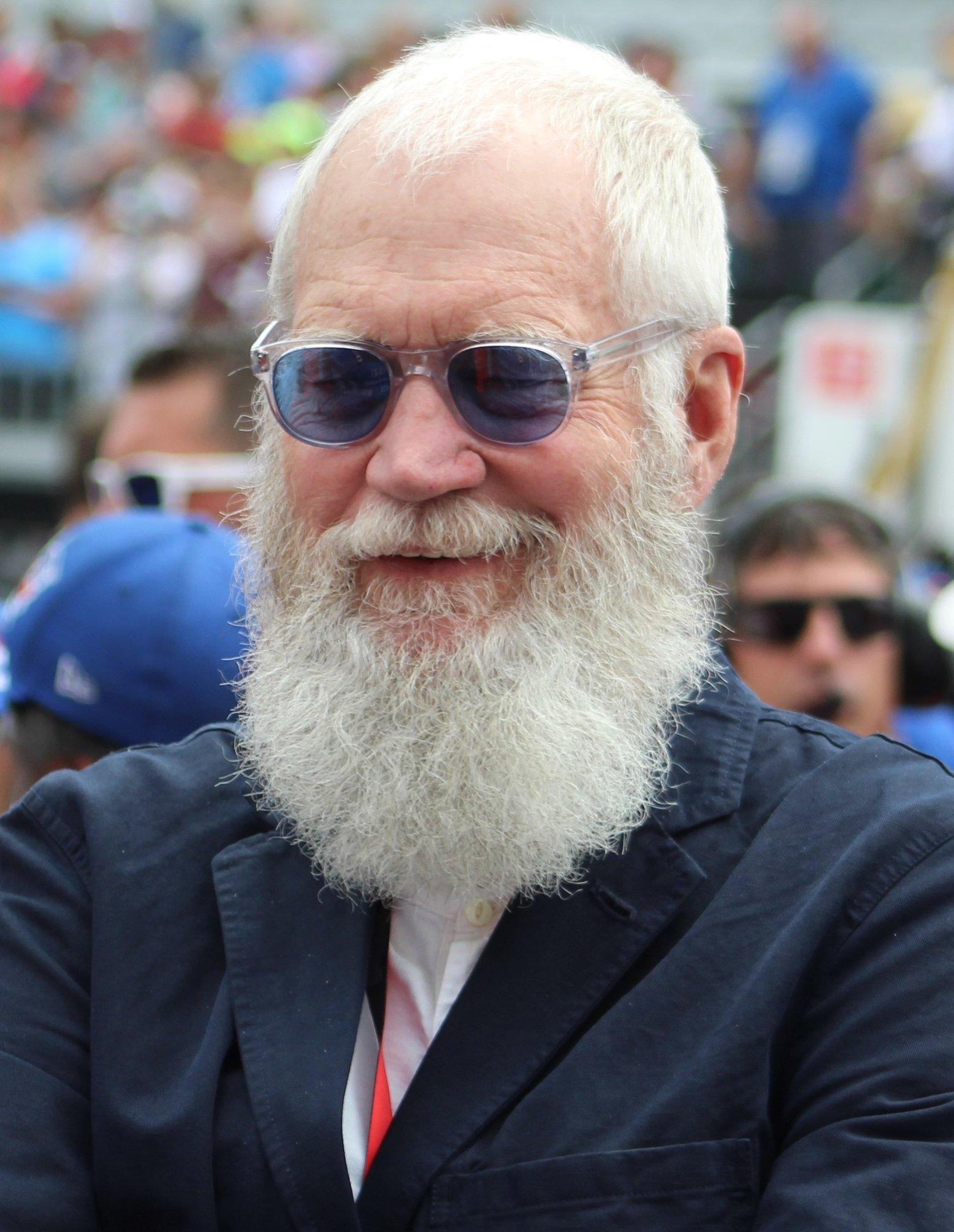
David Letterman.

Comedian · Television Host · Producer

For 33 years, David Letterman turned late night into a lab for bullhorn interruptions, rooftop drops, deadpan cruelty and perfectly timed absurdity. The public image was loose and anarchic; the career underneath was anything but. He went from Indianapolis weather gags about hailstones the size of canned hams to 6,080 episodes across NBC and CBS, built Worldwide Pants into a real production engine, and then resurfaced on Netflix with a calmer but still unmistakably Letterman curiosity.

OBJECTIVE PERSONALITY CLASSIFICATIONFM-Te/Se-PC/B(S)What does this mean?
PERSONALITY SYSTEMObjective Personality
LEAD FUNCTIONTe · Extroverted Thinking
SECOND SAVIOR FUNCTIONSe · Extroverted Sensing
MBTI EQUIVALENTENTJ
01 / BEHIND THE CLASSIFICATION

The personality behind the fame.

How does a recorded OPS classification like FM-Te/Se-PC/B(S) break down? Walk through nine coins and watch the proposed type take shape. These are deductions from the archived code, not independent evidence of typing accuracy.

Scroll below to see David Letterman take shape.

STARTING POINT512 possible OPS typesEach type combines core functions, an animal order, and sexual modalities.
THE FINISH LINEFM-Te/Se-PC/B(S)One recorded classification, decoded from its components.
David Letterman’s HUMAN NEEDS 01—03
01
DECIDER OR OBSERVER?

Decider over Observer

Deciders have more balanced Observer poles in the middle: Control (Oi) and Chaos (Oe). Organizing what's known and handling what's new tend to feel more manageable. People are the harder territory. Self (Di) and Tribe (De) sit at the extremes, so judgment, rejection, approval, and conflict can trigger the strongest reactions.

Letterman’s most public collisions were rarely about whether a stunt would technically work; they were about people, status and judgment. The sharper pattern runs from the NBC succession disappointment to the on-air sparring that made guests like Cher, Madonna and Charles Grodin memorable. A Decider lens fits that world of roles, reactions and wounded pecking orders. The strength is nerve under scrutiny: he could keep the show moving after embarrassment or conflict. The blind spot is turning relational friction into sport so quickly that the underlying issue never gets examined.

D
02
SELF OR TRIBE?

De · Tribe over Di · Self

Tribe (De) is the stronger deciding pole. They check decisions against people, shared standards, and what works for the group: what do we need, what will others think? The strength is coordination and responsiveness; the recurring friction is the Self (Di)—knowing and defending their own position. As the portrait unfolds, notice how Tribe takes the lead.

When NBC passed him over for The Tonight Show, Letterman did not retreat into a private purity project; he built a competing show at CBS, signed major contracts, and kept measuring the public game in public. Even his 2002 decision to stay at CBS came framed through network realities and respect for Ted Koppel’s place rather than a purely personal manifesto. Tribe-first judging excels at reading what other people need, expect or will recognize as fair. Its cost is obvious: institutional verdicts and audience comparisons can matter enough to shape the next move.

De
03
GATHER OR ORGANIZE?

Oe · Gather over Oi · Organize

Gather (Oe) leads with new information, experiences, and possibilities. Its strength is curiosity and adaptability; the recurring friction is narrowing the options and settling into what is already known. Another layer of the personality portrait comes into focus.

Letterman’s career kept widening by chasing live openings instead of settling into one fixed lane: Indianapolis weatherman, radio host, stand-up writer, failed morning host, cult late-night innovator, network switcher, Netflix interviewer. The same pattern showed up inside the shows themselves, from Stupid Pet Tricks to rooftop drops to whatever odd local news item could become a bit. Gather over Organize gives him range and freshness when circumstances change fast. The tradeoff is that novelty can become its own appetite, making stable formulas feel dead even when they still work.

Oe
FIRST THREE COINSD + De + Oe

These establish the preferred human needs in the OPS framework.

David Letterman’s FUNCTIONS 04—05
04
FEELING OR THINKING?

Thinking · T over Feeling · F

Thinking (T) evaluates decisions through reasons, logic, and what works—not a lack of emotion. Its strength is analytical consistency; Feeling (F) provides balance through values, meaning, and the human consequences of a decision. Combined with Tribe (De), this forms the recorded Savior Te.

His recorded judging function is Te, and you can see it in how often Letterman turned comedy into a working system. When intellectual-property limits blocked him from importing NBC segments verbatim to CBS, he simply rebuilt the machinery with new names and kept the format running. Worldwide Pants did the same thing at a business level, producing his own shows and others like Everybody Loves Raymond. The strength is practical execution in public. The limit is tone: efficiency and bluntness can cut so cleanly that a guest or ceremony ends up feeling processed rather than understood.

T → Te
05
SENSING OR INTUITION?

Sensing · S over Intuition · N

Sensing (S) focuses on concrete details, observable reality, and lived experience. Intuition (N) balances it by looking for broader patterns, concepts, and implications. Combined with Gather (Oe), this gives the recorded Savior Se.

Letterman’s observer function is Se, which is hard to miss in a career full of physical, present-tense comedy. He congratulated storms for becoming hurricanes, predicted hailstones the size of canned hams, dropped objects off a five-story roof, interrupted live TV with a bullhorn, and made the room react to what was happening right now. That Sensing strength makes comedy tangible instead of theoretical. The cost is that immediate impact can overrun context. The 1995 Oscars showed how a bit that is vividly alive in one room can land flat in a more ceremonial setting.

S → Se
THE TWO SAVIOR FUNCTIONSTe / Se

Opposing functions: Fi and Ni. This is a jumper classification.

David Letterman’s ANIMAL STACK 06—07
06
PLAY OR SLEEP?

Play over Sleep

Play emphasizes external real-time engagement; Sleep emphasizes internal processing. The recorded stack places Play earlier.

Play shows up all over Letterman’s public style: the charge of live exchange, the joy of poking another set across the hall, the willingness to see what a guest does when the rhythm gets awkward. From Cher’s famous insult to the controlled chaos of his recurring stunts, he often discovered the scene by engaging it. Sleep sits later, so the strength is momentum and improvisational aliveness. The cost is quieter consolidation. If every uncomfortable moment can become material immediately, the private pause needed to sort what actually matters can keep getting deferred.

P > S
07
CONSUME OR BLAST?

Consume over Blast

Consume gathers information for internal processing; Blast organizes and communicates information. The recorded order is Play → Consume → Blast → Sleep. This comparison follows their positions in that stack.

After that live-social edge, Consume helps explain why Letterman’s weirdness stayed stocked with material. Small Town News, Viewer Mail variations, guest histories, local-TV absurdities and even the long buildup from campus radio to Carson favorite all reflect a habit of taking in more than one neat conclusion would require. Blast is still available—especially once CBS lengthened the monologue and formalized the show—but it comes later than the appetite to collect and riff on inputs. The advantage is depth of material. The cost is postponing the cleanest takeaway because another interesting detail just walked in.

C > B
David Letterman’s ANIMAL ORIENTATION 08—09
08
INFO OR ENERGY DOMINANT?

Info over Energy

Info dominant means Consume and Blast are both in the top three: gathering and communicating information are more balanced. Sleep last leaves the energy side uneven—Play can keep engagement going without enough private recovery.

Letterman lands on the Info side because the first three animals keep information moving: real-time engagement, fresh intake and then a shaped delivery to the audience. Six thousand eighty episodes, the Top Ten machinery and a production company behind multiple shows all show a career built to process and distribute material at scale. The missing balance is Sleep last. Private recovery, internal consolidation and truly unplugged reflection can lose to the next taping, next contract or next premise. His bypass hiatus and later guest-host stretches are blunt reminders that the body will eventually demand the pause the schedule avoids.

Info
09
INTROVERSION OR EXTROVERSION?

Extroversion over Introversion

The last animal, Sleep, determines this OPS coin: Play or Blast last means Introversion; Consume or Sleep last means Extroversion. This describes animal orientation, not sociability or shyness.

This profile also lands on OPS Extroversion because Sleep is last, not because a talk-show host seems outgoing. The more revealing pattern is how often Letterman worked things out by externalizing first: taking a failed morning show and immediately retooling for late night, turning the Oscars backlash into a running gag, or moving networks rather than disappearing. That bias can be powerful. Action in public creates feedback fast and keeps a career evolving. The blind spot is letting the external loop outrun the internal one. Growth means taking one beat to privately settle the point before the next joke, deal or reinvention.

E
Sexual Modalities

The four sexual modalities.

OPS uses masculine/feminine sensory and extroverted-deciding distinctions as framework-specific terms, not gender categories. The four modalities are already included in the original 512 types. The recorded modality is FM · Visual.

MM KinestheticMasculine Sensory · Masculine De
MF AudioMasculine Sensory · Feminine De
FF TesterFeminine Sensory · Feminine De
FM RECORDED MODALITYVisualFeminine Sensory · Masculine De
COMPLETE RECORDED OPS TYPE · MODALITY INCLUDEDFM-Te/Se-PC/B(S)

Te leads, Se supports, and the animal stack is Play → Consume → Blast → Sleep.

THE FINISHED PORTRAIT · ALL NINE COINS REVEALED

David Letterman's complete function and animal stack

PlayConsumeBlastSleepmTemNifSefFi
FM-Te/Se-PC/B(S)DOUBLE ACTIVATED · PLAYExplore the Interactive Coin Builder →
THE DAVID LETTERMAN LENS

The dry anarchist in a suit

Letterman’s public image was the man with the gap-toothed grin, the Top Ten list and the nerve to drop random objects off a roof or heckle another broadcast with a bullhorn. Behind that impression was a broadcaster from Indianapolis who kept scaling up the same irreverent instinct, from local weather jokes to the longest run in late night.

His Te/Se pairing gave that instinct teeth. Te kept the show operational, repeatable and ruthlessly useful to an audience; Se made it concrete, visible and alive in the room. That combination can build a format people copy for decades. It can also overshoot tact, treating a guest, an award show or a public moment as one more setup that needs a sharper payoff.

As a Decider and Double Observer, Letterman’s central pressure point is people, judgment and significance, while his flexibility with formats and changing circumstances is comparatively stronger. The imbalance is not a lack of ideas but a tendency to let the social game dominate the inner one. Neglected Fi asks the awkward question beneath the bit: what does he personally value when the room stops reacting?

Play → Consume → Blast → Sleep captures the engine. He engages, gathers, packages and only later slows down to process privately. With Sleep last, the risk is staying externally productive long after the inner system needs review or rest. The best balance is not becoming less sharp on air; it is preserving the live edge by building deliberate off-camera recovery before the next contract call, format shift or major interview.

Want to understand the Savior and Demon states behind these nine coins? Explore the complete explanation, visual examples, and typing principles on our Methodology page →

02 / KEEP EXPLORING

Different faces. Familiar patterns.

Explore other celebrities with related recorded OPS classifications. Related functions are not necessarily exact type matches.

Discover Type Twins
YOUR TURN

Curious about your own type?

Discover how your own personality might be classified through Objective Personality.

Get objectively typed
David Letterman's Personality Type & OPS Profile | The Personality Atlas