The Personality Atlas
THE CELEBRITY PERSONALITY ARCHIVE / COMEDY & FILM

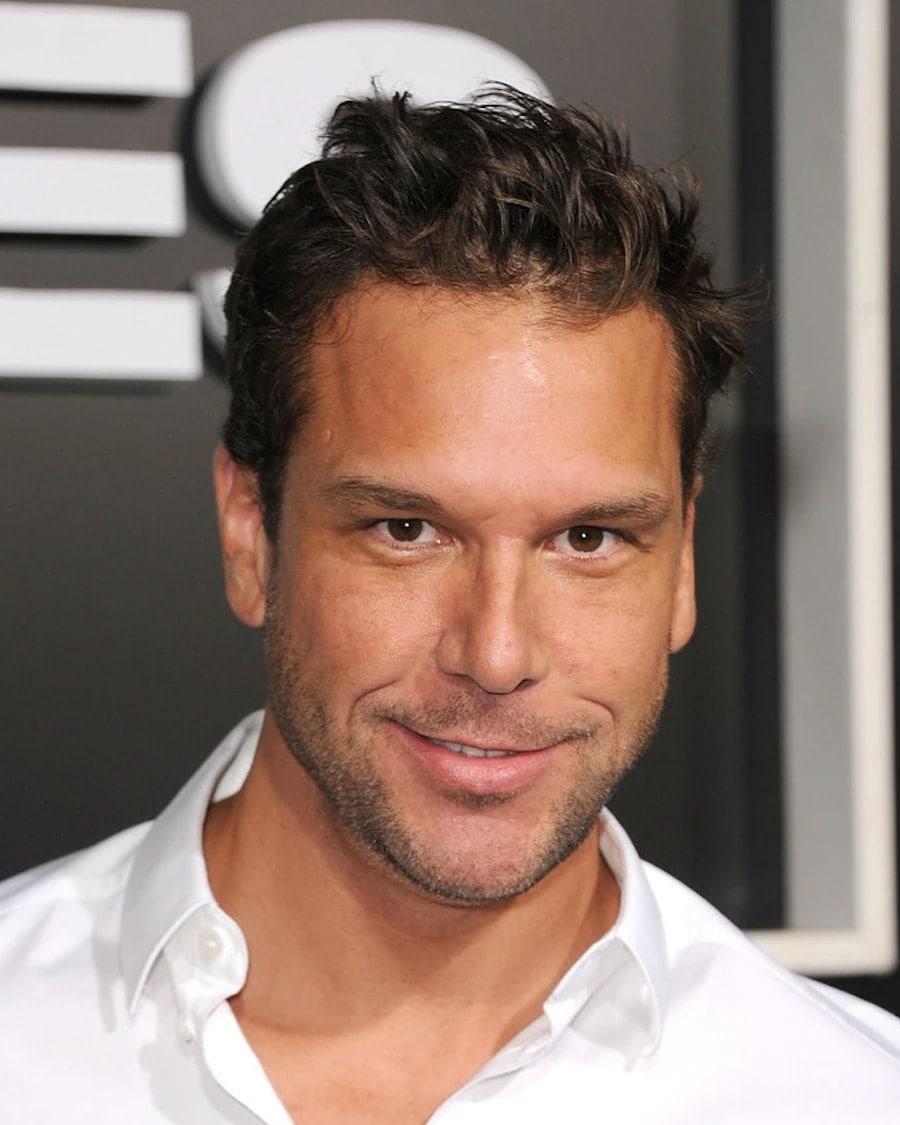
Dane Cook.

Stand-up Comedian · Actor

Dane Cook turned observational stand-up into arena-scale spectacle, moving from Boston clubs to platinum comedy albums, early internet fandom, sold-out Madison Square Garden shows and a side career in film. The public image was loud, kinetic and deliberately overclocked; the longer story is a comic who kept testing new rooms, new platforms and new delivery systems until the culture finally caught up.

OBJECTIVE PERSONALITY CLASSIFICATIONMF-Ne/Ti-CP/B(S)What does this mean?
PERSONALITY SYSTEMObjective Personality
LEAD FUNCTIONNe · Extroverted Intuition
SECOND SAVIOR FUNCTIONTi · Introverted Thinking
MBTI EQUIVALENTENTP
01 / BEHIND THE CLASSIFICATION

The personality behind the fame.

How does a recorded OPS classification like MF-Ne/Ti-CP/B(S) break down? Walk through nine coins and watch the proposed type take shape. These are deductions from the archived code, not independent evidence of typing accuracy.

Scroll below to see Dane Cook take shape.

STARTING POINT512 possible OPS typesEach type combines core functions, an animal order, and sexual modalities.
THE FINISH LINEMF-Ne/Ti-CP/B(S)One recorded classification, decoded from its components.
Dane Cook’s HUMAN NEEDS 01—03
01
DECIDER OR OBSERVER?

Observer over Decider

Observers have more balanced Decider poles in the middle: Self (Di) and Tribe (De). Their own perspective and other people's perspectives tend to be easier to navigate. Things are the harder territory. Control (Oi) and Chaos (Oe) sit at the extremes, so disrupted plans, uncertainty, and a changing world can trigger the strongest reactions.

Before the platinum albums, Cook walked into the Boston Garden in 1992, hit a hostile slot between bands, and got showered with shoes and lighters by a crowd waiting for Phish. That is classic Observer friction: the setup, timing and physical room were wrong before anyone settled on a verdict about him. His strength is resilience under unstable conditions; he turned that disaster into a future target and later sold out major arenas. The blind spot is assuming a better setup is always the answer, when some situations still demand narrowing the act and choosing a lane.
O
02
SELF OR TRIBE?

Di · Self over De · Tribe

Self (Di) is the stronger deciding pole. They check decisions against their own values or reasons first: what makes sense to me, what feels right to me? The strength is independent conviction; the recurring friction is the Tribe (De)—other people's standards, feedback, and expectations. As the portrait unfolds, notice how Self takes the lead.

Cook's career repeatedly shows Self over Tribe. He studied graphic design as a backup, designed his own merchandise and album art, and later launched Superfinger Entertainment so he could produce his own albums and videos instead of waiting for every gatekeeper to approve the plan. That inner standard gave the work a strong owner; the brand and pacing felt unmistakably his. The cost is that a private read can start to feel complete. His public apology after the Aurora joke is the correction: personal conviction does not erase how material lands outside your own frame.

Di
03
GATHER OR ORGANIZE?

Oe · Gather over Oi · Organize

Gather (Oe) leads with new information, experiences, and possibilities. Its strength is curiosity and adaptability; the recurring friction is narrowing the options and settling into what is already known. Another layer of the personality portrait comes into focus.

From Boston clubs to New York, then Los Angeles, then Myspace before many comics treated the internet seriously, Cook kept moving toward the next opening instead of settling into one stable lane. He stacked stand-up, television, movies and early online fandom into the same career because fresh options kept appearing. Gather-first gives him adaptability and a sharp nose for momentum; he can chase the live audience, the digital audience and the studio opportunity in turn. The growth cost is selectivity. A career full of openings still demands the unglamorous act of deciding which possibility deserves the next few years.

Oe
FIRST THREE COINSO + Di + Oe

These establish the preferred human needs in the OPS framework.

Dane Cook’s FUNCTIONS 04—05
04
FEELING OR THINKING?

Thinking · T over Feeling · F

Thinking (T) evaluates decisions through reasons, logic, and what works—not a lack of emotion. Its strength is analytical consistency; Feeling (F) provides balance through values, meaning, and the human consequences of a decision. Combined with Self (Di), this forms the recorded Savior Ti.

Cook's recorded judging function is Ti, and his public style shows it in how carefully the chaos is built. He has described his stage persona as a construction from his mother's physical absurdity and his father's ability to sell anything, which is a very analytical way to talk about comedy. The strength is internal precision: the rant has a mechanism, not just volume. The blind spot is that a line can work inside the logic of the bit and still misread the larger situation. Internal coherence is powerful; it is not the same thing as shared calibration.

T → Ti
05
SENSING OR INTUITION?

Intuition · N over Sensing · S

Intuition (N) focuses on concepts, patterns, and what information might mean. Sensing (S) balances it through observable facts, physical detail, and direct experience. Combined with Gather (Oe), this gives the recorded Savior Ne.

Ne fits a comic who became "alarmingly popular" partly by spotting a channel before the crowd fully formed. Cook was one of the first comedians to use a personal webpage and Myspace to build a major fan base, which shows Intuition looking past the current room toward the next distribution system. The same lens fuels long-form storytelling, exaggeration and sudden turns that keep a bit expanding. The cost is that possibility multiplies faster than reality cooperates. Sitcom pilots stall, movie lanes cool, and the imagined next leap still has to survive actual timing, budgets and audience appetite.

N → Ne
THE TWO SAVIOR FUNCTIONSNe / Ti

Opposing functions: Si and Fe.

Dane Cook’s ANIMAL STACK 06—07
06
CONSUME OR BLAST?

Consume over Blast

Consume gathers information for internal processing; Blast organizes and communicates information. The recorded order is Consume → Play → Blast → Sleep. This comparison follows their positions in that stack.

Consume comes earlier than Blast, and Cook's career makes that easy to picture. Five comedy albums, long-form stories and regular workshopping at the Laugh Factory all point to a comic who keeps stockpiling raw material before locking the lesson into a cleaner takeaway. The strength is range: he rarely seems short on angles, images or examples. The growth cost is that more intake can masquerade as progress. At some point the job changes from finding another detail to making the point land clearly enough that the audience does not have to assemble it for him.

C > B
07
PLAY OR SLEEP?

Play over Sleep

Play emphasizes external real-time engagement; Sleep emphasizes internal processing. The recorded stack places Play earlier.

With Consume already ahead of Blast, the next split matters: Play lands earlier than Sleep. That helps explain why Cook's material so often looks road-tested in motion—Tourgasm, two Saturday Night Live hosting turns, marathon Laugh Factory sets, even troop shows in Iraq. He does not just refine privately and then appear; he learns by throwing material into live contact. The strength is kinetic responsiveness and big-room electricity. The cost is that constant interaction can stay stimulating while quieter consolidation gets delayed. After enough motion, the act still needs a private verdict about what all that energy actually produced.

P > S
Dane Cook’s ANIMAL ORIENTATION 08—09
08
INFO OR ENERGY DOMINANT?

Info over Energy

Info dominant means Consume and Blast are both in the top three: gathering and communicating information are more balanced. Sleep last leaves the energy side uneven—Play can keep engagement going without enough private recovery.

This is an Info-dominant stack. Consume and Blast both sit in Cook's top three, which fits the way he kept turning observations into albums, HBO and Comedy Central specials, a self-produced company and arena-scale sets. He is not merely collecting stories; he keeps packaging them for other people. The missing balance is Sleep last. Public momentum can look continuous while inner recovery lags behind, making productivity seem like its own proof. The growth cost is subtle but expensive: without a real reset, the next round risks being bigger before it is actually clearer, sharper or more considered.

Info
09
INTROVERSION OR EXTROVERSION?

Extroversion over Introversion

The last animal, Sleep, determines this OPS coin: Play or Blast last means Introversion; Consume or Sleep last means Extroversion. This describes animal orientation, not sociability or shyness.

Cook's last animal is Sleep, which makes the recorded orientation Extroversion in OPS terms. That does not mean he must look socially effortless; he has said he was quiet and shy as a child. It means the stack tilts toward taking in, engaging and broadcasting before retreating to process privately. The advantage is obvious in a career built on live feedback, repeat touring and relentless output. The blind spot is saving the private review for later. Growth looks less like becoming quieter and more like protecting time where the set gets digested before the next expansion or comeback run.

E
Sexual Modalities

The four sexual modalities.

OPS uses masculine/feminine sensory and extroverted-deciding distinctions as framework-specific terms, not gender categories. The four modalities are already included in the original 512 types. The recorded modality is MF · Audio.

MM KinestheticMasculine Sensory · Masculine De
MF RECORDED MODALITYAudioMasculine Sensory · Feminine De
FF TesterFeminine Sensory · Feminine De
FM VisualFeminine Sensory · Masculine De
COMPLETE RECORDED OPS TYPE · MODALITY INCLUDEDMF-Ne/Ti-CP/B(S)

Ne leads, Ti supports, and the animal stack is Consume → Play → Blast → Sleep.

THE FINISHED PORTRAIT · ALL NINE COINS REVEALED

Dane Cook's complete function and animal stack

ConsumePlayBlastSleepfNemTifFemSi
MF-Ne/Ti-CP/B(S)DOUBLE ACTIVATED · PLAYExplore the Interactive Coin Builder →
THE DANE COOK LENS

The arena surge had a design.

When Cook sold out Madison Square Garden after years of club work and internet buildup, the public impression was velocity: a comedian hitting rooms at full volume and daring them to keep up. The quieter detail is how assembled that surge was—getting shelled at Boston Garden in 1992, moving across comedy markets, designing his own merch, and grinding at the Laugh Factory before the platform boom matched his scale.

His savior pairing, Ne and Ti, helps explain both the reach and friction. Ne keeps spotting another opening—Myspace, film roles, marathon sets, a bigger room. Ti gives the act an internal skeleton so the rant sounds engineered, not merely loud. That is real strength. The limit is context: a bit can feel airtight from the inside and still land badly timed once it leaves his own frame.

As an Observer and Double Decider, Cook is pushed more by changing circumstances than by permanent people-drama, and that pairing matters. He can survive criticism and keep moving, but the human temperature of a moment can still get underweighted while the next opportunity grabs focus. The neglected function opposite his lead savior is Si: steadier reference points, repetition, and respect for what has already proven reliable.

Consume → Play → Blast → Sleep shows the final pressure point. Sleep last supports the public surge—take in material, test it live, package it big—but leaves private consolidation as the chore that gets postponed. The balance is not becoming less dynamic. It is scheduling a real post-show reset: write down what actually worked, cut excess, and let the material digest before scaling it to the next arena.

Want to understand the Savior and Demon states behind these nine coins? Explore the complete explanation, visual examples, and typing principles on our Methodology page →

02 / KEEP EXPLORING

Different faces. Familiar patterns.

Explore other celebrities with related recorded OPS classifications. Related functions are not necessarily exact type matches.

Discover Type Twins
YOUR TURN

Curious about your own type?

Discover how your own personality might be classified through Objective Personality.

Get objectively typed
Dane Cook's Personality Type & OPS Profile | The Personality Atlas