The Personality Atlas
THE CELEBRITY PERSONALITY ARCHIVE / PERSONAL FINANCE MEDIA

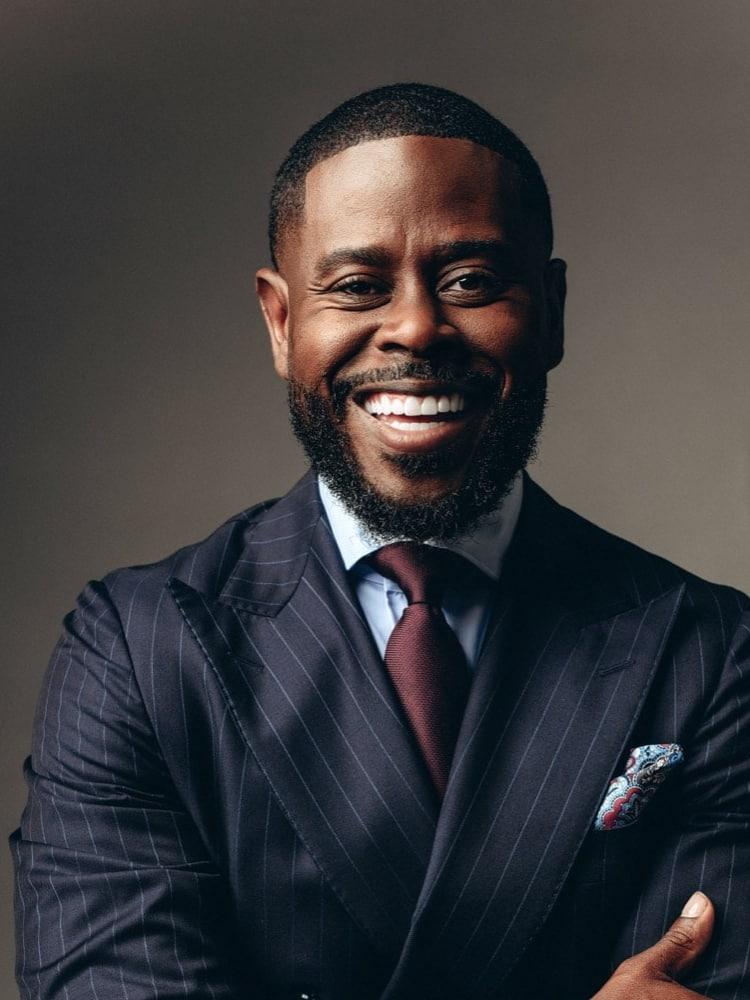
Caleb Hammer.

Personal finance host · YouTuber

Caleb Hammer turned personal finance into confrontation media. On Financial Audit, guests hand over bank statements, debts and spending habits for a public teardown, while Hammer pushes routine money mistakes into sharp, highly watchable verdicts. The draw is not abstract budgeting wisdom; it is a host who treats financial chaos like something that should be named, sorted and corrected immediately.

OBJECTIVE PERSONALITY CLASSIFICATIONMF-Si/Te-BP/C(S) #1What does this mean?
PERSONALITY SYSTEMObjective Personality
LEAD FUNCTIONSi · Introverted Sensing
SECOND SAVIOR FUNCTIONTe · Extroverted Thinking
MBTI EQUIVALENTISTJ
01 / BEHIND THE CLASSIFICATION

The personality behind the fame.

How does a recorded OPS classification like MF-Si/Te-BP/C(S) #1 break down? Walk through nine coins and watch the proposed type take shape. These are deductions from the archived code, not independent evidence of typing accuracy.

Scroll below to see Caleb Hammer take shape.

STARTING POINT512 possible OPS typesEach type combines core functions, an animal order, and sexual modalities.
THE FINISH LINEMF-Si/Te-BP/C(S) #1One recorded classification, decoded from its components.
Caleb Hammer’s HUMAN NEEDS 01—03
01
DECIDER OR OBSERVER?

Observer over Decider

Observers have more balanced Decider poles in the middle: Self (Di) and Tribe (De). Their own perspective and other people's perspectives tend to be easier to navigate. Things are the harder territory. Control (Oi) and Chaos (Oe) sit at the extremes, so disrupted plans, uncertainty, and a changing world can trigger the strongest reactions.

Financial Audit turns ordinary budgeting mistakes into a visible problem of circumstances: debt balances, subscriptions, bank statements, food costs and unstable routines. Hammer’s show is built less around asking whether a guest is a good person than around exposing the mess they are living inside. That Observer emphasis helps him stay practical when a situation is ugly; there is always another line item, deadline or habit to address. The blind spot is treating cleaner circumstances as the whole victory, when the human meaning of shame, pride or resistance can still outlast the spreadsheet fix.

O
02
SELF OR TRIBE?

De · Tribe over Di · Self

Tribe (De) is the stronger deciding pole. They check decisions against people, shared standards, and what works for the group: what do we need, what will others think? The strength is coordination and responsiveness; the recurring friction is the Self (Di)—knowing and defending their own position. As the portrait unfolds, notice how Tribe takes the lead.

Hammer’s public style is not quiet self-containment; it is Tribe-first accountability. He became known for vocally berating guests about spending, which only works because his standard is openly social: what should responsible adults do with money, and how far has this person drifted from that norm? That De focus gives him force. He can make scattered financial habits answer to an external benchmark instead of endless excuses. The cost is that outside standards can become blunt instruments. A guest’s strange life story may be real even when the numbers still need correcting.

De
03
GATHER OR ORGANIZE?

Oi · Organize over Oe · Gather

Organize (Oi) leads with refining, preserving, and structuring what is already known. Its strength is preparation and clear direction; the recurring friction is unexpected change that disrupts the plan. Another layer of the personality portrait comes into focus.

The show’s format is practically a case study in Organize over Gather. Guests arrive with statements, debts and recurring charges; Hammer sorts the chaos into categories, patterns and a plan. Even his most viral episodes depend on pinning wandering behavior to a stable structure people can follow. That Oi strength is why his advice feels decisive instead of vague. The tradeoff is rigidity. If every financial mess gets pulled quickly toward the same kind of order, unusual circumstances can look like resistance when they may actually require a different system.

Oi
FIRST THREE COINSO + De + Oi

These establish the preferred human needs in the OPS framework.

Caleb Hammer’s FUNCTIONS 04—05
04
FEELING OR THINKING?

Thinking · T over Feeling · F

Thinking (T) evaluates decisions through reasons, logic, and what works—not a lack of emotion. Its strength is analytical consistency; Feeling (F) provides balance through values, meaning, and the human consequences of a decision. Combined with Tribe (De), this forms the recorded Savior Te.

Thinking shows up in how Hammer pushes money problems into measurable terms. On Financial Audit, he does not leave spending in the realm of vibes; he wants balances, interest, obligations and a workable sequence of actions. The Gretchen Whitmer interview, moving through Michigan debt and food-stamp questions, fits the same pressure toward public, practical reasoning. Te’s advantage is clarity: a problem becomes legible enough to confront. Its void is easy to miss because it sounds useful. What counts can dominate what matters, and a person can understand the math while still needing a better way to hear it.

T → Te
05
SENSING OR INTUITION?

Sensing · S over Intuition · N

Sensing (S) focuses on concrete details, observable reality, and lived experience. Intuition (N) balances it by looking for broader patterns, concepts, and implications. Combined with Organize (Oi), this gives the recorded Savior Si.

Hammer’s Sensing is unusually visible because his whole brand lives in concrete receipts. He built an audience by taking everyday financial reality—subscriptions, debts, travel costs and recurring purchases—and forcing it into the foreground. Even Ashley Carman’s description of his content as built from “very online problems” still points to tangible details, not abstract theorizing. Si gives him a grounded advantage: he can anchor advice in familiar routines and known consequences. The blind spot is underweighting how fast people’s situations mutate. A rule that fits the usual case can miss a changing one.

S → Si
THE TWO SAVIOR FUNCTIONSSi / Te

Opposing functions: Ne and Fi.

Caleb Hammer’s ANIMAL STACK 06—07
06
CONSUME OR BLAST?

Blast over Consume

Consume gathers information for internal processing; Blast organizes and communicates information. The recorded order is Blast → Play → Consume → Sleep. This comparison follows their positions in that stack.

Between Consume and Blast, Hammer’s stack puts Blast earlier. That is the engine of the show. Guests do not come to Austin for a softly researched seminar; they come for a fast public conclusion about what is broken and what needs to stop. Blast gives him reach because he can turn messy paperwork into a direct message people instantly grasp. The cost of later Consume is that more intake could sometimes sharpen the message before it hardens. Clear instruction moves the episode; extra study would occasionally complicate the first verdict.

B > C
07
PLAY OR SLEEP?

Play over Sleep

Play emphasizes external real-time engagement; Sleep emphasizes internal processing. The recorded stack places Play earlier.

Between Play and Sleep, Hammer leans earlier into Play. Financial Audit is not a private monologue over a spreadsheet; it is real-time pushback, interruption, escalation and reaction, with guests physically traveling to his filming setup in Austin to enter that exchange. Play gives him social pressure that keeps the content alive and unpredictable. The weaker side of later Sleep is not shyness; it is reduced patience for stepping back and privately integrating before the next live clash arrives. Immediate interaction creates momentum, but it can outrun slower reflection about pattern and tone.

P > S
Caleb Hammer’s ANIMAL ORIENTATION 08—09
08
INFO OR ENERGY DOMINANT?

Info over Energy

Info dominant means Consume and Blast are both in the top three: gathering and communicating information are more balanced. Sleep last leaves the energy side uneven—Play can keep engagement going without enough private recovery.

Hammer is Info-dominant, which fits a career built on taking financial details in and pushing conclusions back out to a massive audience. Financial Audit, the clipped TikTok circulation, and the channel’s huge membership success all depend on that intake-to-delivery loop working quickly. The strength is obvious: information does not just sit there; he makes it usable, memorable and public. The missing balance comes from Sleep last. When the stack underweights internal recovery, a creator can keep explaining, reacting and scaling while leaving too little room for quiet consolidation between rounds.

Info
09
INTROVERSION OR EXTROVERSION?

Extroversion over Introversion

The last animal, Sleep, determines this OPS coin: Play or Blast last means Introversion; Consume or Sleep last means Extroversion. This describes animal orientation, not sociability or shyness.

Hammer’s OPS result lands on Extroversion, and this coin is not about whether he seems sociable on camera. It is about where the stack leaves the least natural room. With Sleep last, his system externalizes faster than it withdraws: the pattern gets said, debated and turned into content before extended internal retreat becomes the norm. That bias suits a host whose career exploded through public audits and rapid clips. The growth edge is deliberate solitude after the verdict—time to review what stayed true across episodes—so the blunt public strength does not become automatic repetition.

E
Sexual Modalities

The four sexual modalities.

OPS uses masculine/feminine sensory and extroverted-deciding distinctions as framework-specific terms, not gender categories. The four modalities are already included in the original 512 types. The recorded modality is MF · Audio.

MM KinestheticMasculine Sensory · Masculine De
MF RECORDED MODALITYAudioMasculine Sensory · Feminine De
FF TesterFeminine Sensory · Feminine De
FM VisualFeminine Sensory · Masculine De
ADDITIONAL LAYER · SOCIAL TYPE

The four social types.

Social types are an additional layer on top of the original Objective Personality classification, introduced later in OPS research. They describe two proposed social preference coins: Flex vs. Friends and Generalize vs. Specialize. The combination and priority of these preferences produce four social types. Caleb Hammer's recorded social type is #1.

SOCIAL #1 RECORDED SOCIAL TYPE#1Flex · Generalize
SOCIAL #2 #2Generalize · Friends
SOCIAL #3 #3Specialize · Flex
SOCIAL #4 #4Friends · Specialize
COMPLETE RECORDED OPS TYPE · MODALITY INCLUDED + SOCIAL TYPEMF-Si/Te-BP/C(S) #1

Si leads, Te supports, and the animal stack is Blast → Play → Consume → Sleep.

THE FINISHED PORTRAIT · ALL NINE COINS REVEALED

Caleb Hammer's complete function and animal stack

BlastPlayConsumeSleepmSifTemFifNe
MF-Si/Te-BP/C(S) #1DOUBLE ACTIVATED · PLAYExplore the Interactive Coin Builder →
THE CALEB HAMMER LENS

The budget scold with a filing system.

Hammer’s public image is easy to spot: a guest sits in Austin, the bank statements come out, and Financial Audit turns routine spending into a televised reckoning. But the persona sits on a more ordinary origin. He has described an average family without much money, studied music composition briefly, and left college when YouTube became the real opportunity.

Si/Te is a strong pairing for this kind of work. Si keeps returning to the concrete record—charges, habits, repeatable basics—while Te pushes for an actionable conclusion instead of a mood. That combination makes Hammer effective at turning diffuse financial avoidance into a plan. Its limit is compression: a clean system can explain the numbers and still flatten the odd context around the person living them.

As an Observer and Double Decider, his deeper imbalance is not primarily people drama but the need to get circumstances under control. He can flex between self and tribe decisions more than the public scolding style suggests, yet still over-trust what is already known and trackable. The neglected function opposite his lead savior is Ne: broader possibility, exception, and the future pattern that does not look like the current ledger.

Blast → Play → Consume → Sleep shows why his lessons arrive so forcefully and why the quieter internal reset is the part most easily skipped. Sleep last can keep the content sharp while making sustained private integration less natural than the next public conclusion. The balance point is not softer advice; it is a protected off-camera review of edge cases and exceptions before the next audit, so the directness stays sharp without becoming automatic.

Want to understand the Savior and Demon states behind these nine coins? Explore the complete explanation, visual examples, and typing principles on our Methodology page →

02 / KEEP EXPLORING

Different faces. Familiar patterns.

Explore other celebrities with related recorded OPS classifications. Related functions are not necessarily exact type matches.

Discover Type Twins
YOUR TURN

Curious about your own type?

Discover how your own personality might be classified through Objective Personality.

Get objectively typed
Caleb Hammer's Personality Type & OPS Profile | The Personality Atlas