The Personality Atlas
THE CELEBRITY PERSONALITY ARCHIVE / GAMES BUSINESS

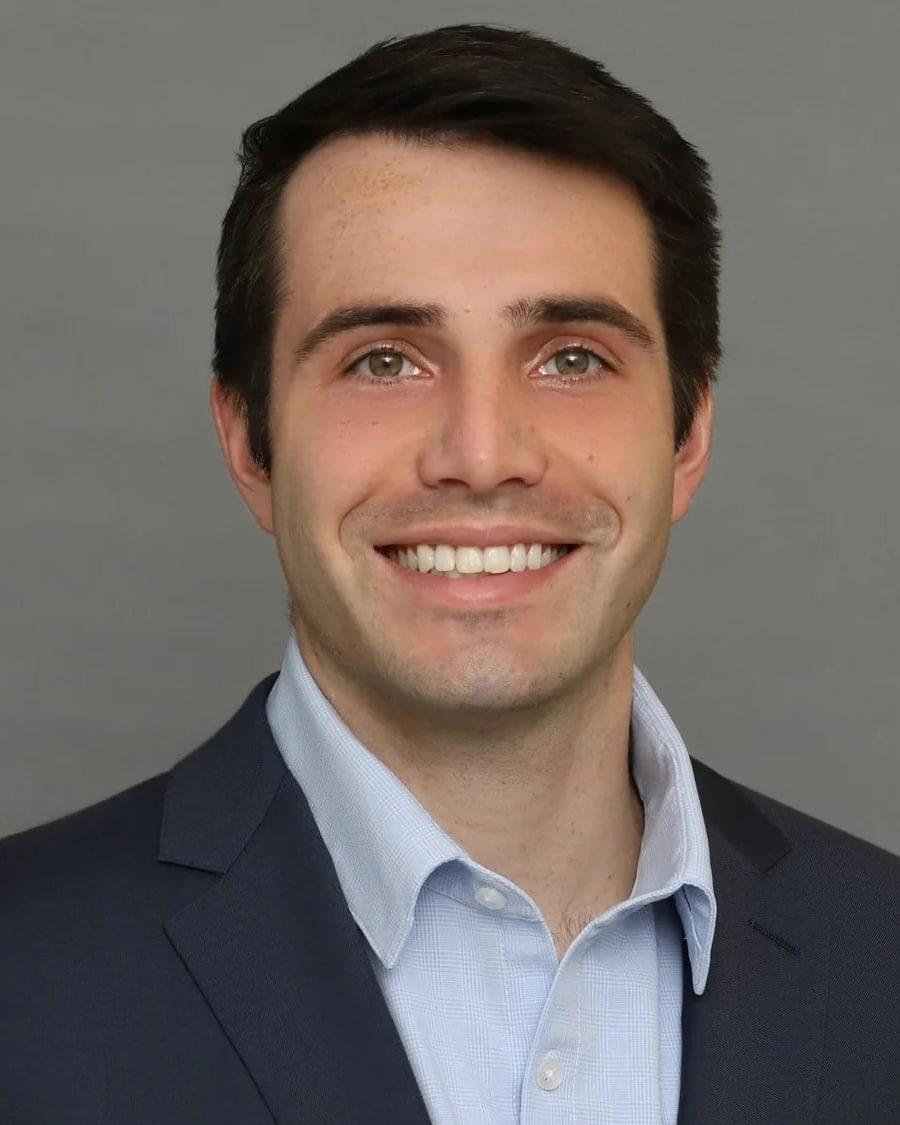
Andrew Sheppard.

Mobile games executive · Investor

From strategy work at EA’s Maxis Studio to worldwide development at Kabam, a 2014 move to GREE, and later investing at Transcend, Andrew Sheppard has built a public career around choosing where games businesses should scale next. He reads less like a hype salesman than a thesis-driven operator: measured, analytical, and willing to back a directional bet before the market fully agrees.

OBJECTIVE PERSONALITY CLASSIFICATIONFM-Ti/Ni-SC/P(B)What does this mean?
PERSONALITY SYSTEMObjective Personality
LEAD FUNCTIONTi · Introverted Thinking
SECOND SAVIOR FUNCTIONNi · Introverted Intuition
MBTI EQUIVALENTISTP
01 / BEHIND THE CLASSIFICATION

The personality behind the fame.

How does a recorded OPS classification like FM-Ti/Ni-SC/P(B) break down? Walk through nine coins and watch the proposed type take shape. These are deductions from the archived code, not independent evidence of typing accuracy.

Scroll below to see Andrew Sheppard take shape.

STARTING POINT512 possible OPS typesEach type combines core functions, an animal order, and sexual modalities.
THE FINISH LINEFM-Ti/Ni-SC/P(B)One recorded classification, decoded from its components.
Andrew Sheppard’s HUMAN NEEDS 01—03
01
DECIDER OR OBSERVER?

Decider over Observer

Deciders have more balanced Observer poles in the middle: Control (Oi) and Chaos (Oe). Organizing what's known and handling what's new tend to feel more manageable. People are the harder territory. Self (Di) and Tribe (De) sit at the extremes, so judgment, rejection, approval, and conflict can trigger the strongest reactions.

Sheppard’s public career keeps putting him where people, not just products, carry the consequence: strategy at Maxis, worldwide development at Kabam, a jump to GREE, then later backing founders through Transcend. That pattern fits Decider pressure. The friction is less “Can the market be known?” than “Which people do I trust, align, back, and disappoint?” The strength is calm judgment when roles, incentives and expectations collide. The blind spot is treating every tough stretch as a people-sorting problem, when some losses come from stubborn market conditions that no amount of sharper judgment can fully smooth out.
D
02
SELF OR TRIBE?

Di · Self over De · Tribe

Self (Di) is the stronger deciding pole. They check decisions against their own values or reasons first: what makes sense to me, what feels right to me? The strength is independent conviction; the recurring friction is the Tribe (De)—other people's standards, feedback, and expectations. As the portrait unfolds, notice how Self takes the lead.

In interviews about GREE, Sheppard did not pitch mobile games as a popularity contest; he argued for specific bets on original titles and scale. That reads Self over Tribe: starting from an internal standard for what makes strategic sense, then inviting others to come along. The advantage is conviction. He can back a thesis before consensus makes it fashionable. The cost is social drag. When a call feels obviously right from the inside, it becomes easier to underestimate how much context, reassurance or dissent a broader group may still need.

Di
03
GATHER OR ORGANIZE?

Oi · Organize over Oe · Gather

Organize (Oi) leads with refining, preserving, and structuring what is already known. Its strength is preparation and clear direction; the recurring friction is unexpected change that disrupts the plan. Another layer of the personality portrait comes into focus.

Kabam’s studio system and his DICE Europe talk about mobile teams scaling with conviction both point to Organize over Gather. He appears drawn to turning a fast, messy industry into a structure: portfolios, development lanes, repeatable ways of building. That is a real strength in games, where chaos is always for sale. The blind spot is rigidity by intelligence rather than by laziness. A strong organizing map can become so persuasive that late-breaking signals—genre swings, platform shifts, a new hit pattern—arrive as noise instead of useful correction.

Oi
FIRST THREE COINSD + Di + Oi

These establish the preferred human needs in the OPS framework.

Andrew Sheppard’s FUNCTIONS 04—05
04
FEELING OR THINKING?

Thinking · T over Feeling · F

Thinking (T) evaluates decisions through reasons, logic, and what works—not a lack of emotion. Its strength is analytical consistency; Feeling (F) provides balance through values, meaning, and the human consequences of a decision. Combined with Self (Di), this forms the recorded Savior Ti.

The Thinking coin shows up in how Sheppard publicly frames strategy. At GREE, he explained why he was placing bets on original mobile games, not merely that he liked them. Ti wants the mechanism: what is the underlying logic, what scales, what actually holds together? That can make him formidable in roles where vague enthusiasm is cheap and bad assumptions are expensive. The limit is that a clean internal model does not automatically mobilize other people. What feels airtight to him may land as unfinished unless the reasoning is translated for the room.

T → Ti
05
SENSING OR INTUITION?

Intuition · N over Sensing · S

Intuition (N) focuses on concepts, patterns, and what information might mean. Sensing (S) balances it through observable facts, physical detail, and direct experience. Combined with Organize (Oi), this gives the recorded Savior Ni.

Ni is visible in the long-arc bets. Maxis strategy, Kabam’s global buildout, his move to GREE in 2014, and later investment work at Transcend all revolve around seeing where a market is going before it fully arrives. Intuition here is not daydreaming; it is directional compression. He narrows sprawling industry noise into a thesis worth acting on. That is powerful when timing matters. The cost is tunnel vision with a pedigree: once the future line feels clear, alternatives can look less like live options and more like distractions.

N → Ni
THE TWO SAVIOR FUNCTIONSTi / Ni

Opposing functions: Fe and Se. This is a jumper classification.

Andrew Sheppard’s ANIMAL STACK 06—07
06
PLAY OR SLEEP?

Sleep over Play

Play emphasizes external real-time engagement; Sleep emphasizes internal processing. The recorded stack places Sleep earlier.

Between Play and Sleep, Sheppard’s record leans Sleep first. Even his public-facing moments—like a conference talk on how mobile studios should scale—read less like improvisational sparring and more like conclusions that have already been worked through privately. Sleep’s strength is depth: he can sit with a problem long enough to develop an actual point of view instead of performing instant certainty. The tradeoff is pacing. Play can generate faster real-time iteration with other people, while Sleep risks arriving with a refined answer after the room has already moved to the next demand.

S > P
07
CONSUME OR BLAST?

Consume over Blast

Consume gathers information for internal processing; Blast organizes and communicates information. The recorded order is Sleep → Consume → Play → Blast. This comparison follows their positions in that stack.

On the other comparison, Consume comes earlier than Blast. Sheppard’s path through Maxis, Kabam, GREE and Transcend suggests a career built on absorbing patterns—how studios organize, where mobile can grow, which bets deserve capital—before broadcasting a simplified doctrine. That earlier Consume gives range and substance. He has more to say because he has taken more in. The cost is familiar in strategy-heavy operators: one more data point, one more edge case, one more refinement can feel productive even when the team now needs a sharper, louder, more final direction.

C > B
Andrew Sheppard’s ANIMAL ORIENTATION 08—09
08
INFO OR ENERGY DOMINANT?

Energy over Info

Energy dominant means Play and Sleep are both in the top three: there is access to expending energy through engagement and conserving it through internal processing. Blast last leaves the information side uneven—Consume may gather far more than gets communicated.

Sheppard’s stack lands on Energy because Sleep and Play both sit in the top three. That balance fits an executive who can retreat into private synthesis, then step back into active leadership when a company or portfolio needs movement. It is not pure seclusion and not pure constant interaction. The missing pressure comes from Blast last. The likely bottleneck is not lack of insight, but packaging: translating a nuanced strategic read into a simple message others can repeat without losing the plot. In leadership, that gap can become expensive.

Energy
09
INTROVERSION OR EXTROVERSION?

Introversion over Extroversion

The last animal, Blast, determines this OPS coin: Play or Blast last means Introversion; Consume or Sleep last means Extroversion. This describes animal orientation, not sociability or shyness.

This profile resolves to Introversion, and Blast being fourth is the reason—not whether Sheppard can speak onstage or lead major organizations. He plainly can. OPS introversion here means private processing and information intake come before the push to declare, summarize and broadcast. That distinction matters for someone who has moved through operator, strategist and investor roles. The strength is measured judgment before proclamation. The blind spot is that teams, founders or partners may not need a smarter private model so much as a clearer public one, delivered earlier and repeated longer.

I
Sexual Modalities

The four sexual modalities.

OPS uses masculine/feminine sensory and extroverted-deciding distinctions as framework-specific terms, not gender categories. The four modalities are already included in the original 512 types. The recorded modality is FM · Visual.

MM KinestheticMasculine Sensory · Masculine De
MF AudioMasculine Sensory · Feminine De
FF TesterFeminine Sensory · Feminine De
FM RECORDED MODALITYVisualFeminine Sensory · Masculine De
COMPLETE RECORDED OPS TYPE · MODALITY INCLUDEDFM-Ti/Ni-SC/P(B)

Ti leads, Ni supports, and the animal stack is Sleep → Consume → Play → Blast.

THE FINISHED PORTRAIT · ALL NINE COINS REVEALED

Andrew Sheppard's complete function and animal stack

SleepConsumePlayBlastfTifSemNimFe
FM-Ti/Ni-SC/P(B)DOUBLE ACTIVATED · CONSUMEExplore the Interactive Coin Builder →
THE ANDREW SHEPPARD LENS

The strategist behind the thesis.

At DICE Europe 2014, Sheppard spoke about mobile studios scaling with conviction—the kind of polished executive moment that can read like standard industry optimism. His documented path from Maxis strategy to Kabam, GREE and later Transcend suggests something narrower and sharper: a person more interested in a worked-out thesis than in performing enthusiasm for its own sake.

Ti/Ni is potent in games business because it pairs internal logic with long-range direction. You can see that in the throughline from strategy work to global development to investing: he compresses a noisy market into a bet worth acting on. The limit is social transmission. A model can become so clear in his own framework that collaborators receive the answer before they receive the structure behind it.

As a Decider and Double Observer, his core imbalance lands more on people and judgment than on raw uncertainty. The recurring pressure is whose perspective to trust, how much to lean on his own read, and how to secure alignment around a bet. The neglected function is Fe, opposite lead Ti. Fe asks him to translate correctness into buy-in, shared language and visible consideration of the group.

Sleep → Consume → Play → Blast puts the final strain in plain sight. He is likely to process privately, absorb more, and engage actively before broadcasting a settled direction. With Blast last, the risk is not weak analysis but under-communicated clarity. Keep the depth, then force one concise operating memo and one repeated verbal thesis for each major move so others can actually carry the strategy with him.

Want to understand the Savior and Demon states behind these nine coins? Explore the complete explanation, visual examples, and typing principles on our Methodology page →

02 / KEEP EXPLORING

Different faces. Familiar patterns.

Explore other celebrities with related recorded OPS classifications. Related functions are not necessarily exact type matches.

Discover Type Twins
YOUR TURN

Curious about your own type?

Discover how your own personality might be classified through Objective Personality.

Get objectively typed
Andrew Sheppard's Personality Type & OPS Profile | The Personality Atlas