The Personality Atlas
THE CELEBRITY PERSONALITY ARCHIVE / BROADCAST JOURNALISM

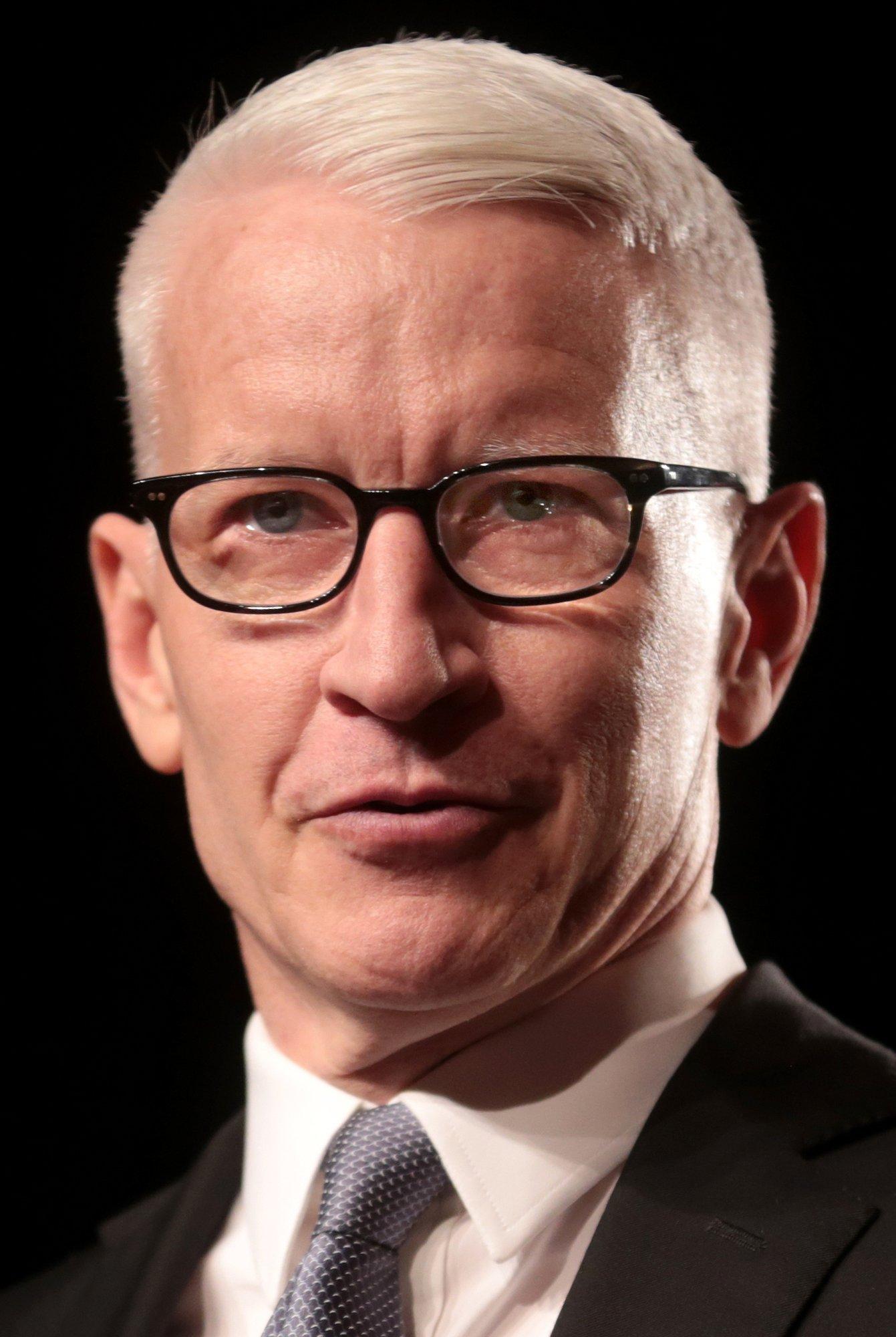
Anderson Cooper.

Broadcast Journalist · Anchor · Author

Anderson Cooper turned on-the-ground reporting into a durable brand without becoming a mere brand mascot: from sneaking into Myanmar with a fake press pass to anchoring Anderson Cooper 360° and reporting for 60 Minutes, he built a career on showing up where reality is loud, ugly, and impossible to fully tidy.

OBJECTIVE PERSONALITY CLASSIFICATIONFM-Si/Fi-SB/C(P)What does this mean?
PERSONALITY SYSTEMObjective Personality
LEAD FUNCTIONSi · Introverted Sensing
SECOND SAVIOR FUNCTIONFi · Introverted Feeling
MBTI EQUIVALENTISTJ
01 / BEHIND THE CLASSIFICATION

The personality behind the fame.

How does a recorded OPS classification like FM-Si/Fi-SB/C(P) break down? Walk through nine coins and watch the proposed type take shape. These are deductions from the archived code, not independent evidence of typing accuracy.

Scroll below to see Anderson Cooper take shape.

STARTING POINT512 possible OPS typesEach type combines core functions, an animal order, and sexual modalities.
THE FINISH LINEFM-Si/Fi-SB/C(P)One recorded classification, decoded from its components.
Anderson Cooper’s HUMAN NEEDS 01—03
01
DECIDER OR OBSERVER?

Observer over Decider

Observers have more balanced Decider poles in the middle: Self (Di) and Tribe (De). Their own perspective and other people's perspectives tend to be easier to navigate. Things are the harder territory. Control (Oi) and Chaos (Oe) sit at the extremes, so disrupted plans, uncertainty, and a changing world can trigger the strongest reactions.

Before he became the silver-haired anchor questioning presidents and disaster response, Cooper was sneaking into Myanmar with a fake press pass, filming Bosnia and Rwanda, and later reporting from Katrina and Haiti. The recurring strain is not mainly, “Do people like me?” but “What exactly is happening, and how do I navigate the chaos fast enough to be useful?” That Observer pressure creates a strength: he can move toward unstable reality instead of freezing. The cost is treating one more crisis, one more field report, as if clearer facts will finally make a disorderly world feel settled.


O
02
SELF OR TRIBE?

Di · Self over De · Tribe

Self (Di) is the stronger deciding pole. They check decisions against their own values or reasons first: what makes sense to me, what feels right to me? The strength is independent conviction; the recurring friction is the Tribe (De)—other people's standards, feedback, and expectations. As the portrait unfolds, notice how Self takes the lead.

Cooper kept his private life largely off-limits for years, then in 2012 gave Andrew Sullivan permission to publish the email saying his silence had created the wrong impression and that he was “happy, comfortable with myself, and proud.” That reads more Self than Tribe: the decision tracks an internal line he wanted to stand behind, not a crowd timetable. The advantage is integrity under pressure. The blind spot is that a privately calibrated standard can leave other people guessing for too long, then surprise them when the boundary suddenly moves.

Di
03
GATHER OR ORGANIZE?

Oi · Organize over Oe · Gather

Organize (Oi) leads with refining, preserving, and structuring what is already known. Its strength is preparation and clear direction; the recurring friction is unexpected change that disrupts the plan. Another layer of the personality portrait comes into focus.

His career looks adventurous, but the public product is unusually structured: Anderson Cooper 360°, years at 60 Minutes, debate moderation, annual New Year’s Eve coverage, and now The Whole Story. Cooper repeatedly turns sprawling events into a format viewers can follow night after night. That is the Organize advantage—stability, continuity, a known frame when the news itself is messy. The tradeoff is rigidity. A trusted map can become so polished that newer angles, messier context, or a different route have to fight harder for airtime than they should.

Oi
FIRST THREE COINSO + Di + Oi

These establish the preferred human needs in the OPS framework.

Anderson Cooper’s FUNCTIONS 04—05
04
FEELING OR THINKING?

Feeling · F over Thinking · T

Feeling (F) evaluates decisions through values, meaning, and what matters—not simply through emotion. Its strength is a clear sense of significance; Thinking (T) provides balance through impersonal reasons, consistency, and evidence. Combined with Self (Di), this forms the recorded Savior Fi.

Cooper’s work on CNN Heroes, his memoirs with and without his mother, and the grief podcast All There Is show a journalist who does not pretend facts arrive without personal stakes. Fi is not softness; it is a value filter. He keeps asking what loss, dignity, survival, or honesty mean for actual people. That strength gives his reporting and interviews an unmistakable human center. The limit is that moral sincerity is not the same as completeness. A personally meaningful frame can illuminate suffering while still leaving practical questions, competing duties, or harder impersonal analysis underplayed.

F → Fi
05
SENSING OR INTUITION?

Sensing · S over Intuition · N

Sensing (S) focuses on concrete details, observable reality, and lived experience. Intuition (N) balances it by looking for broader patterns, concepts, and implications. Combined with Organize (Oi), this gives the recorded Savior Si.

Even when Cooper talks about being “real” on air, the style is rooted in concrete reality: the floodwaters of Katrina, bodies on Rwandan roads, footage he shot in Myanmar and Vietnam, the direct witness account that became Dispatches from the Edge. Si gives him a memory for what actually happened and a discipline for returning to verifiable detail. That is a serious journalistic strength. The weakness is narrower than people assume: when your authority comes from the seen and documented, broader speculation or more abstract forecasting can feel less trustworthy even when the bigger pattern also matters.

S → Si
THE TWO SAVIOR FUNCTIONSSi / Fi

Opposing functions: Ne and Te. This is a jumper classification.

Anderson Cooper’s ANIMAL STACK 06—07
06
PLAY OR SLEEP?

Sleep over Play

Play emphasizes external real-time engagement; Sleep emphasizes internal processing. The recorded stack places Sleep earlier.

Sleep shows up before Play, and the pattern is visible in Cooper’s reflective side projects: Dispatches from the Edge, the email-based book with Gloria Vanderbilt, and All There Is, where experience gets processed before it is shared. The strength is a dense private center rather than constant performance. The blind spot is that real-time interaction can arrive after the internal framing is already half-set. Sleep steadies him; Play can end up feeling like the later adjustment instead of the starting point.

S > P
07
CONSUME OR BLAST?

Blast over Consume

Consume gathers information for internal processing; Blast organizes and communicates information. The recorded order is Sleep → Blast → Consume → Play. This comparison follows their positions in that stack.

Blast lands earlier than Consume, which fits a broadcaster paid to make chaos legible on deadline. Anderson Cooper 360°, presidential debate moderation, and years of breaking-news coverage all reward turning what is known into a clean line people can follow. The strength is clarity without fake omniscience. The cost is that a strong frame can start doing too much work. When Blast outruns Consume, it gets easier to explain the story than to keep reopening it for slower context, fresh reporting, or inconvenient extra detail.

B > C
Anderson Cooper’s ANIMAL ORIENTATION 08—09
08
INFO OR ENERGY DOMINANT?

Info over Energy

Info dominant means Consume and Blast are both in the top three: gathering and communicating information are more balanced. Play last leaves the energy side uneven—Sleep can conserve energy without enough spontaneous outward engagement.

Cooper’s stack resolves as Info-dominant, and his résumé makes the point in plain sight: nightly anchoring, 60 Minutes reporting, bestselling books, live specials, and a grief podcast that turns experience into language other people can use. Information comes in, then gets packaged. That rhythm is a professional asset. But with Play missing from the top three, the void is not more knowledge or better scripting. It is looser, less managed back-and-forth—letting another person or an unscripted moment push the conversation somewhere he did not pre-shape first.

Info
09
INTROVERSION OR EXTROVERSION?

Introversion over Extroversion

The last animal, Play, determines this OPS coin: Play or Blast last means Introversion; Consume or Sleep last means Extroversion. This describes animal orientation, not sociability or shyness.

This profile lands on OPS Introversion because Play is last, not because Cooper lacks range or public stamina. The man has anchored nightly television for decades, toured with Andy Cohen in AC2, and co-hosted New Year’s Eve year after year. Sociability is not the coin. The issue is priority: private processing and information management come more naturally than spontaneous interaction for its own sake. Play last can make him polished in public yet selective about when to enter open-ended exchange. The growth edge is not becoming louder; it is risking more live unpredictability before the frame is fully settled.

I
Sexual Modalities

The four sexual modalities.

OPS uses masculine/feminine sensory and extroverted-deciding distinctions as framework-specific terms, not gender categories. The four modalities are already included in the original 512 types. The recorded modality is FM · Visual.

MM KinestheticMasculine Sensory · Masculine De
MF AudioMasculine Sensory · Feminine De
FF TesterFeminine Sensory · Feminine De
FM RECORDED MODALITYVisualFeminine Sensory · Masculine De
COMPLETE RECORDED OPS TYPE · MODALITY INCLUDEDFM-Si/Fi-SB/C(P)

Si leads, Fi supports, and the animal stack is Sleep → Blast → Consume → Play.

THE FINISHED PORTRAIT · ALL NINE COINS REVEALED

Anderson Cooper's complete function and animal stack

SleepBlastConsumePlayfSimTefFimNe
FM-Si/Fi-SB/C(P)DOUBLE ACTIVATED · SLEEPExplore the Interactive Coin Builder →
THE ANDERSON COOPER LENS

The witness behind the anchor desk

The signature Anderson Cooper image is Hurricane Katrina: rolled-up sleeves, visible anger, and a network anchor sounding less like a studio referee than a man standing in the mess. That impression fits, but it was built earlier through war-zone footage, field reporting, and long practice staying useful when reality gets ugly.

His Si/Fi savior pairing gives events a concrete human weight. Si keeps him close to what happened, what was seen, what can be verified; Fi asks what line he can personally stand behind inside that reality. The strength is credibility with conscience. The limit is that conviction and detail can still narrow the frame.

As an Observer and Double Decider, Cooper is more equipped than many to absorb social pressure without making people-problems the whole story. The deeper imbalance is control versus uncertainty: trying to organize a disorderly world without ever fully mastering it. Neglected Ne, opposite his lead Si, can underweight fresh alternatives and emerging patterns.

Sleep → Blast → Consume → Play puts the final pressure on spontaneous exchange. He can process privately, explain clearly, and gather more information before open-ended interaction becomes the preferred move. That makes for disciplined journalism. The balancing move is specific: keep the rigor, but invite more unscripted editorial pushback earlier, before the narrative hardens.

Want to understand the Savior and Demon states behind these nine coins? Explore the complete explanation, visual examples, and typing principles on our Methodology page →

02 / KEEP EXPLORING

Different faces. Familiar patterns.

Explore other celebrities with related recorded OPS classifications. Related functions are not necessarily exact type matches.

Discover Type Twins
YOUR TURN

Curious about your own type?

Discover how your own personality might be classified through Objective Personality.

Get objectively typed
Anderson Cooper's Personality Type & OPS Profile | The Personality Atlas