The Personality Atlas
THE CELEBRITY PERSONALITY ARCHIVE / FILM

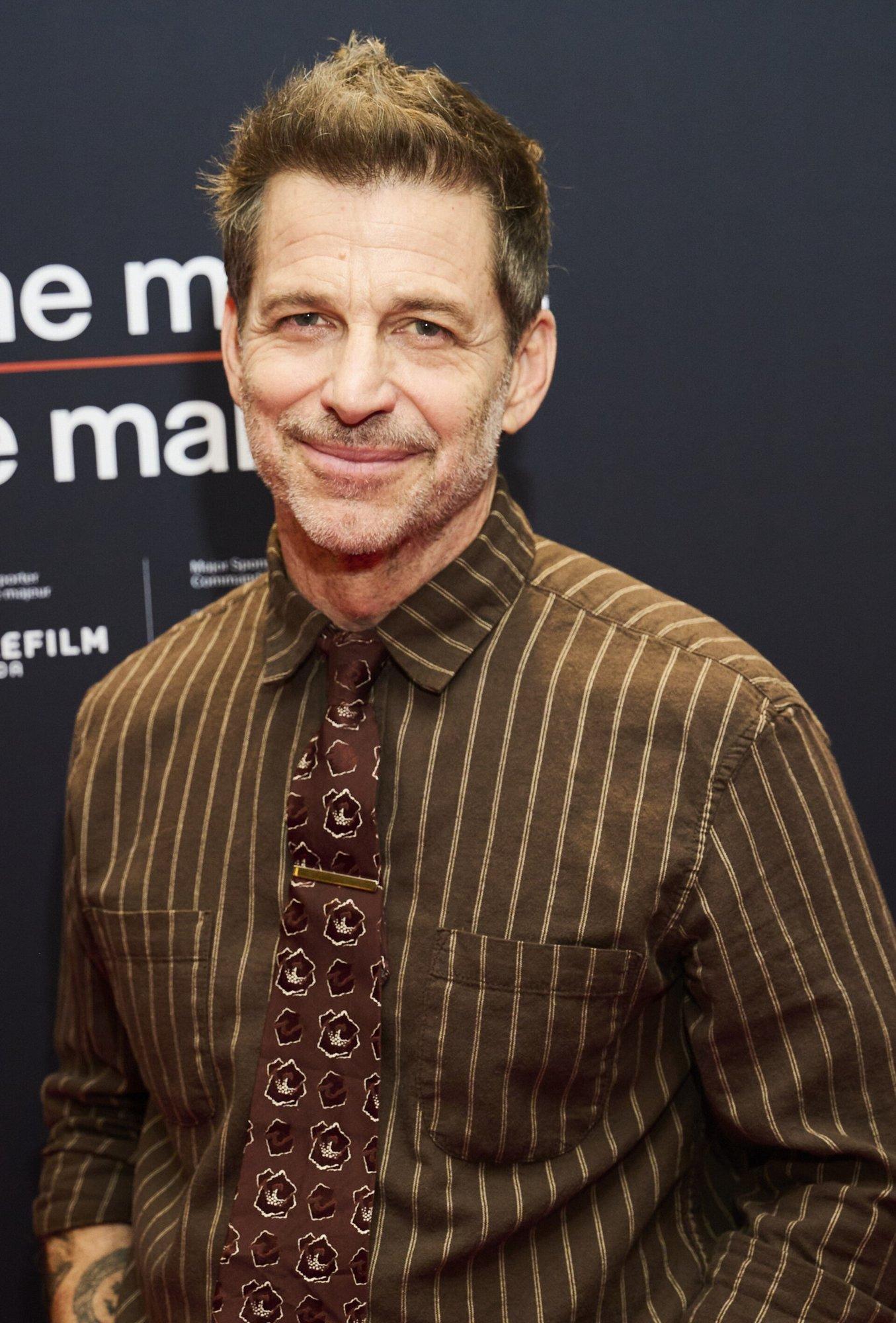
Zack Snyder.

Film Director · Producer · Screenwriter

From Dawn of the Dead and 300 to Man of Steel and Zack Snyder’s Justice League, Zack Snyder built a career on hyper-controlled images, franchise-scale mythmaking and a stubborn willingness to make blockbuster worlds obey his own visual laws.

OBJECTIVE PERSONALITY CLASSIFICATIONMF-Si/Ti-SB/P(C)What does this mean?
PERSONALITY SYSTEMObjective Personality
LEAD FUNCTIONSi · Introverted Sensing
SECOND SAVIOR FUNCTIONTi · Introverted Thinking
MBTI EQUIVALENTISFJ
01 / BEHIND THE CLASSIFICATION

The personality behind the fame.

How does a recorded OPS classification like MF-Si/Ti-SB/P(C) break down? Walk through nine coins and watch the proposed type take shape. These are deductions from the archived code, not independent evidence of typing accuracy.

Scroll below to see Zack Snyder take shape.

STARTING POINT512 possible OPS typesEach type combines core functions, an animal order, and sexual modalities.
THE FINISH LINEMF-Si/Ti-SB/P(C)One recorded classification, decoded from its components.
Zack Snyder’s HUMAN NEEDS 01—03
01
DECIDER OR OBSERVER?

Observer over Decider

Observers have more balanced Decider poles in the middle: Self (Di) and Tribe (De). Their own perspective and other people's perspectives tend to be easier to navigate. Things are the harder territory. Control (Oi) and Chaos (Oe) sit at the extremes, so disrupted plans, uncertainty, and a changing world can trigger the strongest reactions.

From Dawn of the Dead to Rebel Moon, Snyder keeps returning to giant logistical and visual systems: remakes, comic-book mythologies, franchise launches, director’s cuts, even shooting Army of the Dead himself. The recurring pressure is not mainly whether people approve of him, but whether the world on screen can hold together at scale. That Observer tilt is a strength in production chaos; he keeps building when formats, budgets and expectations shift. The blind spot is that tightening the world can start to feel more urgent than reading how other people are receiving it.
O
02
SELF OR TRIBE?

Di · Self over De · Tribe

Self (Di) is the stronger deciding pole. They check decisions against their own values or reasons first: what makes sense to me, what feels right to me? The strength is independent conviction; the recurring friction is the Tribe (De)—other people's standards, feedback, and expectations. As the portrait unfolds, notice how Self takes the lead.

When Snyder left Sony’s S.W.A.T. after wanting an R rating, and when he talks about wanting violence to look messy rather than consequence-free, the pattern is an internal standard he is reluctant to outsource. Self over Tribe does not mean antisocial; it means the work answers first to his own bar for what fits. That gives his films unmistakable authorship. The cost is equally clear: if the standard inside his head becomes the final court, collaborators or audiences can start sounding like obstacles instead of additional data.

Di
03
GATHER OR ORGANIZE?

Oi · Organize over Oe · Gather

Organize (Oi) leads with refining, preserving, and structuring what is already known. Its strength is preparation and clear direction; the recurring friction is unexpected change that disrupts the plan. Another layer of the personality portrait comes into focus.

Snyder’s career is full of prebuilt worlds with rules he wants to lock down: Dawn of the Dead, 300, Watchmen, the launch of the DCEU, a “faithful retelling” of King Arthur, even Rebel Moon growing from long-held science-fiction influences. Organize first likes a stable map, recurring symbols and a canon that can be defended. That strength helps him make gigantic properties feel internally consistent on his terms. The growth cost is rigidity. A director can become so invested in the established frame that fresher options arrive looking like contamination rather than possibility.

Oi
FIRST THREE COINSO + Di + Oi

These establish the preferred human needs in the OPS framework.

Zack Snyder’s FUNCTIONS 04—05
04
FEELING OR THINKING?

Thinking · T over Feeling · F

Thinking (T) evaluates decisions through reasons, logic, and what works—not a lack of emotion. Its strength is analytical consistency; Feeling (F) provides balance through values, meaning, and the human consequences of a decision. Combined with Self (Di), this forms the recorded Savior Ti.

His own explanation of the Watchmen alley fight is almost a manifesto: if someone gets beaten in an alley, he wants the broken arm to look broken, because consequence should be part of the logic. Thinking shows up here as internal consistency over reassurance. Snyder is strong at deciding what rules a film world will obey and then pressing the image until it follows them. The blind spot is that a coherent system can still leave viewers cold. Being logically committed to the choice does not guarantee that everyone experiences it as dramatically convincing.

T → Ti
05
SENSING OR INTUITION?

Sensing · S over Intuition · N

Sensing (S) focuses on concrete details, observable reality, and lived experience. Intuition (N) balances it by looking for broader patterns, concepts, and implications. Combined with Organize (Oi), this gives the recorded Savior Si.

Snyder’s filmmaking is intensely tactile. The speed-ramped fights in 300, the one-minute Leonidas shot, his background in painting and photography, and his choice to serve as cinematographer on Army of the Dead all point to a director who trusts concrete image-making. Sensing gives him a memorable command of texture, posture, costume, light and physical consequence. That is why even his critics rarely call his movies visually anonymous. The tradeoff is that powerful surfaces can become their own argument. A striking image can dominate so completely that viewers are left debating the tableau more than the larger meaning.

S → Si
THE TWO SAVIOR FUNCTIONSSi / Ti

Opposing functions: Ne and Fe. This is a jumper classification.

Zack Snyder’s ANIMAL STACK 06—07
06
PLAY OR SLEEP?

Sleep over Play

Play emphasizes external real-time engagement; Sleep emphasizes internal processing. The recorded stack places Sleep earlier.

Sleep comes earlier than Play here, and Snyder’s public career gives that preference plenty of raw material. Rebel Moon drew from older science-fiction and Kurosawa influences; Horse Latitudes sat in development for years; his films often feel pre-visualized long before they are publicly explained. Sleep’s strength is consolidation: turning inspiration into a privately worked-through system before handing it to the crowd. The blind spot is timing. If the inner version hardens first, real-time exchange can arrive late, mostly to react to a vision that already feels finished in the director’s own frame.

S > P
07
CONSUME OR BLAST?

Blast over Consume

Consume gathers information for internal processing; Blast organizes and communicates information. The recorded order is Sleep → Blast → Play → Consume. This comparison follows their positions in that stack.

After that private consolidation, Blast arrives earlier than Consume. Snyder does not just collect references; he declares worlds. Comic-Con announcements, franchise jump-starts like Man of Steel, and the very existence of a four-hour Zack Snyder’s Justice League all show a willingness to broadcast the thesis at scale. That is a real strength: collaborators and audiences rarely wonder whether he has a point of view. The cost is that extra intake can lose the race. Once the message is rolling, more research, more reinterpretation or more outside nuance may feel less useful than simply pushing the vision through.

B > C
Zack Snyder’s ANIMAL ORIENTATION 08—09
08
INFO OR ENERGY DOMINANT?

Energy over Info

Energy dominant means Play and Sleep are both in the top three: there is access to expending energy through engagement and conserving it through internal processing. Consume last leaves the information side uneven—Blast may broadcast more than gets taken in.

His stack lands on the Energy side, which fits the sheer output. Snyder has repeatedly balanced private incubation with outward motion: directing, producing, co-writing, running The Stone Quarry with Deborah Snyder, shooting Army of the Dead himself, then pivoting into more Netflix world-building. The engine is not just constant information management; it is a rhythm of conserving energy internally and spending it publicly. The missing piece is Consume last. He can keep a giant production moving and communicating, but the growth edge is pausing long enough to absorb more before the next mythology hardens into policy.

Energy
09
INTROVERSION OR EXTROVERSION?

Extroversion over Introversion

The last animal, Consume, determines this OPS coin: Play or Blast last means Introversion; Consume or Sleep last means Extroversion. This describes animal orientation, not sociability or shyness.

This coin is not about whether Snyder seems chatty at dinner. In OPS terms, last Consume points to Extroversion because taking in new input comes after private processing, explanation and engagement. That pattern fits a director who can move from a refined internal vision to public rollout, collaboration and large-scale production without needing endless additional intake first. The advantage is momentum: worlds get built, not merely imagined. The blind spot is informational stubbornness. When fresh feedback arrives late, it can feel like friction against the machine rather than material that might sharpen the next cut.

E
Sexual Modalities

The four sexual modalities.

OPS uses masculine/feminine sensory and extroverted-deciding distinctions as framework-specific terms, not gender categories. The four modalities are already included in the original 512 types. The recorded modality is MF · Audio.

MM KinestheticMasculine Sensory · Masculine De
MF RECORDED MODALITYAudioMasculine Sensory · Feminine De
FF TesterFeminine Sensory · Feminine De
FM VisualFeminine Sensory · Masculine De
COMPLETE RECORDED OPS TYPE · MODALITY INCLUDEDMF-Si/Ti-SB/P(C)

Si leads, Ti supports, and the animal stack is Sleep → Blast → Play → Consume.

THE FINISHED PORTRAIT · ALL NINE COINS REVEALED

Zack Snyder's complete function and animal stack

SleepBlastPlayConsumemSifFemTifNe
MF-Si/Ti-SB/P(C)DOUBLE ACTIVATED · BLASTExplore the Interactive Coin Builder →
THE ZACK SNYDER LENS

The architect of a sealed world.

The public image is easy to caricature: slow motion, capes, gods, steel, a director’s cut large enough to need intermission energy. But the career behind that impression starts earlier, in commercials, music videos and a painter’s eye, then scales into Dawn of the Dead, 300 and the long afterlife of Justice League.

Si/Ti is a formidable pairing for mythic filmmaking. Si wants the image, reference and internal continuity to lock into place; Ti wants the rule set underneath it to make sense on its own terms. That combination gives Snyder a strong visual doctrine. Its limit is that a sealed system can become so coherent to him that competing readings start to look merely mistaken.

As an Observer and Double Decider, Snyder’s recurring imbalance is less about social approval than about managing the world itself: the canon, the production, the scale, the conditions of the frame. The pairing matters. An Observer is a Double Decider, which can steady people judgments while overworking control of circumstances. Neglected Ne, opposite his lead Si, is the less-preferred move toward alternative readings and looser possibilities.

Sleep → Blast → Play → Consume shows why the work can feel so fully preloaded before it reaches the audience. Last Consume leaves a predictable gap: more readiness to process, declare and mobilize than to keep taking in fresh input. The balance is not softer conviction. Keep the visual precision, but add one early script-stage round where outside readers challenge the canon and force three new options before cameras roll.

Want to understand the Savior and Demon states behind these nine coins? Explore the complete explanation, visual examples, and typing principles on our Methodology page →

02 / KEEP EXPLORING

Different faces. Familiar patterns.

Explore other celebrities with related recorded OPS classifications. Related functions are not necessarily exact type matches.

Discover Type Twins
YOUR TURN

Curious about your own type?

Discover how your own personality might be classified through Objective Personality.

Get objectively typed
Zack Snyder's Personality Type & OPS Profile | The Personality Atlas