The Personality Atlas
THE CELEBRITY PERSONALITY ARCHIVE / HISTORY & IDEAS

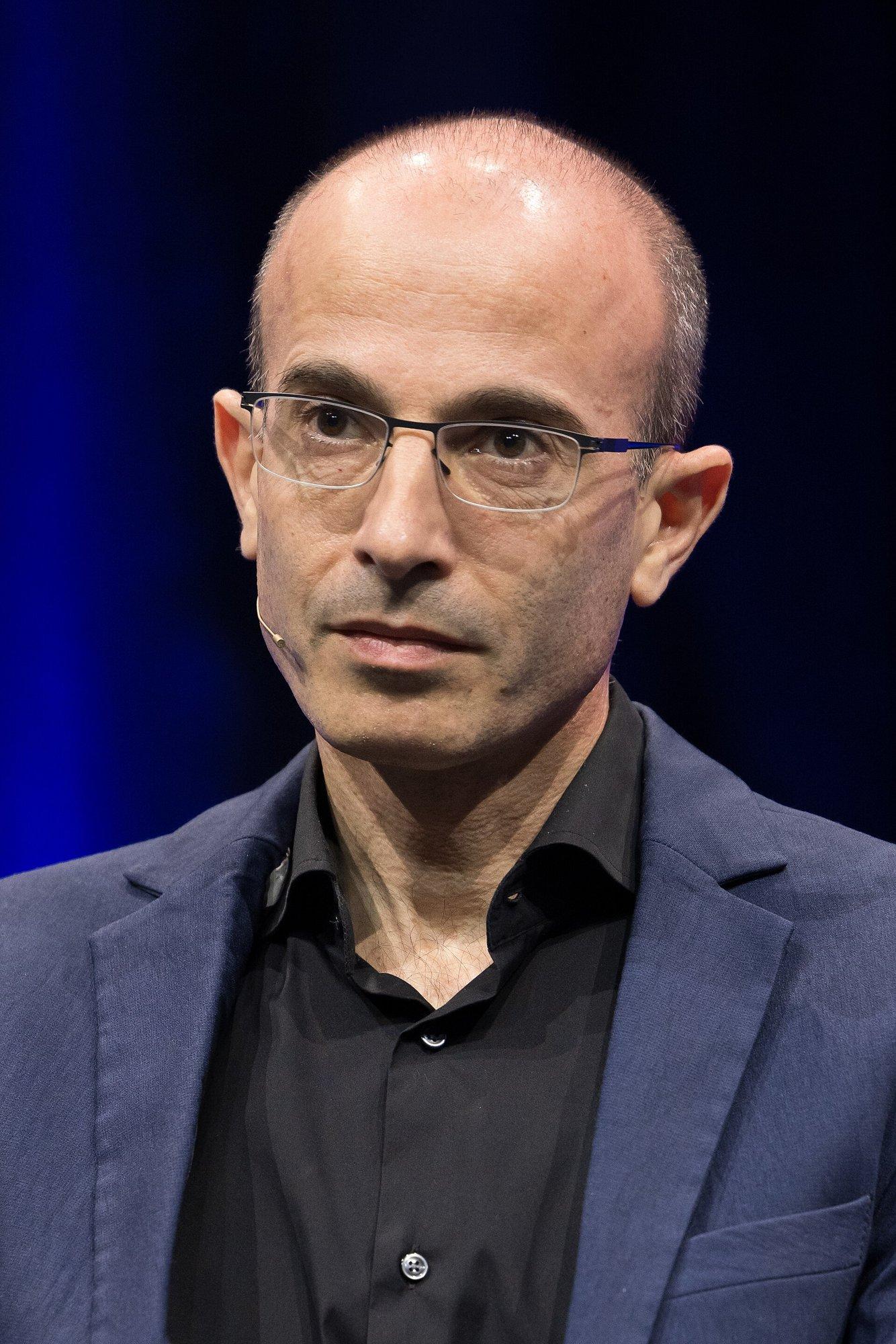
Yuval Noah Harari.

Historian · Public intellectual · Bestselling author

Yuval Noah Harari turned undergraduate world-history lectures at Hebrew University into Sapiens, then into a global publishing and speaking platform carried through Davos appearances, a TED avatar, graphic adaptations and translated bestsellers. The appeal is his ability to compress millennia into a sharp thesis; the friction is that the same compression keeps inviting charges that the spectacle outruns the scholarship.

OBJECTIVE PERSONALITY CLASSIFICATIONFF-Ti/Si-SB/P(C) #4What does this mean?
PERSONALITY SYSTEMObjective Personality
LEAD FUNCTIONTi · Introverted Thinking
SECOND SAVIOR FUNCTIONSi · Introverted Sensing
MBTI EQUIVALENTINTP
01 / BEHIND THE CLASSIFICATION

The personality behind the fame.

How does a recorded OPS classification like FF-Ti/Si-SB/P(C) #4 break down? Walk through nine coins and watch the proposed type take shape. These are deductions from the archived code, not independent evidence of typing accuracy.

Scroll below to see Yuval Noah Harari take shape.

STARTING POINT512 possible OPS typesEach type combines core functions, an animal order, and sexual modalities.
THE FINISH LINEFF-Ti/Si-SB/P(C) #4One recorded classification, decoded from its components.
Yuval Noah Harari’s HUMAN NEEDS 01—03
01
DECIDER OR OBSERVER?

Decider over Observer

Deciders have more balanced Observer poles in the middle: Control (Oi) and Chaos (Oe). Organizing what's known and handling what's new tend to feel more manageable. People are the harder territory. Self (Di) and Tribe (De) sit at the extremes, so judgment, rejection, approval, and conflict can trigger the strongest reactions.

Harari’s public story is not mainly about unruly circumstances; it is about whose judgment counts. Sapiens spent 96 consecutive weeks near the top of The New York Times Best Seller list while academic critics called his work sensational, speculative, or closer to infotainment than scholarship. That split is classic Decider friction: credibility, authority, and the social cost of being treated as either visionary or overhyped. The strength is unusual tolerance for contested status. The blind spot is that battles over respect can become so absorbing that slower factual objections start looking like mere resistance from the wrong crowd.

D
02
SELF OR TRIBE?

Di · Self over De · Tribe

Self (Di) is the stronger deciding pole. They check decisions against their own values or reasons first: what makes sense to me, what feels right to me? The strength is independent conviction; the recurring friction is the Tribe (De)—other people's standards, feedback, and expectations. As the portrait unfolds, notice how Self takes the lead.

Harari’s breakout move came from backing his own synthesis. After encountering Jared Diamond’s work at Oxford as an academic epiphany, he decided he could write similarly sweeping books, then built Sapiens from his own undergraduate lecture course instead of waiting for a narrower scholarly lane to bless the project. Self over Tribe gives him a decisive authorial center: the material sounds owned, not committee-smoothed. The cost is predictable. When the standard comes from inside, outside correction can arrive late, and peer objections can feel less like guidance than proof that others simply prefer a smaller frame.

Di
03
GATHER OR ORGANIZE?

Oi · Organize over Oe · Gather

Organize (Oi) leads with refining, preserving, and structuring what is already known. Its strength is preparation and clear direction; the recurring friction is unexpected change that disrupts the plan. Another layer of the personality portrait comes into focus.

Harari’s signature product is not endless option-chasing; it is a settled frame. Sapiens moves from a cognitive revolution to agriculture to science, and Nexus again stretches from the Stone Age to AI through one organizing storyline. Organize over Gather is what makes that kind of work readable at all. He can compress sprawling history into a map people remember. The tradeoff is that a strong map can start disciplining the territory too aggressively. Critics calling the books speculative are often reacting to exactly that cost: the pattern is so clean that exceptions risk getting treated as clutter.

Oi
FIRST THREE COINSD + Di + Oi

These establish the preferred human needs in the OPS framework.

Yuval Noah Harari’s FUNCTIONS 04—05
04
FEELING OR THINKING?

Thinking · T over Feeling · F

Thinking (T) evaluates decisions through reasons, logic, and what works—not a lack of emotion. Its strength is analytical consistency; Feeling (F) provides balance through values, meaning, and the human consequences of a decision. Combined with Self (Di), this forms the recorded Savior Ti.

Harari’s public arguments regularly sound like system analysis before moral sermon. At Davos he warned that power sits with those who control algorithms; in Homo Deus he coined dataism for a worldview built around information flows. Ti brings the strength of internal coherence: he tries to explain what mechanism links biology, institutions, and technology rather than merely declaring a mood about the future. The blind spot is that a sharp model can flatten value disagreements into engineering problems. That helps produce a memorable thesis, but it also helps explain why some philosophers and scholars think the argument sometimes outruns the human texture it claims to describe.

T → Ti
05
SENSING OR INTUITION?

Sensing · S over Intuition · N

Sensing (S) focuses on concrete details, observable reality, and lived experience. Intuition (N) balances it by looking for broader patterns, concepts, and implications. Combined with Organize (Oi), this gives the recorded Savior Si.

For someone associated with grand futurist claims, Harari’s actual material keeps returning to chronology, record, and recurrence. He is a medievalist and military historian by training, and his biggest books are built from long historical sequences: Stone Age, agricultural revolution, scientific revolution, twenty-first-century networks. Si shows up in that dependence on accumulated precedent and durable scaffolding. The strength is historical legibility; readers can locate themselves inside a timeline. The cost is that once a pattern has been stabilized from the past, projecting it forward can gain more confidence than the evidence for the future really grants.

S → Si
THE TWO SAVIOR FUNCTIONSTi / Si

Opposing functions: Fe and Ne. This is a jumper classification.

Yuval Noah Harari’s ANIMAL STACK 06—07
06
PLAY OR SLEEP?

Sleep over Play

Play emphasizes external real-time engagement; Sleep emphasizes internal processing. The recorded stack places Sleep earlier.

Harari’s routine makes the Sleep side hard to miss. He has said Vipassana meditation transformed his life, practiced two hours a day, and taken silent retreats of thirty days or more with no books or social media. That kind of private consolidation fits Sleep earlier than Play: he appears to want the perspective formed internally before the exchange starts publicly. The strength is distilled clarity. The blind spot is conversational rigidity. When a viewpoint has been processed for months in silence, live interaction can become less about discovery and more about presenting a conclusion already made.

S > P
07
CONSUME OR BLAST?

Blast over Consume

Consume gathers information for internal processing; Blast organizes and communicates information. The recorded order is Sleep → Blast → Play → Consume. This comparison follows their positions in that stack.

After that private processing, Harari tends to move into delivery. Sapiens began as twenty lectures; he later repackaged similar world-history themes through sequels, a graphic adaptation, children’s books, repeated Davos appearances, and even a TED Talk delivered as a digital avatar. Blast earlier than Consume helps explain the reach: he is wired to package a framework so other people can use it. The strength is scale. The growth cost is restraint. Once the message is clean enough to teach, there is less natural incentive to stay messy with fresh material, dissenting details, or one more round of source-digging.

B > C
Yuval Noah Harari’s ANIMAL ORIENTATION 08—09
08
INFO OR ENERGY DOMINANT?

Energy over Info

Energy dominant means Play and Sleep are both in the top three: there is access to expending energy through engagement and conserving it through internal processing. Consume last leaves the information side uneven—Blast may broadcast more than gets taken in.

Harari’s stack lands on Energy dominance, and his public life shows both sides of that pair. There is private energy management in the meditation discipline and long silent retreats; there is outward energy expenditure in bestselling books, repeated World Economic Forum talks, and a very public intellectual brand. That balance lets him conserve internally and still project ideas at scale. The missing pressure point is last Consume. He can process and present before he has fully lingered in more raw intake. The cost is not laziness; it is moving from synthesis to proclamation faster than the next pile of evidence might justify.

Energy
09
INTROVERSION OR EXTROVERSION?

Extroversion over Introversion

The last animal, Consume, determines this OPS coin: Play or Blast last means Introversion; Consume or Sleep last means Extroversion. This describes animal orientation, not sociability or shyness.

Consume sits last, which makes this Atlas coin Extroversion even though Harari is famous for silence, meditation, and for saying he long avoided a smartphone in daily life. In this system the issue is not charm or social appetite. It is whether the stack resolves sooner through output and engagement than through prolonged open-ended intake. Harari can spend enormous time alone and still show Extroversion here because his work repeatedly turns inward processing into public frameworks, lectures, and warnings. The growth edge is deliberately re-entering research mode after the thesis already feels elegant enough to publish.

E
Sexual Modalities

The four sexual modalities.

OPS uses masculine/feminine sensory and extroverted-deciding distinctions as framework-specific terms, not gender categories. The four modalities are already included in the original 512 types. The recorded modality is FF · Tester.

MM KinestheticMasculine Sensory · Masculine De
MF AudioMasculine Sensory · Feminine De
FF RECORDED MODALITYTesterFeminine Sensory · Feminine De
FM VisualFeminine Sensory · Masculine De
ADDITIONAL LAYER · SOCIAL TYPE

The four social types.

Social types are an additional layer on top of the original Objective Personality classification, introduced later in OPS research. They describe two proposed social preference coins: Flex vs. Friends and Generalize vs. Specialize. The combination and priority of these preferences produce four social types. Yuval Noah Harari's recorded social type is #4.

SOCIAL #1 #1Flex · Generalize
SOCIAL #2 #2Generalize · Friends
SOCIAL #3 #3Specialize · Flex
SOCIAL #4 RECORDED SOCIAL TYPE#4Friends · Specialize
COMPLETE RECORDED OPS TYPE · MODALITY INCLUDED + SOCIAL TYPEFF-Ti/Si-SB/P(C) #4

Ti leads, Si supports, and the animal stack is Sleep → Blast → Play → Consume.

THE FINISHED PORTRAIT · ALL NINE COINS REVEALED

Yuval Noah Harari's complete function and animal stack

SleepBlastPlayConsumemTimNefSifFe
FF-Ti/Si-SB/P(C) #4DOUBLE ACTIVATED · BLASTExplore the Interactive Coin Builder →
THE YUVAL NOAH HARARI LENS

The professor who sells a civilizational thesis.

Sapiens began as twenty undergraduate lectures, which explains part of Harari’s peculiar public image. He can stand at Davos or appear as a TED avatar sounding like a civilizational oracle, yet the machine underneath is a historian who built a classroom framework and then scaled it into a global publishing platform read far beyond the academy.

His Ti/Si savior pairing is excellent at building a coherent historical scaffold and then trusting it hard. That is why he can move from medieval warfare to AI-era information networks without sounding scattered. The same gift carries the limit: once the model locks, counterexamples, rival interpretations, and softer social realities can start looking like noise instead of necessary friction.

As a Decider and Double Observer, Harari is more likely to spend extra energy on people-side questions of authority, credibility, and whose story gets to define an age than on raw informational chaos. Double Observer steadies the facts more than the human stakes. Neglected Fe is the sore spot: shared values, public resonance, and broad human buy-in can be treated as softer than the system that is trying to explain them.

Sleep → Blast → Play → Consume fits the pattern: private consolidation first, then teaching, then engagement, with fresh intake last. Because Consume is fourth, the imbalance is moving from distilled insight to sweeping proclamation before enough new material has had time to complicate it. Keep the synthesis; add one adversarial read-through with specialist historians before the next universal claim goes onstage.

Want to understand the Savior and Demon states behind these nine coins? Explore the complete explanation, visual examples, and typing principles on our Methodology page →

02 / KEEP EXPLORING

Different faces. Familiar patterns.

Explore other celebrities with related recorded OPS classifications. Related functions are not necessarily exact type matches.

Discover Type Twins
YOUR TURN

Curious about your own type?

Discover how your own personality might be classified through Objective Personality.

Get objectively typed
Yuval Noah Harari's Personality Type & OPS Profile | The Personality Atlas