The Personality Atlas
THE CELEBRITY PERSONALITY ARCHIVE / COMEDY & MEDIA

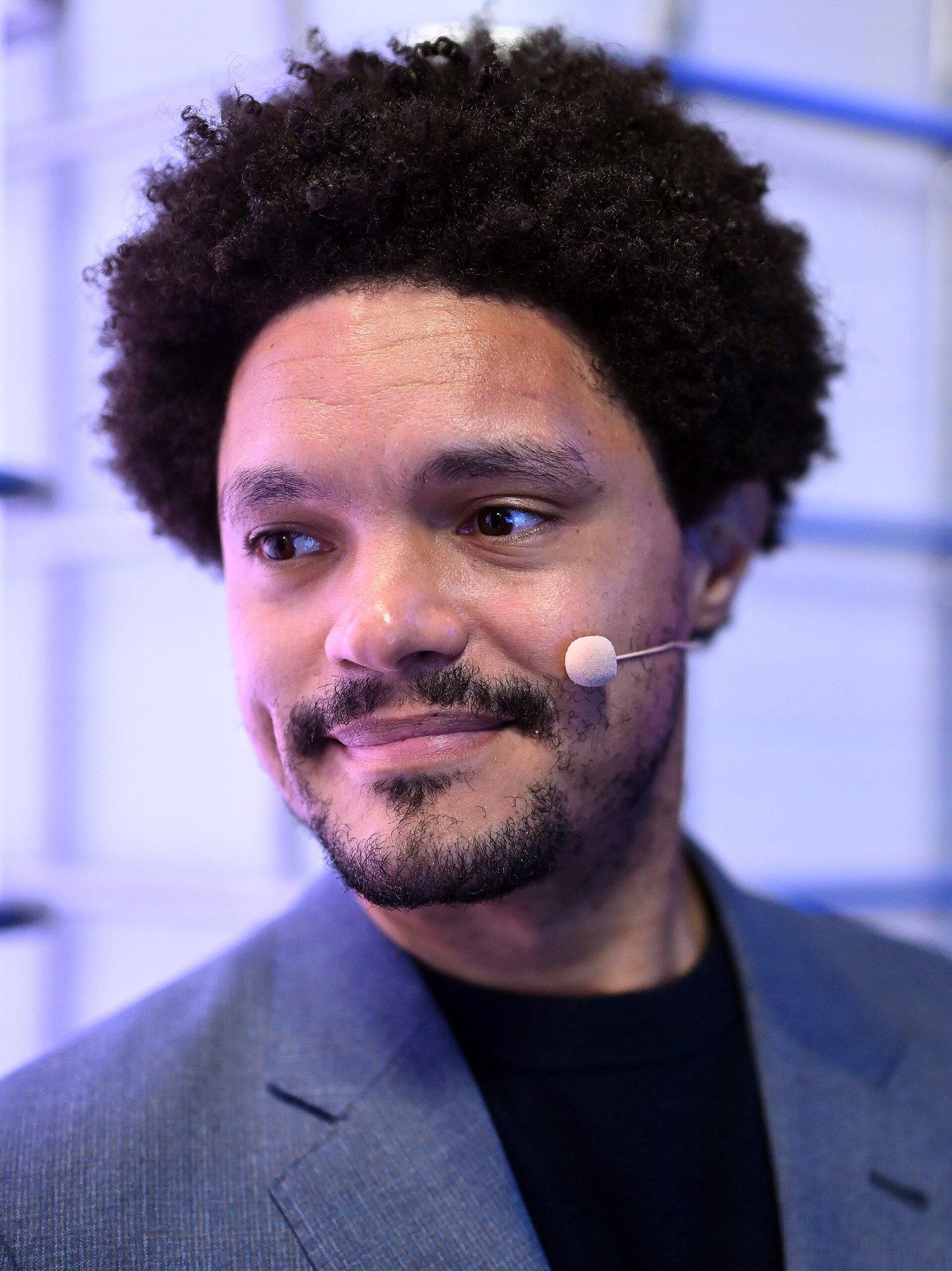
Trevor Noah.

Comedian · Host · Author · Producer

Trevor Noah turned a Johannesburg childhood marked by apartheid, multilingual code-switching, and illegal racial categories into stand-up, Born a Crime, and a seven-year Daily Show run—carrying a sharp, globally legible comic voice from South African television to American late-night and the Grammy stage.

OBJECTIVE PERSONALITY CLASSIFICATIONMF-Se/Te-PC/B(S)What does this mean?
PERSONALITY SYSTEMObjective Personality
LEAD FUNCTIONSe · Extroverted Sensing
SECOND SAVIOR FUNCTIONTe · Extroverted Thinking
MBTI EQUIVALENTESFP
01 / BEHIND THE CLASSIFICATION

The personality behind the fame.

How does a recorded OPS classification like MF-Se/Te-PC/B(S) break down? Walk through nine coins and watch the proposed type take shape. These are deductions from the archived code, not independent evidence of typing accuracy.

Scroll below to see Trevor Noah take shape.

STARTING POINT512 possible OPS typesEach type combines core functions, an animal order, and sexual modalities.
THE FINISH LINEMF-Se/Te-PC/B(S)One recorded classification, decoded from its components.
Trevor Noah’s HUMAN NEEDS 01—03
01
DECIDER OR OBSERVER?

Observer over Decider

Observers have more balanced Decider poles in the middle: Self (Di) and Tribe (De). Their own perspective and other people's perspectives tend to be easier to navigate. Things are the harder territory. Control (Oi) and Chaos (Oe) sit at the extremes, so disrupted plans, uncertainty, and a changing world can trigger the strongest reactions.

Trevor Noah’s first public obstacle was not mainly whether people approved of him, but whether the world around him was even navigable. He was born under apartheid to parents whose relationship was illegal, then built a career across South African television, U.S. stand-up, and late-night during years of political whiplash. That reads as Observer pressure: unstable conditions, shifting systems, stubborn reality. The strength is adaptability under changing circumstances. The blind spot is assuming the next better platform, moment, or context will solve questions that eventually need a firmer long-range direction.
O
02
SELF OR TRIBE?

De · Tribe over Di · Self

Tribe (De) is the stronger deciding pole. They check decisions against people, shared standards, and what works for the group: what do we need, what will others think? The strength is coordination and responsiveness; the recurring friction is the Self (Di)—knowing and defending their own position. As the portrait unfolds, notice how Tribe takes the lead.

When Comedy Central chose Noah to replace Jon Stewart, the job came with a ruthless public scoreboard: old tweets resurfaced, critics compared him to Stewart, ratings were scrutinized, and defenders argued for his evolution as a comedian. Tribe over Self fits that visible calibration to collective standards. The strength is knowing how to address a broad audience in language the group can use. The growth cost is that external legitimacy becomes seductive. If every room, metric, and headline matters, it gets harder to tell useful feedback from plain noise.

De
03
GATHER OR ORGANIZE?

Oe · Gather over Oi · Organize

Gather (Oe) leads with new information, experiences, and possibilities. Its strength is curiosity and adaptability; the recurring friction is narrowing the options and settling into what is already known. Another layer of the personality portrait comes into focus.

Noah’s career almost refuses one fixed lane. South African radio and television led to stand-up, U.S. late-night spots, The Daily Show, a bestselling memoir, Grammy hosting, a podcast, and new media experiments like Fortnite’s JokeNite. Gather over Organize shows up in that appetite for fresh platforms and angles. The strength is range: he keeps finding another opening when the industry changes. The blind spot is expansion for its own sake. More options can feel like progress while quietly postponing the harder task of narrowing to a single deliberate path.

Oe
FIRST THREE COINSO + De + Oe

These establish the preferred human needs in the OPS framework.

Trevor Noah’s FUNCTIONS 04—05
04
FEELING OR THINKING?

Thinking · T over Feeling · F

Thinking (T) evaluates decisions through reasons, logic, and what works—not a lack of emotion. Its strength is analytical consistency; Feeling (F) provides balance through values, meaning, and the human consequences of a decision. Combined with Tribe (De), this forms the recorded Savior Te.

His 2020 Daily Show video on George Floyd and the “broken social contract” is a strong public example of Thinking. Noah took a chaotic national crisis and built an argument with structure, sequence, and consequence. Te’s strength is making reasoning shareable: the audience can track the point and use it. The blind spot is that a forceful frame can travel faster than consensus. Backlash to comments on France’s World Cup team or Rishi Sunak shows the risk. A sharp public argument can still be challenged as incomplete or overextended.

T → Te
05
SENSING OR INTUITION?

Sensing · S over Intuition · N

Sensing (S) focuses on concrete details, observable reality, and lived experience. Intuition (N) balances it by looking for broader patterns, concepts, and implications. Combined with Gather (Oe), this gives the recorded Savior Se.

Born a Crime works because Noah does not float above reality; he keeps returning to what could actually be seen, heard, risked, and survived in apartheid South Africa. The same immediacy serves him onstage and as a host, where languages, accents, timing, and visible detail do real work. Se’s strength is responsiveness to the live moment. He can make politics, race, and culture feel tangible instead of abstract. The cost is that what is vivid right now can dominate the lens, crowding out the slower pattern that only appears after distance.

S → Se
THE TWO SAVIOR FUNCTIONSSe / Te

Opposing functions: Ni and Fi. This is a jumper classification.

Trevor Noah’s ANIMAL STACK 06—07
06
PLAY OR SLEEP?

Play over Sleep

Play emphasizes external real-time engagement; Sleep emphasizes internal processing. The recorded stack places Play earlier.

Watch Noah at the White House Correspondents’ Dinner, on The Daily Show, or steering six straight Grammy telecasts: he comes alive in active exchange. Play over Sleep favors motion, live feedback, and the spark that appears when another person or audience throws something back. That is a real professional advantage for a comedian-host whose job is to keep energy circulating. The shadow is subtler. Constant engagement can masquerade as clarity while private consolidation lags behind. If insight is always tested in public first, quieter internal editing may arrive late.

P > S
07
CONSUME OR BLAST?

Consume over Blast

Consume gathers information for internal processing; Blast organizes and communicates information. The recorded order is Play → Consume → Blast → Sleep. This comparison follows their positions in that stack.

With Play first and Consume next, Noah does not just work the room—he keeps refilling it with fresh material. His multilingual background, memoir, international commentary, and stated desire after The Daily Show to visit countries and learn new languages all fit Consume arriving earlier than Blast. The strength is substance behind the performance: the joke has observation, context, and lived texture. The growth cost is that more input can feel safer than a final declaration. Fresh material enriches the point, but it can also delay the bluntest, clearest version of it.

C > B
Trevor Noah’s ANIMAL ORIENTATION 08—09
08
INFO OR ENERGY DOMINANT?

Info over Energy

Info dominant means Consume and Blast are both in the top three: gathering and communicating information are more balanced. Sleep last leaves the energy side uneven—Play can keep engagement going without enough private recovery.

Noah’s top three animals make him Info-dominant: he is built to keep information moving through performance, intake, and explanation. That helps explain how one career can hold nightly political satire, stand-up specials, books, producing, podcasting, and major live hosting without sounding verbally stiff. The strength is a fast public information loop. The missing balance is Sleep. When private recovery and internal settling come last, momentum itself becomes the default. The cost is not ignorance but insufficient consolidation—turning nearly everything into content before it has fully landed.

Info
09
INTROVERSION OR EXTROVERSION?

Extroversion over Introversion

The last animal, Sleep, determines this OPS coin: Play or Blast last means Introversion; Consume or Sleep last means Extroversion. This describes animal orientation, not sociability or shyness.

In OPS terms, Noah lands on Extroversion because Sleep is last, not because he is simply sociable, polished, or famous. The pattern is a bias toward engaging outwardly before retreating inward for longer private processing. His explanation for leaving The Daily Show—wanting to return to stand-up, visit countries, learn languages, and keep moving—fits that outward tilt better than any stereotype about charisma. The blind spot is postponing stillness until fatigue enforces it. The growth edge is scheduling reflection early enough that movement serves the message, not just the appetite for motion.

E
Sexual Modalities

The four sexual modalities.

OPS uses masculine/feminine sensory and extroverted-deciding distinctions as framework-specific terms, not gender categories. The four modalities are already included in the original 512 types. The recorded modality is MF · Audio.

MM KinestheticMasculine Sensory · Masculine De
MF RECORDED MODALITYAudioMasculine Sensory · Feminine De
FF TesterFeminine Sensory · Feminine De
FM VisualFeminine Sensory · Masculine De
COMPLETE RECORDED OPS TYPE · MODALITY INCLUDEDMF-Se/Te-PC/B(S)

Se leads, Te supports, and the animal stack is Play → Consume → Blast → Sleep.

THE FINISHED PORTRAIT · ALL NINE COINS REVEALED

Trevor Noah's complete function and animal stack

PlayConsumeBlastSleepmSemFifTefNi
MF-Se/Te-PC/B(S)DOUBLE ACTIVATED · PLAYExplore the Interactive Coin Builder →
THE TREVOR NOAH LENS

The effortless voice with no off switch

Trevor Noah can look effortless in public: the Daily Show desk, Grammy hosting, the quick global joke that makes several cultures legible at once. But that ease was built in harsher conditions. Born under apartheid to parents whose relationship was illegal, he learned early that identity and context were concrete realities, not theory.

His savior Se/Te pairing turns messy reality into something immediate and usable. Se grabs the detail that makes a story land; Te organizes it into a clear public point. That is a serious strength in stand-up, memoir, and commentary. The limit is speed: a sharp frame can travel farther than the nuance needed to protect it.

As an Observer and Double Decider, Noah is likelier to stay steadier with people drama than with unstable conditions, timing, and open-ended uncertainty. The core imbalance is managing reality rather than managing worth. His neglected function is Ni, opposite his lead Se, asking what larger pattern these vivid moments and quick reads are actually serving.

Play → Consume → Blast → Sleep completes the pattern. He engages, gathers, explains, and only later withdraws to consolidate. Sleep last can keep the machine brilliant and restless at the same time. Balance would mean protecting off-camera time to write, narrow the thesis, and recharge without dulling the fast, worldly responsiveness that makes him work.

Want to understand the Savior and Demon states behind these nine coins? Explore the complete explanation, visual examples, and typing principles on our Methodology page →

02 / KEEP EXPLORING

Different faces. Familiar patterns.

Explore other celebrities with related recorded OPS classifications. Related functions are not necessarily exact type matches.

Discover Type Twins
YOUR TURN

Curious about your own type?

Discover how your own personality might be classified through Objective Personality.

Get objectively typed
Trevor Noah's Personality Type & OPS Profile | The Personality Atlas