The Personality Atlas
THE CELEBRITY PERSONALITY ARCHIVE / MUSIC & FILM SCORES

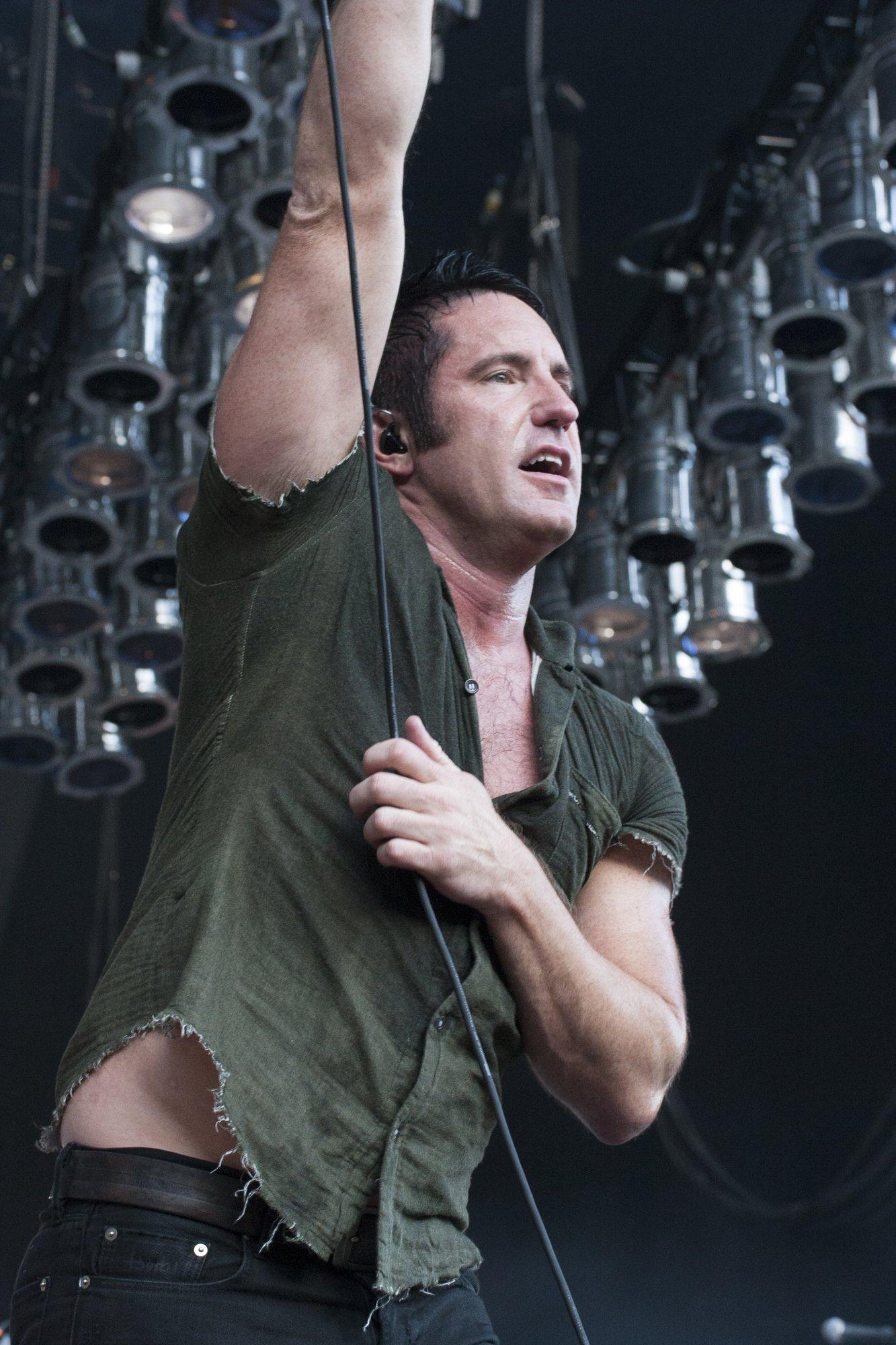
Trent Reznor.

Musician · Composer · Producer

Trent Reznor built Nine Inch Nails like a private laboratory that happened to become a major rock institution. From recording demos alone during off-hours at a Cleveland studio to turning David Fincher films, Soul, and other screen projects into award-winning scores with Atticus Ross, he has repeatedly made precision, atmosphere, and control feel less like aesthetic preference than the only way the work can honestly exist.

OBJECTIVE PERSONALITY CLASSIFICATIONMF-Ni/Ti-SC/B(P)What does this mean?
PERSONALITY SYSTEMObjective Personality
LEAD FUNCTIONNi · Introverted Intuition
SECOND SAVIOR FUNCTIONTi · Introverted Thinking
MBTI EQUIVALENTINFJ
01 / BEHIND THE CLASSIFICATION

The personality behind the fame.

How does a recorded OPS classification like MF-Ni/Ti-SC/B(P) break down? Walk through nine coins and watch the proposed type take shape. These are deductions from the archived code, not independent evidence of typing accuracy.

Scroll below to see Trent Reznor take shape.

STARTING POINT512 possible OPS typesEach type combines core functions, an animal order, and sexual modalities.
THE FINISH LINEMF-Ni/Ti-SC/B(P)One recorded classification, decoded from its components.
Trent Reznor’s HUMAN NEEDS 01—03
01
DECIDER OR OBSERVER?

Observer over Decider

Observers have more balanced Decider poles in the middle: Self (Di) and Tribe (De). Their own perspective and other people's perspectives tend to be easier to navigate. Things are the harder territory. Control (Oi) and Chaos (Oe) sit at the extremes, so disrupted plans, uncertainty, and a changing world can trigger the strongest reactions.

Nine Inch Nails began because Reznor could not find a band that could articulate his songs the way he heard them, so he played nearly everything himself on the earliest recordings. That is classic Observer pressure: the friction lands in the setup, the moving parts, the stubborn mismatch between vision and available conditions. His strength is reengineering the environment until it works, whether that means changing lineups or building a studio. The blind spot is treating one more tweak in circumstances as the thing that will finally settle the tension.
O
02
SELF OR TRIBE?

Di · Self over De · Tribe

Self (Di) is the stronger deciding pole. They check decisions against their own values or reasons first: what makes sense to me, what feels right to me? The strength is independent conviction; the recurring friction is the Tribe (De)—other people's standards, feedback, and expectations. As the portrait unfolds, notice how Self takes the lead.

Reznor kept Nine Inch Nails as his only official membership for decades, secretly recorded under pseudonyms to dodge label interference, and even financed the Fragility Tour out of pocket after The Fragile underperformed commercially. Self over Tribe does not mean antisocial; it means the inner standard outranks consensus when the two collide. That independence gives his work a hard center and unmistakable authorship. The cost is predictable: collaborators, executives, or audiences can experience that same certainty as inflexibility, distance, or resistance to outside priorities.

Di
03
GATHER OR ORGANIZE?

Oi · Organize over Oe · Gather

Organize (Oi) leads with refining, preserving, and structuring what is already known. Its strength is preparation and clear direction; the recurring friction is unexpected change that disrupts the plan. Another layer of the personality portrait comes into focus.

From The Downward Spiral to Year Zero to the trilogy of later EPs, Reznor tends to build worlds rather than merely release songs. Organize over Gather shows up in that need to narrow sound, imagery, and theme into a controlled architecture. It is why a constantly changing live lineup could still feel unmistakably like Nine Inch Nails. The strength is coherence: every piece points somewhere. The growth cost is that a career full of possibilities can get filtered so aggressively that promising detours, looser experiments, or quicker decisions are held back until they fit the larger design.

Oi
FIRST THREE COINSO + Di + Oi

These establish the preferred human needs in the OPS framework.

Trent Reznor’s FUNCTIONS 04—05
04
FEELING OR THINKING?

Thinking · T over Feeling · F

Thinking (T) evaluates decisions through reasons, logic, and what works—not a lack of emotion. Its strength is analytical consistency; Feeling (F) provides balance through values, meaning, and the human consequences of a decision. Combined with Self (Di), this forms the recorded Savior Ti.

When Reznor explained agreeing to perform at the 2014 Grammys, he framed it as a calculation: pros, cons, integrity, audience, terms. That kind of internal systems-check fits Thinking. Ti asks whether the structure makes sense before it asks whether it feels agreeable. The advantage is precision—whether he is arranging a Nine Inch Nails track or finding the cold mechanism inside a film score. The blind spot is that other people may hear a clean logical standard as severity, especially when their concerns are messier than the framework he considers sound.

T → Ti
05
SENSING OR INTUITION?

Intuition · N over Sensing · S

Intuition (N) focuses on concepts, patterns, and what information might mean. Sensing (S) balances it through observable facts, physical detail, and direct experience. Combined with Organize (Oi), this gives the recorded Savior Ni.

Reznor’s Intuition is easy to see in projects that reach past the immediate object toward the pattern behind it. Year Zero imagined a future political world complete with an alternate reality game, and The Social Network score translated ambition and alienation into unnerving atmosphere rather than literal exposition. Ni’s strength is compression: many details become one underlying signal. The tradeoff is distance from the concrete present. A powerful vision can make the immediate room, the body, or the obvious practical constraint feel secondary until it refuses to stay secondary.

N → Ni
THE TWO SAVIOR FUNCTIONSNi / Ti

Opposing functions: Se and Fe. This is a jumper classification.

Trent Reznor’s ANIMAL STACK 06—07
06
PLAY OR SLEEP?

Sleep over Play

Play emphasizes external real-time engagement; Sleep emphasizes internal processing. The recorded stack places Sleep earlier.

Reznor’s stack puts Sleep earlier than Play, and that ordering fits a career built in private labs before public release. He used unused studio time to record alone, spent long stretches refining albums, and often turned inward enough that perfectionism and writer’s block could slow the next move. Sleep gives him a dense internal center instead of borrowed momentum. The cost is that Play arrives later: real-time back-and-forth, improvisational testing, and letting another person disrupt the process can feel less natural than deep solitary consolidation.

S > P
07
CONSUME OR BLAST?

Consume over Blast

Consume gathers information for internal processing; Blast organizes and communicates information. The recorded order is Sleep → Consume → Blast → Play. This comparison follows their positions in that stack.

Consume lands earlier than Blast in Reznor’s animal pattern. You can see it in the obsessive absorption behind his work: learning instruments, building demos piece by piece, studying sound design, and later translating scripts into texture for film scores. That earlier Consume gives depth and range; there is usually more material behind the finished product than the audience hears. The limit is that explanation and directive arrive later. A vision can be brilliantly developed in the workshop while still leaving collaborators waiting for the plainest version of what the project is trying to say.

C > B
Trent Reznor’s ANIMAL ORIENTATION 08—09
08
INFO OR ENERGY DOMINANT?

Info over Energy

Info dominant means Consume and Blast are both in the top three: gathering and communicating information are more balanced. Play last leaves the energy side uneven—Sleep can conserve energy without enough spontaneous outward engagement.

Reznor’s pattern is Info-dominant because Consume and Blast both sit in the top three. He does not just absorb material; he turns it into deliverable worlds—albums, alternate-reality concepts, and scores that directors can actually build around. That balance helps explain the jump from underground rock architect to Oscar-winning composer. The missing fourth animal, Play, creates the void. Private processing and controlled communication can stay strong while spontaneous exchange lags, so the work may arrive exquisitely formed but less tested by messy live interaction along the way.

Info
09
INTROVERSION OR EXTROVERSION?

Introversion over Extroversion

The last animal, Play, determines this OPS coin: Play or Blast last means Introversion; Consume or Sleep last means Extroversion. This describes animal orientation, not sociability or shyness.

Play being last makes this an OPS Introversion result, and it has nothing to do with whether Reznor can command a stage or collaborate successfully. He obviously can. The point is sequence: the inner model and the crafted output tend to come before open-ended interaction with the room. That preference helps explain a career of highly authored work, from solo-built early Nine Inch Nails to tightly shaped scores with Atticus Ross. The growth edge is not becoming more social; it is inviting earlier feedback before the structure hardens beyond useful friction.

I
Sexual Modalities

The four sexual modalities.

OPS uses masculine/feminine sensory and extroverted-deciding distinctions as framework-specific terms, not gender categories. The four modalities are already included in the original 512 types. The recorded modality is MF · Audio.

MM KinestheticMasculine Sensory · Masculine De
MF RECORDED MODALITYAudioMasculine Sensory · Feminine De
FF TesterFeminine Sensory · Feminine De
FM VisualFeminine Sensory · Masculine De
COMPLETE RECORDED OPS TYPE · MODALITY INCLUDEDMF-Ni/Ti-SC/B(P)

Ni leads, Ti supports, and the animal stack is Sleep → Consume → Blast → Play.

THE FINISHED PORTRAIT · ALL NINE COINS REVEALED

Trent Reznor's complete function and animal stack

SleepConsumeBlastPlayfNifFemTimSe
MF-Ni/Ti-SC/B(P)DOUBLE ACTIVATED · SLEEPExplore the Interactive Coin Builder →
THE TRENT REZNOR LENS

The architect inside the noise

The public image is abrasion: distorted vocals, punishing drums, the Nine Inch Nails name stamped onto decades of industrial rock. The more revealing public story is the builder behind it—recording demos during unused studio hours in Cleveland, then keeping the project’s center tightly controlled as it grew.

Ni with Ti gives Reznor a gift for turning atmosphere into a system. Year Zero became a whole future-world framework, and The Social Network found cold design inside a story about status and code. The strength is coherence; the limit is that late outside input can sound structurally irrelevant.

As an Observer and Double Decider, Reznor’s recurring pressure sits more in managing uncertainty, conditions, and the shape of the work than in endless people drama. The human-needs imbalance is toward control over chaos. The neglected function opposite his lead Ni is Se: immediate facts, bodies, rooms, and raw present-tense data.

Sleep → Consume → Blast → Play shows why the private workshop usually comes before live exchange. Play last creates the imbalance: the vision can be deeply processed and clearly delivered before it has been stress-tested in open interaction. A useful balance is sharing rough versions earlier with trusted collaborators, without abandoning the architecture.

Want to understand the Savior and Demon states behind these nine coins? Explore the complete explanation, visual examples, and typing principles on our Methodology page →

02 / KEEP EXPLORING

Different faces. Familiar patterns.

Explore other celebrities with related recorded OPS classifications. Related functions are not necessarily exact type matches.

Discover Type Twins
YOUR TURN

Curious about your own type?

Discover how your own personality might be classified through Objective Personality.

Get objectively typed
Trent Reznor's Personality Type & OPS Profile | The Personality Atlas