The Personality Atlas
THE CELEBRITY PERSONALITY ARCHIVE / FILM & MUSIC

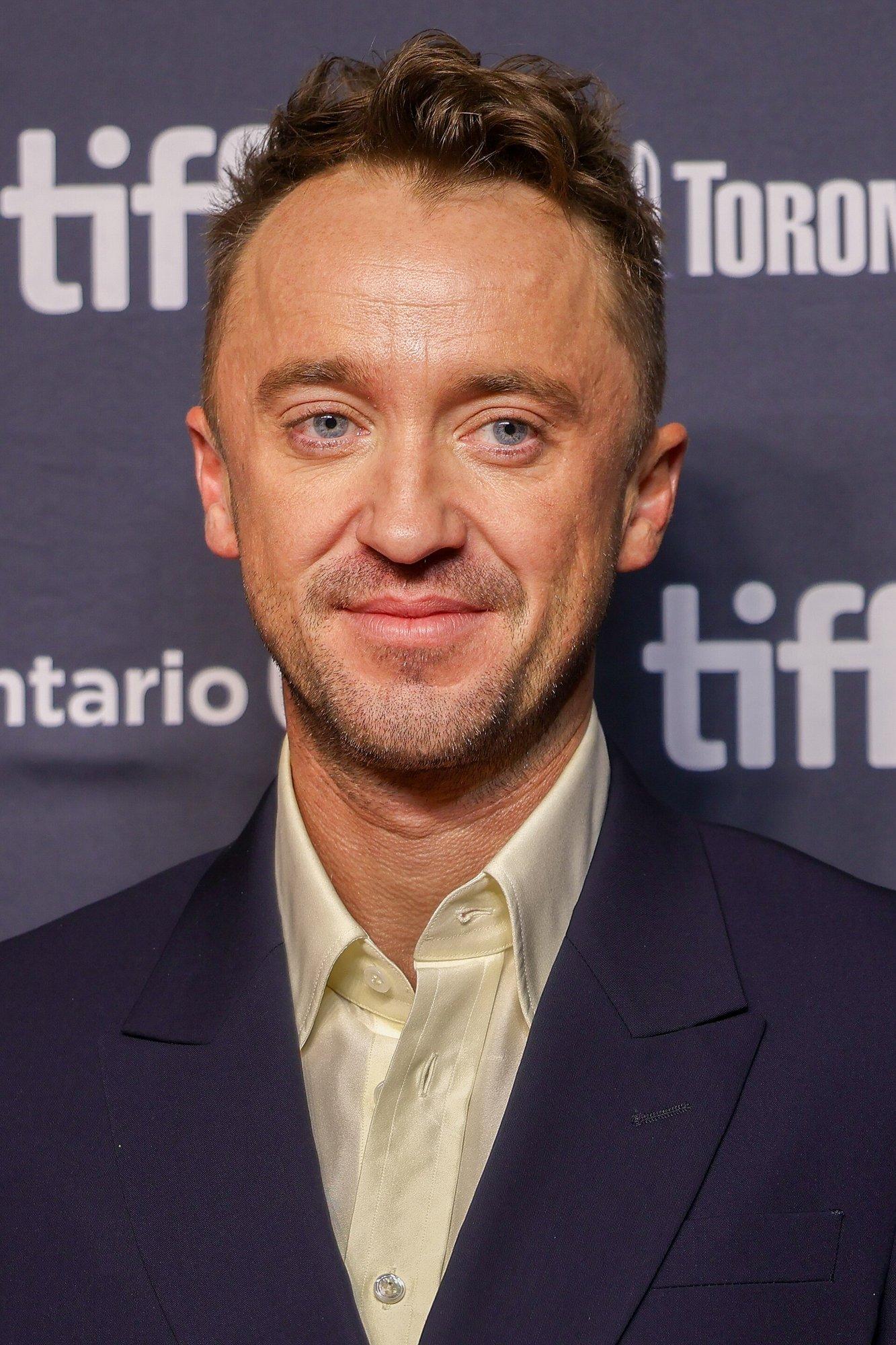
Tom Felton.

Actor · Musician · Memoirist

Tom Felton became world-famous as Draco Malfoy before he was old enough to fully separate himself from the role’s sneer. Since Harry Potter, he has kept moving through indie films, television, music releases, a bestselling memoir, West End theatre and a Broadway return, building a public image that is looser, warmer and more self-directed than the icy school bully that made him instantly recognizable.

OBJECTIVE PERSONALITY CLASSIFICATIONFF-Ti/Se-CP/S(B) #3What does this mean?
PERSONALITY SYSTEMObjective Personality
LEAD FUNCTIONTi · Introverted Thinking
SECOND SAVIOR FUNCTIONSe · Extroverted Sensing
MBTI EQUIVALENTISTP
01 / BEHIND THE CLASSIFICATION

The personality behind the fame.

How does a recorded OPS classification like FF-Ti/Se-CP/S(B) #3 break down? Walk through nine coins and watch the proposed type take shape. These are deductions from the archived code, not independent evidence of typing accuracy.

Scroll below to see Tom Felton take shape.

STARTING POINT512 possible OPS typesEach type combines core functions, an animal order, and sexual modalities.
THE FINISH LINEFF-Ti/Se-CP/S(B) #3One recorded classification, decoded from its components.
Tom Felton’s HUMAN NEEDS 01—03
01
DECIDER OR OBSERVER?

Decider over Observer

Deciders have more balanced Observer poles in the middle: Control (Oi) and Chaos (Oe). Organizing what's known and handling what's new tend to feel more manageable. People are the harder territory. Self (Di) and Tribe (De) sit at the extremes, so judgment, rejection, approval, and conflict can trigger the strongest reactions.

Felton’s earliest fame came with a nasty twist: the boy playing Draco Malfoy was dealing with real people reacting to him like he might actually be Draco Malfoy. He has said the role, the dyed hair and sudden fame led to name-calling at school, and after the first premiere a fan comment hurt enough that his grandfather had to reframe it as praise for making the character disliked. That is Decider friction. The strength is surviving projection without quitting. The blind spot is spending too much energy managing what other people think you are.

D
02
SELF OR TRIBE?

Di · Self over De · Tribe

Self (Di) is the stronger deciding pole. They check decisions against their own values or reasons first: what makes sense to me, what feels right to me? The strength is independent conviction; the recurring friction is the Tribe (De)—other people's standards, feedback, and expectations. As the portrait unfolds, notice how Self takes the lead.

Felton’s music side is a useful Self-over-Tribe example because he did not wait for a giant label or a franchise-approved reinvention to bless it. He released original songs, posted Feltbeats videos, and helped run Six String Productions to promote creative independence and ownership of material. That is a personal standard at work: do the thing because it is yours to stand behind. The strength is ownership. The cost is that private conviction does not automatically translate into a shared public lane, especially when millions already think they know who you are.

Di
03
GATHER OR ORGANIZE?

Oe · Gather over Oi · Organize

Gather (Oe) leads with new information, experiences, and possibilities. Its strength is curiosity and adaptability; the recurring friction is narrowing the options and settling into what is already known. Another layer of the personality portrait comes into focus.

Felton’s post-Potter career rarely sits still for long. He moved from a fantasy franchise to sci-fi in Rise of the Planet of the Apes, period work like Belle and Labyrinth, crime television, stage work, a memoir, and then back into the Potter orbit on Broadway. That range shows Gather over Organize: another role, medium or angle can always open a new door. The strength is adaptability and continued relevance after childhood fame. The blind spot is that a career can become a string of interesting options without always declaring which identity deserves to lead.

Oe
FIRST THREE COINSD + Di + Oe

These establish the preferred human needs in the OPS framework.

Tom Felton’s FUNCTIONS 04—05
04
FEELING OR THINKING?

Thinking · T over Feeling · F

Thinking (T) evaluates decisions through reasons, logic, and what works—not a lack of emotion. Its strength is analytical consistency; Feeling (F) provides balance through values, meaning, and the human consequences of a decision. Combined with Self (Di), this forms the recorded Savior Ti.

One of the sharpest public details about Felton’s craft is wonderfully small: he said his grandfather Nigel Anstey inspired Draco’s sneer. That is a Thinking kind of move. Instead of treating a character as a cloud of feelings, he found a precise behavioral device and built outward from it. The strength of Ti is internal accuracy: make the part make sense to yourself, then repeat it reliably. The blind spot is that a neat inner model does not settle everybody else’s reaction. Audiences still responded to the social effect, not the mechanics behind it.

T → Ti
05
SENSING OR INTUITION?

Sensing · S over Intuition · N

Sensing (S) focuses on concrete details, observable reality, and lived experience. Intuition (N) balances it by looking for broader patterns, concepts, and implications. Combined with Gather (Oe), this gives the recorded Savior Se.

Felton’s public image works through what people can actually see: the sneer that helped define Draco, the glowering villain turns that won MTV Movie Awards, the bungee jump and shark encounter on Adrenaline Junkie, and later the tangible stage presence of his West End and Broadway work. Sensing gives him something physical to play with. The strength is immediacy; he can make a character legible fast. The cost is typecasting by image. If the performance lands too cleanly in the moment, the world may keep handing you versions of the same surface.

S → Se
THE TWO SAVIOR FUNCTIONSTi / Se

Opposing functions: Fe and Ni.

Tom Felton’s ANIMAL STACK 06—07
06
CONSUME OR BLAST?

Consume over Blast

Consume gathers information for internal processing; Blast organizes and communicates information. The recorded order is Consume → Play → Sleep → Blast. This comparison follows their positions in that stack.

Consume shows up in how much Felton gathered before trying to pin down a definitive public statement about himself. Commercials, eight Potter films, side music, indie projects, conventions, charity appearances and eventually a memoir gave him a large store of material to draw from. The strength of Consume is obvious here: he has experiences, stories and references instead of an empty brand deck. Blast coming later creates the cost. More material can keep enriching the picture while still postponing the harder move of stating, plainly, what he wants this next chapter to mean.

C > B
07
PLAY OR SLEEP?

Play over Sleep

Play emphasizes external real-time engagement; Sleep emphasizes internal processing. The recorded stack places Play earlier.

Play comes earlier than Sleep in Felton’s stack, and his public life has repeatedly rewarded that. He ran a fan club, did autograph events so popular they had to pause sign-ups, visited a children’s hospital for a charitable Potter event, joined ensemble sketches like Red Nose Day, and kept working in cast-driven film and television settings. The strength of Play is approachable momentum; people get a real-time person, not only a polished artifact. The cost is that external motion can outrun slower consolidation. Being game in the moment is not the same thing as fully integrating what the moment meant.

P > S
Tom Felton’s ANIMAL ORIENTATION 08—09
08
INFO OR ENERGY DOMINANT?

Energy over Info

Energy dominant means Play and Sleep are both in the top three: there is access to expending energy through engagement and conserving it through internal processing. Blast last leaves the information side uneven—Consume may gather far more than gets communicated.

Felton’s stack lands on the Energy side, which fits a career that has kept alternating between outward involvement and personal processing rather than purely living in research or explanation. He can stay active across acting, music, memoir promotion and live theatre without needing every move to become a lecture. But Blast is last, and that is the bottleneck. The missing balance is not more experience; he already has plenty. It is packaging that experience into a firmer, more organized message, the kind that tells audiences and collaborators exactly what lane he is building next.

Energy
09
INTROVERSION OR EXTROVERSION?

Introversion over Extroversion

The last animal, Blast, determines this OPS coin: Play or Blast last means Introversion; Consume or Sleep last means Extroversion. This describes animal orientation, not sociability or shyness.

Consume → Play → Sleep → Blast is the recorded order, and the last-animal result is OPS Introversion. That does not mean antisocial or timid; the fan events, conventions and stage work make that obvious. It means broadcasting settled conclusions comes later than taking things in, engaging live, and privately processing them. Felton can be charmingly available without living in constant explanation mode. The strength is a lighter touch. The blind spot is leaving interpretive gaps big enough for the franchise, the audience or nostalgia to define him for him.

I
Sexual Modalities

The four sexual modalities.

OPS uses masculine/feminine sensory and extroverted-deciding distinctions as framework-specific terms, not gender categories. The four modalities are already included in the original 512 types. The recorded modality is FF · Tester.

MM KinestheticMasculine Sensory · Masculine De
MF AudioMasculine Sensory · Feminine De
FF RECORDED MODALITYTesterFeminine Sensory · Feminine De
FM VisualFeminine Sensory · Masculine De
ADDITIONAL LAYER · SOCIAL TYPE

The four social types.

Social types are an additional layer on top of the original Objective Personality classification, introduced later in OPS research. They describe two proposed social preference coins: Flex vs. Friends and Generalize vs. Specialize. The combination and priority of these preferences produce four social types. Tom Felton's recorded social type is #3.

SOCIAL #1 #1Flex · Generalize
SOCIAL #2 #2Generalize · Friends
SOCIAL #3 RECORDED SOCIAL TYPE#3Specialize · Flex
SOCIAL #4 #4Friends · Specialize
COMPLETE RECORDED OPS TYPE · MODALITY INCLUDED + SOCIAL TYPEFF-Ti/Se-CP/S(B) #3

Ti leads, Se supports, and the animal stack is Consume → Play → Sleep → Blast.

THE FINISHED PORTRAIT · ALL NINE COINS REVEALED

Tom Felton's complete function and animal stack

ConsumePlaySleepBlastmTifSemNifFe
FF-Ti/Se-CP/S(B) #3DOUBLE ACTIVATED · CONSUMEExplore the Interactive Coin Builder →
THE TOM FELTON LENS

The grin behind the sneer

Felton’s public image was forged in a brutal little miracle of casting: platinum hair, a curled lip, and a role so vivid that schoolmates and fans sometimes blurred actor and character. The warmer figure visible in his memoir, music releases, charity work and stage performances has had to emerge through that glare.

His exact savior pairing, Ti and Se, gives him a practical actor’s edge. Ti can reduce a role to a clean inner mechanism, while Se supplies the visible detail that makes it memorable; his story about crafting Draco’s sneer says plenty. The limit is obvious too: a precise choice can lock you inside the image it works too well to create.

Felton is a Decider and Double Observer, so the deeper recurring pressure centers on people, judgment and significance more than on chaos in the environment. The Double Observer side helps him move across genres and career lanes, but the human-needs imbalance can underplay tribe calibration. The neglected function opposite his lead savior is Fe.

Consume → Play → Sleep → Blast is the full animal order, and Blast last is the long-term imbalance. He can gather, engage and privately process plenty before landing on a firm outward message. The balancing move is not forced loudness; it is choosing one concrete artistic thesis at a time and stating it clearly enough that the public sees the man, not just the sneer.

Want to understand the Savior and Demon states behind these nine coins? Explore the complete explanation, visual examples, and typing principles on our Methodology page →

02 / KEEP EXPLORING

Different faces. Familiar patterns.

Explore other celebrities with related recorded OPS classifications. Related functions are not necessarily exact type matches.

Discover Type Twins
YOUR TURN

Curious about your own type?

Discover how your own personality might be classified through Objective Personality.

Get objectively typed
Tom Felton's Personality Type & OPS Profile | The Personality Atlas