The Personality Atlas
THE CELEBRITY PERSONALITY ARCHIVE / PERFORMING ARTS

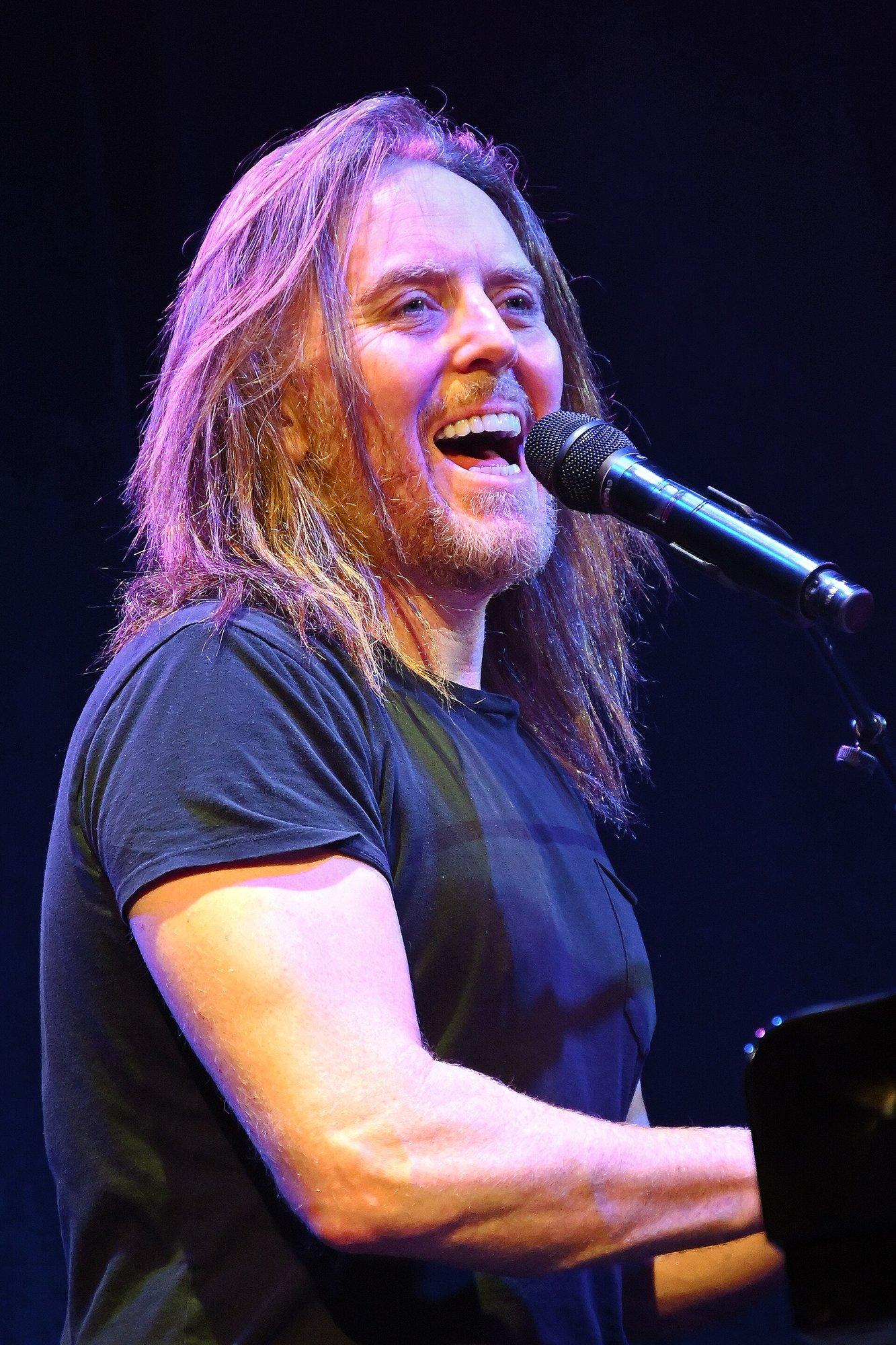
Tim Minchin.

Musical Comedian · Composer · Actor

Tim Minchin made a piano, wild hair and heavy eyeliner into a delivery system for satire, then turned that same mix of theatre craft, songwriting and argument into Darkside, Matilda, Groundhog Day and Upright. His career keeps rewarding the man who can make a sharp idea sing—provided he decides when the idea is finished enough to state plainly.

OBJECTIVE PERSONALITY CLASSIFICATIONMF-Ne/Fi-CS/P(B)What does this mean?
PERSONALITY SYSTEMObjective Personality
LEAD FUNCTIONNe · Extroverted Intuition
SECOND SAVIOR FUNCTIONFi · Introverted Feeling
MBTI EQUIVALENTENFP
01 / BEHIND THE CLASSIFICATION

The personality behind the fame.

How does a recorded OPS classification like MF-Ne/Fi-CS/P(B) break down? Walk through nine coins and watch the proposed type take shape. These are deductions from the archived code, not independent evidence of typing accuracy.

Scroll below to see Tim Minchin take shape.

STARTING POINT512 possible OPS typesEach type combines core functions, an animal order, and sexual modalities.
THE FINISH LINEMF-Ne/Fi-CS/P(B)One recorded classification, decoded from its components.
Tim Minchin’s HUMAN NEEDS 01—03
01
DECIDER OR OBSERVER?

Observer over Decider

Observers have more balanced Decider poles in the middle: Self (Di) and Tribe (De). Their own perspective and other people's perspectives tend to be easier to navigate. Things are the harder territory. Control (Oi) and Chaos (Oe) sit at the extremes, so disrupted plans, uncertainty, and a changing world can trigger the strongest reactions.

Minchin’s early career was less a people drama than a logistics problem: record labels liked him but did not know how to market satirical songs beside serious pop, and he spent a year in Melbourne unable to get an agent. That tension fits an Observer lens. The pressure lands in the situation itself—where does this strange act belong, and what do you do when the lane does not exist yet? His strength is improvising a route anyway. The cost is waiting for the circumstances to become clearer before committing to one.
O
02
SELF OR TRIBE?

Di · Self over De · Tribe

Self (Di) is the stronger deciding pole. They check decisions against their own values or reasons first: what makes sense to me, what feels right to me? The strength is independent conviction; the recurring friction is the Tribe (De)—other people's standards, feedback, and expectations. As the portrait unfolds, notice how Self takes the lead.

Instead of smoothing himself into something more marketable, Minchin leaned harder into his own standard: barefoot at the piano for comfort, heavy eye makeup so audiences could read his face, and a stage persona he described as mocking the fantasy of being iconic. That is Self over Tribe in a very public form. The advantage is authorship; the act belongs to him rather than to a committee’s idea of what a comic musician should be. The growth cost is that a privately satisfying choice can still confuse collaborators, bookers or audiences.

Di
03
GATHER OR ORGANIZE?

Oe · Gather over Oi · Organize

Gather (Oe) leads with new information, experiences, and possibilities. Its strength is curiosity and adaptability; the recurring friction is narrowing the options and settling into what is already known. Another layer of the personality portrait comes into focus.

His career keeps swerving toward the next live possibility: documentary scores, theatre roles, a failed band CD, then Darkside, then arena shows with the Heritage Orchestra, then Matilda, Groundhog Day, Upright and later informal piano evenings with fluid set lists. Gather over Organize shows up in that willingness to keep opening doors instead of defending one settled formula. The strength is range; he can reinvent the package without losing the brain inside it. The blind spot is that endless options do not choose themselves. Someone still has to decide which promising version deserves sustained focus.

Oe
FIRST THREE COINSO + Di + Oe

These establish the preferred human needs in the OPS framework.

Tim Minchin’s FUNCTIONS 04—05
04
FEELING OR THINKING?

Feeling · F over Thinking · T

Feeling (F) evaluates decisions through values, meaning, and what matters—not simply through emotion. Its strength is a clear sense of significance; Thinking (T) provides balance through impersonal reasons, consistency, and evidence. Combined with Self (Di), this forms the recorded Savior Fi.

Minchin’s most recognizable arguments are value arguments. His work on religion, his support for humanism, and songs like "Peace Anthem for Palestine" or "Prejudice" are not just clever constructions; they carry a felt sense of what he finds honest, hypocritical or morally evasive. Fi gives that material its bite. The strength is conviction that does not sound outsourced. He can make satire feel personal rather than merely fashionable. The limit is that a private standard, stated sharply, can land like a verdict. Sincerity helps the work; it does not automatically make dissent feel heard.

F → Fi
05
SENSING OR INTUITION?

Intuition · N over Sensing · S

Intuition (N) focuses on concepts, patterns, and what information might mean. Sensing (S) balances it through observable facts, physical detail, and direct experience. Combined with Gather (Oe), this gives the recorded Savior Ne.

"Storm" turning alternative medicine into a definition joke, "Prejudice" stretching a taboo word into a broader social argument, and Matilda transforming a beloved children’s novel into stage architecture all show Ne at work. Minchin keeps spotting the invisible angle inside familiar material, then widening it until the audience sees the premise from a stranger, sharper height. That is a real strength: concepts multiply quickly around him. The cost is practical restraint. When your mind generates ten connections, the hardest discipline is choosing the one that can actually carry the song, scene or speech to its end.

N → Ne
THE TWO SAVIOR FUNCTIONSNe / Fi

Opposing functions: Si and Te.

Tim Minchin’s ANIMAL STACK 06—07
06
CONSUME OR BLAST?

Consume over Blast

Consume gathers information for internal processing; Blast organizes and communicates information. The recorded order is Consume → Sleep → Play → Blast. This comparison follows their positions in that stack.

Before Darkside broke out, Minchin had already spent years absorbing theatre, English, contemporary music, documentary scoring and a pile of songs that did not yet have a clean commercial box. That tilt toward Consume over Blast matters. He first fills the tank—references, arguments, melodic ideas, stylistic experiments—then eventually releases a sharpened version. The advantage is substance; the jokes arrive with reading, craft and conceptual weight behind them. The blind spot is classic Consume-versus-Blast friction: one more draft, one more nuance, one more intake phase before the message gets stated simply enough for other people to run with it.

C > B
07
PLAY OR SLEEP?

Sleep over Play

Play emphasizes external real-time engagement; Sleep emphasizes internal processing. The recorded stack places Sleep earlier.

Look at how long Minchin’s projects tend to incubate. Matilda and Groundhog Day required deep private distillation before audiences ever heard a finished song, and even his "unfunny" solo evenings are built around material that has clearly been lived with. Sleep comes earlier than Play here. The strength is an internal center: he does not need every idea socialized immediately to know what he thinks. The cost is timing. By the time a privately refined version reaches other people, it can arrive so formed that spontaneous collaboration, interruption or rougher live feedback has less room to reshape it.

S > P
Tim Minchin’s ANIMAL ORIENTATION 08—09
08
INFO OR ENERGY DOMINANT?

Energy over Info

Energy dominant means Play and Sleep are both in the top three: there is access to expending energy through engagement and conserving it through internal processing. Blast last leaves the information side uneven—Consume may gather far more than gets communicated.

His public life makes the Energy coin easy to visualize without confusing it with extroverted charm. Minchin can alternate between inward consolidation—writing lyrics, building musicals, refining arguments—and outward activity—international tours, orchestra shows, ensemble television and live bands. With Sleep and Play both high, there is real movement between private recharge and public engagement. The missing balance sits in Blast last. He can gather and refine for a long time before packaging the point into a clean, broadly usable message. The growth edge is clearer transmission so collaborators and audiences are not left connecting every dot themselves.

Energy
09
INTROVERSION OR EXTROVERSION?

Introversion over Extroversion

The last animal, Blast, determines this OPS coin: Play or Blast last means Introversion; Consume or Sleep last means Extroversion. This describes animal orientation, not sociability or shyness.

Minchin’s stage life could fool people into reading this as social extroversion, but OPS Introversion is a different question. In his recorded order, Blast comes fourth after Consume, Sleep and Play. He can absolutely command a room; the issue is whether settled explanation comes as naturally as exploring, refining and performing. That helps explain why the persona can feel bigger than the summary. The strength is a rich inner build-up before the delivery. The blind spot is leaving the conclusion embedded in the performance when a clearer statement—about the project, the plan or the boundary—would save everyone time without dulling the artistry.

I
Sexual Modalities

The four sexual modalities.

OPS uses masculine/feminine sensory and extroverted-deciding distinctions as framework-specific terms, not gender categories. The four modalities are already included in the original 512 types. The recorded modality is MF · Audio.

MM KinestheticMasculine Sensory · Masculine De
MF RECORDED MODALITYAudioMasculine Sensory · Feminine De
FF TesterFeminine Sensory · Feminine De
FM VisualFeminine Sensory · Masculine De
COMPLETE RECORDED OPS TYPE · MODALITY INCLUDEDMF-Ne/Fi-CS/P(B)

Ne leads, Fi supports, and the animal stack is Consume → Sleep → Play → Blast.

THE FINISHED PORTRAIT · ALL NINE COINS REVEALED

Tim Minchin's complete function and animal stack

ConsumeSleepPlayBlastfNemFifTemSi
MF-Ne/Fi-CS/P(B)DOUBLE ACTIVATED · CONSUMEExplore the Interactive Coin Builder →
THE TIM MINCHIN LENS

The showman with the unfinished thesis

Wild hair, bare feet, eyeliner and a grand piano make Tim Minchin easy to file as a flamboyant provocateur. The fuller public story is stranger and more disciplined: theatre training, early commercial dead ends, then a career that stretched from Darkside to Matilda, Groundhog Day and Upright by making unlikely formats work.

Ne/Fi gives him a potent creative engine. Ne keeps finding conceptual openings inside religion, pop culture, children’s literature and everyday absurdity; Fi decides which ones are worth defending in public. That pairing can produce work with both wit and spine. Its limit is that conviction plus possibility can outrun the patience required to make the point simple.

As an Observer and Double Decider, Minchin is still fundamentally navigating uncertainty in circumstances more than living at the mercy of people-problems. The imbalance shows up around chaos, options and what to do with them next. Neglected Si is the quieter demand for steadiness, repeatable structure and respect for what already works before another inventive detour.

Consume → Sleep → Play → Blast describes a performer who can study, distill and energize a room before he naturally lands on the cleanest shared conclusion. Blast last can leave the thesis hiding inside the flourish. A strong balance move is to state the frame earlier—one plain sentence about the song, show or argument—then let the brilliance get weird around it.

Want to understand the Savior and Demon states behind these nine coins? Explore the complete explanation, visual examples, and typing principles on our Methodology page →

02 / KEEP EXPLORING

Different faces. Familiar patterns.

Explore other celebrities with related recorded OPS classifications. Related functions are not necessarily exact type matches.

Discover Type Twins
YOUR TURN

Curious about your own type?

Discover how your own personality might be classified through Objective Personality.

Get objectively typed
Tim Minchin's Personality Type & OPS Profile | The Personality Atlas