The Personality Atlas
THE CELEBRITY PERSONALITY ARCHIVE / FILM & ANIMATION

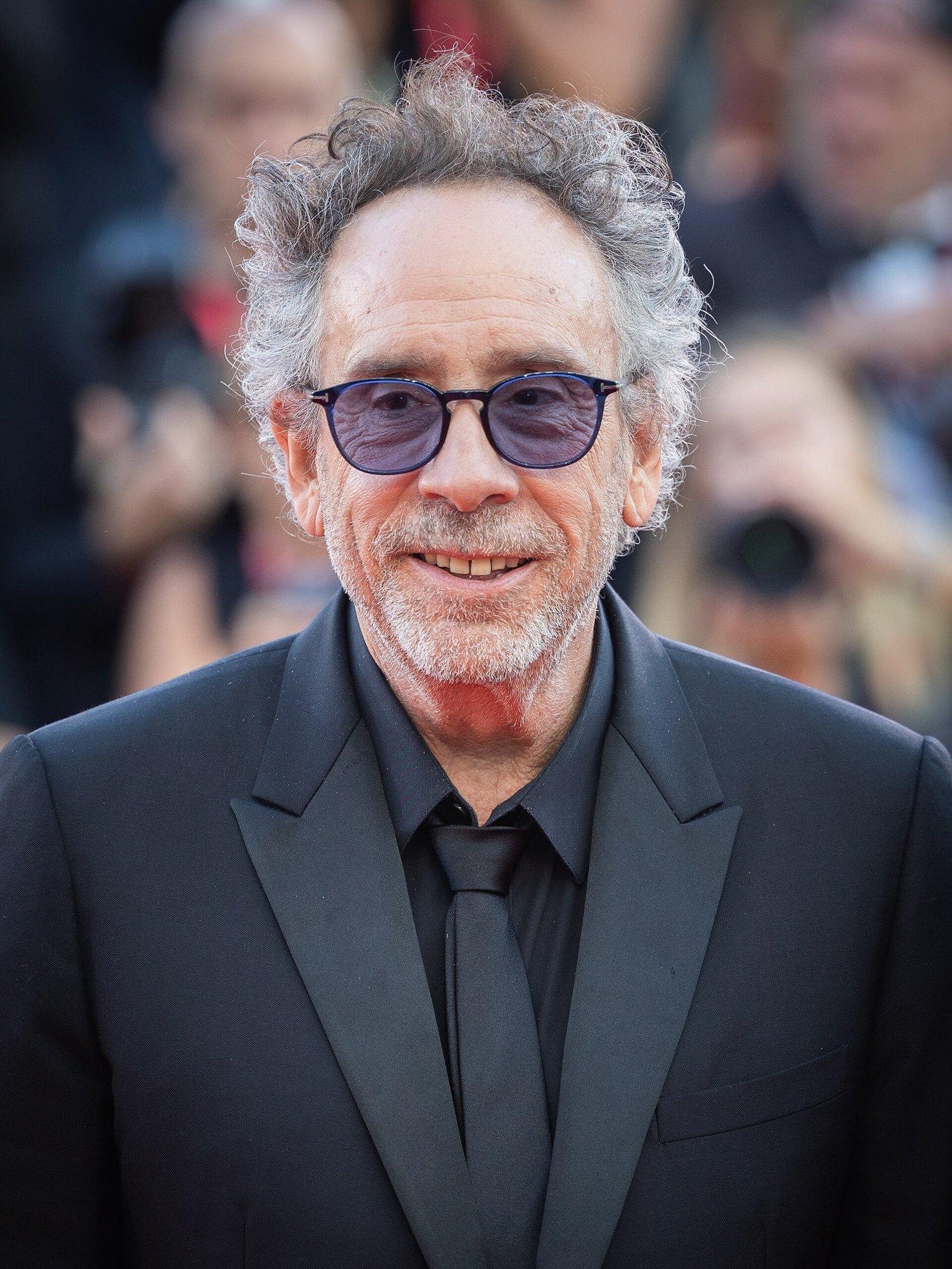
Tim Burton.

Filmmaker · Animator · Author

Tim Burton turned a Burbank childhood of monster movies, backyard 8 mm shorts and off-kilter drawings into one of Hollywood’s most imitated visual signatures. From Pee-wee’s Big Adventure and Beetlejuice to Batman, Edward Scissorhands and Wednesday, he kept dragging gothic whimsy into the center of popular culture until the center started borrowing his wardrobe.

OBJECTIVE PERSONALITY CLASSIFICATIONMF-Ne/Fe-PC/B(S) #4What does this mean?
PERSONALITY SYSTEMObjective Personality
LEAD FUNCTIONNe · Extroverted Intuition
SECOND SAVIOR FUNCTIONFe · Extroverted Feeling
MBTI EQUIVALENTENTP
01 / BEHIND THE CLASSIFICATION

The personality behind the fame.

How does a recorded OPS classification like MF-Ne/Fe-PC/B(S) #4 break down? Walk through nine coins and watch the proposed type take shape. These are deductions from the archived code, not independent evidence of typing accuracy.

Scroll below to see Tim Burton take shape.

STARTING POINT512 possible OPS typesEach type combines core functions, an animal order, and sexual modalities.
THE FINISH LINEMF-Ne/Fe-PC/B(S) #4One recorded classification, decoded from its components.
Tim Burton’s HUMAN NEEDS 01—03
01
DECIDER OR OBSERVER?

Observer over Decider

Observers have more balanced Decider poles in the middle: Self (Di) and Tribe (De). Their own perspective and other people's perspectives tend to be easier to navigate. Things are the harder territory. Control (Oi) and Chaos (Oe) sit at the extremes, so disrupted plans, uncertainty, and a changing world can trigger the strongest reactions.

Burton’s public story keeps running into the same kind of problem: not mainly who likes him, but whether the world will make room for the thing he is trying to build. As a teenager he made crude stop-motion films in his backyard; later Disney fired him after Frankenweenie, calling the project too dark for children. Even Batman came with production headaches, casting backlash and arguments about tone. That Observer strength is obvious: he keeps shaping stubborn circumstances into style. The cost is treating every new obstacle as one more world to redesign instead of one to simplify.
O
02
SELF OR TRIBE?

De · Tribe over Di · Self

Tribe (De) is the stronger deciding pole. They check decisions against people, shared standards, and what works for the group: what do we need, what will others think? The strength is coordination and responsiveness; the recurring friction is the Self (Di)—knowing and defending their own position. As the portrait unfolds, notice how Tribe takes the lead.

Burton’s career is crowded with recurring allies because his work depends on getting other people emotionally on board. Danny Elfman scored nearly all of his films. Paul Reubens chose him for Pee-wee’s Big Adventure after seeing Frankenweenie. Burton fought for Michael Keaton as Batman despite public outrage over the casting. That Tribe-first orientation is a strength when an unconventional vision needs buy-in from actors, composers, studios and audiences all at once. The growth cost is that outside expectations multiply fast. Winning one battle still leaves him carrying the atmosphere, anxieties and reactions of an entire production.

De
03
GATHER OR ORGANIZE?

Oe · Gather over Oi · Organize

Gather (Oe) leads with new information, experiences, and possibilities. Its strength is curiosity and adaptability; the recurring friction is narrowing the options and settling into what is already known. Another layer of the personality portrait comes into focus.

Burton’s filmography keeps swerving into fresh territory without losing its fingerprint: Beetlejuice, Batman, Ed Wood, Sleepy Hollow, Big Fish, Corpse Bride, Wednesday. That Gather-first pattern fits a director who keeps spotting another genre, another visual angle, another strange doorway worth opening. It is a major strength. He does not need to stay in one lane to stay recognizable. The blind spot is selectivity. A career can become an ever-expanding cabinet of beautiful possibilities, where the next intriguing variation arrives before the last one has been fully organized, pared down or made durable.

Oe
FIRST THREE COINSO + De + Oe

These establish the preferred human needs in the OPS framework.

Tim Burton’s FUNCTIONS 04—05
04
FEELING OR THINKING?

Feeling · F over Thinking · T

Feeling (F) evaluates decisions through values, meaning, and what matters—not simply through emotion. Its strength is a clear sense of significance; Thinking (T) provides balance through impersonal reasons, consistency, and evidence. Combined with Tribe (De), this forms the recorded Savior Fe.

Edward Scissorhands is the clearest public example of Burton’s Feeling lens. He said the film represented his teenage difficulty communicating with other people, and the result was not a dry statement but an instantly shared emotional picture: the gentle outsider whose difference is visible in every gesture. That is Fe at its best, turning private strangeness into something a wide audience can feel together. The strength is emotional legibility. The blind spot is that resonance can seem so right that harsher questions about structure, clarity or practical limits arrive later than they should.

F → Fe
05
SENSING OR INTUITION?

Intuition · N over Sensing · S

Intuition (N) focuses on concepts, patterns, and what information might mean. Sensing (S) balances it through observable facts, physical detail, and direct experience. Combined with Gather (Oe), this gives the recorded Savior Ne.

A high-school drawing became Edward Scissorhands. A poem became The Nightmare Before Christmas. Childhood obsessions with Dr. Seuss, Roald Dahl, Universal horror and Japanese monster movies kept resurfacing as new cinematic worlds. That is Intuition in a very Burton form: not just borrowing influences, but recombining them until they feel like a private mythology. The strength is seeing unusual connections before anybody else does. The cost is that concrete reality eventually demands its invoice. Budgets, scripts, pacing and franchise expectations can punish a leap that felt artistically obvious at the moment of inspiration.

N → Ne
THE TWO SAVIOR FUNCTIONSNe / Fe

Opposing functions: Si and Ti. This is a jumper classification.

Tim Burton’s ANIMAL STACK 06—07
06
PLAY OR SLEEP?

Play over Sleep

Play emphasizes external real-time engagement; Sleep emphasizes internal processing. The recorded stack places Play earlier.

Play comes earlier than Sleep in Burton’s stack, and his career shows it. His ideas do not stay locked in sketchbooks; they get tested through collaborators, from Paul Reubens and Danny Elfman to Michael Keaton and the teams behind Wednesday. The strength of Play is momentum. He builds by bouncing material through real people and live production energy, not by waiting forever for perfect private certainty. Sleep later is the cost. The quieter work of stepping back, consolidating and cutting can become the expensive step, especially when the set, the cast and the machine are already moving.

P > S
07
CONSUME OR BLAST?

Consume over Blast

Consume gathers information for internal processing; Blast organizes and communicates information. The recorded order is Play → Consume → Blast → Sleep. This comparison follows their positions in that stack.

After that, Consume lands earlier than Blast. Burton’s work is fed by accumulated input: monster movies, silent gothic horror, comic books, Hammer Films, Roald Dahl, Vincent Price, Ray Harryhausen. Even Ed Wood works as an affectionate act of cultural absorption, turning childhood fascinations into a full film. That earlier Consume gives his worlds texture and reference depth. Blast later is the tradeoff. He often communicates through atmosphere, design and sympathy before a plain thesis, which can make the vision memorable while leaving critics or studios asking for a simpler, more direct statement of the point.

C > B
Tim Burton’s ANIMAL ORIENTATION 08—09
08
INFO OR ENERGY DOMINANT?

Info over Energy

Info dominant means Consume and Blast are both in the top three: gathering and communicating information are more balanced. Sleep last leaves the energy side uneven—Play can keep engagement going without enough private recovery.

Burton is Info-dominant, which fits how often his career turns gathered material into something other people can immediately receive. He absorbs visual influences, stories and genres, then sends them back out as highly communicable worlds, whether in Batman, Big Fish or Wednesday. The strength is not just imagination but transmissibility: the vision reaches the audience. The missing balance is Sleep. When inner consolidation sits outside the top three, the danger is not a shortage of ideas. It is giving too little protected time to digest what should stay, what should go, and what the work is actually saying.

Info
09
INTROVERSION OR EXTROVERSION?

Extroversion over Introversion

The last animal, Sleep, determines this OPS coin: Play or Blast last means Introversion; Consume or Sleep last means Extroversion. This describes animal orientation, not sociability or shyness.

Burton’s OPS Extroversion should not be confused with looking socially ordinary. The public image is almost the opposite. This coin points instead to a stack where Sleep is last, so outward engagement, intake and delivery all outrun private processing. His career makes that visible: even his most autobiographical material became collaborative cinema, from Edward Scissorhands to Wednesday. The strength is making inner weirdness public and shareable. The growth cost is deliberate retreat. He benefits from stepping away long enough to sort what he wants before the next production, franchise or nostalgia wave chooses for him.

E
Sexual Modalities

The four sexual modalities.

OPS uses masculine/feminine sensory and extroverted-deciding distinctions as framework-specific terms, not gender categories. The four modalities are already included in the original 512 types. The recorded modality is MF · Audio.

MM KinestheticMasculine Sensory · Masculine De
MF RECORDED MODALITYAudioMasculine Sensory · Feminine De
FF TesterFeminine Sensory · Feminine De
FM VisualFeminine Sensory · Masculine De
ADDITIONAL LAYER · SOCIAL TYPE

The four social types.

Social types are an additional layer on top of the original Objective Personality classification, introduced later in OPS research. They describe two proposed social preference coins: Flex vs. Friends and Generalize vs. Specialize. The combination and priority of these preferences produce four social types. Tim Burton's recorded social type is #4.

SOCIAL #1 #1Flex · Generalize
SOCIAL #2 #2Generalize · Friends
SOCIAL #3 #3Specialize · Flex
SOCIAL #4 RECORDED SOCIAL TYPE#4Friends · Specialize
COMPLETE RECORDED OPS TYPE · MODALITY INCLUDED + SOCIAL TYPEMF-Ne/Fe-PC/B(S) #4

Ne leads, Fe supports, and the animal stack is Play → Consume → Blast → Sleep.

THE FINISHED PORTRAIT · ALL NINE COINS REVEALED

Tim Burton's complete function and animal stack

PlayConsumeBlastSleepfNemTifFemSi
MF-Ne/Fe-PC/B(S) #4DOUBLE ACTIVATED · PLAYExplore the Interactive Coin Builder →
THE TIM BURTON LENS

The branded eccentric isn’t the whole man.

Beetlejuice, Batman and Wednesday can make Burton look like a director who simply manufactures eccentricity on demand. The stranger truth is more handmade: a Burbank kid shooting backyard films on 8 mm, drawing monsters, and storing up the silent-horror and monster-movie imagery that later looked like a fully formed brand.

His savior pair is Ne and Fe. That combination helps him pull together unlikely ingredients—suburbia, fairy tales, Gothic horror, deadpan comedy—and package them in images an audience can emotionally grasp fast. The strength is instant mythmaking. The limit is that mood and sympathy can outrun blunt explanation, leaving a film vividly felt before it is fully pinned down.

As an Observer and Double Decider, Burton is built to handle people friction better than unstable conditions, so the recurring pressure shows up in tone, genre, scale and fit more than endless identity combat. The human-needs imbalance is forgetting ordinary steadiness while chasing another possibility. Neglected Si, opposite his lead Ne, is the quieter discipline of repetition, proven methods and what reliably holds.

Play → Consume → Blast → Sleep helps explain why his private imagery keeps becoming public culture: he engages, gathers and shares before fully retreating. With Sleep last, the imbalance is under-prioritized inner consolidation, not a lack of imagination. A useful correction would be protected review time between projects—cut one extra idea, keep the strongest image, and let the vision settle before the next machine starts moving.

Want to understand the Savior and Demon states behind these nine coins? Explore the complete explanation, visual examples, and typing principles on our Methodology page →

02 / KEEP EXPLORING

Different faces. Familiar patterns.

Explore other celebrities with related recorded OPS classifications. Related functions are not necessarily exact type matches.

Discover Type Twins
YOUR TURN

Curious about your own type?

Discover how your own personality might be classified through Objective Personality.

Get objectively typed
Tim Burton's Personality Type & OPS Profile | The Personality Atlas