The Personality Atlas
THE CELEBRITY PERSONALITY ARCHIVE / AUTHOR & LECTURER

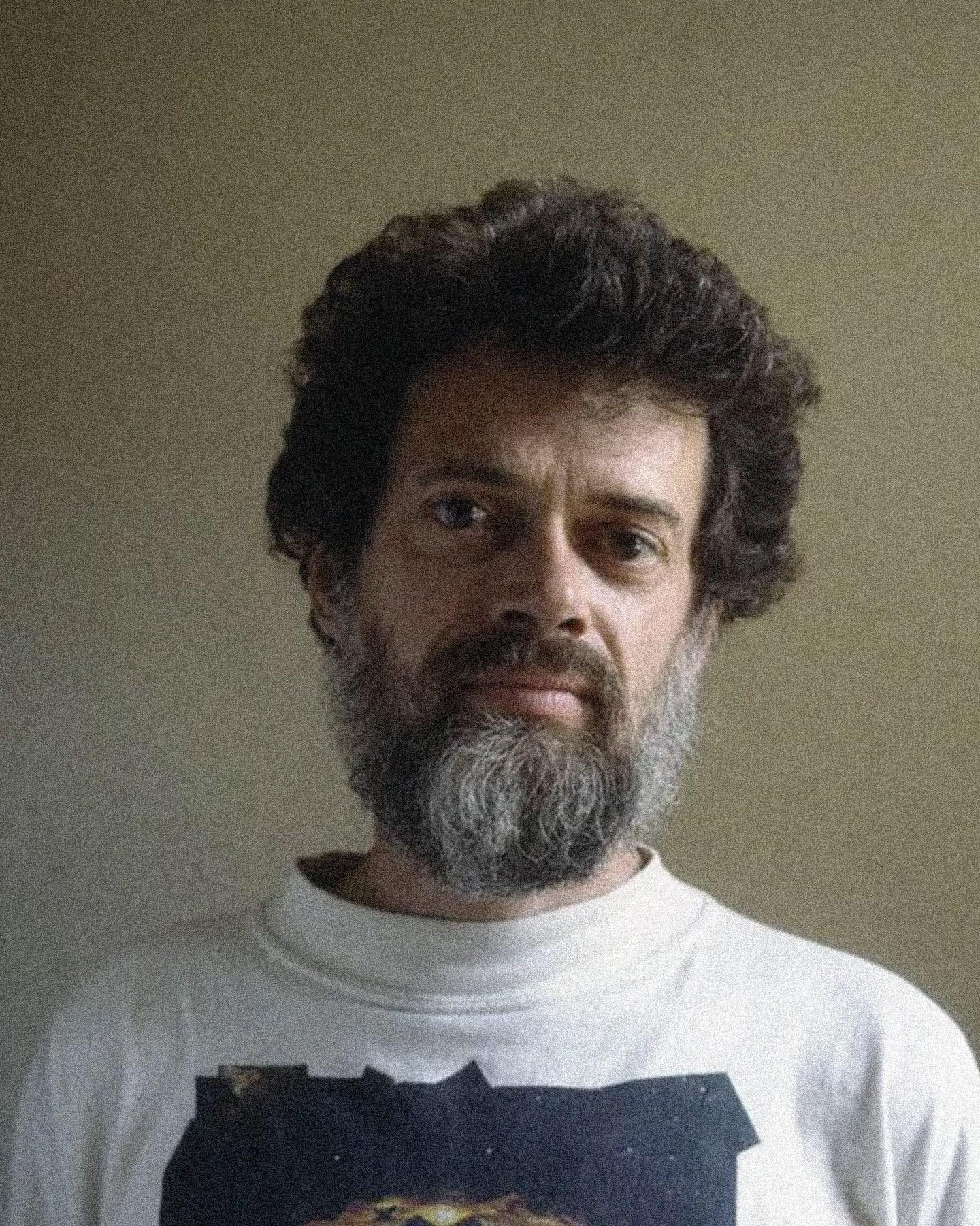
Terence McKenna.

Author · Lecturer · Ethnobotanist

Terence McKenna turned ethnobotany, psychedelic advocacy and speculative philosophy into a traveling one-man weather system. From Amazon mushroom expeditions and a bestselling home-cultivation guide to rave-sampled lectures about language, novelty and the end of time, he made curiosity sound both scholarly and combustible.

OBJECTIVE PERSONALITY CLASSIFICATIONFF-Ne/Ti-CS/P(B)What does this mean?
PERSONALITY SYSTEMObjective Personality
LEAD FUNCTIONNe · Extroverted Intuition
SECOND SAVIOR FUNCTIONTi · Introverted Thinking
MBTI EQUIVALENTENTP
01 / BEHIND THE CLASSIFICATION

The personality behind the fame.

How does a recorded OPS classification like FF-Ne/Ti-CS/P(B) break down? Walk through nine coins and watch the proposed type take shape. These are deductions from the archived code, not independent evidence of typing accuracy.

Scroll below to see Terence McKenna take shape.

STARTING POINT512 possible OPS typesEach type combines core functions, an animal order, and sexual modalities.
THE FINISH LINEFF-Ne/Ti-CS/P(B)One recorded classification, decoded from its components.
Terence McKenna’s HUMAN NEEDS 01—03
01
DECIDER OR OBSERVER?

Observer over Decider

Observers have more balanced Decider poles in the middle: Self (Di) and Tribe (De). Their own perspective and other people's perspectives tend to be easier to navigate. Things are the harder territory. Control (Oi) and Chaos (Oe) sit at the extremes, so disrupted plans, uncertainty, and a changing world can trigger the strongest reactions.

McKenna’s public life kept returning to unruly conditions: traveling through Nepal and southeast Asia, hunting for visionary plants in the Amazon, then watching his 2012-linked novelty theory ignite a cultural phenomenon he could not control. The recurring friction is not mainly “Do people like me?” but “What exactly is this world doing?” Observer-first can be brilliant at following strange realities further than other people will. The cost is chasing the next explanatory key as if one more pattern might finally settle the uncertainty. Growth asks for living with mystery without endlessly escalating it.

O
02
SELF OR TRIBE?

Di · Self over De · Tribe

Self (Di) is the stronger deciding pole. They check decisions against their own values or reasons first: what makes sense to me, what feels right to me? The strength is independent conviction; the recurring friction is the Tribe (De)—other people's standards, feedback, and expectations. As the portrait unfolds, notice how Self takes the lead.

McKenna repeatedly chose his own standard over consensus: opposing organized religion, favoring direct experience, and warning that powerful psychedelics required caution, reflection and research rather than dogma. Even his preference for naturally occurring psychedelics over synthetic drugs shows a line he wanted to own personally, not just borrow from a group. Self over Tribe gives his voice unusual authorship; the ideas feel unmistakably his. The blind spot is assuming a conviction becomes stronger simply because it is sincerely held and internally persuasive. Growth costs pride: outside challenge has to matter before total backlash forces it to.

Di
03
GATHER OR ORGANIZE?

Oe · Gather over Oi · Organize

Gather (Oe) leads with new information, experiences, and possibilities. Its strength is curiosity and adaptability; the recurring friction is narrowing the options and settling into what is already known. Another layer of the personality portrait comes into focus.

His lectures roamed across shamanism, language, artificial intelligence, environmentalism, alchemy, evolution and the internet as “the global mind.” Add the Asia and South America travels, butterfly collecting, and the Amazon expeditions, and the pattern is obvious: gather first, settle later. That openness let McKenna spot cultural crosscurrents long before they were fashionable and pull material from wildly different domains. The price is selectivity. A mind that sees five intriguing doors at once can postpone the harsher task of closing four of them. Exploration multiplies possibilities; it does not choose the one worth staking a reputation on.

Oe
FIRST THREE COINSO + Di + Oe

These establish the preferred human needs in the OPS framework.

Terence McKenna’s FUNCTIONS 04—05
04
FEELING OR THINKING?

Thinking · T over Feeling · F

Thinking (T) evaluates decisions through reasons, logic, and what works—not a lack of emotion. Its strength is analytical consistency; Feeling (F) provides balance through values, meaning, and the human consequences of a decision. Combined with Self (Di), this forms the recorded Savior Ti.

Ti shows up in the way McKenna kept building inner models that tried to make the strange hang together. Novelty theory, his I Ching-based map of time, was not a slogan; it was an attempt to create a complete explanatory framework. The same pattern appears in his trialogues with Ralph Abraham and Rupert Sheldrake, where he kept refining the logic of his own ideas. That internal precision is the strength: he wanted a mechanism, not just a mood. The limit is public and empirical. A theory can feel exquisitely arranged from the inside and still leave outsiders unconvinced.

T → Ti
05
SENSING OR INTUITION?

Intuition · N over Sensing · S

Intuition (N) focuses on concepts, patterns, and what information might mean. Sensing (S) balances it through observable facts, physical detail, and direct experience. Combined with Gather (Oe), this gives the recorded Savior Ne.

Ne is the public electricity in McKenna: psilocybin as a catalyst for language and culture, mushrooms as possibly intelligent life, DMT as contact with entities, the internet as a planetary nervous system. He did not merely collect weird facts; he kept leaping between them until a larger possibility emerged. That makes him unusually generative and culturally contagious. People remember the lens because it opens conceptual space. The blind spot is that Intuition can keep widening the pattern faster than reality can verify it. A thrilling connection is not yet a settled boundary, method, or measurement.

N → Ne
THE TWO SAVIOR FUNCTIONSNe / Ti

Opposing functions: Si and Fe.

Terence McKenna’s ANIMAL STACK 06—07
06
CONSUME OR BLAST?

Consume over Blast

Consume gathers information for internal processing; Blast organizes and communicates information. The recorded order is Consume → Sleep → Play → Blast. This comparison follows their positions in that stack.

Before Terence McKenna became a sampled lecture voice and countercultural fixture, he spent years loading the system: Jung at fourteen, Huxley in adolescence, Tibetan language studies, field travel, ecology training, the mushroom cultivation guide, and the memorable advice that the first place to go before taking a new drug is the library. Consume clearly arrives earlier than Blast. The strength is depth before declaration. He usually had more material than slogan. The cost is familiar: one more source, one more expedition, one more refinement can delay the cleaner job of stating the conclusion plainly enough to be tested.

C > B
07
PLAY OR SLEEP?

Sleep over Play

Play emphasizes external real-time engagement; Sleep emphasizes internal processing. The recorded stack places Sleep earlier.

McKenna could electrify festivals, radio audiences and public debates, but the voice that reached people sounded pre-cooked rather than improvised. Books like True Hallucinations and The Archaic Revival came after long periods of inner processing, and even his live talks often felt like invitations into a private conceptual world already under construction. That points to Sleep arriving earlier than Play. The strength is a worldview with real internal continuity. The blind spot is that interaction can become delivery plus reaction instead of mutual redirection. The growth cost is letting real-time pushback reshape the map, not just feed it.

S > P
Terence McKenna’s ANIMAL ORIENTATION 08—09
08
INFO OR ENERGY DOMINANT?

Energy over Info

Energy dominant means Play and Sleep are both in the top three: there is access to expending energy through engagement and conserving it through internal processing. Blast last leaves the information side uneven—Consume may gather far more than gets communicated.

His recorded stack lands on Energy rather than Info: the top three animals emphasize private processing and outward engagement more than polished transmission. That combination fits the public pattern surprisingly well. McKenna could retreat into long stretches of reading, theorizing and plant work in Hawaii, then reappear as a mesmerizing live lecturer whose talks were sampled across rave culture. The strength is range without needing a rigid institutional platform. The missing balance sits at Blast last. He could generate and engage at length while still leaving the final thesis sprawling, associative, and harder to hand another person as a clean framework.

Energy
09
INTROVERSION OR EXTROVERSION?

Introversion over Extroversion

The last animal, Blast, determines this OPS coin: Play or Blast last means Introversion; Consume or Sleep last means Extroversion. This describes animal orientation, not sociability or shyness.

McKenna’s popularity on stage does not cancel the Introversion coin. In OPS, Blast last points to introversion because consuming and privately consolidating information outrank the job of packaging it into a settled, universally legible message. He could hold a crowd, but that is different from preferring to simplify his map for them. The strength is independence from constant audience calibration; the ideas keep their strange edge. The blind spot is making listeners do too much assembly themselves. Growth looks less like becoming quieter or louder, and more like translating the visionary thesis into shorter, stricter, falsifiable claims.

I
Sexual Modalities

The four sexual modalities.

OPS uses masculine/feminine sensory and extroverted-deciding distinctions as framework-specific terms, not gender categories. The four modalities are already included in the original 512 types. The recorded modality is FF · Tester.

MM KinestheticMasculine Sensory · Masculine De
MF AudioMasculine Sensory · Feminine De
FF RECORDED MODALITYTesterFeminine Sensory · Feminine De
FM VisualFeminine Sensory · Masculine De
COMPLETE RECORDED OPS TYPE · MODALITY INCLUDEDFF-Ne/Ti-CS/P(B)

Ne leads, Ti supports, and the animal stack is Consume → Sleep → Play → Blast.

THE FINISHED PORTRAIT · ALL NINE COINS REVEALED

Terence McKenna's complete function and animal stack

ConsumeSleepPlayBlastmNemTifFefSi
FF-Ne/Ti-CS/P(B)DOUBLE ACTIVATED · CONSUMEExplore the Interactive Coin Builder →
THE TERENCE MCKENNA LENS

The Librarian of the Weird

McKenna is easy to remember as the fast-talking bard of mushrooms, the voice sampled in rave culture and introduced by Timothy Leary as world-historical. But the public spell was built by a kid who hunted fossils, read Jung at fourteen, collected butterflies in Indonesia and crossed the Amazon looking for plants. Behind the grand claims was a relentless field collector of anomalies.

Ne/Ti gave him the signature combination: expansive conceptual leaps disciplined by an inner logical grid. That is why his lectures could jump from shamanism to cyberculture without feeling random to him, and why theories like the stoned ape story or novelty theory arrived as systems rather than stray provocations. The strength is synthesis. The limit is that an elegant internal architecture can outrun shared standards of proof.

As an Observer and Double Decider, McKenna looks comparatively flexible with people and far less relaxed about the unstable terrain of reality itself. The recurring strain is not mainly tribe approval but the urge to decode circumstances, patterns and control-chaos questions until the next key appears. His neglected function is Si, opposite his lead Ne: the quieter discipline of preserving what is already known, repeatable and grounded.

Consume → Sleep → Play → Blast helps explain why he could absorb huge libraries, privately metabolize them, then animate a room, yet still leave the final takeaway wider than the evidence. Blast last makes concise, bounded explanation the strain point. The best balance is not muting the wonder; it is pairing each big thesis with one plain claim, one concrete example, and one clear test an ordinary listener can check.

Want to understand the Savior and Demon states behind these nine coins? Explore the complete explanation, visual examples, and typing principles on our Methodology page →

02 / KEEP EXPLORING

Different faces. Familiar patterns.

Explore other celebrities with related recorded OPS classifications. Related functions are not necessarily exact type matches.

Discover Type Twins
YOUR TURN

Curious about your own type?

Discover how your own personality might be classified through Objective Personality.

Get objectively typed
Terence McKenna's Personality Type & OPS Profile | The Personality Atlas