The Personality Atlas
THE CELEBRITY PERSONALITY ARCHIVE / TELEVISION & ENTERTAINMENT

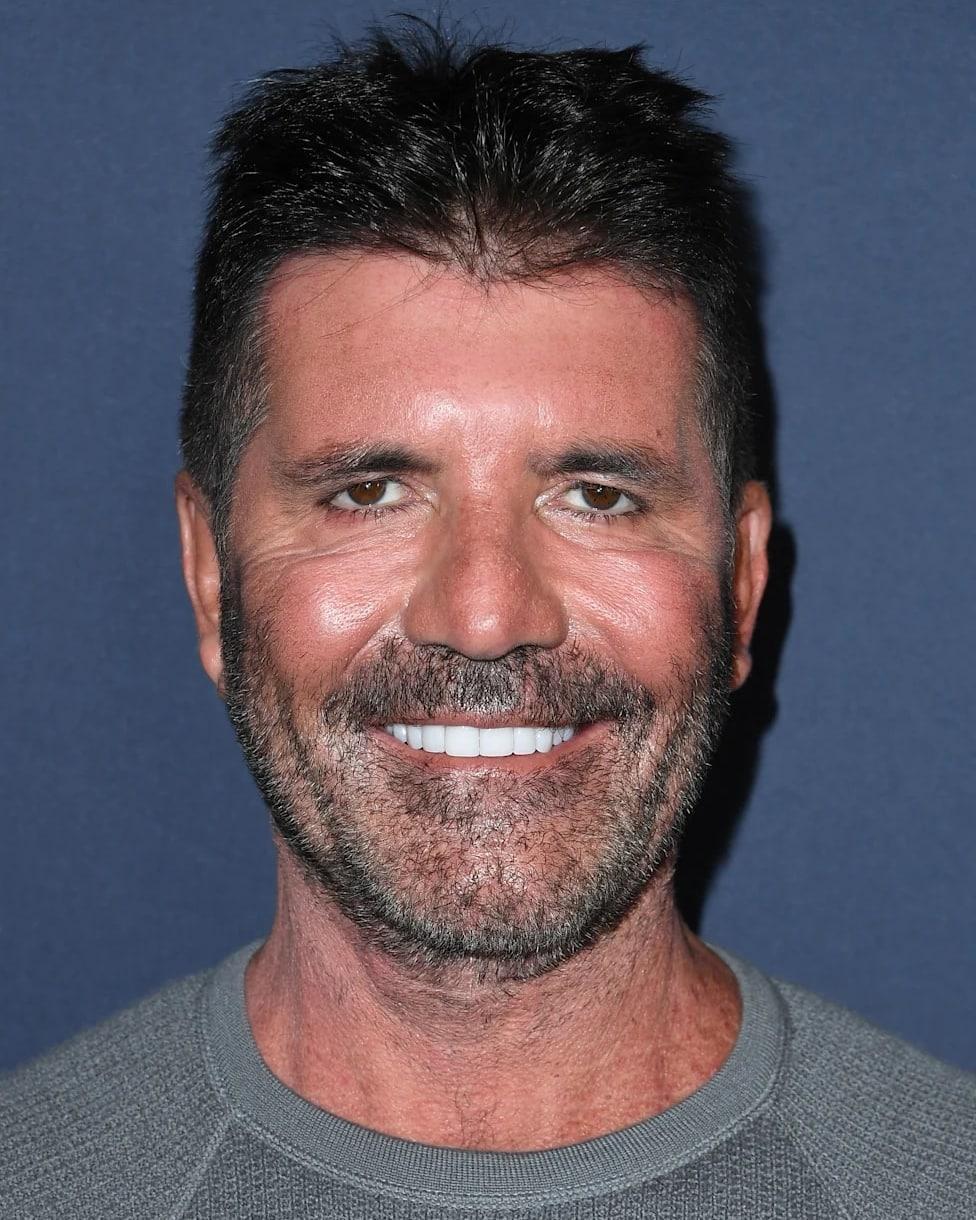
Simon Cowell.

Television judge · Producer · Record executive

Simon Cowell turned a record-business apprenticeship, a near-bankruptcy, and an instinct for what grabs an audience into Pop Idol, The X Factor, Got Talent, and Syco. The black T-shirt and merciless one-liners made him infamous, but the more durable story is a builder of formats, talent rosters, and blunt commercial judgments that repeatedly changed televised entertainment.

OBJECTIVE PERSONALITY CLASSIFICATIONMM-Ti/Se-CP/S(B)What does this mean?
PERSONALITY SYSTEMObjective Personality
LEAD FUNCTIONTi · Introverted Thinking
SECOND SAVIOR FUNCTIONSe · Extroverted Sensing
MBTI EQUIVALENTISTP
01 / BEHIND THE CLASSIFICATION

The personality behind the fame.

How does a recorded OPS classification like MM-Ti/Se-CP/S(B) break down? Walk through nine coins and watch the proposed type take shape. These are deductions from the archived code, not independent evidence of typing accuracy.

Scroll below to see Simon Cowell take shape.

STARTING POINT512 possible OPS typesEach type combines core functions, an animal order, and sexual modalities.
THE FINISH LINEMM-Ti/Se-CP/S(B)One recorded classification, decoded from its components.
Simon Cowell’s HUMAN NEEDS 01—03
01
DECIDER OR OBSERVER?

Decider over Observer

Deciders have more balanced Observer poles in the middle: Control (Oi) and Chaos (Oe). Organizing what's known and handling what's new tend to feel more manageable. People are the harder territory. Self (Di) and Tribe (De) sit at the extremes, so judgment, rejection, approval, and conflict can trigger the strongest reactions.

Cowell became famous not as a singer but as the man willing to tell singers, on camera, that the performance was dreadful. American Idol and The X Factor turned him into a public verdict machine, and even backstage he made people calls, sacking Louis Walsh for one series before quickly reversing when the panel chemistry suffered. That is classic Decider pressure: the tension sits in judgments, alliances and who can work with whom. The strength is decisiveness around people. The blind spot is that a cutting verdict can become the show itself, crowding out whatever talent was actually onstage.

D
02
SELF OR TRIBE?

Di · Self over De · Tribe

Self (Di) is the stronger deciding pole. They check decisions against their own values or reasons first: what makes sense to me, what feels right to me? The strength is independent conviction; the recurring friction is the Tribe (De)—other people's standards, feedback, and expectations. As the portrait unfolds, notice how Self takes the lead.

Before the TV empire, Cowell had a long record of backing his own read over the room's approval. He left jobs when he clashed with bosses, nearly went bankrupt with Fanfare Records, then rebuilt through BMG, novelty acts, and the stubborn push that got Robson & Jerome to record Unchained Melody. Self over Tribe is not about isolation; it is about where the final standard lives. His strength is conviction when consensus is doubtful. The cost is that confidence can make other people's caution look irrelevant until it becomes an obstacle he has to deal with anyway.

Di
03
GATHER OR ORGANIZE?

Oe · Gather over Oi · Organize

Gather (Oe) leads with new information, experiences, and possibilities. Its strength is curiosity and adaptability; the recurring friction is narrowing the options and settling into what is already known. Another layer of the personality portrait comes into focus.

Cowell's career keeps widening the field. He moved from record production and A&R into Pop Idol, then expanded into The X Factor, Got Talent, La Banda, and other formats instead of protecting one tidy lane. Gather over Organize shows up in that appetite for fresh openings: another act, another market, another version of the show. The strength is range and adaptability in industries that change fast. The blind spot is expansion without enough closure. A franchise builder can always see the next possibility, but not every promising branch deserves the same time, money, or attention.

Oe
FIRST THREE COINSD + Di + Oe

These establish the preferred human needs in the OPS framework.

Simon Cowell’s FUNCTIONS 04—05
04
FEELING OR THINKING?

Thinking · T over Feeling · F

Thinking (T) evaluates decisions through reasons, logic, and what works—not a lack of emotion. Its strength is analytical consistency; Feeling (F) provides balance through values, meaning, and the human consequences of a decision. Combined with Self (Di), this forms the recorded Savior Ti.

His public criticism can sound purely theatrical, but Cowell's judgments often come from a hard internal logic about what works. He persuaded Robson & Jerome to record Unchained Melody, helped build acts like Westlife and Il Divo, and later admitted Grease Is the Word was 'slaughtered by the critics – and rightly so' because it was too similar to his other formats. That Ti style is a strength: he wants the mechanism to make sense, not merely to sound nice. The limit is obvious. A privately coherent verdict can still feel brutal, reductive, or insufficiently human to everyone hearing it.

T → Ti
05
SENSING OR INTUITION?

Sensing · S over Intuition · N

Sensing (S) focuses on concrete details, observable reality, and lived experience. Intuition (N) balances it by looking for broader patterns, concepts, and implications. Combined with Gather (Oe), this gives the recorded Savior Se.

Cowell's best-known talent is immediate physical readout. In an audition room or live talent format, he judges what is actually landing: the voice in the room, the look, the pacing, the crowd response, the way a performer holds attention for ninety seconds. That Se sharpness helped him spot commercial traction in acts ranging from Leona Lewis to the post-show potential of One Direction. The strength is realism about what is happening now. The blind spot is that a present-tense read can underrate slower development, hidden depth, or talent that does not announce itself instantly.

S → Se
THE TWO SAVIOR FUNCTIONSTi / Se

Opposing functions: Fe and Ni.

Simon Cowell’s ANIMAL STACK 06—07
06
CONSUME OR BLAST?

Consume over Blast

Consume gathers information for internal processing; Blast organizes and communicates information. The recorded order is Consume → Play → Sleep → Blast. This comparison follows their positions in that stack.

For someone remembered as a broadcaster of brutal lines, the more revealing tilt is Consume over Blast. Cowell spent years in mail-room grunt work, A&R, novelty records, and talent scouting before he became the face of a franchise. He keeps absorbing what sells, what audiences react to, and what kind of act can travel across formats and countries. That intake is a real strength; it gave him a deeper reservoir than the one-liner persona suggests. The cost is that more evidence can keep arriving, while the clean, fully articulated message to others stays rougher than the research behind it.

C > B
07
PLAY OR SLEEP?

Play over Sleep

Play emphasizes external real-time engagement; Sleep emphasizes internal processing. The recorded stack places Play earlier.

After that Consume-over-Blast emphasis, Play over Sleep helps explain why Cowell's career became so visibly panel-based and collaborative. Pop Idol, American Idol, The X Factor and Britain's Got Talent all put him in live exchange—bouncing off contestants, sparring with judges, and even reversing choices when the chemistry was wrong, as with Louis Walsh's return. The strength is responsive engagement; he does not need everything to stay private before acting on it. The cost is that constant interaction can outrun slower internal digestion, making the next call or quip arrive before the deeper reflection fully catches up.

P > S
Simon Cowell’s ANIMAL ORIENTATION 08—09
08
INFO OR ENERGY DOMINANT?

Energy over Info

Energy dominant means Play and Sleep are both in the top three: there is access to expending energy through engagement and conserving it through internal processing. Blast last leaves the information side uneven—Consume may gather far more than gets communicated.

Cowell's top-three pattern makes him Energy-dominant: Play and Sleep both arrive before the final animal, so outward engagement and private recalibration are both available. That helps explain how he could keep building shows, mentoring acts, and returning as an on-camera force for years. The missing balance comes from Blast sitting last. He can gather talent data, market instincts and live reactions all day, yet the final explanatory packaging can lag behind the verdict. His edge is stamina across action and reflection; the growth cost is turning instinct into clearer guidance.

Energy
09
INTROVERSION OR EXTROVERSION?

Introversion over Extroversion

The last animal, Blast, determines this OPS coin: Play or Blast last means Introversion; Consume or Sleep last means Extroversion. This describes animal orientation, not sociability or shyness.

Blast lands fourth in Consume → Play → Sleep → Blast, which gives Cowell the OPS Introversion result even though his career is built in front of crowds. This coin is not about shyness or sociability. It is about the relative ease of taking things in, engaging in real time, and privately settling a view before broadcasting a finished explanation. He can dominate a live panel and still prefer not to over-elaborate the larger thesis. The strength is economy. The blind spot is that people may hear the famous verdict without getting the structure that would make it genuinely useful.

I
Sexual Modalities

The four sexual modalities.

OPS uses masculine/feminine sensory and extroverted-deciding distinctions as framework-specific terms, not gender categories. The four modalities are already included in the original 512 types. The recorded modality is MM · Kinesthetic.

MM RECORDED MODALITYKinestheticMasculine Sensory · Masculine De
MF AudioMasculine Sensory · Feminine De
FF TesterFeminine Sensory · Feminine De
FM VisualFeminine Sensory · Masculine De
COMPLETE RECORDED OPS TYPE · MODALITY INCLUDEDMM-Ti/Se-CP/S(B)

Ti leads, Se supports, and the animal stack is Consume → Play → Sleep → Blast.

THE FINISHED PORTRAIT · ALL NINE COINS REVEALED

Simon Cowell's complete function and animal stack

ConsumePlaySleepBlastfTimSefNimFe
MM-Ti/Se-CP/S(B)DOUBLE ACTIVATED · CONSUMEExplore the Interactive Coin Builder →
THE SIMON COWELL LENS

The verdict came with a blueprint.

On television, Cowell often arrives as the raised eyebrow in a black T-shirt, the judge about to tell a hopeful singer the audition is dead on arrival. That image stuck because it was vivid and marketable. Behind it sits a longer builder's story: mail-room work at EMI, A&R hustling, a near-collapse at Fanfare, then the slow construction of Idol, X Factor, and Got Talent.

Ti with Se gave him a ruthless professional instrument. Ti keeps asking what actually works; Se reads the room fast—voice, timing, nerves, star presence, audience response. That helped him spot commercial traction in acts like Leona Lewis and One Direction. The limit is equally public: a correct read can land so bluntly that the person remembers the sting more than the useful direction.

As a Decider and Double Observer, Cowell's central strain is people and standards, not a chronic inability to map the situation. He can usually see the format, the market, the chemistry. The harder growth edge is relational: who feels backed, dismissed, or replaceable. Neglected Fe, opposite his lead Ti, asks for more explicit morale, shared buy-in, and awareness of how a verdict lands across the whole group.

Consume → Play → Sleep → Blast names the final pressure point. He absorbs signals, tests them live, and settles them privately before the last step of packaging a message for everyone else. Blast last does not weaken his authority; it explains why the verdict can arrive before the roadmap. The balance is practical: keep the blunt standard, but attach one concrete next step contestants or collaborators can immediately use.

Want to understand the Savior and Demon states behind these nine coins? Explore the complete explanation, visual examples, and typing principles on our Methodology page →

02 / KEEP EXPLORING

Different faces. Familiar patterns.

Explore other celebrities with related recorded OPS classifications. Related functions are not necessarily exact type matches.

Discover Type Twins
YOUR TURN

Curious about your own type?

Discover how your own personality might be classified through Objective Personality.

Get objectively typed
Simon Cowell's Personality Type & OPS Profile | The Personality Atlas