The Personality Atlas
THE CELEBRITY PERSONALITY ARCHIVE / TENNIS

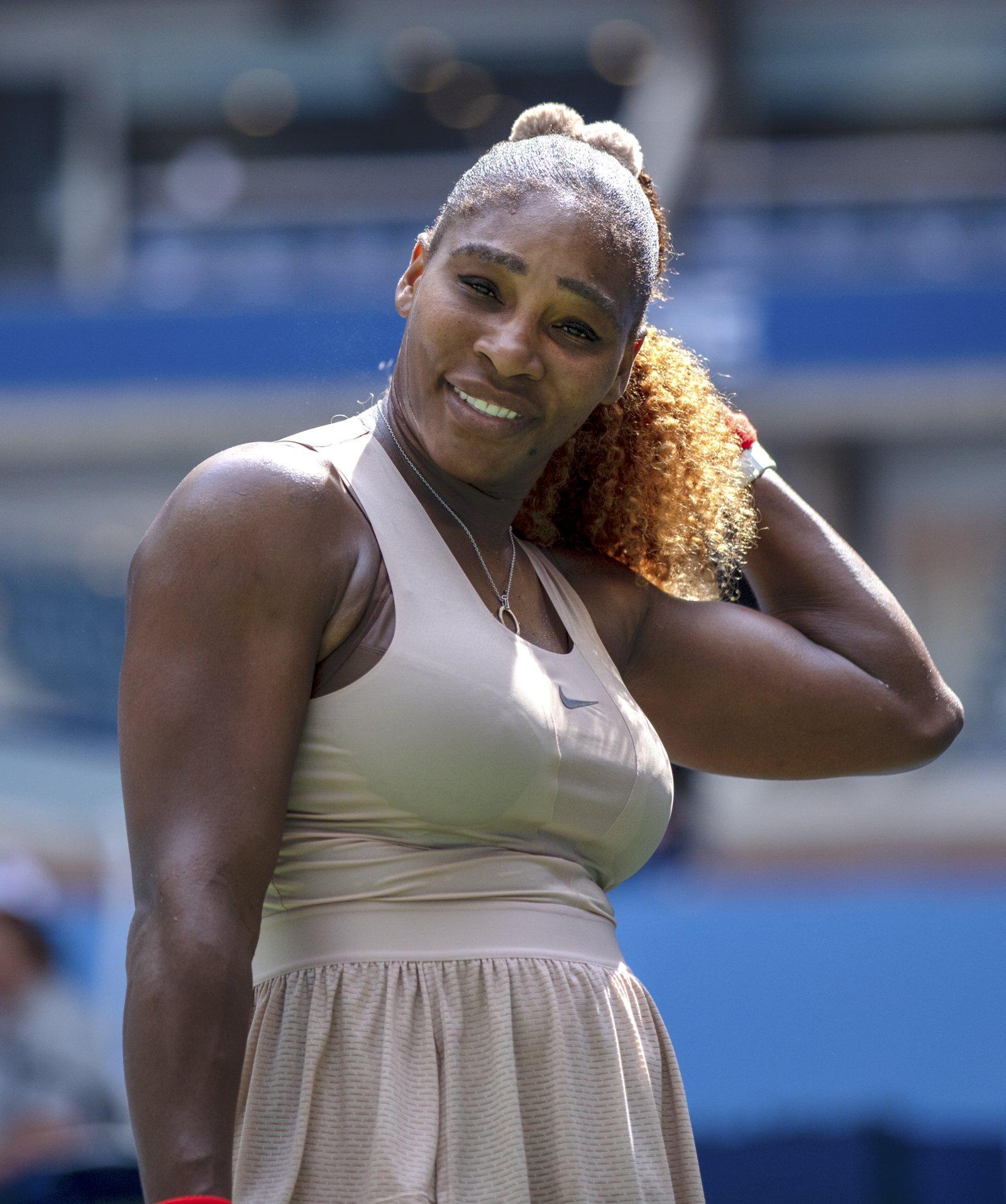
Serena Williams.

Professional tennis player · 23-time major champion

Serena Williams built a career so overwhelming it often looked impolite: 23 major singles titles, Olympic gold in singles and doubles, two separate Serena Slams, and a public habit of treating injuries, skepticism and ugly conditions as temporary obstacles instead of final verdicts.

OBJECTIVE PERSONALITY CLASSIFICATIONMM-Se/Fe-PC/S(B)What does this mean?
PERSONALITY SYSTEMObjective Personality
LEAD FUNCTIONSe · Extroverted Sensing
SECOND SAVIOR FUNCTIONFe · Extroverted Feeling
MBTI EQUIVALENTESTP
01 / BEHIND THE CLASSIFICATION

The personality behind the fame.

How does a recorded OPS classification like MM-Se/Fe-PC/S(B) break down? Walk through nine coins and watch the proposed type take shape. These are deductions from the archived code, not independent evidence of typing accuracy.

Scroll below to see Serena Williams take shape.

STARTING POINT512 possible OPS typesEach type combines core functions, an animal order, and sexual modalities.
THE FINISH LINEMM-Se/Fe-PC/S(B)One recorded classification, decoded from its components.
Serena Williams’ HUMAN NEEDS 01—03
01
DECIDER OR OBSERVER?

Observer over Decider

Observers have more balanced Decider poles in the middle: Self (Di) and Tribe (De). Their own perspective and other people's perspectives tend to be easier to navigate. Things are the harder territory. Control (Oi) and Chaos (Oe) sit at the extremes, so disrupted plans, uncertainty, and a changing world can trigger the strongest reactions.

Serena’s career keeps running into conditions that no amount of confidence can simply vote away. Age rules blocked her planned 1995 debut, injuries repeatedly broke her momentum, and the infamous 2004 US Open quarterfinal became a mess of bad line calls and broken flow. That is classic Observer friction: the problem is unstable reality, not merely whether people approve. Her strength is ferocious adaptation under pressure. The blind spot is the temptation to keep treating each solved obstacle as if it will finally make the environment predictable.
O
02
SELF OR TRIBE?

De · Tribe over Di · Self

Tribe (De) is the stronger deciding pole. They check decisions against people, shared standards, and what works for the group: what do we need, what will others think? The strength is coordination and responsiveness; the recurring friction is the Self (Di)—knowing and defending their own position. As the portrait unfolds, notice how Tribe takes the lead.

Serena’s partnership with Venus is one of the clearest public examples of Tribe-first power. Fourteen major doubles titles together, an undefeated record in major doubles finals, and Olympic golds show someone who can lock into a shared standard and raise the level for both people at once. The advantage is obvious: collective chemistry becomes a weapon. The cost is that outside atmosphere matters more too. Public expectations, family stakes and social meaning can become part of the competition, not just background noise around it.

De
03
GATHER OR ORGANIZE?

Oe · Gather over Oi · Organize

Gather (Oe) leads with new information, experiences, and possibilities. Its strength is curiosity and adaptability; the recurring friction is narrowing the options and settling into what is already known. Another layer of the personality portrait comes into focus.

Serena’s résumé is almost absurdly broad: major titles across surfaces, dominance in singles and doubles, Olympic success, and a second great peak after injuries had already interrupted the first. Gather over Organize fits that range. New opponents, changed conditions and fresh phases of a career become material to work with rather than disruptions to resent. The strength is versatility at the highest level. The growth cost is selectivity. A career this open to variables keeps demanding another adjustment, even when the wiser move is narrowing the target and conserving for one priority.

Oe
FIRST THREE COINSO + De + Oe

These establish the preferred human needs in the OPS framework.

Serena Williams’ FUNCTIONS 04—05
04
FEELING OR THINKING?

Feeling · F over Thinking · T

Feeling (F) evaluates decisions through values, meaning, and what matters—not simply through emotion. Its strength is a clear sense of significance; Thinking (T) provides balance through impersonal reasons, consistency, and evidence. Combined with Tribe (De), this forms the recorded Savior Fe.

The Indian Wells boycott after racist comments toward her family showed a Feeling judgment in public, not just a ranking calculation. The issue was dignity, belonging and what kind of atmosphere a major sporting event was asking her to tolerate. That value-centered stance gave her career symbolic force beyond trophies. It also came with a real cost. A values-based stand does not make the practical consequences disappear; it can surrender opportunities, invite years of scrutiny and still leave the surrounding system unresolved.

F → Fe
05
SENSING OR INTUITION?

Sensing · S over Intuition · N

Sensing (S) focuses on concrete details, observable reality, and lived experience. Intuition (N) balances it by looking for broader patterns, concepts, and implications. Combined with Gather (Oe), this gives the recorded Savior Se.

Serena’s Se is not just power; it is command of the live reality right in front of her. At the 1999 US Open, she beat Clijsters, Martínez, Seles and defending champion Davenport before taking down world No. 1 Martina Hingis in the final. That run was not abstract potential. It was point-by-point responsiveness against elite opposition. The strength is immediate tactical presence. The blind spot is relying on battle readiness as the universal answer. Sometimes the body, season and schedule need long-range pacing that raw present-tense dominance cannot supply by itself.

S → Se
THE TWO SAVIOR FUNCTIONSSe / Fe

Opposing functions: Ni and Ti. This is a jumper classification.

Serena Williams’ ANIMAL STACK 06—07
06
PLAY OR SLEEP?

Play over Sleep

Play emphasizes external real-time engagement; Sleep emphasizes internal processing. The recorded stack places Play earlier.

Play over Sleep shows up in how alive Serena becomes in direct exchange with other people. Fed Cup ties, Olympic doubles, all-sister major finals and high-stakes matches against the best in the world all put her in situations where real-time interaction sharpens the edge rather than distracting from it. That is the strength: pressure becomes fuel when the contest is happening now. The cost is that constant engagement can outrun recovery. If the next challenge always looks energizing, stepping back to process the toll can feel optional until it is not.

P > S
07
CONSUME OR BLAST?

Consume over Blast

Consume gathers information for internal processing; Blast organizes and communicates information. The recorded order is Play → Consume → Sleep → Blast. This comparison follows their positions in that stack.

Consume before Blast helps explain why Serena so often made the case with accumulated proof instead of tidy explanation. Her 1997 Chicago breakthrough came from the hard evidence of upsetting Monica Seles and Mary Pierce as the lowest-ranked player in the Open Era to beat two top-10 opponents in one tournament. She gathered credibility through results before packaging a public thesis about herself. That creates formidable substance. The downside is that others may wait for a clearer declared standard. Proof can silence doubters without fully explaining the roadmap.

C > B
Serena Williams’ ANIMAL ORIENTATION 08—09
08
INFO OR ENERGY DOMINANT?

Energy over Info

Energy dominant means Play and Sleep are both in the top three: there is access to expending energy through engagement and conserving it through internal processing. Blast last leaves the information side uneven—Consume may gather far more than gets communicated.

Serena’s stack lands on Energy because outward engagement and inward reset both sit high enough to keep her alternating between intense action and real consolidation. You can see it in the way she returned from layoffs, surgery and interrupted seasons to win again, including the 2004 comeback and the dominant return in 2012. That rhythm is a strength: recover, then surge. The missing cost is last Blast. She does not naturally owe everyone a polished doctrine, which can leave the explanation trailing behind the achievement and the adjustment.

Energy
09
INTROVERSION OR EXTROVERSION?

Introversion over Extroversion

The last animal, Blast, determines this OPS coin: Play or Blast last means Introversion; Consume or Sleep last means Extroversion. This describes animal orientation, not sociability or shyness.

This Introversion coin is not about whether Serena can command a stadium. Obviously she can. In OPS terms, it means Blast comes last: direct presentation of a settled message is less automatic than action, intake and internal reset. Her clearest statement was often another title, another No. 1 run, another comeback that made the debate look silly afterward. The strength is refusing to mistake talk for proof. The growth cost is stating the conclusion early enough that coaches, media and fans do not have to reconstruct the plan only from the result.

I
Sexual Modalities

The four sexual modalities.

OPS uses masculine/feminine sensory and extroverted-deciding distinctions as framework-specific terms, not gender categories. The four modalities are already included in the original 512 types. The recorded modality is MM · Kinesthetic.

MM RECORDED MODALITYKinestheticMasculine Sensory · Masculine De
MF AudioMasculine Sensory · Feminine De
FF TesterFeminine Sensory · Feminine De
FM VisualFeminine Sensory · Masculine De
COMPLETE RECORDED OPS TYPE · MODALITY INCLUDEDMM-Se/Fe-PC/S(B)

Se leads, Fe supports, and the animal stack is Play → Consume → Sleep → Blast.

THE FINISHED PORTRAIT · ALL NINE COINS REVEALED

Serena Williams's complete function and animal stack

PlayConsumeSleepBlastmSefTimFefNi
MM-Se/Fe-PC/S(B)DOUBLE ACTIVATED · CONSUMEExplore the Interactive Coin Builder →
THE SERENA WILLIAMS LENS

The scoreboard wasn't the whole story.

Serena’s public image is pure force: the serve, the stare, the finals record, the way a match could suddenly feel unfair for the woman across the net. But the deeper story is how often she had to adjust to unstable conditions—age restrictions, injuries, ugly crowd dynamics, bad calls—and still keep moving.

Her Se/Fe saviors made that dominance unusually vivid. Se meets the live court as it is, not as theory says it should be; Fe tracks the human temperature around the moment, whether that means doubles chemistry with Venus or the social meaning of Indian Wells. The strength is immediate command with shared impact. The limit is that present pressure and public atmosphere can crowd out a calmer long-view.

As an Observer and Double Decider, Serena is built to handle people turbulence better than environmental uncertainty. The recurring strain is less about belonging with others and more about mastering conditions, timing and physical reality. That is why the neglected function matters: Ni, opposite her lead Se, asks what pattern the chaos is forming before the next crisis forces the answer.

Play → Consume → Sleep → Blast fits a career that sharpened itself in live exchange, built proof, processed privately, and only then explained. With Blast last, the risk is letting results do all the talking. Balance means keeping the attack while adding one deliberate step after each big swing: name the narrowed next target out loud before the next tournament drags her back into motion.

Want to understand the Savior and Demon states behind these nine coins? Explore the complete explanation, visual examples, and typing principles on our Methodology page →

02 / KEEP EXPLORING

Different faces. Familiar patterns.

Explore other celebrities with related recorded OPS classifications. Related functions are not necessarily exact type matches.

Discover Type Twins
YOUR TURN

Curious about your own type?

Discover how your own personality might be classified through Objective Personality.

Get objectively typed
Serena Williams's Personality Type & OPS Profile | The Personality Atlas