The Personality Atlas
THE CELEBRITY PERSONALITY ARCHIVE / SCIENCE & IDEAS

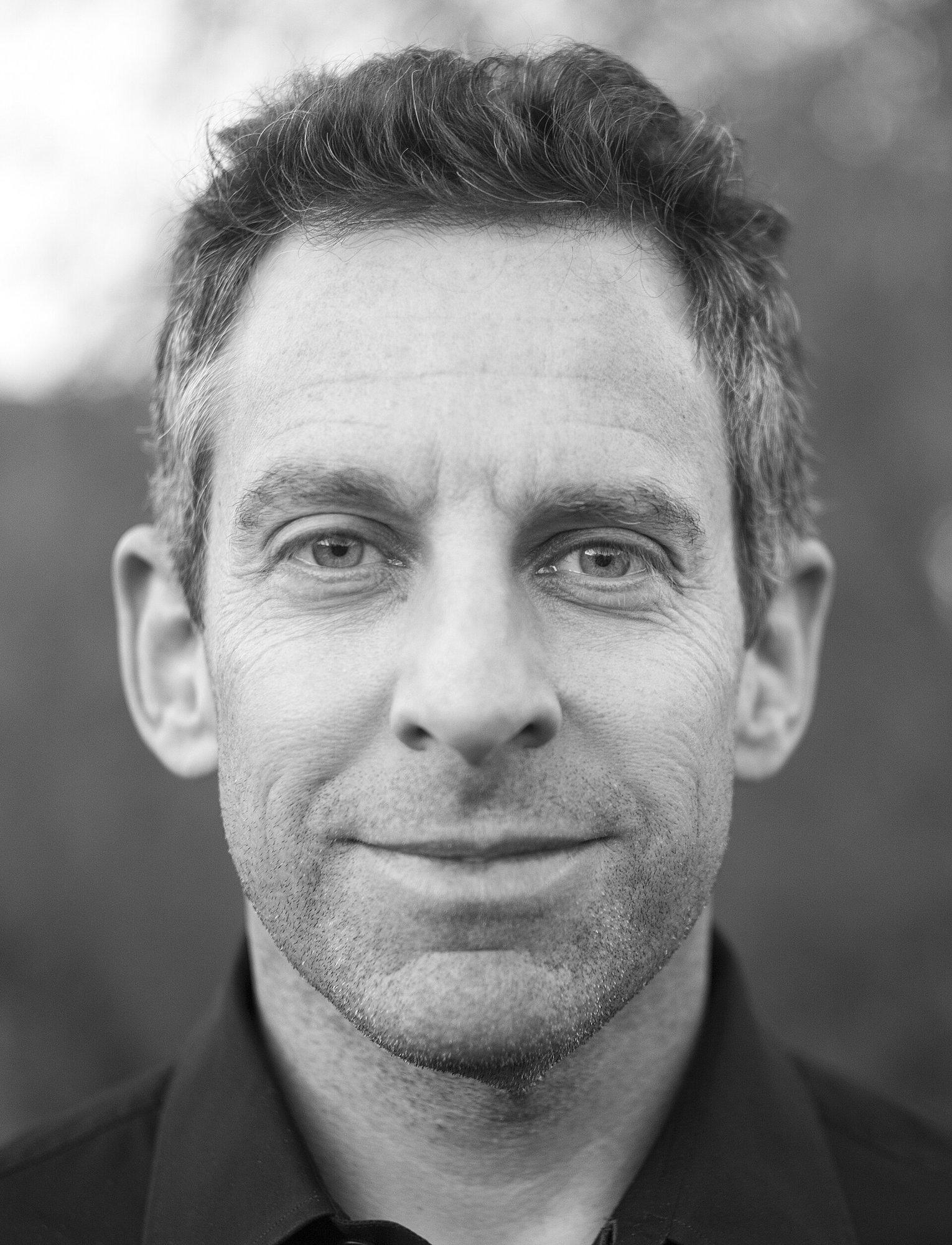
Sam Harris.

Neuroscientist · Author · Podcast Host

Sam Harris built a career by turning abstract argument into a public event: The End of Faith after 9/11, long-form clashes with figures like William Lane Craig, Jordan Peterson and Deepak Chopra, a podcast on everything from terrorism to consciousness, and a meditation app that packages spirituality without religion. The public impression is icy certainty. The more revealing pattern is a man who keeps building tighter inner frameworks, then testing them against the noisiest audience he can find.

OBJECTIVE PERSONALITY CLASSIFICATIONMF-Ti/Si-SC/B(P)What does this mean?
PERSONALITY SYSTEMObjective Personality
LEAD FUNCTIONTi · Introverted Thinking
SECOND SAVIOR FUNCTIONSi · Introverted Sensing
MBTI EQUIVALENTINTP
01 / BEHIND THE CLASSIFICATION

The personality behind the fame.

How does a recorded OPS classification like MF-Ti/Si-SC/B(P) break down? Walk through nine coins and watch the proposed type take shape. These are deductions from the archived code, not independent evidence of typing accuracy.

Scroll below to see Sam Harris take shape.

STARTING POINT512 possible OPS typesEach type combines core functions, an animal order, and sexual modalities.
THE FINISH LINEMF-Ti/Si-SC/B(P)One recorded classification, decoded from its components.
Sam Harris’ HUMAN NEEDS 01—03
01
DECIDER OR OBSERVER?

Decider over Observer

Deciders have more balanced Observer poles in the middle: Control (Oi) and Chaos (Oe). Organizing what's known and handling what's new tend to feel more manageable. People are the harder territory. Self (Di) and Tribe (De) sit at the extremes, so judgment, rejection, approval, and conflict can trigger the strongest reactions.

Harris became prominent not because he found safe subjects, but because he repeatedly stepped into judgment-saturated arenas: the "Four Horsemen" debates, his exchange with Ben Affleck on Bill Maher, arguments with Chomsky, Peterson and others over religion, terrorism and liberalism. The recurring pressure is people deciding whether he is rigorous, reckless, principled or offensive. That is Decider terrain. His strength is staying verbal when the room turns morally personal. The blind spot is that a disagreement can start looking like a trial about who is sane and honest, rather than a problem with multiple moving parts.
D
02
SELF OR TRIBE?

Di · Self over De · Tribe

Self (Di) is the stronger deciding pole. They check decisions against their own values or reasons first: what makes sense to me, what feels right to me? The strength is independent conviction; the recurring friction is the Tribe (De)—other people's standards, feedback, and expectations. As the portrait unfolds, notice how Self takes the lead.

His career keeps following an internal standard before a consensus forms around it. He left Stanford, spent years in India and Nepal studying meditation, returned to finish philosophy, then later argued that spirituality could be pursued without religion while remaining a blunt critic of dogma. That Self-first posture gives him unusual continuity; the atheist polemicist and the meditation teacher come from the same private yardstick. The cost is equally visible. A position refined against one's own standard can come across as already settled, even while everyone else is still trying to establish common ground.

Di
03
GATHER OR ORGANIZE?

Oi · Organize over Oe · Gather

Organize (Oi) leads with refining, preserving, and structuring what is already known. Its strength is preparation and clear direction; the recurring friction is unexpected change that disrupts the plan. Another layer of the personality portrait comes into focus.

Harris does not merely visit large subjects; he tries to lock them into an organized frame. The Moral Landscape arranges morality around well-being. Free Will compresses a sprawling philosophical dispute into a crisp deterministic case. Making Sense ranges widely, but the public brand remains tightly ordered: the same core problems, re-sorted and clarified again. Organize-first gives him structure and repeatability. People know the map. The liability is stiffness. When the framework feels settled, genuinely fresh angles can arrive looking like drift, confusion or a refusal to engage the real question.

Oi
FIRST THREE COINSD + Di + Oi

These establish the preferred human needs in the OPS framework.

Sam Harris’ FUNCTIONS 04—05
04
FEELING OR THINKING?

Thinking · T over Feeling · F

Thinking (T) evaluates decisions through reasons, logic, and what works—not a lack of emotion. Its strength is analytical consistency; Feeling (F) provides balance through values, meaning, and the human consequences of a decision. Combined with Self (Di), this forms the recorded Savior Ti.

Ti shows in Harris's habit of taking a claim down to its joints and asking whether it still holds. His work on religion, free will and artificial intelligence depends on definitions, internal consistency and trimming away what he sees as rhetorical fog. That precision is a real strength: he can make huge philosophical disputes feel sharply testable. But internal elegance is not the whole game. Daniel Dennett praised Free Will as valuable while calling parts of it a "veritable museum of mistakes," a useful reminder that a model can feel clean from the inside while still leaving important counterarguments insufficiently answered.

T → Ti
05
SENSING OR INTUITION?

Sensing · S over Intuition · N

Sensing (S) focuses on concrete details, observable reality, and lived experience. Intuition (N) balances it by looking for broader patterns, concepts, and implications. Combined with Organize (Oi), this gives the recorded Savior Si.

For someone associated with sweeping ideas, Harris often works from stored specifics. He returned to Stanford after eleven years abroad, later earned a neuroscience Ph.D. studying belief, disbelief and uncertainty with fMRI, and built Waking Up around repeatable daily practices instead of vague mysticism. Si helps him anchor abstract claims in prior study, established methods and carefully revisited examples. That steadiness makes difficult material teachable. The constraint is narrower openness to the unfamiliar. A trusted archive can become so persuasive that emerging possibilities or looser interpretations receive less curiosity than they might deserve.

S → Si
THE TWO SAVIOR FUNCTIONSTi / Si

Opposing functions: Fe and Ne. This is a jumper classification.

Sam Harris’ ANIMAL STACK 06—07
06
PLAY OR SLEEP?

Sleep over Play

Play emphasizes external real-time engagement; Sleep emphasizes internal processing. The recorded stack places Sleep earlier.

Sleep versus Play shows up in how much of Harris's work arrives already distilled. The books read like arguments that have spent a long time under private pressure before publication, and the meditation app turns years of study into structured lessons rather than loose group exploration. Even his longest interviews often feel guided by a frame he has quietly rehearsed. The strength is depth and composure. The blind spot is timing. When inner processing gets too far ahead, live exchange can feel like cleanup work for conclusions that were largely settled before the conversation began.

S > P
07
CONSUME OR BLAST?

Consume over Blast

Consume gathers information for internal processing; Blast organizes and communicates information. The recorded order is Sleep → Consume → Blast → Play. This comparison follows their positions in that stack.

With Sleep already ahead of Play, Harris next shows Consume ahead of Blast. His public life is built on intake: bestselling books across philosophy and religion, marathon podcast episodes, conversations with scientists and spiritual teachers, and an app packed with lessons and interviews. That appetite gives his work range, context and nuance; he usually has more source material than the average culture-war combatant. The tradeoff is compression. Consume can keep enriching the model while Blast waits, which means the shorter, cleaner version sometimes arrives later than the audience's attention span.

C > B
Sam Harris’ ANIMAL ORIENTATION 08—09
08
INFO OR ENERGY DOMINANT?

Info over Energy

Info dominant means Consume and Blast are both in the top three: gathering and communicating information are more balanced. Play last leaves the energy side uneven—Sleep can conserve energy without enough spontaneous outward engagement.

Harris lands on the Info side because taking in information and delivering it both sit near the front of the stack. He does not just research; he packages—through books, podcast episodes, meditation lessons and daily prompts. That pairing helps explain why he can move from neuroscience to Islamism to consciousness and still sound like he is building one continuous project. The missing balance comes from Play last. He can absorb and explain at scale while being less naturally drawn to messy, spontaneous back-and-forth. The growth cost is not more content, but more unscripted contact inside the content.

Info
09
INTROVERSION OR EXTROVERSION?

Introversion over Extroversion

The last animal, Play, determines this OPS coin: Play or Blast last means Introversion; Consume or Sleep last means Extroversion. This describes animal orientation, not sociability or shyness.

This is Introversion in the OPS sense, not because Harris lacks public visibility, but because Play comes last. He debates prominent opponents, interviews major guests and speaks to large audiences, yet the underlying priority remains private clarification first, then information handling, with real-time mutual exchange later. That creates a clear strength: the solo line stays coherent across books, essays and interviews. The blind spot is subtler. In fast human conversation, he can sound less interested in building something jointly than in returning the discussion to the framework that already makes the most sense to him.

I
Sexual Modalities

The four sexual modalities.

OPS uses masculine/feminine sensory and extroverted-deciding distinctions as framework-specific terms, not gender categories. The four modalities are already included in the original 512 types. The recorded modality is MF · Audio.

MM KinestheticMasculine Sensory · Masculine De
MF RECORDED MODALITYAudioMasculine Sensory · Feminine De
FF TesterFeminine Sensory · Feminine De
FM VisualFeminine Sensory · Masculine De
COMPLETE RECORDED OPS TYPE · MODALITY INCLUDEDMF-Ti/Si-SC/B(P)

Ti leads, Si supports, and the animal stack is Sleep → Consume → Blast → Play.

THE FINISHED PORTRAIT · ALL NINE COINS REVEALED

Sam Harris's complete function and animal stack

SleepConsumeBlastPlaymTifNemSifFe
MF-Ti/Si-SC/B(P)DOUBLE ACTIVATED · SLEEPExplore the Interactive Coin Builder →
THE SAM HARRIS LENS

The polished argument and the human room

Harris can look in public like a man who came preloaded with conclusions: The End of Faith after 9/11, the Bill Maher clash with Ben Affleck, and long Making Sense episodes on religion, free will, AI and meditation. Behind that severe reputation is someone less interested in spectacle than in building a framework sturdy enough to survive hostile company.

His Ti/Si pairing is excellent at tightening enormous subjects into a repeatable internal model. You can hear it in Free Will, in his neuroscience work on belief and uncertainty, and in the structured lessons of Waking Up. The strength is clarity with memory. The limit is rigidity: once the model locks, a differently framed objection can sound like static rather than revision.

As a Decider and Double Observer, Harris is built to manage information more easily than human friction. The recurring strain is not chaos in the facts but conflict over fairness, trust, blame and who gets to define reasonableness. That pairing can make him unusually steady around complex ideas while underplaying the emotional calibration other people need. The neglected function is Fe, opposite his lead Ti.

Sleep → Consume → Blast → Play fits the public pattern: private refinement, heavy intake, then polished explanation, with spontaneous back-and-forth last. Play last does not mean unsocial; it means real-time mutual exchange is the least preferred gear. The balancing move is specific: keep the long-form rigor, but build more short conversations where he first restates the other person's view accurately before advancing his own.

Want to understand the Savior and Demon states behind these nine coins? Explore the complete explanation, visual examples, and typing principles on our Methodology page →

02 / KEEP EXPLORING

Different faces. Familiar patterns.

Explore other celebrities with related recorded OPS classifications. Related functions are not necessarily exact type matches.

Discover Type Twins
YOUR TURN

Curious about your own type?

Discover how your own personality might be classified through Objective Personality.

Get objectively typed
Sam Harris's Personality Type & OPS Profile | The Personality Atlas