The Personality Atlas
THE CELEBRITY PERSONALITY ARCHIVE / FILM & COMEDY

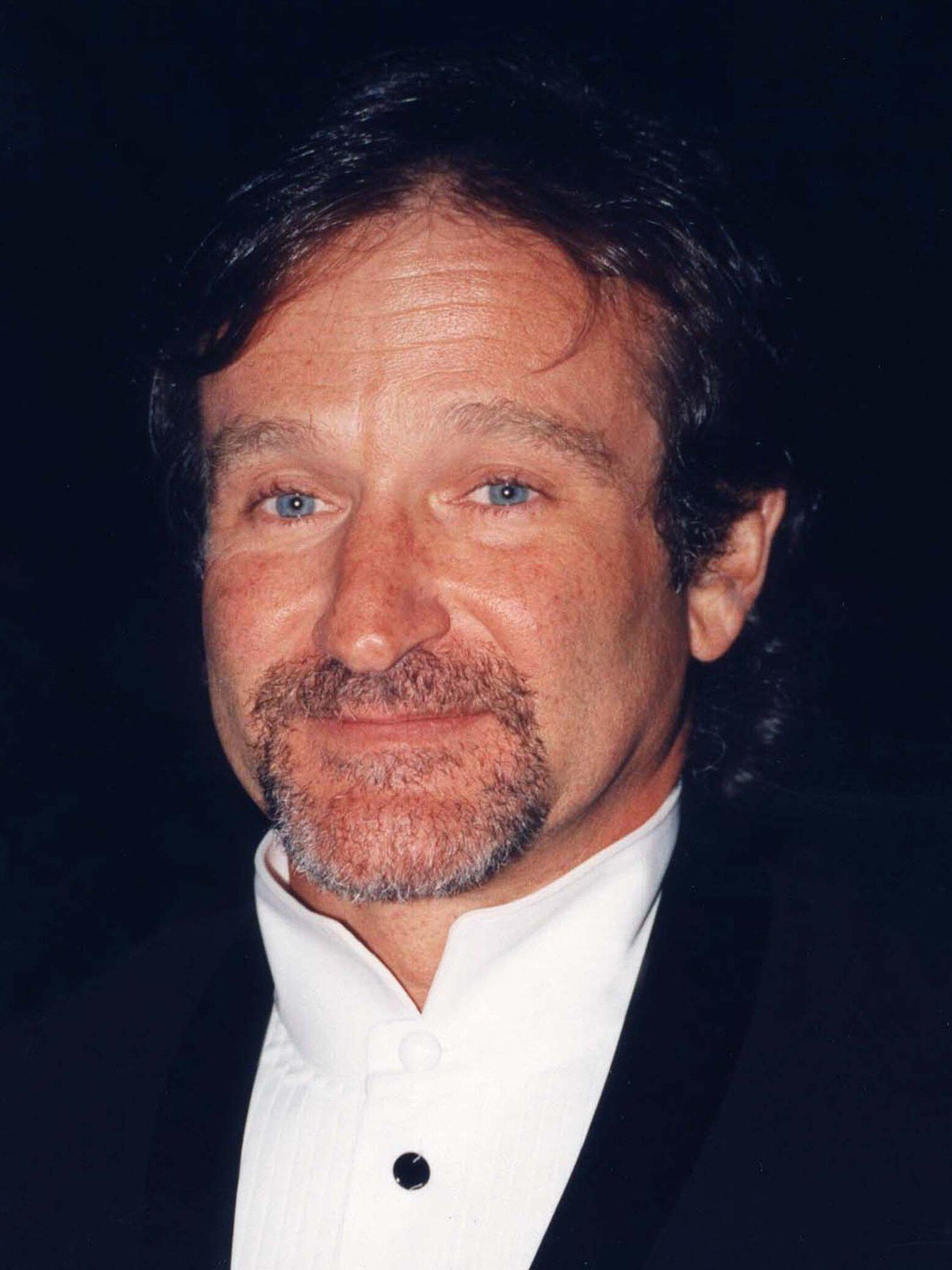
Robin Williams.

Actor · Comedian · Improviser

Robin Williams could turn an audition into a dare—sitting on his head for Garry Marshall, then improvising Mork into a television phenomenon. Across stand-up, Good Morning, Vietnam, Dead Poets Society and Aladdin, he made velocity feel human: a performer whose ideas arrived in torrents, yet whose best work landed because the chaos was shaped for other people.

OBJECTIVE PERSONALITY CLASSIFICATIONFF-Te/Ne-PB/C(S) #4What does this mean?
PERSONALITY SYSTEMObjective Personality
LEAD FUNCTIONTe · Extroverted Thinking
SECOND SAVIOR FUNCTIONNe · Extroverted Intuition
MBTI EQUIVALENTESTJ
01 / BEHIND THE CLASSIFICATION

The personality behind the fame.

How does a recorded OPS classification like FF-Te/Ne-PB/C(S) #4 break down? Walk through nine coins and watch the proposed type take shape. These are deductions from the archived code, not independent evidence of typing accuracy.

Scroll below to see Robin Williams take shape.

STARTING POINT512 possible OPS typesEach type combines core functions, an animal order, and sexual modalities.
THE FINISH LINEFF-Te/Ne-PB/C(S) #4One recorded classification, decoded from its components.
Robin Williams’ HUMAN NEEDS 01—03
01
DECIDER OR OBSERVER?

Decider over Observer

Deciders have more balanced Observer poles in the middle: Control (Oi) and Chaos (Oe). Organizing what's known and handling what's new tend to feel more manageable. People are the harder territory. Self (Di) and Tribe (De) sit at the extremes, so judgment, rejection, approval, and conflict can trigger the strongest reactions.

Robin Williams’s public story keeps returning to people. He said he tried to make his mother laugh to get attention; later, producers, audiences and collaborators became the living weather around his career. The Disney conflict over Aladdin was not a broken-camera problem but an agreement-and-trust problem about how his work would be used. That is Decider friction: the stakes gather around relationships, expectations and significance. The strength is obvious—he cared deeply about impact on others. The blind spot is that human expectations can become the loudest problem, even when the practical situation also needs attention.

D
02
SELF OR TRIBE?

De · Tribe over Di · Self

Tribe (De) is the stronger deciding pole. They check decisions against people, shared standards, and what works for the group: what do we need, what will others think? The strength is coordination and responsiveness; the recurring friction is the Self (Di)—knowing and defending their own position. As the portrait unfolds, notice how Tribe takes the lead.

When Mork & Mindy took off, the show was rewritten to accommodate Williams’s improvisations because so many other people had to build around his pace: writers, crew, network executives and a huge weekly audience. Tribe over Self shows up in that outward calibration. His gift was not merely having ideas; it was making them usable for the room and legible to millions. That creates tremendous reach. The cost is that shared expectations, promises and public agreements can carry extra weight, which helps explain why the Aladdin advertising dispute became such a serious rupture rather than a shrug.

De
03
GATHER OR ORGANIZE?

Oe · Gather over Oi · Organize

Gather (Oe) leads with new information, experiences, and possibilities. Its strength is curiosity and adaptability; the recurring friction is narrowing the options and settling into what is already known. Another layer of the personality portrait comes into focus.

Williams’s career was practically a master class in gathering. Stand-up in San Francisco became television, television became film, film became voice acting, and along the way he moved from alien sitcom chaos to drama, family fantasy, thrillers and dozens of accents. Gather over Organize gives him a visible advantage: another genre or character can become fuel instead of a threat. The blind spot is selectivity. A person who can plausibly do ten different things may still need to decide which one deserves the next season of life, rather than trusting possibility itself to narrow the field.

Oe
FIRST THREE COINSD + De + Oe

These establish the preferred human needs in the OPS framework.

Robin Williams’ FUNCTIONS 04—05
04
FEELING OR THINKING?

Thinking · T over Feeling · F

Thinking (T) evaluates decisions through reasons, logic, and what works—not a lack of emotion. Its strength is analytical consistency; Feeling (F) provides balance through values, meaning, and the human consequences of a decision. Combined with Tribe (De), this forms the recorded Savior Te.

Good Morning, Vietnam is a sharp example of Williams’s Thinking side because the performance was not only expressive, it was useful. Producer Mark Johnson said they let the cameras roll while Williams created something new on take after take, shaping energy into material that served the scene and the audience. Thinking here is about effectiveness, not coldness. The strength is rapid problem-solving in public. The cost is subtler: when what works becomes the standard, speed and output can get favored over patience, softness or leaving a moment unresolved.

T → Te
05
SENSING OR INTUITION?

Intuition · N over Sensing · S

Intuition (N) focuses on concepts, patterns, and what information might mean. Sensing (S) balances it through observable facts, physical detail, and direct experience. Combined with Gather (Oe), this gives the recorded Savior Ne.

Aladdin makes the Intuition coin almost unfairly easy to see. Williams reportedly recorded about 30 hours for the Genie and improvised a stream of celebrity impressions and conceptual left turns that turned one animated character into a whole carnival of possibilities. That is Intuition at full voltage: one idea instantly opening five more. The strength is creative multiplication. The blind spot is that possibility can outrun proportion. If every doorway is interesting, restraint starts to look dull, even though some performances become great precisely because not every association makes the final cut.

N → Ne
THE TWO SAVIOR FUNCTIONSTe / Ne

Opposing functions: Fi and Si. This is a jumper classification.

Robin Williams’ ANIMAL STACK 06—07
06
PLAY OR SLEEP?

Play over Sleep

Play emphasizes external real-time engagement; Sleep emphasizes internal processing. The recorded stack places Play earlier.

David Letterman said seeing Williams arrive at the Comedy Store was like a hurricane, and that captures Play over Sleep with unusual precision. Live exchange seemed to wake him up: clubs, talk shows and set improvisations all show how another person or a room could pull fresh material out of him in real time. The strength is contagious momentum. The cost is quieter. Constant interaction can make stillness look unproductive, even though some of a performer’s most necessary work happens when nothing is being asked for and nothing needs to land immediately.

P > S
07
CONSUME OR BLAST?

Blast over Consume

Consume gathers information for internal processing; Blast organizes and communicates information. The recorded order is Play → Blast → Consume → Sleep. This comparison follows their positions in that stack.

After that quick social ignition, Williams does not just riff—he projects. Good Morning, Vietnam, the Academy Awards and Robin Williams: Live on Broadway show Blast coming before Consume: the instinct is to take a pile of impressions and push them outward into a bit, a scene or a room-commanding run. Play gives him spark; Blast makes the spark public. Because Consume comes later, more research or slower preparation may feel secondary to delivery. That bias is powerful onstage. Its cost is that additional study can seem optional right when it might sharpen the point.

B > C
Robin Williams’ ANIMAL ORIENTATION 08—09
08
INFO OR ENERGY DOMINANT?

Info over Energy

Info dominant means Consume and Blast are both in the top three: gathering and communicating information are more balanced. Sleep last leaves the energy side uneven—Play can keep engagement going without enough private recovery.

Williams’s career shows Info dominance in plain sight. He absorbed accents at Juilliard, material in clubs, scripts, songs and public personas, then sent that information back out as Mork, the Genie, radio monologues and late-night performances. Consume and Blast both sit high enough to keep input and output circulating. The missing weight is Sleep last. The risk is not lack of talent or care; it is underfunding private reset. A life can stay full of material and still need more unperformed space to decide what to keep, what to drop and when to stop for a while.

Info
09
INTROVERSION OR EXTROVERSION?

Extroversion over Introversion

The last animal, Sleep, determines this OPS coin: Play or Blast last means Introversion; Consume or Sleep last means Extroversion. This describes animal orientation, not sociability or shyness.

This Extroversion coin is not a claim that Williams was merely sociable. It comes from Sleep landing last in Play, Blast, Consume, Sleep: outward engagement, public delivery and information intake all get priority before private consolidation. His public life makes that pattern easy to picture—San Francisco clubs, HBO specials, 50 appearances on Letterman, overseas performances and film sets that kept rolling. The strength is responsiveness to the world. The cost is that retreat can become the afterthought, when deliberate solitude and routine may be exactly what keep the instrument reliable.

E
Sexual Modalities

The four sexual modalities.

OPS uses masculine/feminine sensory and extroverted-deciding distinctions as framework-specific terms, not gender categories. The four modalities are already included in the original 512 types. The recorded modality is FF · Tester.

MM KinestheticMasculine Sensory · Masculine De
MF AudioMasculine Sensory · Feminine De
FF RECORDED MODALITYTesterFeminine Sensory · Feminine De
FM VisualFeminine Sensory · Masculine De
ADDITIONAL LAYER · SOCIAL TYPE

The four social types.

Social types are an additional layer on top of the original Objective Personality classification, introduced later in OPS research. They describe two proposed social preference coins: Flex vs. Friends and Generalize vs. Specialize. The combination and priority of these preferences produce four social types. Robin Williams's recorded social type is #4.

SOCIAL #1 #1Flex · Generalize
SOCIAL #2 #2Generalize · Friends
SOCIAL #3 #3Specialize · Flex
SOCIAL #4 RECORDED SOCIAL TYPE#4Friends · Specialize
COMPLETE RECORDED OPS TYPE · MODALITY INCLUDED + SOCIAL TYPEFF-Te/Ne-PB/C(S) #4

Te leads, Ne supports, and the animal stack is Play → Blast → Consume → Sleep.

THE FINISHED PORTRAIT · ALL NINE COINS REVEALED

Robin Williams's complete function and animal stack

PlayBlastConsumeSleepfTefSimNemFi
FF-Te/Ne-PB/C(S) #4DOUBLE ACTIVATED · PLAYExplore the Interactive Coin Builder →
THE ROBIN WILLIAMS LENS

The engine behind the whirlwind

Watch the Mork audition story or Good Morning, Vietnam with the microphone live, and the obvious impression is velocity: a man arriving faster than the room expected. But the public whirlwind sat on years of shyness, drama training, Juilliard discipline and club work. The spontaneity was genuine; it was also practiced enough to become a profession.

His Te/Ne pairing made him devastatingly useful in performance. Te wants the bit to land, the scene to work, and the audience to stay with him; Ne keeps generating another angle, voice or association before the old one cools. That combination can feel miraculous on camera. Its limit is pace: output can outrun the quieter act of deciding what not to do.

As a Decider and Double Observer, Williams is best understood as someone whose deepest friction clusters around people, expectations and relational stakes, while still showing unusual flexibility with changing roles, genres and formats. The imbalance is human-needs based: social judgment can stay louder than environmental chaos. Neglected Fi, opposite lead Te, asks what he personally values when the room stops demanding more.

Play → Blast → Consume → Sleep helps explain why the public often saw motion first. Sleep last can leave recovery, inner consolidation and protected quiet time underfunded compared with performing, explaining and gathering more material. The balancing move is not less brilliance. It is scheduled solitude between obligations—fewer inputs, fewer asks, and enough silence to choose the next role on purpose.

Want to understand the Savior and Demon states behind these nine coins? Explore the complete explanation, visual examples, and typing principles on our Methodology page →

02 / KEEP EXPLORING

Different faces. Familiar patterns.

Explore other celebrities with related recorded OPS classifications. Related functions are not necessarily exact type matches.

Discover Type Twins
YOUR TURN

Curious about your own type?

Discover how your own personality might be classified through Objective Personality.

Get objectively typed
Robin Williams's Personality Type & OPS Profile | The Personality Atlas